
Country profile · Southern Africa
 Angola
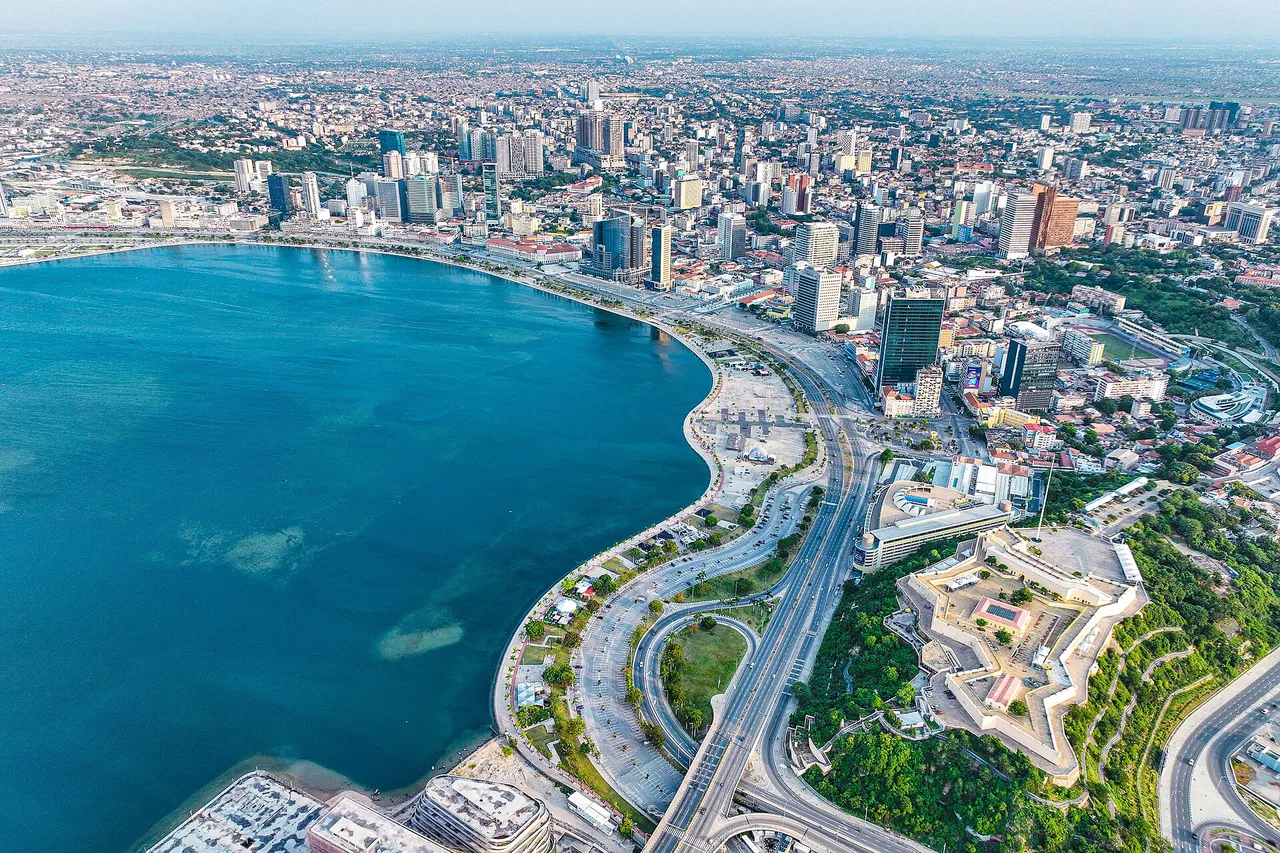
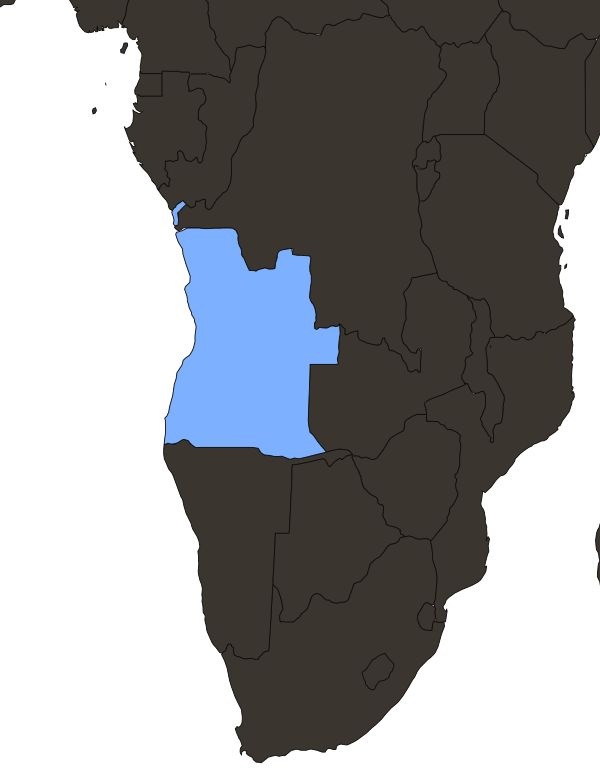
Angola is a large country on Africa's Atlantic coast with 36.6 million people, and half of them are under 17. The MPLA has ruled since independence from Portugal in 1975, through a civil war that lasted until 2002. Oil makes up nine-tenths of exports, and China buys more than half of the crude. President João Lourenço cannot run again in 2027.
Where Angola ranks
All rankings →Which alliances is Angola in?
All alliances →Who runs Angola?
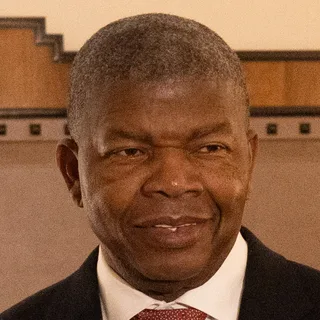
President João Lourenço was born on March 5, 1954, in Lobito. He studied at a military academy in the Soviet Union from 1978 to 1982 and served as defense minister from 2014 to 2017. He took office on September 26, 2017, succeeding José Eduardo dos Santos, who had ruled since 1979. Angolans do not vote for a president directly. The person at the top of the winning party's list becomes president. In the election of August 24, 2022, his MPLA won 51.17% and 124 of 220 seats. UNITA, the former rebel movement, won 43.95% and 90 seats (chart). "I only leave power because the constitution does not allow me to continue," Lourenço said in December 2025. He is running again for party chairman at the MPLA congress on December 9 to 10, 2026, and the winner can name the 2027 candidate. In July 2025 a taxi strike over diesel prices turned into riots. The government counted 22 dead, and police later gave 30.
- MPLA 124
- UNITA 90
- PRS, FNLA and PHA (2 each) 6
Photo (September 2024): Chuck Kennedy, US State Department, Wikimedia Commons, public domain (cropped)
Who are Angola's allies and rivals?
During the civil war the Soviet Union armed the MPLA and Cuba sent troops, more than 50,000 at the 1988 peak. Today China matters most. It has lent Angola more than any other African country and buys more than half its crude oil. The United States has moved closer. Joe Biden became the first US president to visit Angola in December 2024. The Trump administration signed a $553 million loan in December 2025 to upgrade the Lobito railway, which carries copper from Congo to the Atlantic. Since January 2026 the US has restricted visas for Angolans, and Angolan goods face a 12.5% US tariff. Portugal, the former colonial power, raised its credit line to €3.25 billion. Ties with Russia have cooled. In July 2026 a Luanda court jailed two Russians for planning to fund UNITA and spread disinformation. In Cabinda, an oil-rich exclave, the separatist FLEC-FAC declared independence in Brussels on February 2, 2026. President João Lourenço mediated between Congo and Rwanda until March 2025.
Allies and partners
 ChinaLargest foreign lender; buys most of its oil
 United States$553 million loan for the Lobito railway
 PortugalFormer colonial power; raised credit line
- African UnionLourenço chaired it from 2025 to 2026
Tensions
- FLEC-FACCabinda separatists; declared independence February 2026
 RussiaTwo Russians jailed in 2026 for meddling
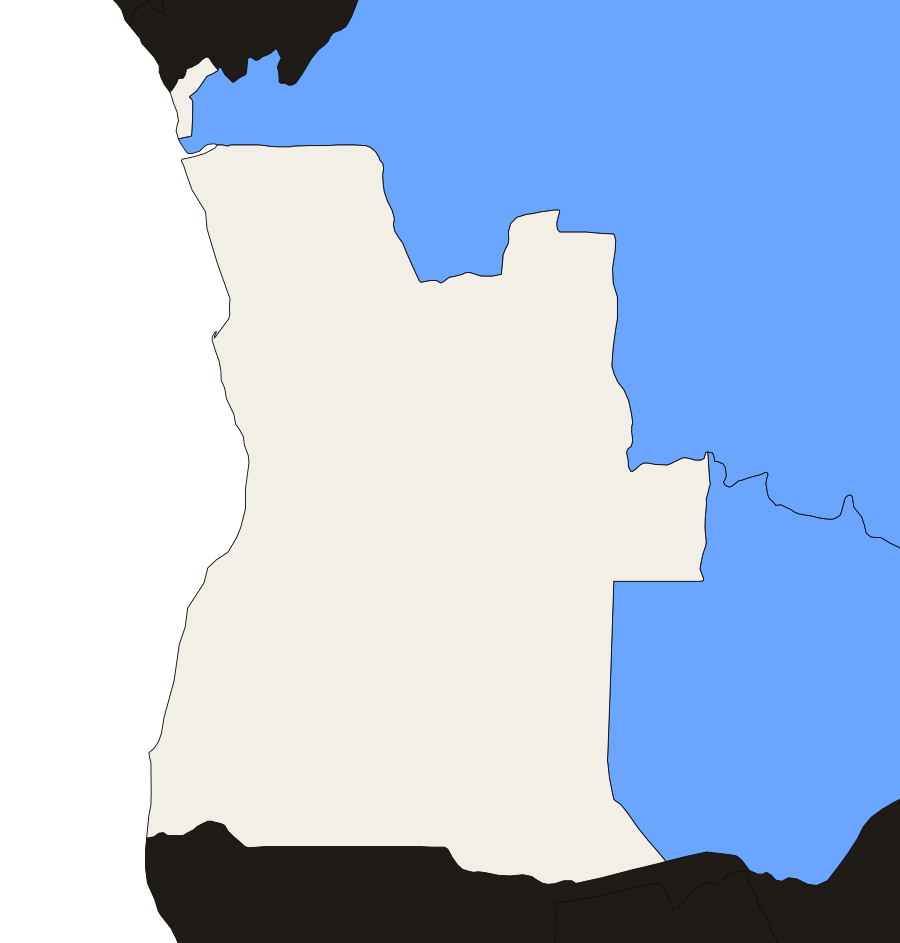
- Lobito Port at the start of the railway to Congo's copper mines. Upgraded with a $553 million US loan.
- Cabinda Oil-rich exclave between the two Congos. Separatists declared independence in February 2026.
- Kolwezi Copper and cobalt town in Congo. Its copper goes by train to Lobito.
- Catoca Angola's largest diamond mine. Russia's Alrosa sold its 41% stake to an Omani state company.
- Angola
- Partner
Who does Angola trade with?
Angola exported goods worth $33.70 billion in 2025 and imported $16.78 billion (UN Comtrade). Oil and fuels made up 91.4% of exports (INE). China bought 43.0% of all exports and India 10.8% (chart). China also supplied 20.4% of imports, and Portugal 9.8%. Diamonds and other precious stones were about 5.8% of exports. In 2025 Angola produced diamonds worth $1.81 billion, the third-largest value in the world after Russia and Botswana (Kimberley Process). Angola pumps oil but buys most of its fuel abroad. Imports covered 82.7% of fuel supply in early 2026. A refinery opened in Cabinda in September 2025, and a larger one is being built at Lobito. Before independence Angola was one of the world's top four coffee producers. In 2025 it exported only 3,288 tonnes.
Sells to
Share of Angola's exports
- China43.0%
 India10.8%
 Indonesia5.8%
 Spain5.6%
 United Arab Emirates5.4%
Buys from
Share of Angola's imports
- China20.4%
- Portugal9.8%
- India6.2%
 United Kingdom6.0%
- United States5.5%
Goods, 2025, as reported by Angola. UN Comtrade.
Why does Angola owe China so much?
Angola needed money to rebuild after the civil war ended in 2002. On March 2, 2004, China's Export-Import Bank signed a $2 billion loan to be repaid with oil sold to a trading arm of the Chinese oil company Sinopec. Many more followed. Chinese companies rebuilt the Benguela Railway, which reopened in 2014, built the new city of Kilamba and built Luanda's new airport, opened in November 2023. From 2000 to 2024 China lent Angola about $49 billion, more than a quarter of all its loans to Africa (Boston University). At the end of 2024 Angola owed Chinese lenders $14.4 billion, second only to Pakistan (chart). That is down from a peak of $22.9 billion in 2018. The oil-backed part fell to about $6.8 billion by mid-2026, and Angola aims to clear it by 2028. In 2025 Chinese loans stopped being Angola's largest debt. Sonangol is now negotiating a $4.8 billion Chinese loan for the Lobito refinery, without oil as collateral.
Debt owed to China, end of 2024
Full ranking → Pakistan$22.4bn
- Angola$14.4bn
 Sri Lanka$8.7bn
 Ethiopia$7.4bn
 Bangladesh$6.6bn
 Egypt$5.9bn
 Kenya$5.4bn
 Zambia$5.3bn
World Bank International Debt Statistics, 2025 edition
Why did Angola leave OPEC?
Angola joined OPEC in 2007. In December 2023 OPEC cut its 2024 production quota to 1.11 million barrels a day. Angola wanted 1.18 million. On December 21, 2023, the oil minister announced that Angola would leave, and it left on January 1, 2024. Since then output has kept falling. It peaked at nearly 1.9 million barrels a day in 2008 and was about 1.03 million in 2025 (IMF), down more than 40% from 2015 (chart). Most of the oil comes from offshore fields that are getting old, and few new ones have been found. Proven reserves fell from 9.5 billion barrels in 2010 to 2.6 billion in 2025 (World Bank). New fields help. Agogo started pumping in July 2025, and Kaminho is due in late 2027. On October 15, 2026, President João Lourenço promised to keep output above 1 million barrels a day. Oil paid for 57% of government revenue in 2025, and the 2026 budget is the first to expect more revenue from other sources.


 Republic of the Congo
 Gabon
Gabon