
Ranking · People
Nobel Prize winners by country
The United States has the most Nobel Prize winners: 299 laureates born there and 407 prizes won at US institutions, through October 2026. The United Kingdom is second with 110 by birth, followed by Germany with 86 and France with 65. Immigrants won 40% of US science prizes since 2000, according to the National Foundation for American Policy.
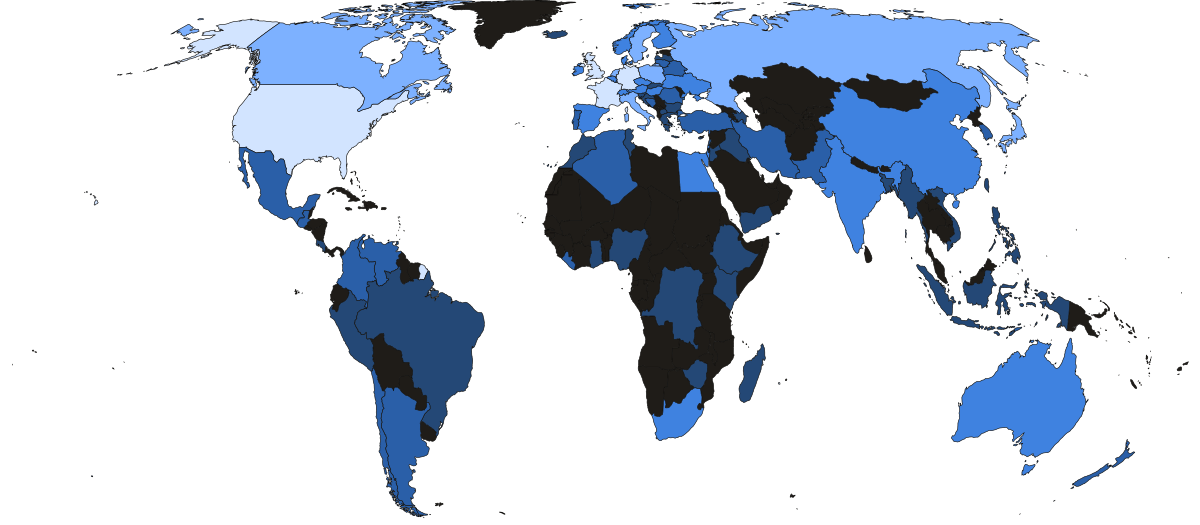
- Under 2
- 2–5
- 5–20
- 20–50
- Over 50
- Not in this ranking
- Under 2
- 2–5
- 5–20
- 20–50
- Over 50
- Not in this ranking
- Under 2
- 2–4
- 4–10
- 10–20
- Over 20
- Not in this ranking
| # | Country | Laureates | Prizes | Laureates |
|---|---|---|---|---|
| 1 |  United States United States |
299 | 407 | 118 |
| 2 |  United Kingdom United Kingdom |
110 | 95 | 31 |
| 3 |  Germany Germany |
86 | 74 | 15 |
| 4 |  France France |
65 | 41 | 17 |
| 5 |  Japan Japan |
31 | 20 | 23 |
| 6 |  Sweden Sweden |
30 | 18 | 4 |
| 7 |  Russia Russia |
29 | 12 | 8 |
| 8 |  Poland Poland |
28 | · | 1 |
| 9 |  Canada Canada |
23 | 10 | 9 |
| 10 |  Italy Italy |
20 | 7 | 3 |
| 11 |  Netherlands Netherlands |
20 | 10 | 3 |
| 12 |  Austria Austria |
19 | 7 | 5 |
| 13 |  Switzerland Switzerland |
19 | 24 | 4 |
| 14 |  Denmark Denmark |
13 | 9 | 1 |
| 15 |  Norway Norway |
13 | 5 | 4 |
| 16 |  China China |
12 | 1 | 6 |
| 17 |  Hungary Hungary |
12 | 2 | 5 |
| 18 |  Australia Australia |
10 | 5 | 3 |
| 19 |  Belgium Belgium |
10 | 5 | 3 |
| 20 |  South Africa South Africa |
10 | · | 4 |
| 21 |  India India |
9 | 1 | 3 |
| 22 |  Spain Spain |
7 | 1 | · |
| 23 |  Czechia Czechia |
6 | 1 | 1 |
| 24 |  Egypt Egypt |
6 | · | 1 |
| 25 |  Israel Israel |
6 | 5 | 5 |
| 26 |  Finland Finland |
5 | 1 | 2 |
| 27 |  Ireland Ireland |
5 | 1 | 1 |
| 28 |  Ukraine Ukraine |
5 | · | 1 |
| 29 |  Argentina Argentina |
4 | 2 | · |
| 30 |  Belarus Belarus |
4 | · | 1 |
| 31 |  Romania Romania |
4 | · | 2 |
| 32 |  Turkey Turkey |
4 | · | 3 |
| 33 |  Iran Iran |
3 | · | 3 |
| 34 |  Lithuania Lithuania |
3 | · | · |
| 35 |  Mexico Mexico |
3 | · | · |
| 36 |  New Zealand New Zealand |
3 | · | 1 |
| 37 |  Pakistan Pakistan |
3 | · | 1 |
| 38 |  South Korea South Korea |
3 | · | 2 |
| 39 |  Algeria Algeria |
2 | · | · |
| 40 |  Bosnia and Herzegovina Bosnia and Herzegovina |
2 | · | · |
| 41 |  Chile Chile |
2 | · | · |
| 42 |  Colombia Colombia |
2 | · | 1 |
| 43 |  Guatemala Guatemala |
2 | · | · |
| 44 |  Liberia Liberia |
2 | · | 2 |
| 45 |  Luxembourg Luxembourg |
2 | · | 1 |
| 46 |  Portugal Portugal |
2 | 1 | · |
| 47 |  Saint Lucia Saint Lucia |
2 | · | · |
| 48 |  Timor-Leste Timor-Leste |
2 | · | · |
| 49 |  Venezuela Venezuela |
2 | · | 1 |
| 50 |  Azerbaijan Azerbaijan |
1 | · | · |
| 51 |  Bangladesh Bangladesh |
1 | · | 1 |
| 52 |  Brazil Brazil |
1 | · | · |
| 53 |  Bulgaria Bulgaria |
1 | · | · |
| 54 |  Costa Rica Costa Rica |
1 | · | · |
| 55 |  Croatia Croatia |
1 | · | · |
| 56 |  Cyprus Cyprus |
1 | · | 1 |
| 57 |  DR Congo DR Congo |
1 | · | 1 |
| 58 |  Ethiopia Ethiopia |
1 | · | 1 |
| 59 |  Ghana Ghana |
1 | · | 1 |
| 60 |  Greece Greece |
1 | · | · |
| 61 |  Iceland Iceland |
1 | · | · |
| 62 |  Indonesia Indonesia |
1 | · | · |
| 63 |  Iraq Iraq |
1 | · | 1 |
| 64 |  Jordan Jordan |
1 | · | 1 |
| 65 |  Kenya Kenya |
1 | · | 1 |
| 66 |  Latvia Latvia |
1 | · | · |
| 67 |  Lebanon Lebanon |
1 | · | 1 |
| 68 |  Madagascar Madagascar |
1 | · | · |
| 69 |  Morocco Morocco |
1 | · | 1 |
| 70 |  Myanmar Myanmar |
1 | · | · |
| 71 |  Nigeria Nigeria |
1 | · | · |
| 72 |  North Macedonia North Macedonia |
1 | · | · |
| 73 |  Peru Peru |
1 | · | 1 |
| 74 |  Philippines Philippines |
1 | · | 1 |
| 75 |  Slovakia Slovakia |
1 | · | · |
| 76 |  Slovenia Slovenia |
1 | · | · |
| 77 |  Taiwan Taiwan |
1 | · | · |
| 78 |  Trinidad and Tobago Trinidad and Tobago |
1 | · | 1 |
| 79 |  Tunisia Tunisia |
1 | 1 | 1 |
| 80 |  Vietnam Vietnam |
1 | · | · |
| 81 |  Yemen Yemen |
1 | · | 1 |
| 82 |  Zimbabwe Zimbabwe |
1 | · | · |
| # | Country | Prizes | Laureates | Laureates |
|---|---|---|---|---|
| 1 | United States |
407 | 299 | 118 |
| 2 | United Kingdom |
95 | 110 | 31 |
| 3 | Germany |
74 | 86 | 15 |
| 4 | France |
41 | 65 | 17 |
| 5 | Switzerland |
24 | 19 | 4 |
| 6 | Japan |
20 | 31 | 23 |
| 7 | Sweden |
18 | 30 | 4 |
| 8 | Russia |
12 | 29 | 8 |
| 9 | Canada |
10 | 23 | 9 |
| 10 | Netherlands |
10 | 20 | 3 |
| 11 | Denmark |
9 | 13 | 1 |
| 12 | Italy |
7 | 20 | 3 |
| 13 | Austria |
7 | 19 | 5 |
| 14 | Norway |
5 | 13 | 4 |
| 15 | Australia |
5 | 10 | 3 |
| 16 | Belgium |
5 | 10 | 3 |
| 17 | Israel |
5 | 6 | 5 |
| 18 | Hungary |
2 | 12 | 5 |
| 19 | Argentina |
2 | 4 | · |
| 20 | China |
1 | 12 | 6 |
| 21 | India |
1 | 9 | 3 |
| 22 | Spain |
1 | 7 | · |
| 23 | Czechia |
1 | 6 | 1 |
| 24 | Finland |
1 | 5 | 2 |
| 25 | Ireland |
1 | 5 | 1 |
| 26 | Portugal |
1 | 2 | · |
| 27 | Tunisia |
1 | 1 | 1 |
| # | Country | Laureates | Laureates | Prizes |
|---|---|---|---|---|
| 1 | United States |
118 | 299 | 407 |
| 2 | United Kingdom |
31 | 110 | 95 |
| 3 | Japan |
23 | 31 | 20 |
| 4 | France |
17 | 65 | 41 |
| 5 | Germany |
15 | 86 | 74 |
| 6 | Canada |
9 | 23 | 10 |
| 7 | Russia |
8 | 29 | 12 |
| 8 | China |
6 | 12 | 1 |
| 9 | Austria |
5 | 19 | 7 |
| 10 | Hungary |
5 | 12 | 2 |
| 11 | Israel |
5 | 6 | 5 |
| 12 | Sweden |
4 | 30 | 18 |
| 13 | Switzerland |
4 | 19 | 24 |
| 14 | Norway |
4 | 13 | 5 |
| 15 | South Africa |
4 | 10 | · |
| 16 | Italy |
3 | 20 | 7 |
| 17 | Netherlands |
3 | 20 | 10 |
| 18 | Australia |
3 | 10 | 5 |
| 19 | Belgium |
3 | 10 | 5 |
| 20 | India |
3 | 9 | 1 |
| 21 | Turkey |
3 | 4 | · |
| 22 | Iran |
3 | 3 | · |
| 23 | Finland |
2 | 5 | 1 |
| 24 | Romania |
2 | 4 | · |
| 25 | South Korea |
2 | 3 | · |
| 26 | Liberia |
2 | 2 | · |
| 27 | Poland |
1 | 28 | · |
| 28 | Denmark |
1 | 13 | 9 |
| 29 | Czechia |
1 | 6 | 1 |
| 30 | Egypt |
1 | 6 | · |
| 31 | Ireland |
1 | 5 | 1 |
| 32 | Ukraine |
1 | 5 | · |
| 33 | Belarus |
1 | 4 | · |
| 34 | New Zealand |
1 | 3 | · |
| 35 | Pakistan |
1 | 3 | · |
| 36 | Colombia |
1 | 2 | · |
| 37 | Luxembourg |
1 | 2 | · |
| 38 | Venezuela |
1 | 2 | · |
| 39 | Bangladesh |
1 | 1 | · |
| 40 | Cyprus |
1 | 1 | · |
| 41 | DR Congo |
1 | 1 | · |
| 42 | Ethiopia |
1 | 1 | · |
| 43 | Ghana |
1 | 1 | · |
| 44 | Iraq |
1 | 1 | · |
| 45 | Jordan |
1 | 1 | · |
| 46 | Kenya |
1 | 1 | · |
| 47 | Lebanon |
1 | 1 | · |
| 48 | Morocco |
1 | 1 | · |
| 49 | Peru |
1 | 1 | · |
| 50 | Philippines |
1 | 1 | · |
| 51 | Trinidad and Tobago |
1 | 1 | · |
| 52 | Tunisia |
1 | 1 | 1 |
| 53 | Yemen |
1 | 1 | · |
Why they rank where they do
-
United States
Immigrants won 40% of US Nobel Prizes in chemistry, medicine and physics from 2000 to 2025, according to the National Foundation for American Policy. In 2026, four prizes went to people at US institutions.
-
United Kingdom
Many British-born laureates did their prize-winning work abroad. John Clarke (Physics 2025) is at UC Berkeley, and Simon Johnson (Economics 2024) is at MIT.
-
Germany
According to Medawar and Pyke, German scientists won one third of all Nobel science prizes from 1901 to 1932 but only eight from 1933 to 1960, after the Nazi regime dismissed Jewish scientists.
-
France
France has 16 Nobel Prizes in Literature as of 2026, the most of any country. Henri B. Kagan, 95, shared the 2026 Chemistry Prize, making him one of the oldest laureates ever.
-
Japan
Japan ranks third since 2000, with 23 laureates by birth. The count includes people who held other citizenship when they won, such as Shuji Nakamura (US) and Kazuo Ishiguro (UK).
-
Poland
Poland's 28 laureates reflect today's borders, so they include Marie Curie, born in Warsaw, and Max Born (Physics 1954), born in Breslau, now Wrocław, when the city was part of Germany.
-
Canada
Anne Carson, born in Toronto, won the 2026 Literature Prize. Xinhua called her the second Canadian author to win it, though Saul Bellow (1976), an American writer, was also born in Canada.
-
Switzerland
Switzerland ranks fifth by institution (24) but 12th by birth (19). The 1984 Physics Prize to Carlo Rubbia and Simon van der Meer was the first for work done at CERN in Geneva.
-
China
Most of China's 12 by birth worked or lived abroad, such as Walter Brattain (born in Xiamen) and the 14th Dalai Lama (born in Amdo, now Qinghai). Liu Xiaobo won the 2010 Peace Prize while in a Chinese prison.
-
Hungary
Hungary has 12 laureates by birth but only 2 prizes at Hungarian institutions. Eugene Wigner (Physics 1963), for example, moved to the US in the 1930s.
-
Belgium
Francis Halzen, born in Tienen, won the 2026 Physics Prize for his work on the IceCube Neutrino Observatory at the South Pole. He was the first sole physics winner since Georges Charpak in 1992.
-
South Africa
Navi Pillay, born in Durban, won the 2026 Peace Prize at age 85. She served as UN High Commissioner for Human Rights from 2008 to 2014.
-
Iran
Iran's three laureates since 2000 include Doris Lessing (Literature 2007), born in Kermanshah, and Narges Mohammadi (Peace 2023), sentenced again in February 2026 and on medical leave from prison as of September 2026.
Which country has won the most Nobel Prizes?
The United States leads on every measure: 299 laureates born there, 407 prizes won at US institutions, and 118 since 2000. In 2026, three laureates were born in the US (Karl Deisseroth, Robert E. Hall and Michael Woodford) and four prizes went to US institutions. The United Kingdom is second with 110 by birth, Germany third with 86. Through 2026, about 1,000 individuals have won Nobel Prizes or the economics prize.
- United States299
- United Kingdom110
- Germany86
- France65
- Japan31
- Sweden30
- Russia29
- Poland28
- Canada23
- Italy20
Why does the United States win so many Nobel Prizes?
Immigration is a major factor. According to the National Foundation for American Policy (NFAP), immigrants won 36% of US prizes in chemistry, medicine and physics from 1901 to 2025, and 40% from 2000 to 2025. NFAP links the rise after 1960 to the 1965 Immigration and Nationality Act and the 1990 Immigration Act. Before 1960, Jewish scientists who fled European fascism in the 1930s added to the US total. According to Medawar and Pyke, more than 1,500 scientists left Nazi Germany as refugees, and 15 of them later won Nobel Prizes. The United States has 407 prizes won at US institutions but 299 laureates born there.
United States407
Next five countries combined254
United Kingdom, Germany, France, Switzerland and Japan
Which countries gained or lost Nobel laureates to other countries?
The two tabs count different things, so the gaps are a rough guide. The United States has 299 laureates by birth but 407 prizes at US institutions, because many laureates moved there to work. The United Kingdom has 110 by birth and 95 by institution. Germany has 86 and 74. Switzerland goes the other way, with 19 by birth and 24 by institution. France drops from 65 by birth to 41 by institution. Part of that gap is literature and peace prizes, which usually have no institution, and France has 16 literature prizes. Some French-born scientists, such as Pierre Agostini and Moungi Bawendi, won while working in the United States.
- United States299
- United Kingdom110
- Germany86
- France65
- Japan31
- Sweden30
- Russia29
- Poland28
- United States407
- United Kingdom95
- Germany74
- France41
- Switzerland24
- Japan20
- Sweden18
- Russia12
Moves up the ranking
Which countries have the most Nobel laureates since 2000?
From 2000 to 2026, 118 laureates were born in the United States, far ahead of the United Kingdom with 31. Japan is third with 23, ahead of France with 17 and Germany with 15. In 2000, Japan's government adopted a science plan with a goal of as many as 30 Nobel laureates in 50 years. Later plans dropped the goal. In 2026, Kenso Soai, born in Japan, and Henri B. Kagan, born in France, shared the Chemistry Prize. China has 6 laureates by birth since 2000.
- United States118
- United Kingdom31
- Japan23
- France17
- Germany15
- Canada9
- Russia8
- China6


