
Resource · Critical mineral
Helium
The United States produced 42.6% of the world's helium in 2025, 81 million cubic meters out of 190 million. Qatar produced 33.2%. Helium is not mined; it is separated from natural gas. Iran closed the Strait of Hormuz on February 28, 2026, and struck Qatar's Ras Laffan complex, cutting off most Qatari helium. Spot prices tripled by October.
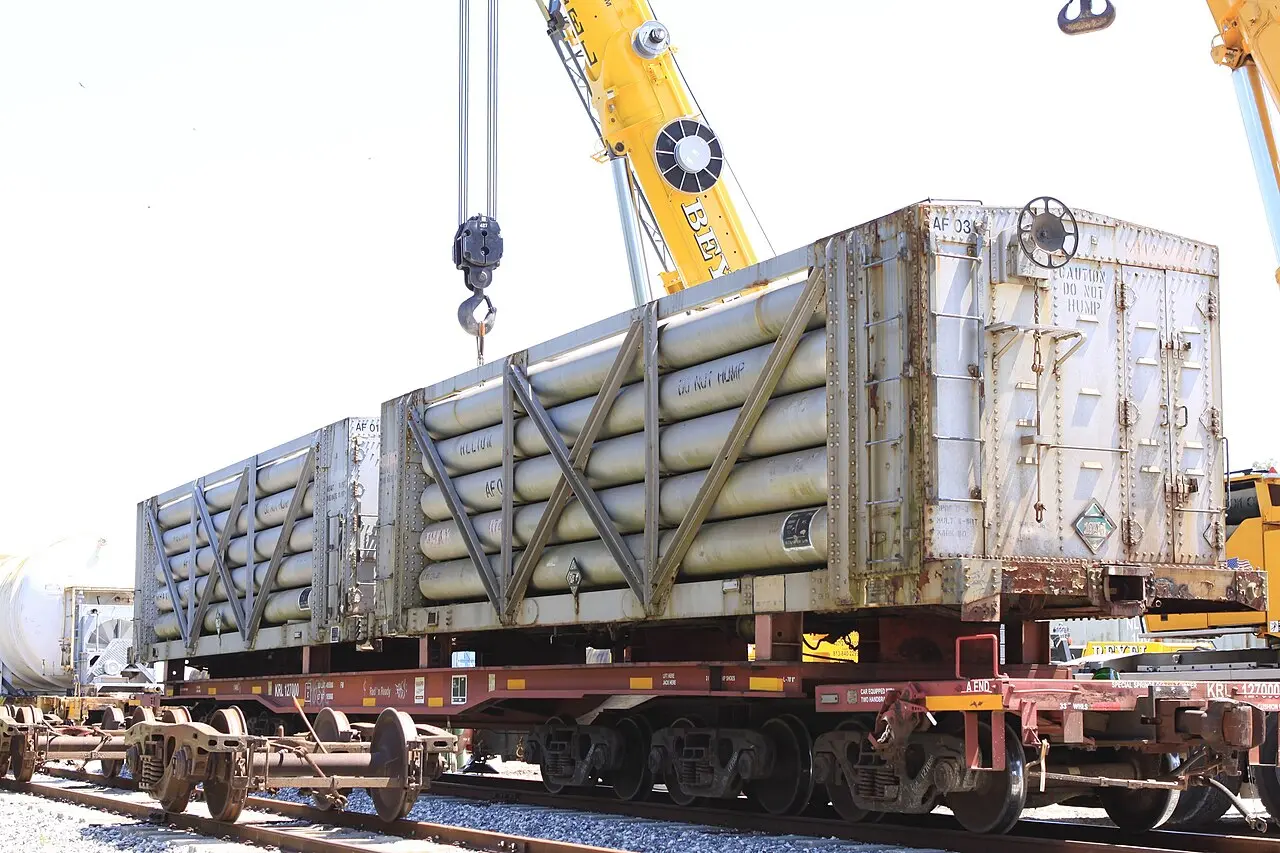
- Produced in 2025
- 190 million m³
- of helium, USGS estimate
- Largest producer
 42.6%
- 81 million m³, 2025
- Produced in Qatar
 33.2%
- of world output, 2025; disrupted by the Iran war
- Into MRI scanners
- 15%
- of the helium used in the US, 2025
- US apparent use
- 51 million m³
- 2025, the most of any country
Which countries produce the most helium?
The United States produced 81 million cubic meters of helium in 2025, 42.6% of the world's 190 million. Qatar produced 63 million cubic meters (33.2%). Together they account for three quarters of the world's output. Russia produced 18 million cubic meters. Its largest helium producer is Gazprom's Amur gas processing plant in the Far East, which opened in 2021. Algeria produced 11 million cubic meters. Canada, China and Poland each produced 3 to 6 million cubic meters. ExxonMobil says its Shute Creek plant in Wyoming supplies about a fifth of the world's helium.
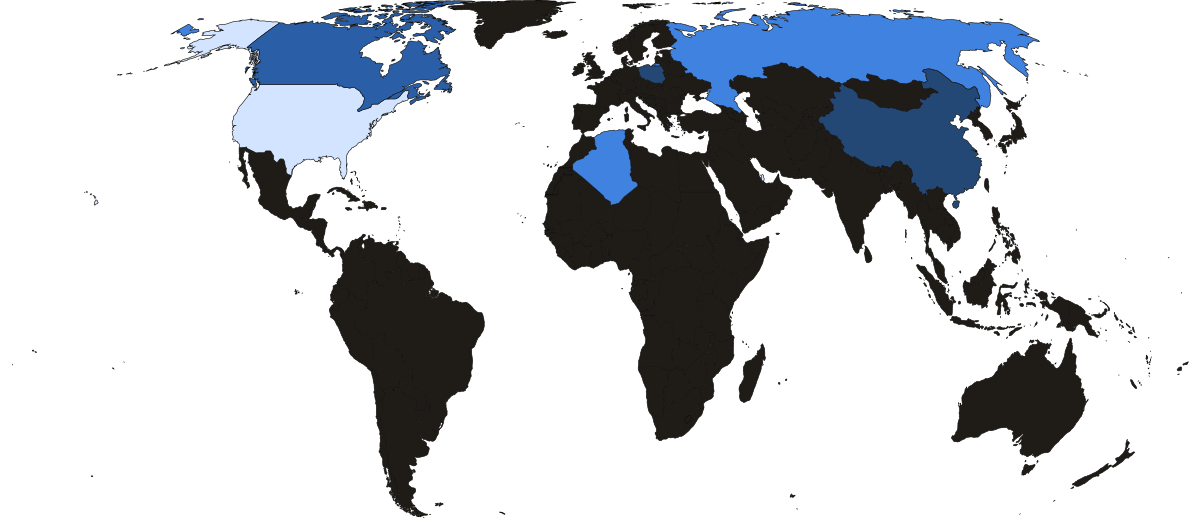

- Under 2%
- 2%–5%
- 5%–10%
- 10%–30%
- Over 30%
- No production
What is helium used for?
Laboratory and specialty gases take the largest share of US helium use at 22%. Semiconductor manufacturing and fiber optics take 17%, the same as balloons and airships. MRI scanners use 15%: liquid helium cools their superconducting magnets to near absolute zero, and no substitute works at those temperatures. Aerospace, where helium purges and pressurizes rocket fuel tanks, takes 9%. Worldwide, chipmaking uses about a fifth of all helium, according to the Compressed Gas Association.
What helium is used for in the United States
Share of helium used in the US, 2025
- Lab, analytical and specialty gases22%
- Chips, fiber optics and controlled atmospheres17%
- Balloons and airships (lifting gas)17%
- MRI scanners15%
- Aerospace (rockets)9%
- Welding8%
- Diving5%
- Leak detection5%
- Other2%
How did the Iran war hit helium supply?
Iran closed the Strait of Hormuz on February 28, 2026. After Iranian drone strikes, QatarEnergy halted LNG production at Ras Laffan on March 2, and its helium output stopped too. Iranian missiles hit Ras Laffan again on March 18-19. QatarEnergy said the damage would cut its helium exports by 14% for three to five years. Russia made helium exports subject to permits in April, and China banned them in July. Asian buyers turned to US helium. In late October, speakers at a Houston industry summit said Qatar's helium exports by sea were unlikely to resume even in early 2027. Some Qatari helium has gone overland through Saudi Arabia and Oman.
Where Taiwan's helium comes from
2025January-June 2026- United States4%60%
- Qatar88%30%
Why can't we just make more helium?
Helium forms underground from the radioactive decay of uranium and thorium over millions of years and collects alongside natural gas. A gas field is usually worth tapping for helium alone only if its gas holds at least 0.3% helium. Qatar and Algeria recover helium from leaner gas, as a by-product of making LNG. Helium released into the air is too dilute to capture and eventually escapes into space. Qatar holds the largest identified resources. New supply is coming: six US operations started in 2025, Canada's Saskatchewan province aims for 10% of world supply by 2030, and Tanzania awarded its first helium mining license in 2025.
Where the world's known helium is
Identified helium resources, billion m³
Who buys the most helium?
Counting imports minus re-exports, China bought the most helium and other rare gases in 2024: $366 million. Taiwan ($235 million), South Korea ($234 million) and Japan ($187 million) followed. East Asia's chip and electronics industries drive the demand. France is the largest gross importer ($473 million) because Air Liquide re-exports much of what it buys; net of re-exports, France imported $134 million. The United States exported 38 million cubic meters in 2025 and imported 8 million. Qatar and Russia do not report their helium trade.
Who buys the most helium
Net imports of helium and other rare gases, 2024, US$ million
 China$366m
 Taiwan$235m
 South Korea$234m
 Japan$187m
 United Kingdom$140m
 Germany$136m
 France$134m
History
Why did the Hindenburg fly on hydrogen instead of helium?
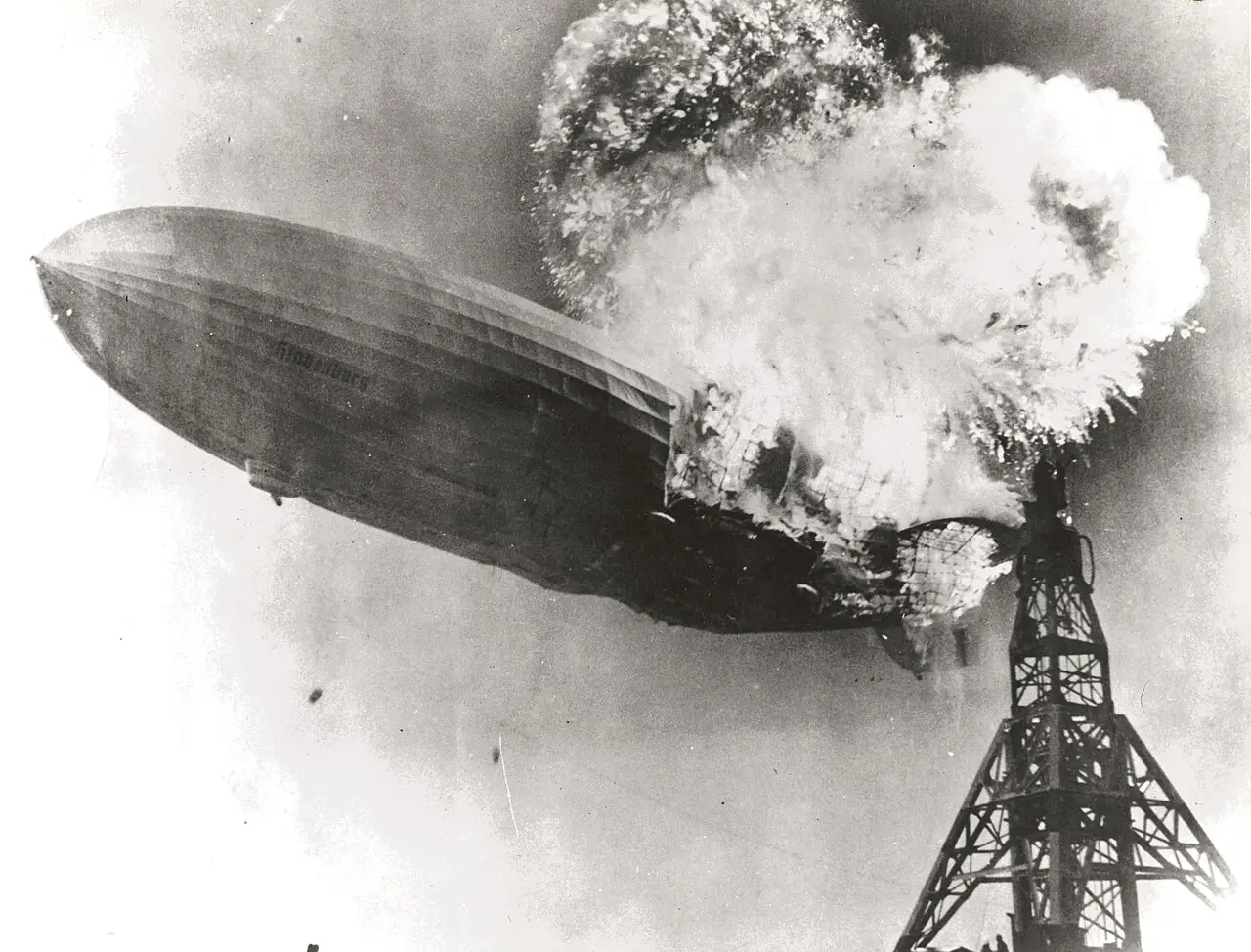
The United States was then the only country producing helium in quantity, and a 1927 law allowed no exports without the President's permission. The Zeppelin Company could not get any, so it filled the Hindenburg with hydrogen. On May 6, 1937, the airship caught fire while landing at Lakehurst, New Jersey, and 36 people died.
In September 1937, Congress changed the law to allow exports of helium for non-military use. In November the State Department approved a sale to the Zeppelin Company. Then Germany annexed Austria on March 12, 1938. Interior Secretary Harold Ickes refused to sign the sales contract, arguing that the helium had military value. The law gave the Interior Secretary a veto over each sale, and Franklin D. Roosevelt said publicly that he had no legal power to override Ickes. The replacement airship, LZ 130, flew on hydrogen. In March 1940 Hermann Goering ordered it and the older Graf Zeppelin scrapped for their aluminum.
History
Who produced the world's helium 25 years ago?
In 2001 the United States produced 82% of the world's helium, according to the US Geological Survey. Qatar produced none. The US government had built the industry after World War I, extracting helium from Texas and Kansas gas fields for military airships.
Algeria and Qatar became large producers by recovering helium from natural gas at their LNG plants. Algeria's state oil company, Sonatrach, opened a helium plant at Arzew in 1994 with Air Liquide and Air Products. Qatar opened its first plant at Ras Laffan in the mid-2000s and a second in 2013. In June 2017 Saudi Arabia, the United Arab Emirates, Bahrain and Egypt cut ties with Qatar, and Saudi Arabia closed Qatar's only land border. Qatar's liquid helium normally went by truck through Saudi Arabia to the port of Jebel Ali in the UAE. Qatar shut both helium plants in mid-June. They restarted in early July, after Qatar began shipping helium by sea through Oman.
Share of world helium production
20012025- United States82%43%
- Qatar0%33%
 Russia3.8%9.5%
 Algeria13%5.8%
 Poland0.9%1.6%
Other resources
All 33 resources →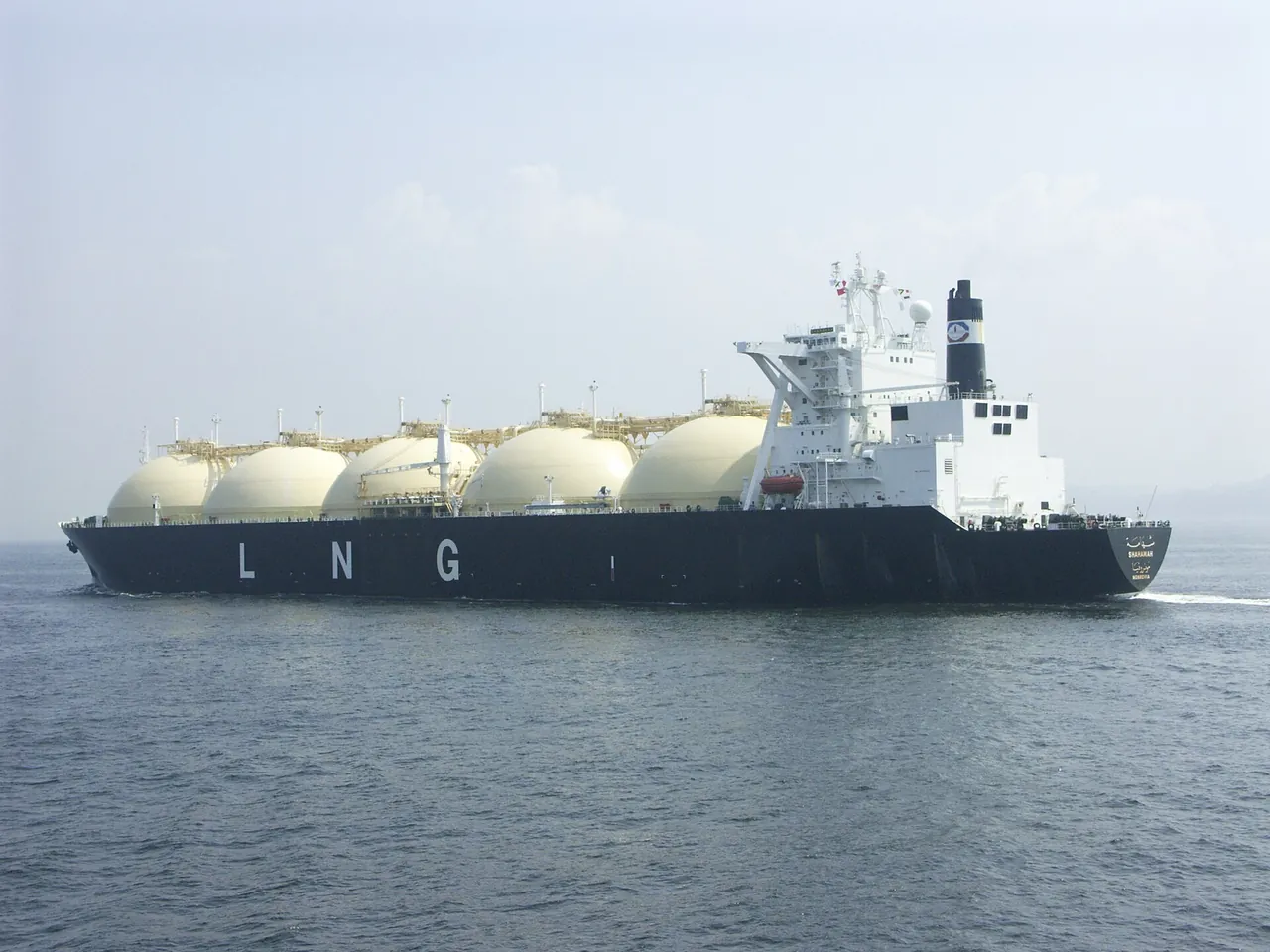 United States 25%
Energy
Natural gas
Qatar's LNG cargoes fell 96% in six months after Iran closed the Strait of Hormuz.
 United States 16.1%
Energy
Crude oil
The US pumps 13.6 million barrels a day, more than any other country.
 China 69%
Critical mineral
Rare earths
China mines 69% of rare earths, refines 85% and makes 94% of the magnets.