
Alliance · Union
CIS
Commonwealth of Independent States
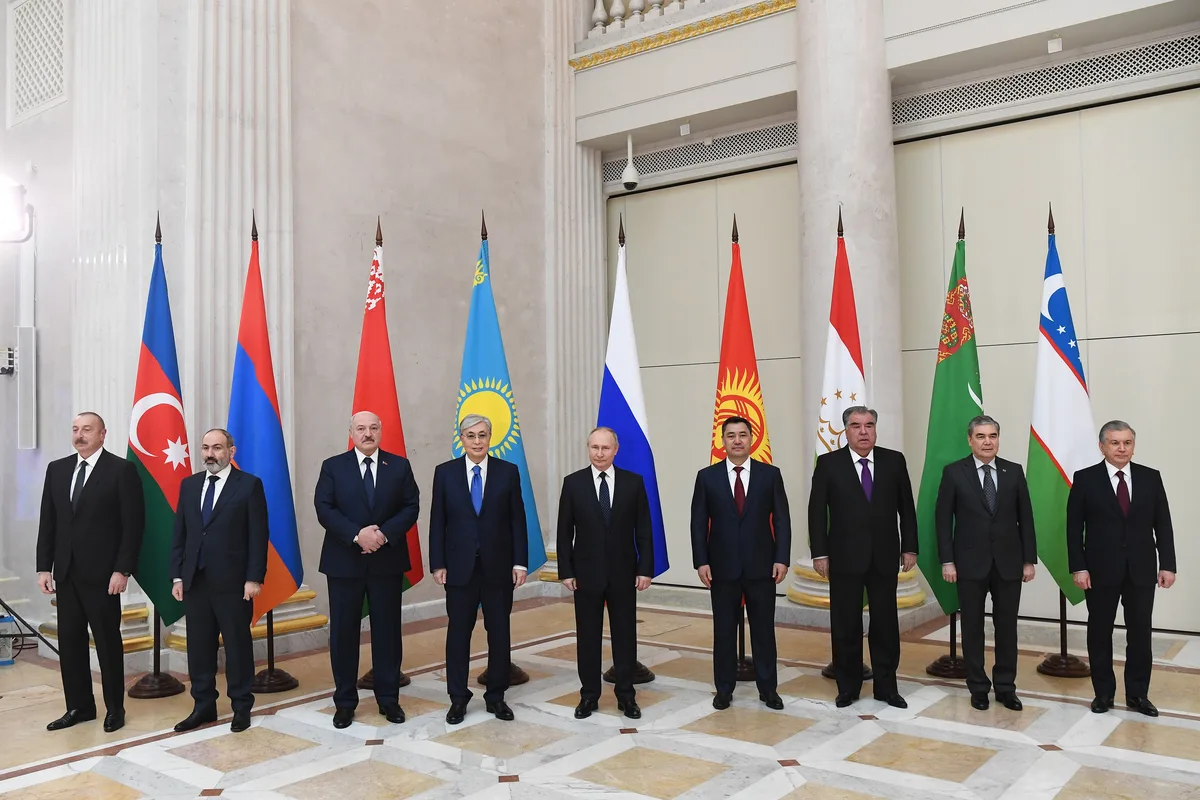
The Commonwealth of Independent States is a loose forum of former Soviet republics, founded in December 1991 as the Soviet Union ended. It has nine Charter members: Armenia, Azerbaijan, Belarus, Kazakhstan, Kyrgyzstan, Moldova, Russia, Tajikistan and Uzbekistan. Turkmenistan takes part as an associate member. Its headquarters are in Minsk, Belarus. Moldova is leaving on April 8, 2027.
- Members
- 9
- Moldova leaving April 8, 2027
- Founded
- 1991
- Belovezha Accords, December 8
- Headquarters
- Minsk
- Branch office in Moscow
- Chair in 2026
 Turkmenistan
- Uzbekistan in 2027
- Secretary General
 Sergei Lebedev
- In post since 2007
Which countries are in the CIS?
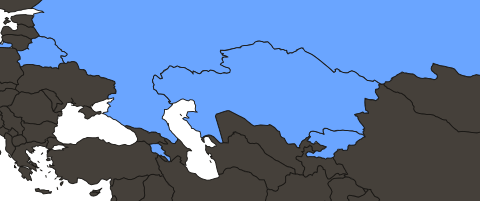
The CIS has nine Charter members: Armenia, Azerbaijan, Belarus, Kazakhstan, Kyrgyzstan, Moldova, Russia, Tajikistan and Uzbekistan. Turkmenistan is an associate member. It never ratified the Charter but holds the CIS chair in 2026. Moldova is leaving: its parliament voted on April 2, 2026, and the exit takes effect on April 8, 2027.
Ukraine signed the founding agreement on December 8, 1991 but never ratified the Charter. It stopped taking part in CIS bodies in 2018. The CIS website still lists it among its 11 "participant states." Georgia joined in 1993 and left on August 18, 2009. Nine states attended the most recent summit, at Avaza, Turkmenistan, on October 9, 2026.
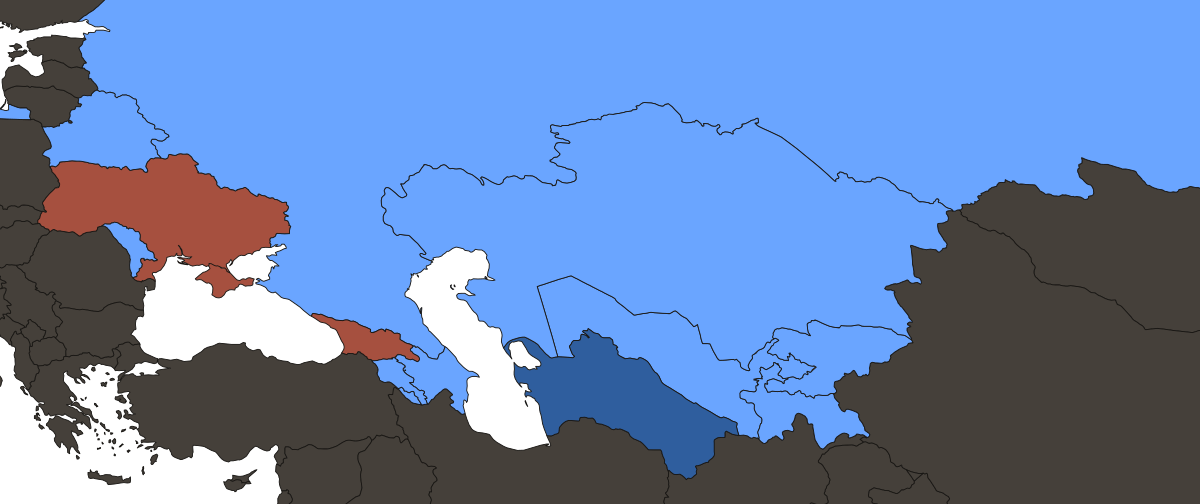
- Member
- Associate member
- Left
- Not a member
Who joined and who left the CIS
Countries that joined in each year, and the total after


 199110 founders
 199311
- 200910, Georgia left
- 20189, Ukraine left
All 9 members and the year each joined
- Armenia1991
- Azerbaijan1991
- Belarus1991
- Kazakhstan1991
- Kyrgyzstan1991
- Moldova1991
- Russia1991
- Tajikistan1991
- Uzbekistan1991
How was the CIS created?
On December 8, 1991, the leaders of Russia, Ukraine and Belarus met at the Viskuli hunting lodge in Belovezhskaya Pushcha, Belarus. Boris Yeltsin signed for Russia, Leonid Kravchuk for Ukraine and Stanislav Shushkevich for Belarus. Their agreement declared that "the USSR, as a subject of international law and a geopolitical reality, is ceasing its existence." The meeting began with a hunting invitation. In October 1991 Shushkevich had told Yeltsin: "You're a hunter. Come visit us!"
On December 21, 1991, 11 of the 12 remaining Soviet republics signed the Alma-Ata Protocol. Georgia did not sign. The Baltic states were already independent. Gorbachev resigned on December 25. The Soviet Union formally ended on December 26. The CIS Charter was adopted in Minsk on January 22, 1993.
How the CIS began
- 1991Yeltsin, Kravchuk and Shushkevich sign the Belovezha Accords at Viskuli on December 8
- 199111 republics sign the Alma-Ata Protocol on December 21
- 1991Gorbachev resigns on December 25
- 1991The Soviet Union formally ends on December 26
- 1993The CIS Charter is adopted in Minsk on January 22
- 1993Georgia joins the CIS on December 3
- 2005Turkmenistan becomes an associate member
- 2009Georgia leaves the CIS
Who has left the CIS, and why?
Georgia decided to leave on August 14, 2008, during its war with Russia. The exit took effect on August 18, 2009, after the Charter's 12-month notice period. Ukraine never ratified the Charter. President Poroshenko ended Ukraine's participation in CIS bodies by decree on May 19, 2018. In March 2026 Ukraine's government decided to exit 116 treaties, including 87 CIS agreements.
Moldova's parliament voted 60 in favor on April 2, 2026. President Maia Sandu signed the laws on April 8, and notice went to the Executive Committee in Minsk the same day. The exit takes effect on April 8, 2027. Foreign Minister Mihai Popșoi called it "the breaking of the last thread that keeps us anchored in a toxic, bitter past." Moldova's government ties the exit to its EU path. The Communist and Socialist opposition cited economic risks.
-
GeorgiaLeft 2009
Parliament voted to leave on August 14, 2008, during the war with Russia. The exit took effect on August 18, 2009 after the Charter's 12-month notice period.
-
UkraineStopped taking part
Ukraine is a founding signatory that never ratified the Charter. A presidential decree ended its part in CIS bodies in May 2018. In March 2026 Ukraine's government decided to exit 116 treaties, including 87 CIS agreements.
-
MoldovaLeaving 2027
Parliament voted 60 in favor on April 2, 2026. The exit takes effect April 8, 2027. Moldova has not taken part in CIS events since 2022 and plans to keep some economic agreements.
-
TurkmenistanAssociate
Turkmenistan never ratified the Charter. It became an associate member in August 2005, citing its permanent neutrality. It holds the CIS chair in 2026.
What does the CIS do today?
The CIS coordinates policy among its members through summits, treaties and an executive committee in Minsk. Its members have signed hundreds of agreements covering trade, borders and security. Eight states, including Ukraine, signed a free trade agreement in St Petersburg on October 18, 2011, which took effect on September 20, 2012. At the 2025 summit in Dushanbe the leaders created a "CIS Plus" format to bring outside partners into CIS work. Iran's president, Masoud Pezeshkian, attended the 2026 Avaza summit as a special guest. It was the first time an Iranian leader took part.
Visa-free travel across the CIS was once a key benefit. The 1992 Bishkek agreement broke down in 1999 and 2000 after Turkmenistan, Uzbekistan and Russia left it. Today visa-free travel rests mostly on bilateral deals. Moldova ended its part in November 2025.
With the establishment of the Commonwealth of Independent States, the Union of Soviet Socialist Republics ceases to exist.
Eight states, including Ukraine, signed in St Petersburg on October 18, 2011. It took effect on September 20, 2012.
A new format to bring outside partners into CIS work, created at the Dushanbe summit on October 10, 2025. Iran's president attended the 2026 summit as a guest.
Russia says over 96% of CIS trade settlements are now in national currencies (2025 figure).
How is the CIS different from the CSTO and the Eurasian Economic Union?
The CIS is a broad political forum. The CSTO is a military alliance with a mutual-defense clause. The Eurasian Economic Union is a customs union and single market. All three overlap in membership but serve different purposes. Russia, Belarus, Kazakhstan and Kyrgyzstan belong to all three. Armenia is in all three, though it froze its CSTO participation in 2024.
Azerbaijan, Moldova and Uzbekistan are in the CIS but in neither the CSTO nor the EAEU. Tajikistan is in the CIS and the CSTO but not the EAEU. Turkmenistan is only an associate member of the CIS and stays out of both others, in line with its permanent neutrality.
Is it in the CIS?
Short answers for the countries people ask about most.
Is Ukraine in the CIS?
NoUkraine signed the founding agreement in 1991 but never ratified the Charter. It stopped taking part in CIS bodies in 2018. The CIS website still lists it.
Is Georgia in the CIS?
NoGeorgia joined in 1993 and left on August 18, 2009. Its parliament voted to leave during the August 2008 war with Russia.
Is Moldova in the CIS?
Leaving 2027Moldova is a Charter member but its parliament voted to leave on April 2, 2026. The exit takes effect on April 8, 2027.
Is Turkmenistan in the CIS?
AssociateTurkmenistan never ratified the Charter. It has been an associate member since August 2005 and holds the CIS chair in 2026.
Is Azerbaijan in the CIS?
YesAzerbaijan is a full Charter member. In 2027 Uzbekistan chairs the CIS, and Azerbaijan is a co-chair for the first time, alongside Turkmenistan.
Is Armenia in the CIS?
YesArmenia is a full member. Prime Minister Pashinyan attended the 2025 and 2026 summits. Armenia's CSTO participation is frozen, and it lost its CSTO vote in November 2026, but it remains in the CIS and the Eurasian Economic Union.

Are the Baltic states in the CIS?
NoEstonia, Latvia and Lithuania never joined. They were already independent before the CIS was created in December 1991.

Is Mongolia in the CIS?
NoMongolia was never a Soviet republic and has never been a CIS member. Some websites call it a CIS observer, but the CIS has no formal list of observers.
Is Uzbekistan in the CIS?
YesUzbekistan is a founding member. It takes over the CIS chair on January 1, 2027 and hosts the next formal summit of heads of state on October 7, 2027.
Other alliances
All alliances →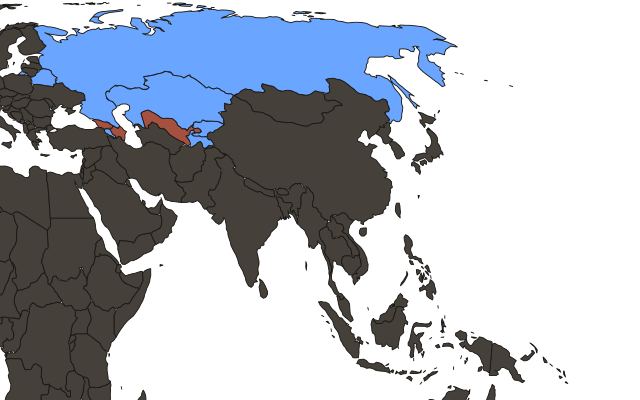 CSTO
Russia and five former Soviet republics. Armenia froze its part in 2024 and lost its vote in 2026.
 Warsaw Pact
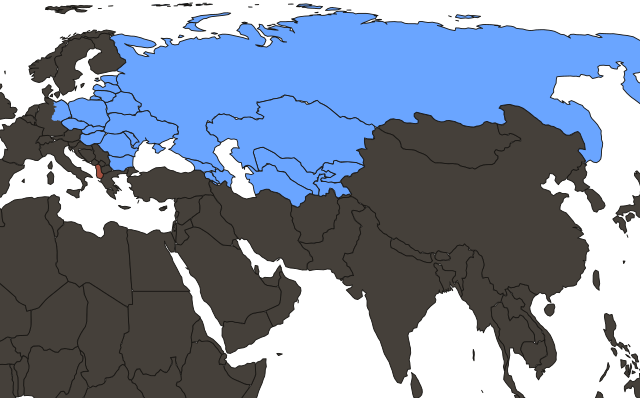
The Soviet Union and seven allies, 1955 to 1991. All non-Soviet members are now in NATO.
All alliances
Who belongs to what
Which alliances each country is in, and how big each one is.
See every country →