
Country profile · South Caucasus
 Armenia
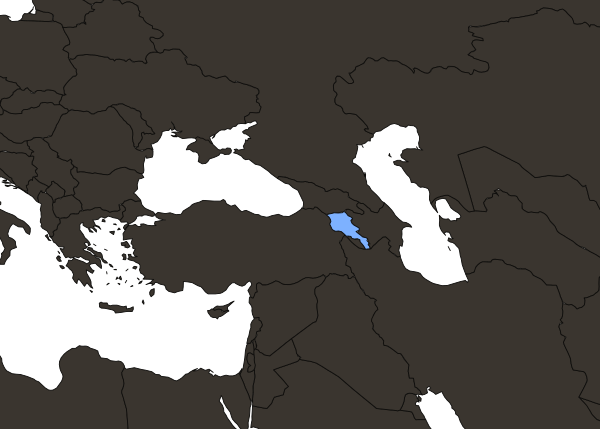
 is a small landlocked country in the South Caucasus with about 3 million people. Prime Minister Nikol Pashinyan has led it since street protests in 2018. After losing Nagorno-Karabakh to Azerbaijan in 2023, Armenia froze its role in Russia's military alliance, began moving toward the EU and the United States, and is negotiating a peace treaty with Azerbaijan.
Where Armenia ranks
All rankings →Which alliances is Armenia in?
All alliances →Who runs Armenia?
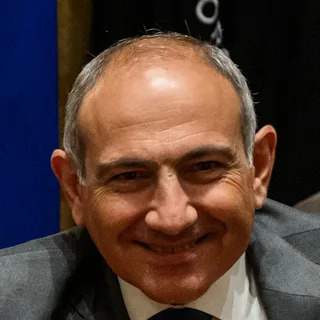
Prime Minister Nikol Pashinyan was born in Ijevan in 1975 and worked as a newspaper editor. In April 2018 mass street protests forced out Prime Minister Serzh Sargsyan. On May 8, 2018, parliament elected Pashinyan prime minister. His party, Civil Contract, won the election of June 7, 2026, with about 49.7% of the vote and 64 of 105 seats (chart). It lost its two-thirds majority, which it would need to call a referendum on a new constitution. The billionaire Samvel Karapetyan's Strong Armenia came second with 29 seats. Karapetyan was arrested in June 2025 for calls to seize power and is under house arrest. In October 2026 the government moved to nationalize his electricity company. Pashinyan is also fighting the Armenian Apostolic Church. Two archbishops were arrested in 2025, and Catholicos Karekin II has been on trial since August 2026 for defying a court order. The president, Vahagn Khachaturyan, is elected by parliament and has a mostly ceremonial role.
- Civil Contract 64
- Strong Armenia (Samvel Karapetyan) 29
- Armenia Alliance (Robert Kocharyan) 12
Photo (August 2025): Daniel Torok, The White House, Wikimedia Commons, public domain (cropped)
Who are Armenia's allies and rivals?
Russia was Armenia's protector for 30 years. It still has a military base at Gyumri with more than 3,000 troops. Armenians felt Russia failed them when Azerbaijan took Nagorno-Karabakh. In February 2024 Armenia froze its role in the Russian-led CSTO alliance and stopped paying dues, though it remains a member. Russian border guards left Yerevan airport in 2024 and the Iran and Turkey border crossings in 2025. India is now Armenia's largest arms supplier, with 43% of its arms imports in 2022 to 2024 (SIPRI). France sells it Caesar howitzers. In March 2025 parliament passed a law to start the process of joining the EU, and the first EU-Armenia summit was held in May 2026. The United States signed a strategic partnership charter with Armenia in January 2025. Iran is a friendly neighbor that swaps gas for Armenian electricity. Turkey has kept its border with Armenia closed since 1993 but lifted its ban on direct trade in May 2026.
Allies and partners
- European UnionFirst EU-Armenia summit in May 2026
 FranceSells Caesar howitzers; Macron visited in May 2026
 IndiaLargest arms supplier (SIPRI, 2022 to 2024)
 United StatesStrategic partnership charter, January 2025
 IranSwaps gas for Armenian electricity
 GeorgiaMain road to Russia and the Black Sea
Rivals and tensions
 AzerbaijanTook Nagorno-Karabakh in 2023; peace treaty not yet signed
 TurkeyBorder closed since 1993; denies the genocide
 RussiaKeeps a base at Gyumri; Armenia froze its CSTO role
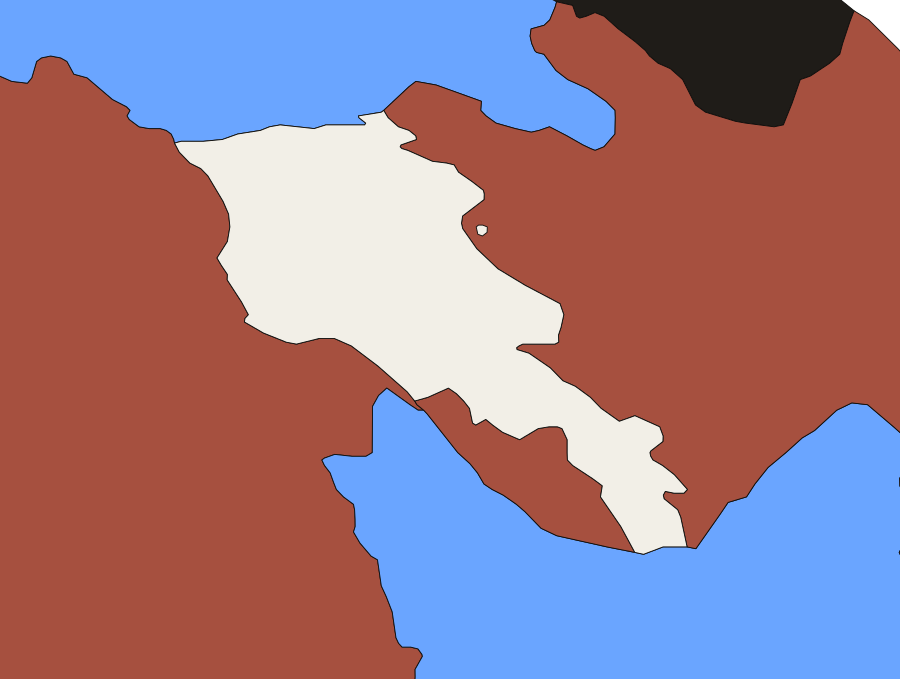
- Gyumri Armenia's second city. Russia's 102nd military base is here, with more than 3,000 troops.
- Metsamor Armenia's only nuclear plant, a Soviet reactor from 1980. It made 29% of the country's electricity in 2025.
- Meghri On the planned TRIPP route, a road and railway linking Azerbaijan to Nakhchivan, to be built by a US-led company.
- Nagorno-Karabakh Azerbaijani region run by Armenians from 1994. Azerbaijan took it in September 2023, and more than 100,000 Armenians fled.
- Armenia
- Partner
- Tensions
Who does Armenia trade with?
Armenia's exports fell to $8.3 billion in 2025 from $13.1 billion in 2024, and its imports were $12.8 billion (UN Comtrade). After 2022 Armenia became a route for goods sold to Russia and for gold sent from Russia to the United Arab Emirates and Hong Kong. Russia's share of Armenia's trade fell from about 41% in 2024 to about 36% in 2025 and about 27% in the first half of 2026. Russia is still the biggest single partner (chart). Exports of precious metals fell 64.5% in 2025, but the economy still grew 7.2%, after 12.6% in 2022. Copper concentrate, brandy and cigarettes are the main goods made in Armenia. Russia supplied about 82% of Armenia's gas imports in 2025, and Gazprom owns the gas network. Gazprom cut deliveries for 10 days in September 2026, citing repairs, and Iran filled the gap. In 2026 Russia also restricted imports of Armenian flowers, fruit, brandy and mineral water.


What happened to Nagorno-Karabakh?
Nagorno-Karabakh is a mountain region inside Azerbaijan where most people were Armenian. Armenian forces won a war over it from 1988 to 1994. In a 44-day war in 2020, Azerbaijan took back the town of Shusha and several districts. Armenia lost about 3,800 soldiers and Azerbaijan about 2,900. Azerbaijan blocked the only road to Armenia from December 2022. On September 19 and 20, 2023, it took the rest of Nagorno-Karabakh in a one-day offensive. More than 100,000 Armenians, almost the whole population, fled to Armenia within days. The breakaway republic dissolved itself on January 1, 2024. Armenia now hosts about 42 refugees per 1,000 people, the eighth highest rate in the world (chart). More than 45,000 refugees have taken Armenian citizenship, and a $250 million World Bank program helps them pay rent and buy homes. Azerbaijan still holds 19 Armenians in prison, including former Karabakh leaders sentenced in 2026 to life or 20 years.


Will Armenia make peace with Azerbaijan?
On August 8, 2025, Prime Minister Nikol Pashinyan and Azerbaijan's President Ilham Aliyev met President Trump at the White House. They signed a joint declaration, and their foreign ministers initialed a 17-article peace treaty. The treaty has not been signed. Aliyev says he will sign only after Armenia removes a reference to Nagorno-Karabakh from its constitution. That needs a referendum, which Pashinyan's party can no longer call alone: it won 64 of 105 seats in June 2026, short of the 70 needed. In October 2026 Pashinyan set a goal of signing by 2031. The deal also created TRIPP, the Trump Route, a road and railway through southern Armenia linking Azerbaijan to its Nakhchivan exclave. A company 74% owned by the United States will run it for 49 years, with an option for 50 more. Armenia keeps sovereignty over the route. Building has not started. No one has been killed on the border in two years, Pashinyan said in October 2026.