
Country profile · East Africa
 South Sudan
South Sudan became independent from Sudan on July 9, 2011, the world's newest country, and has about 12 million people. Salva Kiir has been president ever since, and on September 22, 2026 he dissolved the government and parliament. Oil, piped north through war-torn Sudan, pays for most of the state's budget. One in six South Sudanese is a refugee abroad.
Where South Sudan ranks
All rankings →Which alliances is South Sudan in?
All alliances →Disputed territories involving South Sudan
All disputed territories →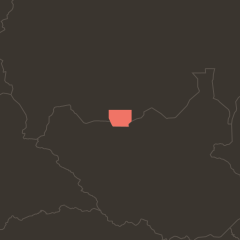
Who runs South Sudan?
President Salva Kiir was born in 1951. He is a Dinka and leads the Sudan People's Liberation Movement (SPLM), the former rebel movement that fought Khartoum. He took over the south in August 2005, after the rebel leader John Garang died in a helicopter crash, and has been president since independence. In December 2013 his rivalry with his deputy, Riek Machar, a Nuer, turned into a civil war. A 2018 peace deal brought Machar back as first vice president. In March 2025 Machar was put under house arrest, and since September 2025 he has been on trial for treason, murder and crimes against humanity. There is no verdict yet. On September 22, 2026 Kiir dissolved the unity government, both houses of parliament and all state governments, and removed all five vice presidents. A caretaker cabinet now serves, and Kiir stays in office until an elected president is sworn in. He changes ministers often: the finance minister named in February 2026 was the ninth in under six years.
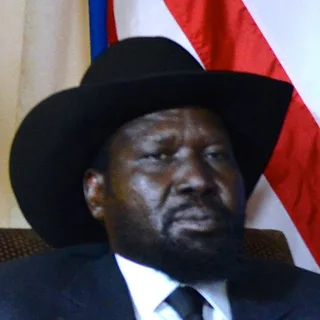
Photo (August 2014): US Department of State, Wikimedia Commons, public domain (cropped)
Who are South Sudan's allies and rivals?
Uganda is President Salva Kiir's closest ally. At his request it sent troops to Juba in March 2025, and a UN commission found that they joined the army's fighting and air strikes. Most imports come by road from Kenya's port of Mombasa through Uganda. A new trade corridor through Ethiopia to Djibouti was signed in February 2026. Sudan is the hardest neighbor. South Sudan's oil can only reach the sea through Sudan's pipelines. When the Rapid Support Forces, a paramilitary at war with Sudan's army, seized the Heglig oil field in December 2025, both sides let South Sudan's army guard it. Both countries claim Abyei, where clashes at a market killed about 40 people in September 2026 (UN). The United States helped South Sudan win independence, but relations have soured. In April 2025 it revoked all South Sudanese visas in a dispute over a deportee, and since January 2026 it has barred entry from South Sudan. Chinese state oil companies co-own the main oil fields.
Allies and partners

Rivals and tensions
 SudanBoth claim Abyei; oil must cross Sudan to the sea
- SPLA-IOMachar's armed wing; fighting the army since 2025
 United StatesEntry ban since January 2026; drafts the UN arms embargo
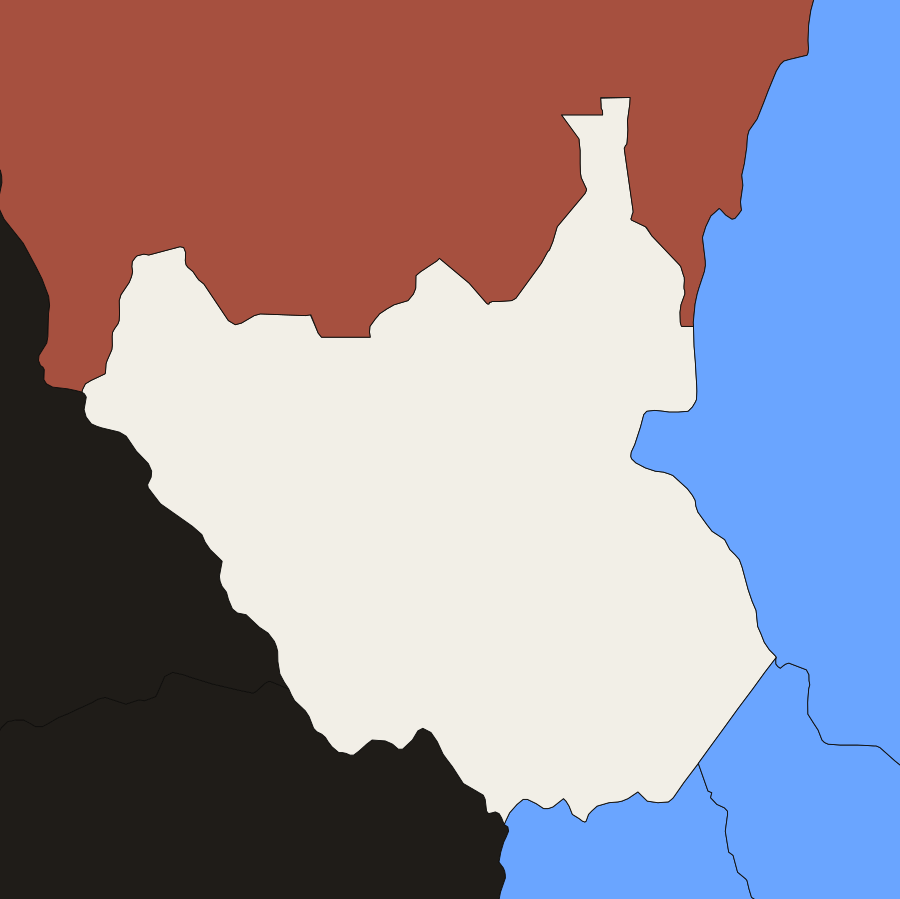
- Juba The capital. Ugandan troops have helped guard it since March 2025.
- Abyei Claimed by both Sudans and guarded by UN troops. About 40 people died in market clashes in September 2026.
- Heglig Sudanese oil field on the export pipeline. South Sudan's army has guarded it since December 2025.
- Nasir The White Army overran the army base here in March 2025. Machar's arrest followed.
- South Sudan
- Partner
- Tensions
Who does South Sudan trade with?
Oil was about 99% of South Sudan's goods exports in 2025, which came to $3.28 billion (UN Comtrade). Before a 2012 shutdown in a dispute with Sudan over transit fees, South Sudan pumped about 350,000 barrels a day. Output fell to about 95,000 in 2024-25, when fighting in Sudan stopped the pipeline for a year, and recovered to about 156,000 in 2025-26 (World Bank). Oil is due to provide about 79% of government revenue in the 2026-27 budget. Much of it is sold before it is pumped. UN experts found 22 cargoes worth over $731 million sold in advance in 2025, some paid to third parties. In May 2026 an English court blocked new advance sales. Most imported goods come by road from Uganda and Kenya (chart). Civil servants were owed 13 to 14 months of pay in July 2026, and prices nearly doubled in 2025 (IMF). Transparency International ranks South Sudan joint last, with Somalia, for corruption.
Sells to
Share of South Sudan's exports
 Malaysia36.7%
 United Arab Emirates19.2%
 Singapore17.4%
 Italy11.7%
 China10.9%
Buys from
Share of South Sudan's imports
 Uganda49.8%
 Kenya15.7%
- China10.8%
- United States5.4%
 India2.9%
Goods, 2025. Exports as reported by South Sudan; imports as reported by the countries that sold the goods. UN Comtrade.
Why is South Sudan still at war?
The 2013 to 2018 civil war caused about 383,000 more deaths than normal, about half of them violent (London School of Hygiene and Tropical Medicine). The 2018 peace deal promised a single army, but by July 2026 none of its unified troops had been deployed (UN). In March 2025 an armed Nuer youth group, the White Army, overran the army base at Nasir. The government arrested Riek Machar, and fighting with his SPLA-IO spread across Jonglei and Upper Nile. In February 2026 a UN human rights commission said the country's leaders were "driving the country towards a full-scale war". Local militias and cattle raiders cause most civilian deaths. About 71 people died in clashes around Rumbek in October 2026. About 2.4 million South Sudanese are refugees abroad, 16% of all South Sudanese, the second-highest share after Venezuela (chart). South Sudan also shelters over 600,000 refugees, most from Sudan. About 7.8 million people, 56%, face acute hunger.
Share of people who have fled their country, end of 2025
Full ranking → Venezuela18.5%
- South Sudan16.4%
 Syria16.0%
 Eritrea13.3%
 Ukraine11.8%
 Central African Republic10.9%
 Afghanistan7.8%
- Sudan5.2%
UNHCR Refugee Population Statistics Database
Will South Sudan hold its first election?
South Sudan has never held a national election as an independent country. The 2018 peace deal set a vote for 2022, and the transition was extended twice, most recently to an election on December 22, 2026. In July 2026 parliament dropped two conditions, a census and a permanent constitution, so the vote could go ahead. But by mid-October no voter had been registered, and registration will be done on paper. In August the election commission said it needed $250 million and had received $21 million. On September 15 President Salva Kiir fired its chairman without giving a reason. The ruling SPLM has named Kiir its candidate. Machar's faction of the SPLM-IO says it will not take part and calls the vote an attempt to legitimize Kiir. The transition legally ends on February 22, 2027, and the African Union and the regional bloc IGAD reject another extension.