Ranking · Economy
Foreign aid by country
Germany gave the most foreign aid in 2025: $29.1 billion, narrowly ahead of the United States at $29.0 billion. The United Kingdom gave $17.2 billion, Japan $16.2 billion and France $14.5 billion. Aid from DAC countries fell to $174.3 billion, a 23.1% drop after inflation and the largest on record. Norway gave the most as a share of income: 1.03% of GNI.
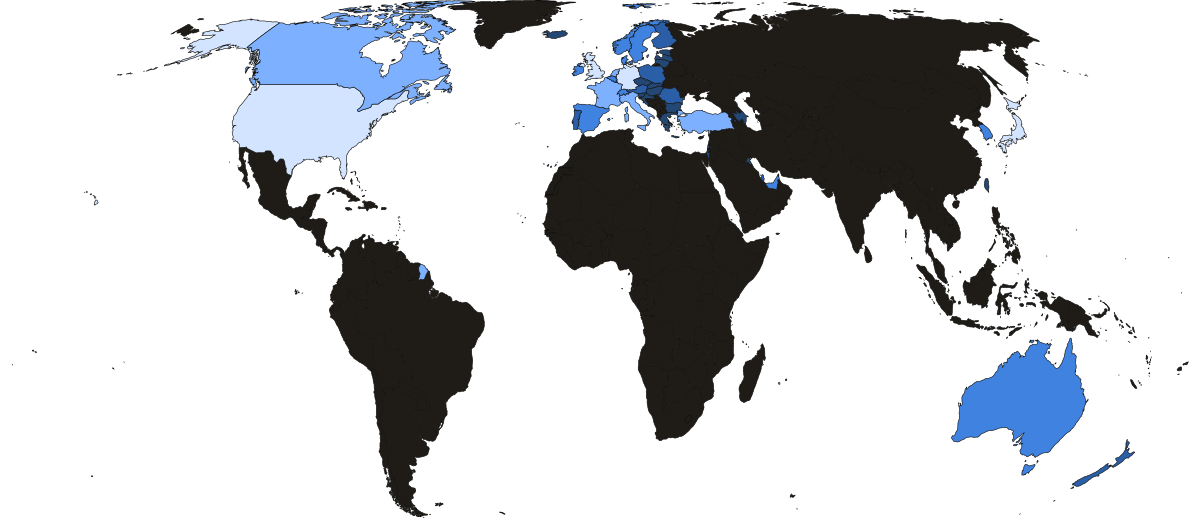
- Under $0.5bn
- $0.5bn–$2bn
- $2bn–$7bn
- $7bn–$15bn
- Over $15bn
- Not in this ranking
- Under 0.15%
- 0.15%–0.3%
- 0.3%–0.5%
- 0.5%–0.7%
- Over 0.7%
- Not in this ranking
- Under $0.5bn
- $0.5bn–$2bn
- $2bn–$7bn
- $7bn–$15bn
- Over $15bn
- Not in this ranking
- Under $0.3bn
- $0.3bn–$1bn
- $1bn–$2bn
- $2bn–$4bn
- Over $4bn
- Not in this ranking
| # | Country | Aid given | Share of GNI | Aid given | Aid received | Change from 2024 |
|---|---|---|---|---|---|---|
| 1 |  Germany Germany |
$29.1bn | 0.56% | $32.8bn | · | −11% |
| 2 |  United States United States |
$28.9bn | 0.09% | $65.5bn | · | −56% |
| 3 |  United Kingdom United Kingdom |
$17.2bn | 0.43% | $18.0bn | · | −5% |
| 4 |  Japan Japan |
$16.2bn | 0.35% | $16.5bn | · | −2% |
| 5 |  France France |
$14.5bn | 0.42% | $15.4bn | · | −6% |
| 6 |  Netherlands Netherlands |
$7.7bn | 0.58% | $7.5bn | · | +2% |
| 7 |  Turkey Turkey |
$7.5bn | 0.50% | $7.4bn | $1.3bn | +2% |
| 8 |  Italy Italy |
$7.3bn | 0.30% | $6.8bn | · | +6% |
| 9 |  Canada Canada |
$7.2bn | 0.32% | $7.4bn | · | −2% |
| 10 |  Sweden Sweden |
$6.0bn | 0.85% | $5.0bn | · | +19% |
| 11 |  Norway Norway |
$5.7bn | 1.03% | $5.2bn | · | +9% |
| 12 |  Spain Spain |
$5.1bn | 0.27% | $4.3bn | · | +18% |
| 13 |  Switzerland Switzerland |
$4.6bn | 0.46% | $4.6bn | · | −1% |
| 14 |  South Korea South Korea |
$3.9bn | 0.20% | $4.0bn | · | −4% |
| 15 |  Denmark Denmark |
$3.4bn | 0.72% | $3.2bn | · | +9% |
| 16 |  United Arab Emirates United Arab Emirates |
$3.4bn | 0.61% | $2.1bn | · | +64% |
| 17 |  Australia Australia |
$3.3bn | 0.18% | $3.4bn | · | −3% |
| 18 |  Belgium Belgium |
$2.7bn | 0.37% | $3.2bn | · | −16% |
| 19 |  Ireland Ireland |
$2.1bn | 0.42% | $2.5bn | · | −18% |
| 20 |  Austria Austria |
$1.8bn | 0.33% | $1.8bn | · | +1% |
| 21 |  Poland Poland |
$1.6bn | 0.16% | $1.8bn | · | −12% |
| 22 |  Finland Finland |
$1.4bn | 0.44% | $1.4bn | · | +0% |
| 23 |  Qatar Qatar |
$911m | 0.43% | $702m | · | +30% |
| 24 |  Luxembourg Luxembourg |
$694m | 0.99% | $597m | · | +16% |
| 25 |  New Zealand New Zealand |
$681m | 0.27% | $783m | · | −13% |
| 26 |  Portugal Portugal |
$603m | 0.19% | $654m | · | −8% |
| 27 |  Romania Romania |
$563m | 0.14% | $587m | · | −4% |
| 28 |  Taiwan Taiwan |
$446m | 0.05% | $404m | · | +10% |
| 29 |  Czechia Czechia |
$436m | 0.12% | $553m | · | −21% |
| 30 |  Greece Greece |
$358m | 0.13% | $372m | · | −4% |
| 31 |  Israel Israel |
$309m | 0.05% | $315m | · | −2% |
| 32 |  Hungary Hungary |
$303m | 0.14% | $190m | · | +60% |
| 33 |  Croatia Croatia |
$226m | 0.24% | $224m | · | +1% |
| 34 |  Kuwait Kuwait |
$218m | 0.11% | $260m | · | −16% |
| 35 |  Slovakia Slovakia |
$200m | 0.13% | $198m | · | +1% |
| 36 |  Lithuania Lithuania |
$192m | 0.21% | $197m | · | −2% |
| 37 |  Slovenia Slovenia |
$171m | 0.22% | $165m | · | +3% |
| 38 |  Bulgaria Bulgaria |
$137m | 0.12% | $144m | · | −5% |
| 39 |  Iceland Iceland |
$130m | 0.34% | $110m | · | +18% |
| 40 |  Estonia Estonia |
$90m | 0.19% | $84m | · | +7% |
| 41 |  Latvia Latvia |
$87m | 0.18% | $88m | · | −2% |
| 42 |  Malta Malta |
$51m | 0.21% | $64m | · | −20% |
| 43 |  Azerbaijan Azerbaijan |
$47m | 0.06% | $61m | $38m | −22% |
| 44 |  Liechtenstein Liechtenstein |
$41m | · | $41m | · | −1% |
| 45 |  Monaco Monaco |
$33m | · | $29m | · | +16% |
| # | Country | Share of GNI | Aid given | Aid given | Aid received | Change from 2024 |
|---|---|---|---|---|---|---|
| 1 | Norway |
1.03% | $5.7bn | $5.2bn | · | +9% |
| 2 | Luxembourg |
0.99% | $694m | $597m | · | +16% |
| 3 | Sweden |
0.85% | $6.0bn | $5.0bn | · | +19% |
| 4 | Denmark |
0.72% | $3.4bn | $3.2bn | · | +9% |
| 5 | United Arab Emirates |
0.61% | $3.4bn | $2.1bn | · | +64% |
| 6 | Netherlands |
0.58% | $7.7bn | $7.5bn | · | +2% |
| 7 | Germany |
0.56% | $29.1bn | $32.8bn | · | −11% |
| 8 | Turkey |
0.50% | $7.5bn | $7.4bn | $1.3bn | +2% |
| 9 | Switzerland |
0.46% | $4.6bn | $4.6bn | · | −1% |
| 10 | Finland |
0.44% | $1.4bn | $1.4bn | · | +0% |
| 11 | United Kingdom |
0.43% | $17.2bn | $18.0bn | · | −5% |
| 12 | Qatar |
0.43% | $911m | $702m | · | +30% |
| 13 | France |
0.42% | $14.5bn | $15.4bn | · | −6% |
| 14 | Ireland |
0.42% | $2.1bn | $2.5bn | · | −18% |
| 15 | Belgium |
0.37% | $2.7bn | $3.2bn | · | −16% |
| 16 | Japan |
0.35% | $16.2bn | $16.5bn | · | −2% |
| 17 | Iceland |
0.34% | $130m | $110m | · | +18% |
| 18 | Austria |
0.33% | $1.8bn | $1.8bn | · | +1% |
| 19 | Canada |
0.32% | $7.2bn | $7.4bn | · | −2% |
| 20 | Italy |
0.30% | $7.3bn | $6.8bn | · | +6% |
| 21 | Spain |
0.27% | $5.1bn | $4.3bn | · | +18% |
| 22 | New Zealand |
0.27% | $681m | $783m | · | −13% |
| 23 | Croatia |
0.24% | $226m | $224m | · | +1% |
| 24 | Slovenia |
0.22% | $171m | $165m | · | +3% |
| 25 | Lithuania |
0.21% | $192m | $197m | · | −2% |
| 26 | Malta |
0.21% | $51m | $64m | · | −20% |
| 27 | South Korea |
0.20% | $3.9bn | $4.0bn | · | −4% |
| 28 | Portugal |
0.19% | $603m | $654m | · | −8% |
| 29 | Estonia |
0.19% | $90m | $84m | · | +7% |
| 30 | Australia |
0.18% | $3.3bn | $3.4bn | · | −3% |
| 31 | Latvia |
0.18% | $87m | $88m | · | −2% |
| 32 | Poland |
0.16% | $1.6bn | $1.8bn | · | −12% |
| 33 | Romania |
0.14% | $563m | $587m | · | −4% |
| 34 | Hungary |
0.14% | $303m | $190m | · | +60% |
| 35 | Greece |
0.13% | $358m | $372m | · | −4% |
| 36 | Slovakia |
0.13% | $200m | $198m | · | +1% |
| 37 | Czechia |
0.12% | $436m | $553m | · | −21% |
| 38 | Bulgaria |
0.12% | $137m | $144m | · | −5% |
| 39 | Kuwait |
0.11% | $218m | $260m | · | −16% |
| 40 | United States |
0.09% | $28.9bn | $65.5bn | · | −56% |
| 41 | Azerbaijan |
0.06% | $47m | $61m | $38m | −22% |
| 42 | Taiwan |
0.05% | $446m | $404m | · | +10% |
| 43 | Israel |
0.05% | $309m | $315m | · | −2% |
| # | Country | Aid given | Aid given | Share of GNI | Aid received | Change from 2024 |
|---|---|---|---|---|---|---|
| 1 | United States |
$65.5bn | $28.9bn | 0.09% | · | −56% |
| 2 | Germany |
$32.8bn | $29.1bn | 0.56% | · | −11% |
| 3 | United Kingdom |
$18.0bn | $17.2bn | 0.43% | · | −5% |
| 4 | Japan |
$16.5bn | $16.2bn | 0.35% | · | −2% |
| 5 | France |
$15.4bn | $14.5bn | 0.42% | · | −6% |
| 6 | Netherlands |
$7.5bn | $7.7bn | 0.58% | · | +2% |
| 7 | Turkey |
$7.4bn | $7.5bn | 0.50% | $1.3bn | +2% |
| 8 | Canada |
$7.4bn | $7.2bn | 0.32% | · | −2% |
| 9 | Italy |
$6.8bn | $7.3bn | 0.30% | · | +6% |
| 10 |  Saudi Arabia Saudi Arabia |
$5.6bn | · | · | · | |
| 11 | Norway |
$5.2bn | $5.7bn | 1.03% | · | +9% |
| 12 | Sweden |
$5.0bn | $6.0bn | 0.85% | · | +19% |
| 13 | Switzerland |
$4.6bn | $4.6bn | 0.46% | · | −1% |
| 14 | Spain |
$4.3bn | $5.1bn | 0.27% | · | +18% |
| 15 | South Korea |
$4.0bn | $3.9bn | 0.20% | · | −4% |
| 16 | Australia |
$3.4bn | $3.3bn | 0.18% | · | −3% |
| 17 | Belgium |
$3.2bn | $2.7bn | 0.37% | · | −16% |
| 18 | Denmark |
$3.2bn | $3.4bn | 0.72% | · | +9% |
| 19 | Ireland |
$2.5bn | $2.1bn | 0.42% | · | −18% |
| 20 | United Arab Emirates |
$2.1bn | $3.4bn | 0.61% | · | +64% |
| 21 | Poland |
$1.8bn | $1.6bn | 0.16% | · | −12% |
| 22 | Austria |
$1.8bn | $1.8bn | 0.33% | · | +1% |
| 23 | Finland |
$1.4bn | $1.4bn | 0.44% | · | +0% |
| 24 | New Zealand |
$783m | $681m | 0.27% | · | −13% |
| 25 | Qatar |
$702m | $911m | 0.43% | · | +30% |
| 26 | Portugal |
$654m | $603m | 0.19% | · | −8% |
| 27 | Luxembourg |
$597m | $694m | 0.99% | · | +16% |
| 28 | Romania |
$587m | $563m | 0.14% | · | −4% |
| 29 | Czechia |
$553m | $436m | 0.12% | · | −21% |
| 30 | Taiwan |
$404m | $446m | 0.05% | · | +10% |
| 31 | Greece |
$372m | $358m | 0.13% | · | −4% |
| 32 | Israel |
$315m | $309m | 0.05% | · | −2% |
| 33 | Kuwait |
$260m | $218m | 0.11% | · | −16% |
| 34 | Croatia |
$224m | $226m | 0.24% | · | +1% |
| 35 | Slovakia |
$198m | $200m | 0.13% | · | +1% |
| 36 | Lithuania |
$197m | $192m | 0.21% | · | −2% |
| 37 | Hungary |
$190m | $303m | 0.14% | · | +60% |
| 38 | Slovenia |
$165m | $171m | 0.22% | · | +3% |
| 39 | Bulgaria |
$144m | $137m | 0.12% | · | −5% |
| 40 | Iceland |
$110m | $130m | 0.34% | · | +18% |
| 41 | Latvia |
$88m | $87m | 0.18% | · | −2% |
| 42 | Estonia |
$84m | $90m | 0.19% | · | +7% |
| 43 | Malta |
$64m | $51m | 0.21% | · | −20% |
| 44 | Azerbaijan |
$61m | $47m | 0.06% | $38m | −22% |
| 45 |  Thailand Thailand |
$60m | · | · | $20m | |
| 46 |  Kazakhstan Kazakhstan |
$50m | · | · | $84m | |
| 47 | Liechtenstein |
$41m | $41m | · | · | −1% |
| 48 | Monaco |
$29m | $33m | · | · | +16% |
| 49 |  Cyprus Cyprus |
$13m | · | · | · |
| # | Country | Aid received | Aid given | Share of GNI | Aid given | Change from 2024 |
|---|---|---|---|---|---|---|
| 1 |  Ukraine Ukraine |
$35.6bn | · | · | · | |
| 2 |  Syria Syria |
$8.2bn | · | · | · | |
| 3 |  Ethiopia Ethiopia |
$7.8bn | · | · | · | |
| 4 |  Bangladesh Bangladesh |
$5.1bn | · | · | · | |
| 5 |  Pakistan Pakistan |
$4.6bn | · | · | · | |
| 6 |  Palestine Palestine |
$4.4bn | · | · | · | |
| 7 |  Nigeria Nigeria |
$4.1bn | · | · | · | |
| 8 |  DR Congo DR Congo |
$4.0bn | · | · | · | |
| 9 |  Tanzania Tanzania |
$3.3bn | · | · | · | |
| 10 |  Kenya Kenya |
$3.1bn | · | · | · | |
| 11 |  Yemen Yemen |
$3.1bn | · | · | · | |
| 12 |  Ghana Ghana |
$2.8bn | · | · | · | |
| 13 |  Mozambique Mozambique |
$2.8bn | · | · | · | |
| 14 |  Jordan Jordan |
$2.7bn | · | · | · | |
| 15 |  Uzbekistan Uzbekistan |
$2.6bn | · | · | · | |
| 16 |  Somalia Somalia |
$2.5bn | · | · | · | |
| 17 |  Côte d'Ivoire Côte d'Ivoire |
$2.4bn | · | · | · | |
| 18 |  Zambia Zambia |
$2.3bn | · | · | · | |
| 19 |  Uganda Uganda |
$2.2bn | · | · | · | |
| 20 |  Afghanistan Afghanistan |
$2.2bn | · | · | · | |
| 21 |  India India |
$2.1bn | · | · | · | |
| 22 |  Sudan Sudan |
$2.0bn | · | · | · | |
| 23 |  Chad Chad |
$1.8bn | · | · | · | |
| 24 |  Iraq Iraq |
$1.8bn | · | · | · | |
| 25 |  South Sudan South Sudan |
$1.7bn | · | · | · | |
| 26 |  Lebanon Lebanon |
$1.7bn | · | · | · | |
| 27 |  Cambodia Cambodia |
$1.6bn | · | · | · | |
| 28 |  South Africa South Africa |
$1.6bn | · | · | · | |
| 29 |  Malawi Malawi |
$1.6bn | · | · | · | |
| 30 |  Rwanda Rwanda |
$1.6bn | · | · | · | |
| 31 |  Burkina Faso Burkina Faso |
$1.5bn | · | · | · | |
| 32 |  Colombia Colombia |
$1.4bn | · | · | · | |
| 33 | Turkey |
$1.3bn | $7.5bn | 0.50% | $7.4bn | +2% |
| 34 |  Madagascar Madagascar |
$1.3bn | · | · | · | |
| 35 |  Nepal Nepal |
$1.2bn | · | · | · | |
| 36 |  Haiti Haiti |
$1.2bn | · | · | · | |
| 37 |  Senegal Senegal |
$1.2bn | · | · | · | |
| 38 |  Indonesia Indonesia |
$1.1bn | · | · | · | |
| 39 |  Niger Niger |
$1.1bn | · | · | · | |
| 40 |  Benin Benin |
$1.1bn | · | · | · | |
| 41 |  Philippines Philippines |
$1.1bn | · | · | · | |
| 42 |  Mali Mali |
$1.1bn | · | · | · | |
| 43 |  Myanmar Myanmar |
$1.1bn | · | · | · | |
| 44 |  Sri Lanka Sri Lanka |
$1.1bn | · | · | · | |
| 45 |  Papua New Guinea Papua New Guinea |
$1.1bn | · | · | · | |
| 46 |  Morocco Morocco |
$1.0bn | · | · | · | |
| 47 |  Cameroon Cameroon |
$988m | · | · | · | |
| 48 |  Tunisia Tunisia |
$968m | · | · | · | |
| 49 |  Moldova Moldova |
$939m | · | · | · | |
| 50 |  Zimbabwe Zimbabwe |
$879m | · | · | · | |
| 51 |  Honduras Honduras |
$807m | · | · | · | |
| 52 |  Togo Togo |
$795m | · | · | · | |
| 53 |  Peru Peru |
$737m | · | · | · | |
| 54 |  Marshall Islands Marshall Islands |
$710m | · | · | · | |
| 55 |  Mexico Mexico |
$708m | · | · | · | |
| 56 |  Micronesia Micronesia |
$667m | · | · | · | |
| 57 |  Egypt Egypt |
$664m | · | · | · | |
| 58 |  Guinea Guinea |
$657m | · | · | · | |
| 59 |  Burundi Burundi |
$616m | · | · | · | |
| 60 |  Central African Republic Central African Republic |
$560m | · | · | · | |
| 61 |  Laos Laos |
$545m | · | · | · | |
| 62 |  Brazil Brazil |
$533m | · | · | · | |
| 63 |  Sierra Leone Sierra Leone |
$516m | · | · | · | |
| 64 |  Guatemala Guatemala |
$485m | · | · | · | |
| 65 |  Mongolia Mongolia |
$471m | · | · | · | |
| 66 |  Liberia Liberia |
$463m | · | · | · | |
| 67 |  Tajikistan Tajikistan |
$454m | · | · | · | |
| 68 |  Ecuador Ecuador |
$443m | · | · | · | |
| 69 |  Serbia Serbia |
$427m | · | · | · | |
| 70 |  Panama Panama |
$400m | · | · | · | |
| 71 |  Kyrgyzstan Kyrgyzstan |
$387m | · | · | · | |
| 72 |  Mauritania Mauritania |
$381m | · | · | · | |
| 73 |  Fiji Fiji |
$377m | · | · | · | |
| 74 |  El Salvador El Salvador |
$370m | · | · | · | |
| 75 |  Nicaragua Nicaragua |
$367m | · | · | · | |
| 76 |  Venezuela Venezuela |
$365m | · | · | · | |
| 77 |  Gambia Gambia |
$357m | · | · | · | |
| 78 |  Namibia Namibia |
$339m | · | · | · | |
| 79 |  Bosnia and Herzegovina Bosnia and Herzegovina |
$331m | · | · | · | |
| 80 |  Dominican Republic Dominican Republic |
$325m | · | · | · | |
| 81 |  Albania Albania |
$303m | · | · | · | |
| 82 |  Armenia Armenia |
$300m | · | · | · | |
| 83 |  Libya Libya |
$291m | · | · | · | |
| 84 |  Iran Iran |
$284m | · | · | · | |
| 85 |  Solomon Islands Solomon Islands |
$283m | · | · | · | |
| 86 |  North Macedonia North Macedonia |
$253m | · | · | · | |
| 87 |  Republic of the Congo Republic of the Congo |
$249m | · | · | · | |
| 88 |  Algeria Algeria |
$241m | · | · | · | |
| 89 |  Timor-Leste Timor-Leste |
$236m | · | · | · | |
| 90 |  Angola Angola |
$226m | · | · | · | |
| 91 |  Lesotho Lesotho |
$215m | · | · | · | |
| 92 |  Comoros Comoros |
$197m | · | · | · | |
| 93 |  Palau Palau |
$194m | · | · | · | |
| 94 |  Costa Rica Costa Rica |
$179m | · | · | · | |
| 95 |  Maldives Maldives |
$173m | · | · | · | |
| 96 |  Bolivia Bolivia |
$172m | · | · | · | |
| 97 |  Georgia Georgia |
$167m | · | · | · | |
| 98 |  Vanuatu Vanuatu |
$163m | · | · | · | |
| 99 |  Eritrea Eritrea |
$163m | · | · | · | |
| 100 |  Guinea-Bissau Guinea-Bissau |
$162m | · | · | · | |
| 101 |  Cuba Cuba |
$162m | · | · | · | |
| 102 |  Guyana Guyana |
$158m | · | · | · | |
| 103 |  Djibouti Djibouti |
$153m | · | · | · | |
| 104 |  Tonga Tonga |
$148m | · | · | · | |
| 105 |  Belarus Belarus |
$142m | · | · | · | |
| 106 |  Paraguay Paraguay |
$141m | · | · | · | |
| 107 |  Montenegro Montenegro |
$121m | · | · | · | |
| 108 |  São Tomé and Príncipe São Tomé and Príncipe |
$120m | · | · | · | |
| 109 |  Samoa Samoa |
$117m | · | · | · | |
| 110 |  Bhutan Bhutan |
$114m | · | · | · | |
| 111 |  Eswatini Eswatini |
$105m | · | · | · | |
| 112 |  Jamaica Jamaica |
$105m | · | · | · | |
| 113 |  Cape Verde Cape Verde |
$103m | · | · | · | |
| 114 |  Tuvalu Tuvalu |
$101m | · | · | · | |
| 115 |  Kiribati Kiribati |
$86m | · | · | · | |
| 116 | Kazakhstan |
$84m | · | · | $50m | |
| 117 |  Botswana Botswana |
$81m | · | · | · | |
| 118 |  Turkmenistan Turkmenistan |
$80m | · | · | · | |
| 119 |  Saint Lucia Saint Lucia |
$76m | · | · | · | |
| 120 |  Mauritius Mauritius |
$69m | · | · | · | |
| 121 |  Nauru Nauru |
$46m | · | · | · | |
| 122 |  Belize Belize |
$43m | · | · | · | |
| 123 |  Gabon Gabon |
$43m | · | · | · | |
| 124 | Azerbaijan |
$38m | $47m | 0.06% | $61m | −22% |
| 125 |  Argentina Argentina |
$32m | · | · | · | |
| 126 |  Saint Vincent and the Grenadines Saint Vincent and the Grenadines |
$32m | · | · | · | |
| 127 |  Malaysia Malaysia |
$26m | · | · | · | |
| 128 | Thailand |
$20m | · | · | $60m | |
| 129 |  Equatorial Guinea Equatorial Guinea |
$14m | · | · | · | |
| 130 |  Dominica Dominica |
$14m | · | · | · | |
| 131 |  North Korea North Korea |
$13m | · | · | · | |
| 132 |  Suriname Suriname |
$12m | · | · | · | |
| 133 |  Grenada Grenada |
$8m | · | · | · |
Why they rank where they do
-
Germany
Germany became the largest donor for the first time in 2025. About 17% of Germany's aid paid for hosting refugees in their first year, and 8.5% covered the cost of students from developing countries.
-
United States
US aid fell 56.9% after inflation, the largest cut by any donor on record. USAID stopped implementing foreign aid on July 1, 2025, and the State Department took over its remaining programs.
-
United Kingdom
In February 2025 the UK government announced it would cut aid from 0.5% to 0.3% of GNI by 2027 to pay for defense. The 2025 figure of 0.43% is a step on the way down.
-
Japan
More than half of Japan's aid is loans, at 58.4% in 2024, the highest share among DAC members. Japan was the world's largest donor from 1991 to 2000.
-
France
A 2021 law said France would "strive" to reach 0.7% of GNI in 2025. Instead, French aid fell 10.9% after inflation, to 0.42% of GNI, and the 2026 budget cut aid by a further 803 million euros.
-
Turkey
In 2024, 83.1% of Turkey's bilateral aid was humanitarian, and Syria was by far the main recipient. Development Initiatives said Turkey's 2020 humanitarian aid was largely spent hosting Syrian refugees in Turkey.
-
Sweden
In December 2025, Sweden's government said it would phase out aid to Zimbabwe, Tanzania, Mozambique, Liberia and Bolivia and raise aid to Ukraine to at least SEK 10 billion in 2026.
-
Norway
Norway was the most generous donor by share of income at 1.03% of GNI. Only Norway, Luxembourg, Sweden and Denmark exceeded the UN's 0.7% target in 2025.
-
United Arab Emirates
The OECD says UAE aid rose 55.5% after inflation in 2025, to 0.61% of GNI. More than four-fifths of UAE bilateral aid went to places the OECD rates as highly or extremely fragile.
-
Luxembourg
Luxembourg's aid has been at about 1% of GNI since 2009, according to the Luxembourg government. The 2025 figure of 0.99% is just under that level.
-
Ethiopia
The World Bank approved $1.5 billion in budget support for Ethiopia in July 2024, after Ethiopia floated its currency. The World Bank said over $16.6 billion could follow over three years.
-
Ukraine
Ukraine received $35.6 billion in 2024, more than the next six recipients combined. The EU paid Ukraine 16.1 billion euros in 2024 through its Ukraine Facility, a fund of up to 50 billion euros for 2024 to 2027.
Which country gives the most foreign aid?
Germany gave $29.1 billion in 2025, narrowly passing the United States at $29.0 billion. This was the first time Germany has been the largest donor. The 2025 data is preliminary, and the gap is small enough that revisions could reverse the order. The five largest donors, Germany, the US, the UK, Japan and France, gave 60.8% of DAC aid and accounted for 95.7% of the fall. Measured as a share of income rather than in dollars, Norway was the most generous donor at 1.03% of GNI.
- Germany$29.1bn
- United States$28.9bn
- United Kingdom$17.2bn
- Japan$16.2bn
- France$14.5bn
- Netherlands$7.7bn
- Turkey$7.5bn
- Italy$7.3bn
- Canada$7.2bn
- Sweden$6.0bn
How much did global foreign aid fall in 2025?
Aid from DAC countries fell from $215.1 billion in 2024 to $174.3 billion in 2025. After inflation, that was a 23.1% drop, the largest annual fall on record. The OECD says aid is back to its 2015 level. The US drove most of the decline: US aid fell from $65.5 billion to $29.0 billion, and the US alone accounted for 75.1% of the total fall. US aid through multilateral bodies fell 87.2%. Humanitarian aid fell 35.8% to $15.5 billion. Aid to the least developed countries fell 25.8% and aid to sub-Saharan Africa fell 26.3%.
- United States−56%
- Azerbaijan−22%
- Czechia−21%
- Malta−20%
- Ireland−18%
- Kuwait−16%
- Belgium−16%
- New Zealand−13%
Which countries meet the UN 0.7% foreign aid target?
In October 1970 the UN set a target of 0.7% of national income for foreign aid. In 2025 only four countries exceeded it: Norway at 1.03%, Luxembourg at 0.99%, Sweden at 0.85% and Denmark at 0.72%. All four increased their aid that year. DAC donors together gave 0.26% of their combined GNI. The United States gave 0.09% of GNI. The US never committed to specific targets or timetables for the 0.7% goal.
- Norway1.03%
- Luxembourg0.99%
- Sweden0.85%
- Denmark0.72%
- United Arab Emirates0.61%
- Netherlands0.58%
- Germany0.56%
- Turkey0.50%
Which countries receive the most foreign aid?
Ukraine received $35.6 billion in 2024, more than the next six recipients combined. Much of it was budget support from the EU and others. Syria was second at $8.2 billion. Turkey reported about $6.1 billion of humanitarian aid in 2024, and Syria was by far its main recipient. Ethiopia received $7.8 billion, Bangladesh $5.1 billion and Pakistan $4.6 billion. The recipient figures are 2024 data and use a different measure than the donor figures: they count net flows, meaning loan disbursements minus repayments.
- Ukraine$35.6bn
- Syria$8.2bn
- Ethiopia$7.8bn
- Bangladesh$5.1bn
- Pakistan$4.6bn
- Palestine$4.4bn
- Nigeria$4.1bn
- DR Congo$4.0bn