
Resource · Precious metal
Platinum and palladium
South Africa mined 52% of the world's platinum and palladium combined in 2025, about 190 of 363 tonnes, and 71% of the platinum. Russia mined 43% of the palladium, mostly at Nornickel's Norilsk mines. Vehicle catalytic converters took 81% of the palladium used. Platinum hit a record of about $2,920 an ounce on January 26, 2026.
- Mined in 2025
- 363 t
- 169 t of platinum and 194 t of palladium
- Largest miner
 52.4%
- of both metals combined, 2025
- Russia's palladium share
 43%
- 84 tonnes, 2025, mostly Nornickel
- Into vehicle catalysts
- 81%
- of palladium used in 2025, and 42% of platinum
- Record platinum price
- $2,920
- an ounce, January 26, 2026
Which countries mine the most platinum and palladium?
South Africa mined 52% of the world's platinum and palladium combined in 2025, about 190 of 363 tonnes. Russia mined 29% (104 tonnes), Zimbabwe 9% (33 tonnes), Canada 6% (21 tonnes) and the United States 2% (8 tonnes). These five countries mine about 98% of the world total.
South Africa holds about 83% of the world's reserves of platinum-group metals, nearly all of them in the Bushveld Complex. Russia's come from Nornickel's nickel and copper mines at Norilsk, and Canada's mostly from nickel mines. South Africa's output fell an estimated 9% in 2025 because of low palladium prices, deep-mine costs and power cuts.
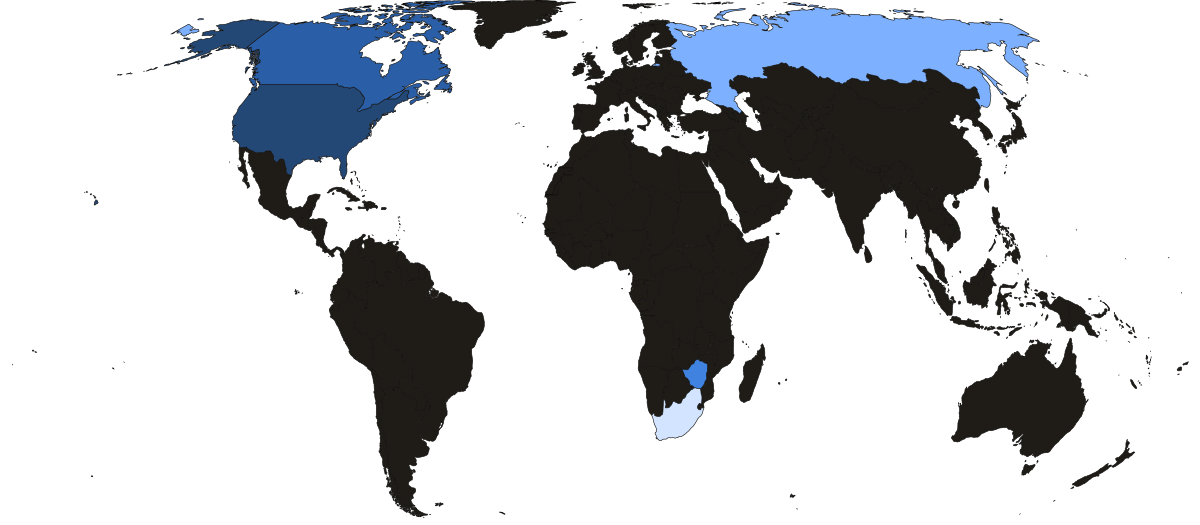
Share of world platinum and palladium mine output combined, 2025
- South Africa52.4%
- Russia28.7%
 Zimbabwe9.1%
 Canada5.8%
 United States2.2%
- Everyone else1.8%
- Under 3%
- 3%–8%
- 8%–20%
- 20%–40%
- Over 40%
- No production
Who mines the most platinum?
South Africa mined about 120 tonnes of platinum in 2025, 71% of the world's 169 tonnes. Russia produced 20 tonnes (12%), Zimbabwe 18 tonnes (11%), Canada 5 tonnes and the United States 1.8 tonnes. South Africa's output fell from 126 tonnes in 2024, in part after flooding hit Valterra Platinum's Amandelbult mine.
Platinum was in deficit for a third straight year in 2025. Johnson Matthey put the deficit at 915,000 troy ounces (about 28 tonnes). The World Platinum Investment Council revised its 2025 deficit to over 1.4 million ounces. Zimbabwe's Zimplats sends its matte to Impala Platinum's refinery in Springs, South Africa, for final processing.
Who mines the most platinum
Share of world platinum mine output, 2025
- South Africa71%
- Russia11.9%
- Zimbabwe10.7%
- Canada3.0%
- United States1.1%
- Everyone else2.3%
Who mines the most palladium?
Russia mined about 84 tonnes of palladium in 2025, 43% of the world's 194 tonnes, almost all of it at Nornickel's Norilsk mines. Nornickel expects its lowest palladium output since at least 2005 in 2026. South Africa mined 70 tonnes (36%), Canada 16 tonnes, Zimbabwe 15 tonnes and the United States 6.2 tonnes.
In July 2025, Sibanye-Stillwater, which mines palladium in Montana, and the United Steelworkers asked for US duties on Russian palladium. US imports from Russia stopped in August 2025. On May 29, 2026, the US International Trade Commission ruled 3-0 that the imports did not injure US industry, so no duties were imposed. Sibanye-Stillwater appealed in July 2026.
Who mines the most palladium
Share of world palladium mine output, 2025
- Russia43%
- South Africa36%
- Canada8.2%
- Zimbabwe7.7%
- United States3.2%
- Everyone else1.5%
What are platinum and palladium used for?
About 81% of the palladium used in 2025 went into catalytic converters for petrol and diesel cars and trucks. Platinum's uses are more spread out: 42% went into vehicle catalysts, 19% into jewelry, 8% into chemicals, 7% into investment and 5% into glass.
Battery electric cars have no catalytic converter, so their growth cuts demand for both metals. Hybrids and plug-in hybrids still carry catalysts. Electric cars, including plug-in hybrids, were 25% of global car sales in 2025, according to the International Energy Agency. Johnson Matthey expects vehicle demand for these metals to fall 4 to 5% in 2026.
What the world's platinum went into in 2025
Share of platinum demand, 2025
- Catalytic converters in cars and trucks42%
- Jewelry19%
- Chemicals7.7%
- Investment6.9%
- Glass5.3%
- Other uses20%
In numbers
- 81%of the palladium used in 2025 went into catalytic converters in cars and trucks
- 25%of new cars sold worldwide in 2025 were electric, including plug-in hybrids (IEA)
- -19%palladium used in vehicles in 2026 (forecast) compared with 2019
- 30%of the world's platinum was used in China in 2025, the most of any country
Why did platinum prices jump?
Johnson Matthey gives reasons for platinum's rise from an average of $955 an ounce in 2024. Fears of US tariffs pulled metal into New York warehouses and left London short. In December 2025, heavy trading on China's new Guangzhou platinum futures market lifted the price to an all-time high above $2,300. It peaked at about $2,920 on January 26, 2026.
Platinum fell to $1,908 by the end of March 2026, after war broke out in Iran. On November 4, 2026, it closed at about $1,500, about half its record. Palladium peaked at $3,441 on March 7, 2022, after Russia invaded Ukraine. In early November 2026 it traded at about $1,000.
The price of platinum, yearly average
US dollars per troy ounce
History
Which country mined the most platinum before World War I?
Russia mined 93% of the world's platinum in 1913, from river gravels in the Ural Mountains. From 1828 to 1845, Russia minted platinum coins of 3, 6 and 12 roubles. No other country has put platinum coins into general circulation. Finance Minister Georg Kankrin went ahead even though Alexander von Humboldt had warned him in 1827 that platinum's value could not be kept stable. In 1913, French firms controlled 74% of world output.
During the First World War, platinum was the catalyst for making acids for explosives. In May 1918, the United States fixed its price at $105 an ounce, about five times the price of gold. Russian output fell by more than four fifths between 1913 and 1917, as war and revolution disrupted the Ural mines. In 1924, the geologist Hans Merensky traced a platinum-bearing rock layer in South Africa, now called the Merensky Reef. By the 1950s, South Africa was the world's largest platinum producer.
Share of world platinum mine output
19132025- Russia93%12%
- South Africa0%71%
- Zimbabwe0%11%
- Canada0%3%
- United States0.2%1.1%
History
How Gulag prisoners built Norilsk, the source of Soviet palladium
Norilsk, the Arctic city where Russia mines most of its palladium, was built by prisoners of the Gulag. On June 25, 1935, the NKVD chief, Genrikh Yagoda, signed the order that set up the Norillag camp to build a nickel works there. The camp held about 1,200 prisoners in 1935, 9,000 in 1937 and 72,500 at its peak in 1951. The prisoners included the historian Lev Gumilyov, son of the poets Anna Akhmatova and Nikolay Gumilyov.
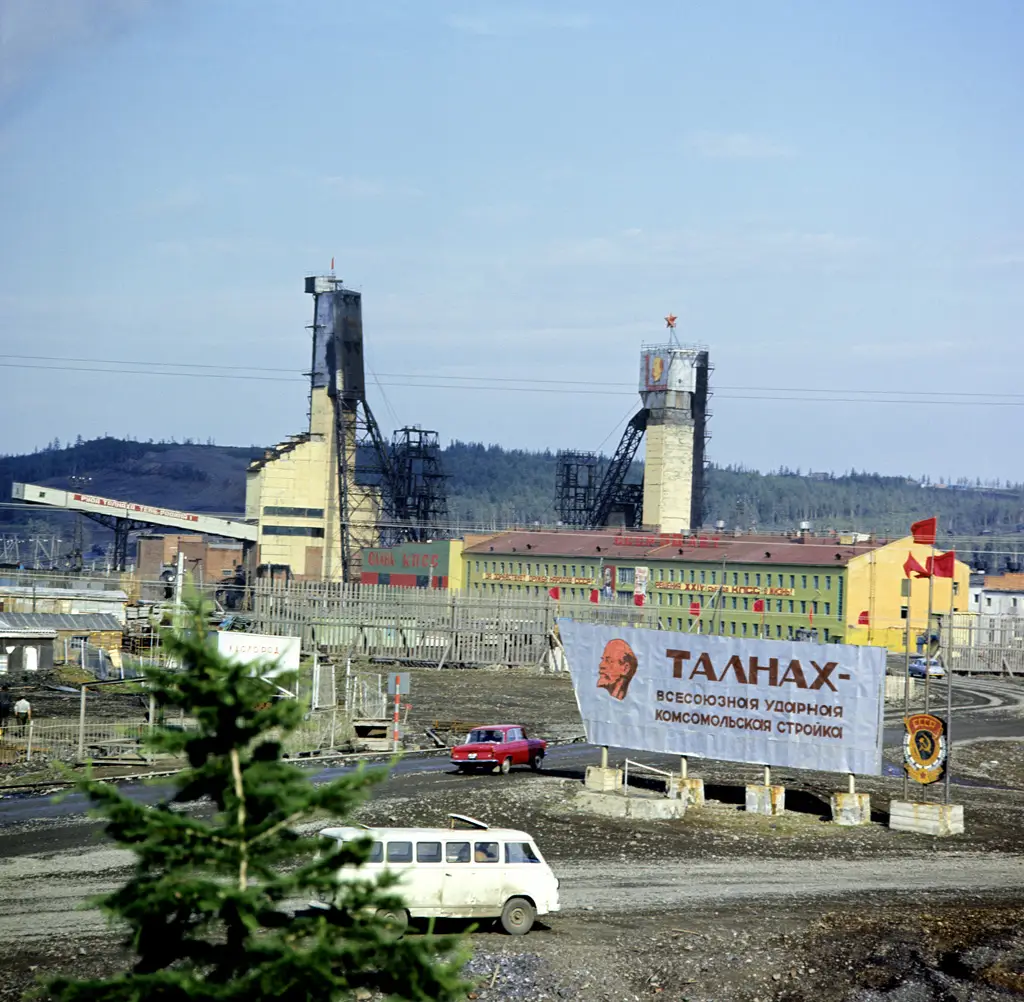
On May 26, 1953, less than three months after Joseph Stalin's death, prisoners of Gorlag, a camp for political prisoners at Norilsk, went on strike after guards shot several inmates. About 16,000 joined. Troops crushed the strike by August 4, 1953. Estimates of the prisoners killed range from dozens to several hundred. By then, Norilsk produced 90% of the Soviet Union's platinum-group metals. Geologists found the rich Talnakh deposit nearby in 1960. By 1964, the Soviet Union was the world's leading supplier of palladium.
History
Why US sanctions on apartheid South Africa spared its platinum
The United States kept buying South African platinum under apartheid because the only other large supplier was the Soviet Union. From 1974, Impala Platinum supplied General Motors with up to 300,000 ounces of platinum a year for catalytic converters. In October 1986, Congress passed the Comprehensive Anti-Apartheid Act over President Ronald Reagan's veto. It banned imports from South African state companies but exempted strategic minerals not available from reliable suppliers. The State Department did not count the Soviet Union as reliable. On February 11, 1987, it put platinum-group metals on the exempt list.
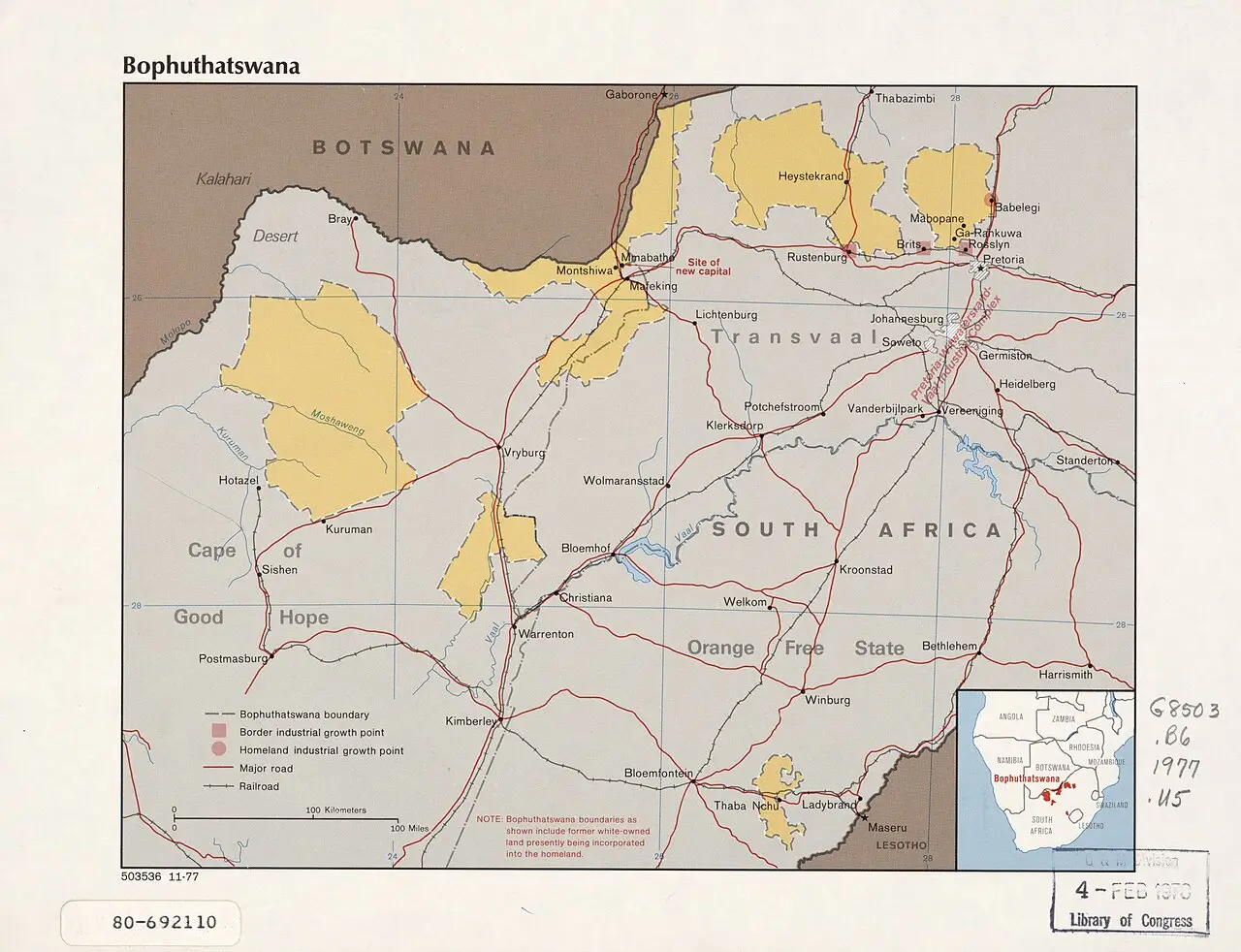
Much of the platinum belt lay in Bophuthatswana, a homeland that South Africa declared independent in 1977. No country except South Africa recognized it. Its president, Lucas Mangope, detained the Bafokeng chief, Lebone Molotlegi, on whose land Impala mined, until he fled to Botswana. South Africa removed Mangope in March 1994. The Bafokeng then sued Impala, and a 1999 settlement gave them a 22% royalty.
Other resources
All 33 resources →
 China 11.5%
Precious metal
Gold
China mines the most gold. Central banks have bought about 1,000 tonnes a year since 2022.
 Indonesia 67%
Battery metal
Nickel
Indonesia mines 67% of the world's nickel; Chinese firms run 75% of its smelters.
 China 69%
Critical mineral
Rare earths
China mines 69% of rare earths, refines 85% and makes 94% of the magnets.