
Resource · Precious metal
Gold
China mined the most gold in 2025, 380 tonnes or 11.5% of the world's 3,300 tonnes. Russia and Australia came next. Switzerland refines most of the world's gold and exported $196 billion of it in 2025. Central banks bought over 1,000 tonnes a year in 2022-2024. Gold hit a record of about $5,595 an ounce in January 2026.
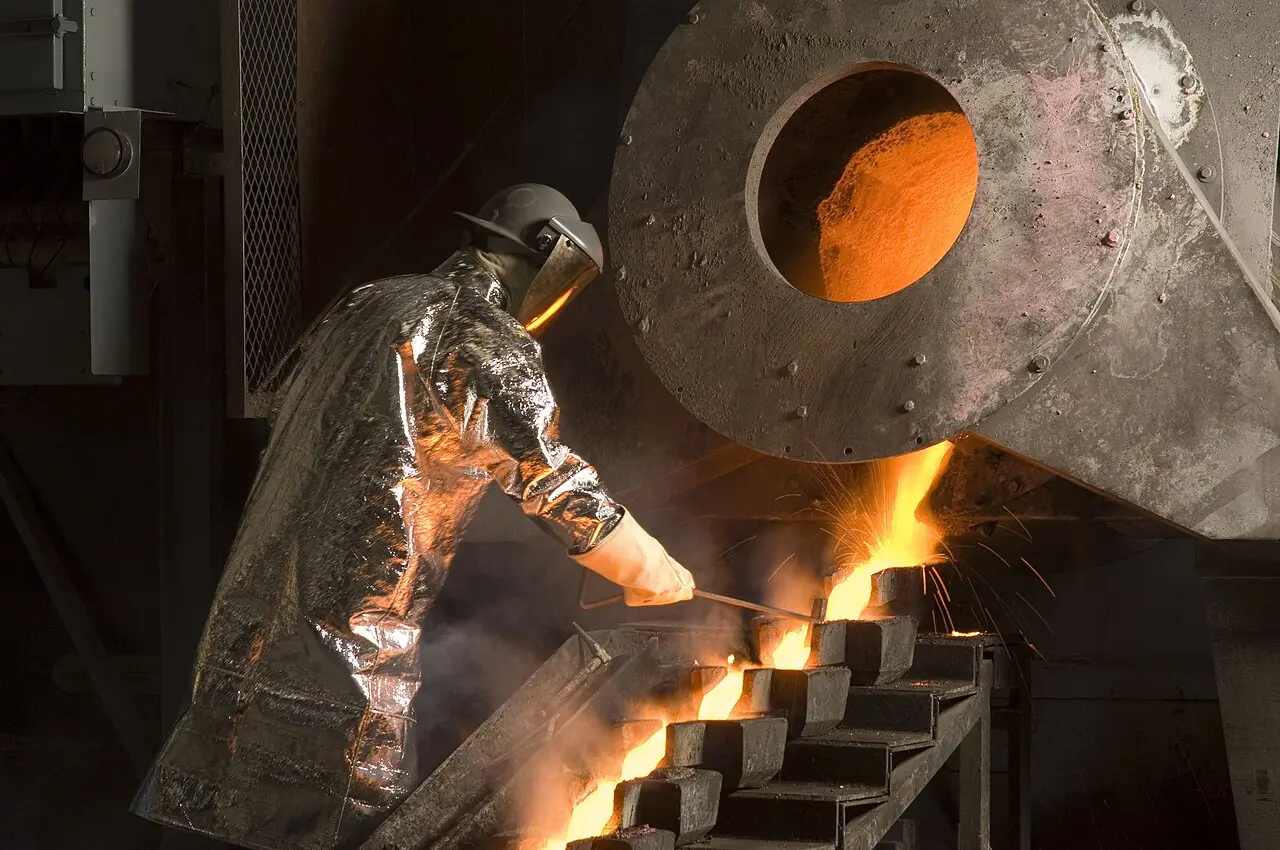
- Mined in 2025
- 3,300 t
- of gold, USGS estimate
- Largest miner
 11.5%
- 380 tonnes, 2025
- Exported by Switzerland
 $196 billion
- of gold in 2025, the most of any country
- Bought by central banks
- 863 t
- in 2025, after 1,000+ t a year in 2022-2024
- Record price
- $5,595
- an ounce, January 29, 2026
Which countries mine the most gold?
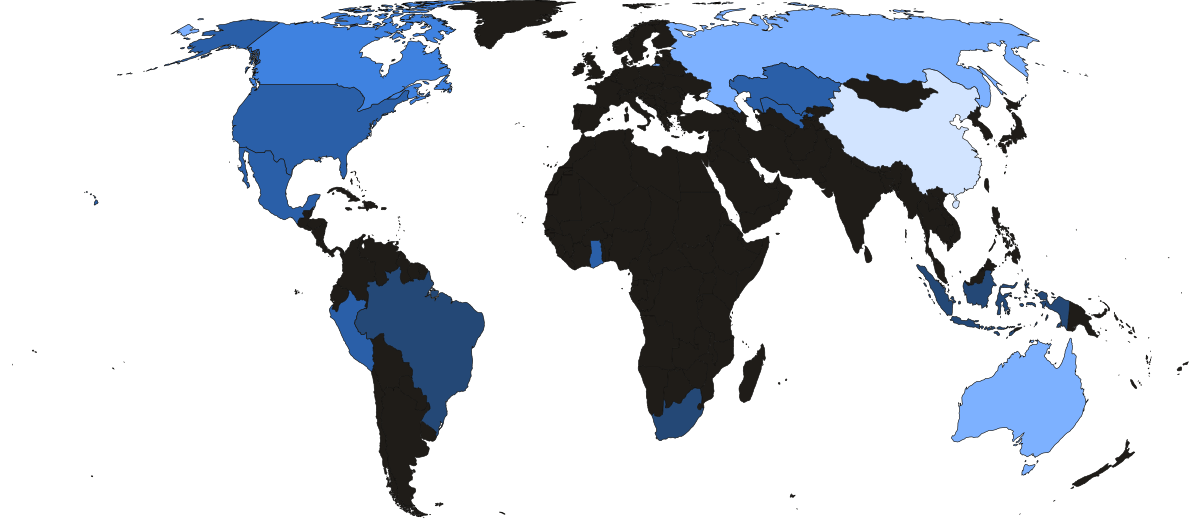
China mined about 380 tonnes of gold in 2025, 11.5% of the world's 3,300 tonnes. Russia produced 310 tonnes (9.4%) and Australia 280 tonnes (8.5%). Canada and the United States were fourth and fifth. The USGS lists 13 countries that together mine about 70% of the world total. No single country mines more than 12% of the world's gold.
Ghana is Africa's largest gold miner at 150 tonnes, ahead of South Africa's 90 tonnes. In the United States, Nevada produces about 64% of the country's output.

- Under 3%
- 3%–5%
- 5%–8%
- 8%–10%
- Over 10%
- No production
Who buys the most gold?
Total gold demand reached 5,002 tonnes in 2025, the first year above 5,000 tonnes. Jewelry accounted for about a third of demand. Bars and coins made up 27%, and central banks 17%. Gold funds (ETFs) took 16%.
China's consumers bought the most gold of any country in 2025, about 792 tonnes of jewelry, bars and coins combined. India's consumers bought 711 tonnes. China's bar and coin purchases of 432 tonnes were a record and for the first time exceeded its jewelry buying.
What the world's gold went into in 2025
Share of gold demand, 2025
- Jewelry33%
- Bars and coins28%
- Central banks17%
- Gold funds (ETFs)16%
- Technology6.4%
Who bought it
- 792 tbought by consumers in China in 2025 (jewelry, bars and coins), the most of any country
- 711 tbought by consumers in India, which buys the most jewelry
- 5,002 tof gold demand in 2025, the first year above 5,000 t
- 801 tadded to gold funds (ETFs) in 2025, after a small outflow in 2024
Why are central banks buying gold?
Central banks began buying more gold after Western governments froze about $300 billion of Russia's central-bank reserves in 2022. Reserves held as dollars or euros can be frozen; gold in a country's own vaults cannot. Central banks bought 1,082 tonnes in 2022, 1,051 in 2023, 1,092 in 2024 and 863 in 2025. From 2010 to 2021 they bought an average of 473 tonnes a year.
In January to September 2026, central banks bought 675 tonnes, 6% more than a year earlier. Poland has added 442 tonnes since the end of 2021, more than any other central bank. China added 398 tonnes. The gold reserves ranking lists every country's holdings.
Who added the most gold since 2021
Tonnes added to official gold reserves, end of 2021 to 2026


Why did gold hit a record price?
The World Gold Council names three drivers: central-bank buying, large inflows into gold funds (ETFs) and bar and coin buying in China and India. Gold first passed $4,000 an ounce on October 8, 2025, and $5,000 on January 26, 2026. The record during trading was about $5,595 on January 29, 2026.
On January 30, 2026, President Donald Trump nominated Kevin Warsh as Federal Reserve chair, and gold had its biggest one-day fall since 1980. On October 30, 2026, gold fell to about $3,965 after strong US economic data raised bets on a Fed rate increase in December. On November 5, 2026, it traded at about $4,135, 26% below the record.
The price of gold, yearly average
US dollars per troy ounce
Who refines and exports the most gold?
Switzerland refines and exports the most gold. About 64% of the world's mined gold was refined in Switzerland in 2019, according to the USGS. Switzerland exported $196 billion of gold in 2025, more than twice as much as the United States, Hong Kong or the United Kingdom.
Since March 7, 2022, the London Bullion Market Association has refused new gold bars from Russia's refiners. A SWISSAID report estimated that 435 tonnes of gold left Africa undeclared in 2022, and 405 tonnes of it went to the United Arab Emirates. On July 13, 2026, the EU banned imports of Sudanese gold to cut off money that funds Sudan's civil war.
Who exports the most gold
Gold exports, 2025, US dollars
- Switzerland$196bn
 United States$81bn
 Hong Kong$80bn
 United Kingdom$80bn
 Australia$38bn
 Canada$38bn
History
How Mali's gold put Mansa Musa on Europe's maps
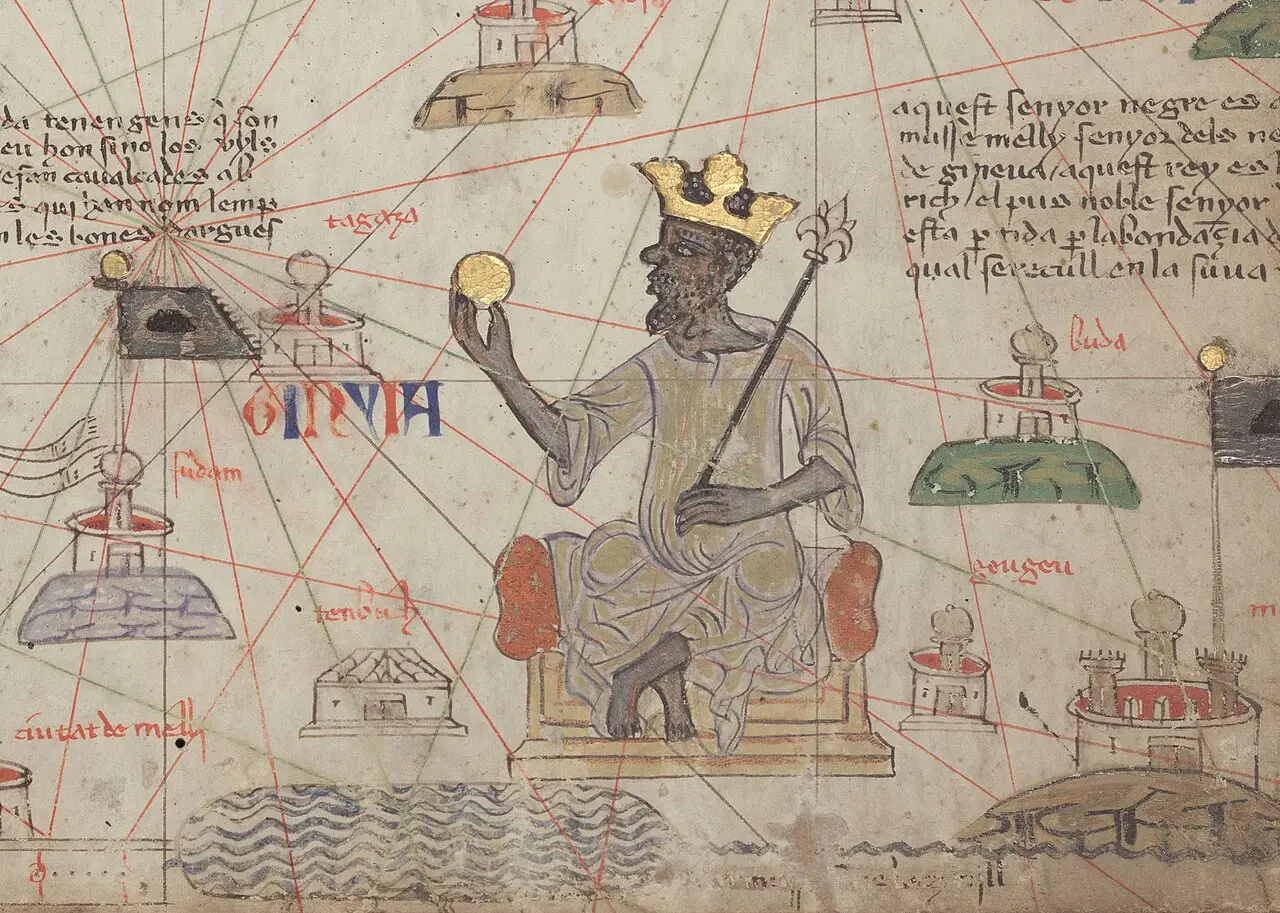
Mansa Musa, who ruled Mali from about 1312, became known in Europe for the gold he spent on his pilgrimage to Mecca. In Cairo in July 1324, his party spent so much gold that its value against silver fell by roughly 12%, according to al-Umari, a Mamluk official writing in the late 1330s. Musa told his hosts that his predecessor had sailed into the Atlantic with a large fleet and never came back. In 1375 a mapmaker in Majorca drew Musa enthroned on the Catalan Atlas.
Camel caravans carried much of this West African gold across the Sahara. Portugal took Ceuta in 1415. Its ships then sailed down Africa's coast, partly to reach the gold without Muslim middlemen. In 1482 Portugal built the fort of São Jorge da Mina in what became the British Gold Coast. When Kwame Nkrumah led the colony to independence on March 6, 1957, his government named it Ghana after a medieval West African gold empire.
History
Which country mined the most gold before World War II?
South Africa mined the most gold in 1938, about 12.2 million troy ounces (378 tonnes), almost a third of the world total. The Soviet Union, Canada and the United States each produced 11 to 14%. In 1939 more than half of the world's gold came from the British Empire.
South Africa's lead began in 1886, when the prospector George Harrison found the Main Reef on the farm Langlaagte. The farm lay in the Transvaal, a Boer republic led by President Paul Kruger. By 1899 the Transvaal's mines produced about a quarter of the world's gold. The Second Boer War (1899-1902) ended Boer independence. About 28,000 Boers, most of them children, and at least 14,000 Black Africans died in British camps. The mines that followed relied on migrant Black workers housed in compounds under pass laws, a system that shaped later apartheid. South Africa stayed the world's largest gold miner from 1905 until 2007, when China passed it.
Share of world gold mine output
19382025 South Africa32%2.7%
 Russia14%9.4%
- Canada13%6.1%
- United States11%4.8%
- Australia5%8.5%
- China0.5%12%
History
How gold backed the dollar until 1971
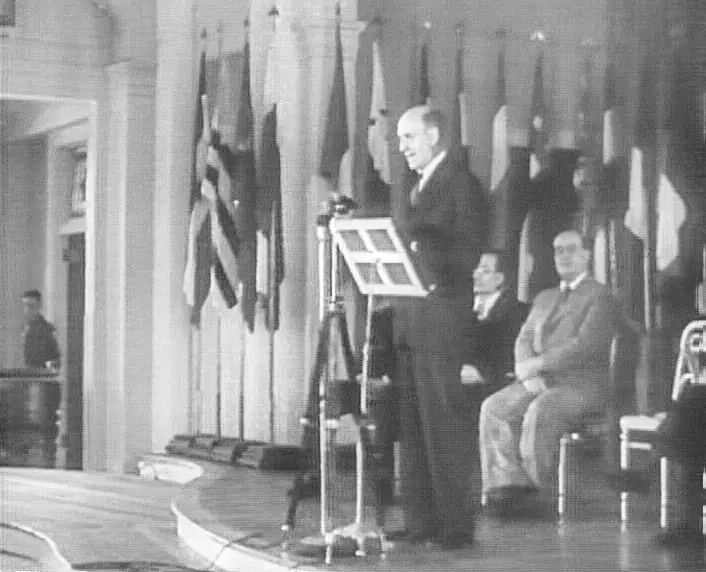
At Bretton Woods, New Hampshire, in July 1944, 44 countries agreed to peg their currencies to the US dollar. Foreign governments could convert their dollars into gold at $35 an ounce. Soon after the war the United States held about three-quarters of the world's official gold reserves. The Bretton Woods system made the dollar the world's main reserve currency.
In the 1960s US gold reserves fell as the dollars held abroad grew. France was converting its dollars into gold. At a press conference on February 4, 1965, Charles de Gaulle called for a return to the gold standard. On the evening of Sunday, August 15, 1971, Richard Nixon announced on television that he had directed Treasury Secretary John Connally to suspend the dollar's convertibility into gold. He also announced a 90-day wage and price freeze and a 10% import surcharge. Connally later told European finance ministers: "The dollar is our currency, but it's your problem." The suspension was never lifted.
Other resources
All 33 resources →
 Chile 23%
Industrial metal
Copper
China refines 48% of the world's copper but mines only 8%.
 United States 16.1%
Energy
Crude oil
The US pumps 13.6 million barrels a day, more than any other country.
 China 69%
Critical mineral
Rare earths
China mines 69% of rare earths, refines 85% and makes 94% of the magnets.