Why are China and Japan enemies?
In 1894, Japan defeated China in a war everyone expected China to win. The hostility it created has outlasted every attempt to end it.
In September 2012, Japan's government bought three uninhabited islands in the East China Sea from a private landowner. Within days, anti-Japanese protests erupted in more than a hundred Chinese cities. Demonstrators smashed Japanese cars, burned Japanese factories, and looted Japanese stores. Toyota and Honda shut down their Chinese plants. The Chinese government, which had encouraged the anger, eventually had to arrest its own protesters before the damage spread further.
The islands, called the Senkaku by Japan and the Diaoyu by China, are tiny and uninhabited. The rage was not really about them. It was about a history that begins in 1894 and has never been resolved.
The war that reversed two thousand years
For most of recorded history, China was the center of East Asian civilization and Japan was its student. Japan borrowed Chinese writing, Chinese Buddhism, Chinese architecture, and Chinese systems of government. Chinese emperors regarded Japan as a tributary, and Japanese scholars traveled to China the way medieval Europeans traveled to Rome.
The Meiji Restoration of 1868 changed that. Japan's new government studied Western industry, Western armies, and Western law, then rebuilt the country in a single generation. By the 1890s Japan had a professional conscript army, a modern navy, and a constitution modeled on Prussia's. China was heading the other direction. The Qing dynasty had spent the century losing wars to Britain and France, signing away ports, territory, and sovereignty in a series of unequal treaties.
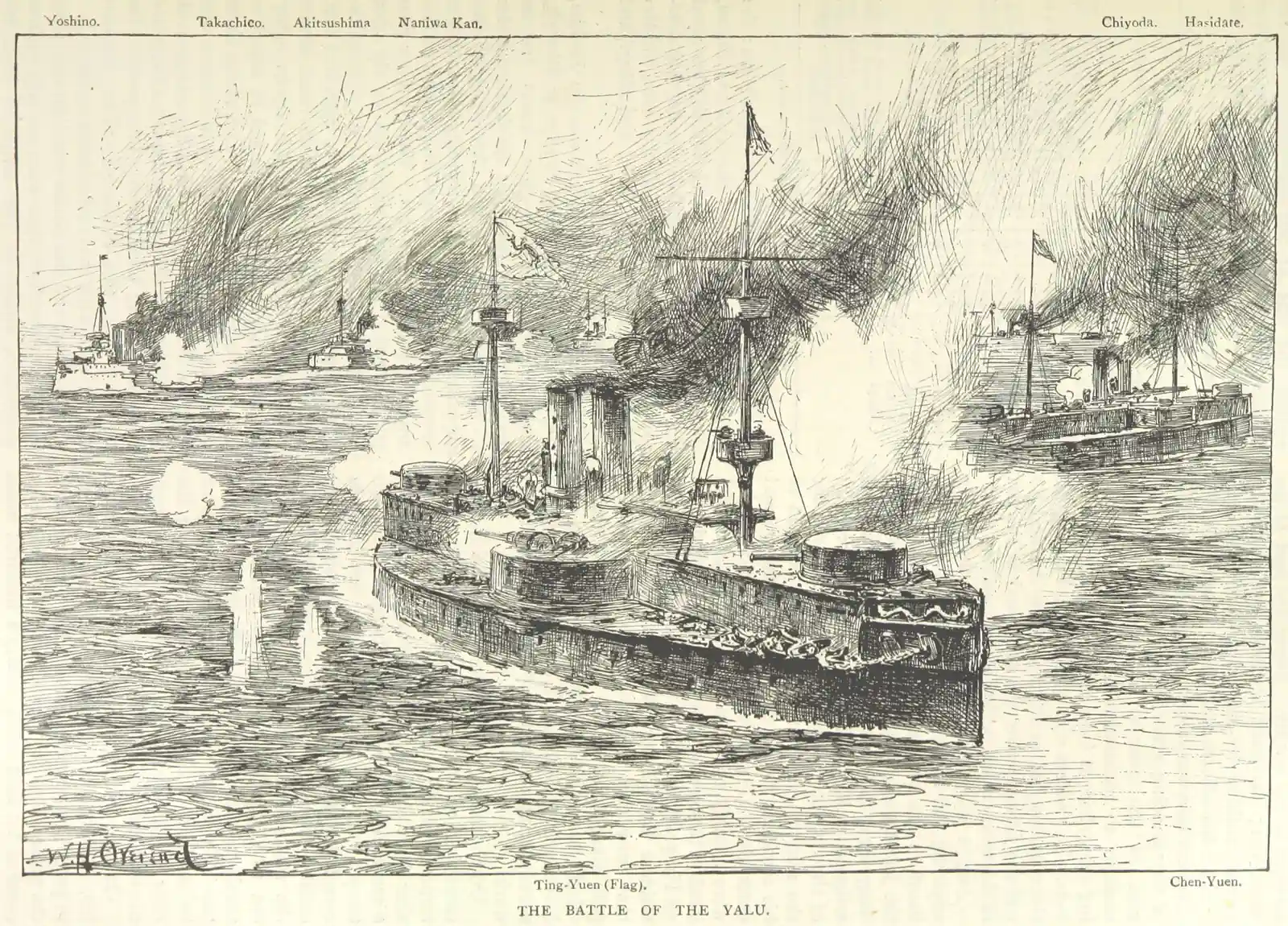
When Japan and China went to war over control of Korea in 1894, Western observers expected China to win. China had 350 million people to Japan's 40 million, and its Beiyang Fleet included German-built ironclad battleships with 12-inch guns. Japan destroyed the fleet in five hours at the Battle of the Yalu River, then conquered Korea and swept into Manchuria. The Treaty of Shimonoseki in 1895 forced China to give up Taiwan, recognize Korean independence (which in practice meant Japanese control), and pay 200 million taels of silver. Of all the defeats of China's century of humiliation, this one cut deepest, because it came from a country the Chinese had spent two thousand years regarding as a junior civilization.
Fifty years of invasion
Japan's 1894 victory launched four decades of expansion at China's expense. Japan took Taiwan in 1895, defeated Russia in 1905, and annexed Korea in 1910. In September 1931, officers of the Kwantung Army staged a fake bombing on a railway track in Manchuria and used it to conquer a territory the size of France and Germany combined. The officers acted without permission from Tokyo, but the government backed them after the fact. They set up a puppet state called Manchukuo and put China's last emperor on its throne. The League of Nations condemned the invasion. Japan withdrew from the League and kept Manchuria.
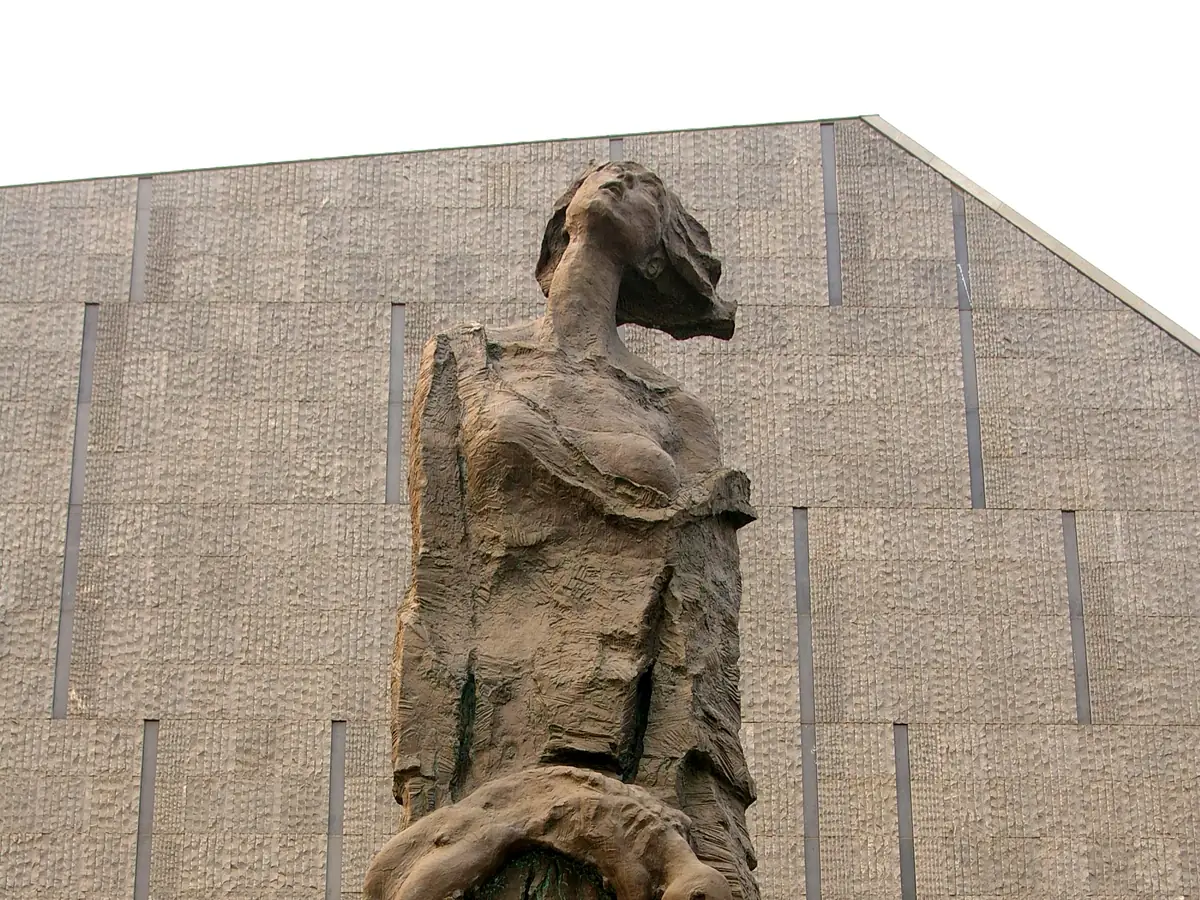
In July 1937, a skirmish at the Marco Polo Bridge outside Beijing became a full-scale Japanese invasion of China. The war lasted eight years and killed between 15 and 20 million Chinese people. In December 1937, after capturing Nanjing, China's capital, Japanese troops murdered tens of thousands of civilians and prisoners of war over six weeks. Rape was systematic. A German businessman named John Rabe, a member of the Nazi Party, organized a safety zone in the city center that sheltered roughly 250,000 people. Across occupied China, the Japanese military forced hundreds of thousands of women, mostly Korean and Chinese, into sexual slavery in what were called "comfort stations."
China had been fighting longer than any other Allied power when Japan surrendered in August 1945. It had suffered more civilian deaths than any country in the war except the Soviet Union.
The apology that never settles
After the war, the two countries normalized relations in 1972. Japan provided billions of dollars in development aid. Trade grew. But the question of how Japan remembers the war has been poisoning the relationship ever since.
Japan has apologized. In 1995, Prime Minister Tomiichi Murayama acknowledged Japan's "colonial rule and aggression" and offered a "heartfelt apology." In 1998, Prime Minister Keizo Obuchi repeated the apology directly to China's president. The problem is what happens between the apologies.
Japanese prime ministers visit the Yasukuni Shrine, a Shinto memorial in Tokyo that honors Japan's war dead, including fourteen convicted Class-A war criminals. Junichiro Koizumi visited six times between 2001 and 2006. Each visit drew formal protests from Beijing, and diplomatic contact between the two countries froze for years. Shinzo Abe visited in December 2013, the first sitting prime minister to go since Koizumi. China summoned Japan's ambassador and said Abe was not welcome in China.
Japan's education ministry has approved textbooks that downplay the Nanjing Massacre and omit the comfort women. In 2001, a government-approved textbook gave no death toll for Nanjing and left out the military's use of biological weapons entirely. China called the books "poison for Japan's younger generation." The editions were barely adopted, but the approval itself was enough to set off diplomatic crises in both 2001 and 2005.
For China, the cycle is the point. An apology followed by a shrine visit followed by a textbook revision followed by another apology does not add up to reconciliation. It adds up, as Beijing has said for thirty years, to proof that Japan has never genuinely faced what it did.
Islands, protests, and $300 billion in trade
The unresolved history sits underneath a territorial dispute that has nearly started a conflict twice in the last fifteen years.
The Senkaku Islands (Diaoyu in Chinese) are five uninhabited islands and three rocks in the East China Sea, roughly 170 kilometers northeast of Taiwan. Japan has controlled them since 1895. China claims they were Chinese territory taken during the First Sino-Japanese War and should have been returned after 1945. The islands sit above potential oil and gas reserves, but the real value is the precedent: whoever controls them frames the legal argument for every other territorial claim in the region.
In 2010, a Chinese fishing trawler rammed two Japanese coast guard vessels near the islands. Japan arrested the captain. China suspended ministerial-level talks and cut off exports of rare earth minerals, which Japan depends on for electronics manufacturing. Japan released the captain within weeks.
Two years later, when Japan nationalized the islands by purchasing them from their private owner, the backlash was the largest anti-Japanese movement since the war itself. Japanese car sales in China dropped by half. Bilateral trade, worth more than $300 billion a year, took a visible hit. The two countries' largest economic relationship was hostage to five uninhabited rocks.
What keeps them enemies
China and Japan are each other's largest trading partners. Millions of Chinese tourists visit Japan every year. Japanese anime and food are popular across China. By nearly every economic measure, the two countries need each other. None of that has been enough.
The first reason is unresolved history. China's government has built its legitimacy partly on the promise that the country will never again be humiliated the way Japan humiliated it. Every December 13, a national memorial day established by Xi Jinping in 2014, air raid sirens sound across Nanjing. Xi's central political project, the "great rejuvenation of the Chinese nation," is defined as the reversal of the era Japan dominated.
The second is territory. Chinese coast guard ships enter the waters around the Senkaku Islands regularly. Japan has responded by doubling its defense budget and deepening military partnerships with the United States, Australia, India, and the Philippines.
The third is the future. For the first time since the 1890s, China is richer and militarily stronger than Japan. The question of who leads East Asia, settled by the Treaty of Shimonoseki in 1895, is open again. Japan has allied with Washington and is arming at a pace not seen since World War II. China has built the largest navy in the world. Neither country believes the other's intentions are peaceful, and both have a hundred and thirty years of reasons to say why.
Test what you learned
5 questions on this article. About two minutes, no signup.
Orbis has a full course on this
The Sino-Japanese Wars. 22 lessons, each ending with a quiz like this one.