Why did the Korean War start?
The Korean War began when Kim Il-sung invaded the South with Stalin's approval. What changed in 1950 was not Kim's ambition but the world around him.
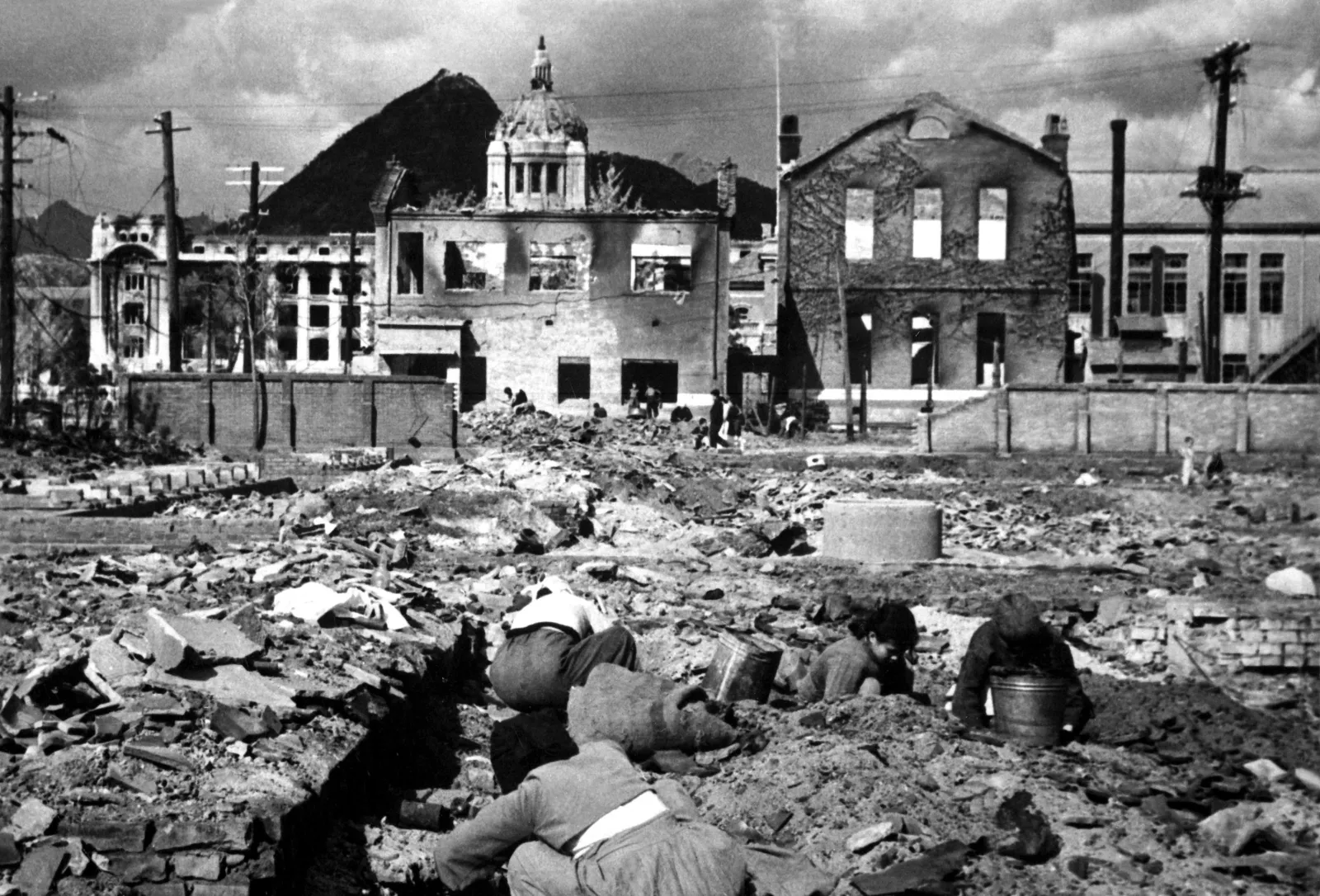
At 4 a.m. on June 25, 1950, North Korean artillery opened fire along the entire length of the 38th parallel. Within hours, roughly 75,000 North Korean soldiers backed by more than a hundred Soviet-made T-34 tanks were pushing south. Seoul, the South Korean capital, fell by June 28. The South Korean army had no tanks, almost no anti-tank weapons, and no warning. Within six weeks, its surviving forces had been pushed into a tiny perimeter around the port of Busan. Six months earlier, the American government had publicly drawn a defense line across the Pacific that left South Korea outside it. The war that followed would last three years, pull in the United States and China, kill roughly three million people, and end with the border almost exactly where it had been on June 24.
A peninsula split in half
Korea had been one country for more than a thousand years before 1945. When Japan surrendered at the end of World War II, two American officers divided the peninsula at the 38th parallel as a temporary boundary between Soviet and American occupation zones. Within three years, the temporary line had become an international border.
By 1948, there were two Korean states. In the North, Kim Il-sung led a communist government backed by the Soviet Union. In the South, Syngman Rhee ran an authoritarian government backed by the United States. Each claimed authority over all of Korea. Each wanted to reunify the peninsula under its own system, by force if necessary.
Rhee talked openly about marching north, and his troops clashed with North Korean soldiers along the border throughout 1949, killing thousands on both sides. The division of Korea is a separate story. What matters here is that by early 1950, both governments wanted war. The question was which side would move first, and which superpower would allow it.
Why Kim invaded when he did
Kim Il-sung had wanted to invade the South since the partition. He asked Stalin for permission repeatedly, sending roughly fifty requests between 1948 and 1950, and Stalin repeatedly refused. The Soviet leader did not want a war that might draw in the United States.
Three things changed his thinking in the winter of 1949-50.
First, Mao Zedong's communists won the Chinese civil war in October 1949. China's revolution shifted the balance of power in East Asia. If Stalin kept refusing Kim, Kim could appeal to Mao directly, and Moscow risked losing influence over both men.
Second, the Soviet Union tested its first atomic bomb in August 1949. Stalin no longer faced an American nuclear monopoly.
Third, in January 1950, U.S. Secretary of State Dean Acheson gave a speech at the National Press Club in Washington outlining America's defense perimeter in the Pacific. The line ran from the Aleutians through Japan to the Philippines. South Korea was not on it. Acheson later argued he had not meant to signal that America would abandon Korea. Kim and Stalin read it as exactly that signal.
In April 1950, Kim flew to Moscow. Stalin gave his approval, with conditions: the attack had to succeed fast, before the Americans could react, and if things went wrong, Kim would bear the responsibility alone. Kim assured Stalin that the Rhee government was so unpopular that much of the southern population would welcome the northern army as liberators.
Kim was 38 years old. He had fought as a guerrilla against the Japanese in Manchuria in the 1930s, then spent the last years of World War II as a captain in the Soviet military before returning to Korea on a Soviet ship in 1945. He had built his army with Soviet weapons, Soviet training, and thousands of ethnic Korean veterans of Mao's armies who had crossed back from China after the civil war.
Mao gave his own consent in May 1950. With both communist powers behind him, Kim set the date: June 25.
From invasion to stalemate
The first weeks went exactly as Kim had planned. The T-34 tanks were unstoppable against the South Korean army, which had no armor and no anti-tank weapons that could penetrate the Soviet-made tanks. The first American troops sent to slow the advance, a small unit called Task Force Smith, were routed near Osan on July 5. The American army in 1950 was undermanned, poorly equipped, and unprepared for a ground war in Asia. By August, UN forces held only a tiny perimeter around the port of Busan.
President Harry Truman decided to intervene within two days of the invasion. He went to the United Nations, which authorized a military response. The Soviet Union was boycotting the Security Council at the time and could not veto the resolution.
Then came the gamble that reversed the war. On September 15, General Douglas MacArthur landed 75,000 troops at Inchon, the port city near Seoul. The tides at Inchon were among the most extreme in the world, the approaches were narrow, and most of his staff considered the plan too risky. MacArthur was 70 years old and had run the postwar occupation of Japan. He pushed ahead anyway. The landing cut the North Korean supply lines, Seoul was recaptured within two weeks, and the North Korean army, suddenly cut off, collapsed.
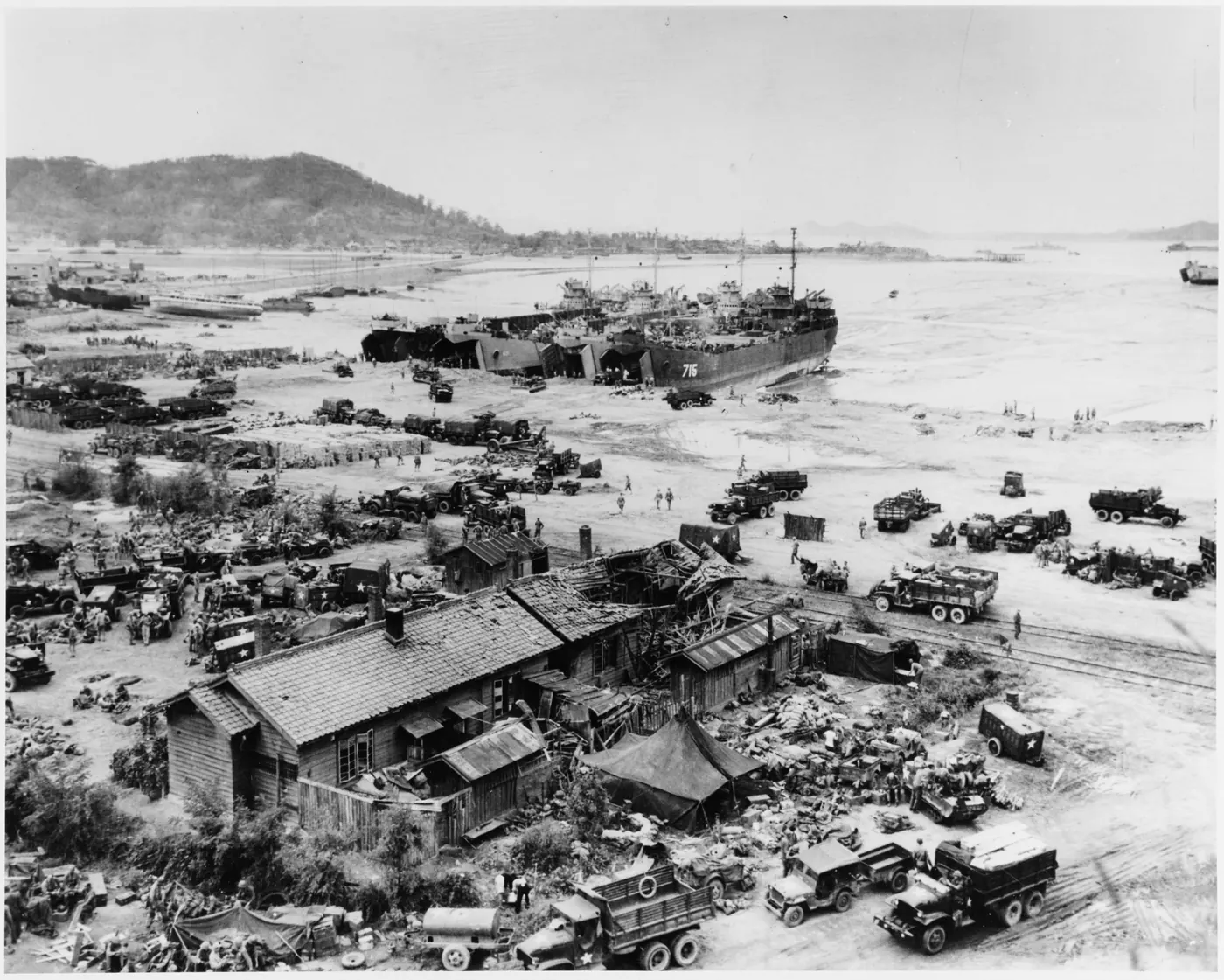
MacArthur pushed north. He crossed the 38th parallel, took Pyongyang, and drove toward the Chinese border at the Yalu River. China had warned, through Indian diplomats, that it would not accept American forces near its border. MacArthur dismissed the warnings. At a meeting with Truman on Wake Island in October 1950, he assured the president that the Chinese would not enter the war.
In late November, roughly 300,000 Chinese soldiers poured across the Yalu and struck the UN forces in the mountains of North Korea. At the Chosin Reservoir, 30,000 UN troops, mostly US Marines, were surrounded by roughly 120,000 Chinese soldiers in temperatures that dropped below minus 30 degrees Fahrenheit. The Marines fought their way out over 17 days, carrying their wounded and their dead, in one of the longest fighting retreats in American military history.
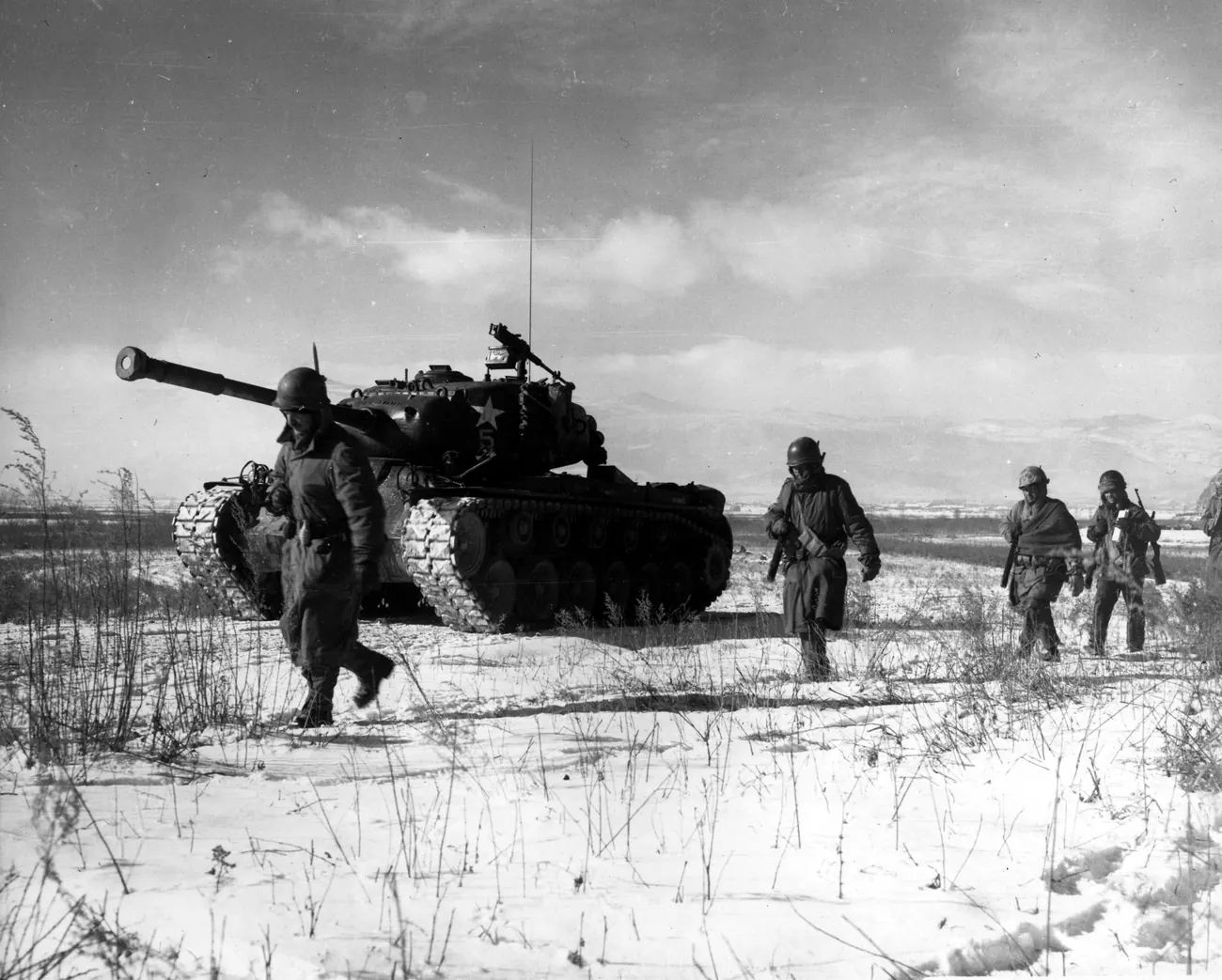
The Chinese pushed the front line back south of Seoul. By the spring of 1951, the fighting had settled into a stalemate along roughly the same line where the war began. Two more years of trench warfare followed. The armistice signed on July 27, 1953, froze the front line into a demilitarized zone. No peace treaty has ever been signed.
What the Korean War settled
The war killed roughly 36,500 Americans, an estimated 400,000 Chinese soldiers, and somewhere between two and three million Koreans, most of them civilians. Seoul changed hands four times. Most of Korea's cities were destroyed.
The Korean War settled questions that shaped the next seventy-five years. It proved that the United States would fight to prevent communist expansion outside Europe. The Truman Doctrine, originally a European commitment, became a global one. Washington tripled its defense budget and began building the network of military bases it still maintains across the Pacific. American troops have been stationed in South Korea continuously since 1950.
Kim Il-sung's gamble produced the opposite of what he intended. Instead of a united Korea under his rule, the war created the most heavily fortified border on Earth, backed by nuclear weapons on both sides. South Korea became one of the richest countries in the world. North Korea became a nuclear-armed state whose citizens cannot leave. The reunification that both sides once promised has become something neither side seriously pursues. The armistice signed in 1953 is still the only agreement in force, and the war it froze has never officially ended.
Test what you learned
5 questions on this article. About two minutes, no signup.
Orbis has a full course on this
The Korean Peninsula. 24 lessons, each ending with a quiz like this one.