Why did the Qing dynasty fall?
The Qing dynasty ruled China for 268 years and built the largest Chinese empire in history. It collapsed in four months.
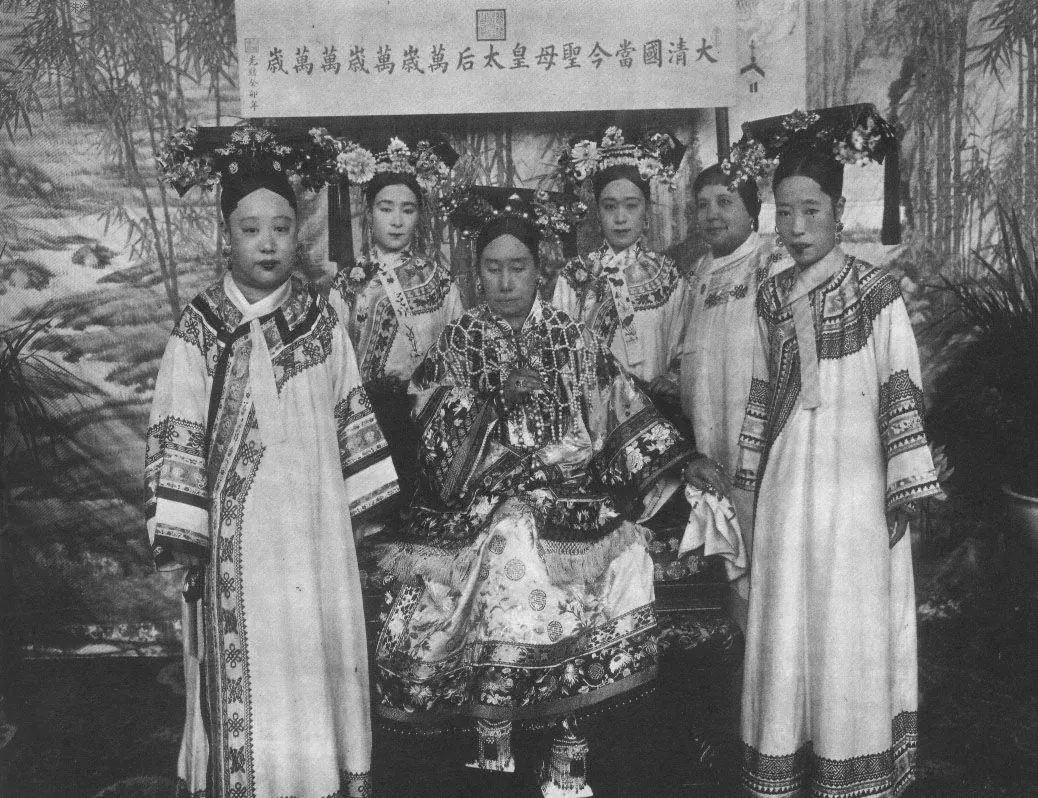
In 1790, the Qing dynasty ruled over roughly 400 million people across 14.7 million square kilometers, the largest territory any Chinese dynasty had ever held. The empire stretched from Manchuria to Tibet, from Mongolia to the jungles of Yunnan. Its economy produced about a third of global output. A century later, the dynasty had lost wars to Britain, France, Japan, and an eight-nation coalition, owed foreign creditors more money than it could repay, and had survived a civil war that killed an estimated 20 to 30 million people. In 1912, a six-year-old emperor named Puyi signed an abdication decree he could not read. The dynasty that had ruled China for 268 years was finished.
The collapse was not one event. It was a sequence of military defeats, internal rebellions, and failed reforms that hollowed the empire out over seven decades until there was almost nothing left to overthrow.
The dynasty that peaked too early
The Qing were not ethnically Chinese. They were Manchus, a people from the forests northeast of China who conquered Beijing in 1644 after the Ming dynasty collapsed in a peasant rebellion. They forced Chinese men to wear the Manchu queue, a shaved forehead with a long braid, on pain of death. The policy was meant to mark submission. It worked, but the resentment never fully disappeared.
For their first 150 years, the Manchus were extraordinarily effective rulers. The Kangxi Emperor reigned for 61 years, the longest in Chinese history, and expanded the empire into Tibet, Taiwan, and Mongolia. His grandson, the Qianlong Emperor, pushed the borders to their widest point. The population more than doubled during the 1700s. The civil service examination system, the most sophisticated bureaucracy in the world, kept the provinces running.
But by the time Qianlong abdicated in 1796, the problems were already visible. Corruption had spread through the bureaucracy. The army that had conquered Central Asia was rotting from within, its soldiers carrying outdated weapons and their officers pocketing the pay meant for recruits. The population had grown faster than the farmland could support it, and peasant revolts were spreading in the interior. The Qing had peaked, and the shocks that followed would find an empire with no capacity to absorb them.
The wars that broke the illusion
The first shock came from Britain. In 1839, a Qing official named Lin Zexu destroyed more than 1,400 tons of British opium at Canton. Britain responded with warships. The First Opium War lasted three years, and it was not close. The Royal Navy's steam-powered gunboats outclassed everything the Qing had. The Treaty of Nanjing in 1842 forced China to cede Hong Kong, open five ports to foreign trade, and pay 21 million silver dollars. It was the first of what the Chinese call the unequal treaties. Over the next six decades, China would sign dozens more.
Then came the Taiping Rebellion. Starting in 1850, a failed examination candidate named Hong Xiuquan, who believed he was the brother of Jesus Christ, led a peasant army that conquered much of southern China and established a rival state with its capital at Nanjing. The rebellion lasted 14 years and killed an estimated 20 to 30 million people, making it the deadliest civil war in recorded history. The Qing court could not put it down with its own forces. Instead, regional Chinese generals like Zeng Guofan raised their own armies, funded by local taxes, and crushed the Taiping. The dynasty survived, but the price was a permanent shift in power from the Manchu court to Han Chinese provincial leaders who now controlled their own troops and revenue.
Every reform ran into the same wall
The defeats convinced some officials that China needed Western technology. The Self-Strengthening Movement, launched in the 1860s, built arsenals, shipyards, telegraph lines, and a modern navy called the Beiyang Fleet. The fleet included German-built ironclad battleships carrying 12-inch Krupp guns. On paper, it was the strongest navy in Asia.
In 1894, Japan went to war with China over Korea. Western observers expected China to win. At the Battle of the Yalu River, the Japanese navy sank five of ten Chinese warships without losing a single ship. The Chinese admiral, Ding Ruchang, was offered asylum by the Japanese commander after his remaining fleet was destroyed. He refused and killed himself with an overdose of opium. The Treaty of Shimonoseki forced China to cede Taiwan to Japan and pay a massive indemnity. The Self-Strengthening Movement had built modern weapons on top of a medieval state. The weapons were not the problem. The state was.

After the Japanese defeat, a young Confucian scholar named Kang Youwei convinced the Guangxu Emperor that China needed not just Western technology but Western-style institutions: a modern civil service, a reformed education system, a constitutional monarchy. In the summer of 1898, the emperor issued more than a hundred reform edicts in what became known as the Hundred Days' Reform. Empress Dowager Cixi, who had been the real power behind the throne for decades, watched for 103 days and then acted. On September 21, she placed the emperor under house arrest, executed six of the leading reformers, and reversed every major decree. Kang Youwei fled to Japan. The Guangxu Emperor spent the remaining ten years of his life a prisoner in his own palace.
Cixi was not opposed to all change. After the Boxer Rebellion of 1900, when an eight-nation army occupied Beijing and imposed an indemnity of 450 million taels of silver, she launched her own "New Policies": modern schools, a reformed army, even a promise of constitutional government. But the New Policies came after four decades of blocked reform, and they backfired. The new provincial assemblies gave local elites a platform to demand more power. The new army trained officers who would lead the revolution. And the dynasty's promise of a constitution, scheduled for 1916, was too slow for a country that had been humiliated repeatedly and watched Japan modernize in a single generation.
The revolution that barely had to fight
The end, when it came, was almost accidental. On October 10, 1911, a bomb exploded prematurely in a revolutionary cell in the city of Wuchang. Police raided the site and found membership lists. The conspirators, mostly junior officers in the new army the Qing had just built, decided to revolt immediately rather than wait to be arrested. They seized the city that night.
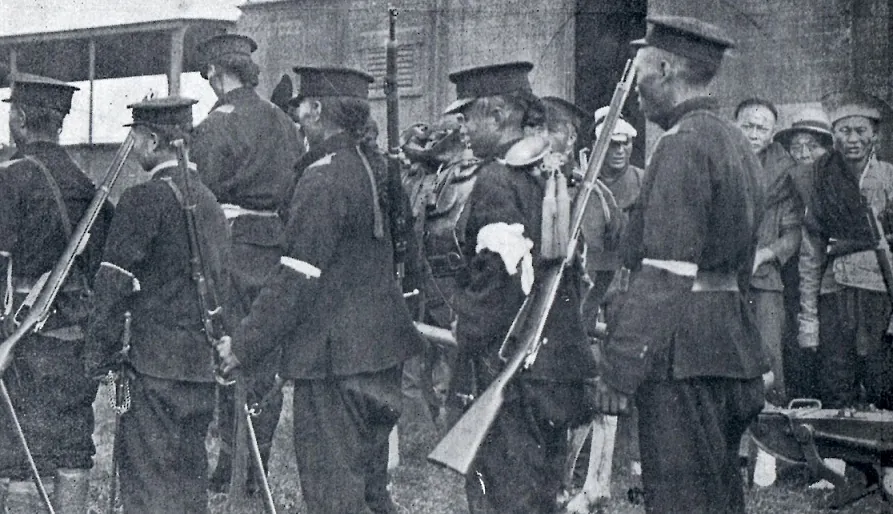
Within weeks, province after province declared independence from Beijing. There was no nationwide uprising, no great battle. The dynasty simply had no one willing to fight for it. Sun Yat-sen, the revolutionary who had spent decades organizing from exile, read about the revolution in an American newspaper. He hurried home and was elected provisional president of the new Republic of China on January 1, 1912. But the man who actually ended the dynasty was Yuan Shikai, the Qing court's last effective general. He negotiated the abdication of the six-year-old Emperor Puyi on February 12, 1912, then took the presidency for himself. An empire that had lasted 268 years ended not with an invasion or a popular revolution but with a backroom deal between a general and a court that had run out of options.
Why the fall still echoes
The Qing dynasty's collapse created the political vacuum that defined China's twentieth century. What followed was not a stable republic but 37 years of warlords, civil war, Japanese invasion, and communist revolution before Mao Zedong proclaimed the People's Republic in 1949.
The lesson Beijing draws from the Qing is specific and political: the dynasty fell because it was too weak to resist foreign powers and too slow to modernize on its own terms. The century of humiliation that began with the Opium Wars is the founding story of modern Chinese nationalism, and the Communist Party has built its legitimacy on the promise that China will never be that vulnerable again. When Xi Jinping talks about the "great rejuvenation of the Chinese nation," the Qing collapse is the catastrophe he is measuring the distance from.
Test what you learned
5 questions on this article. About two minutes, no signup.
Orbis has a full course on this
China: The Fall of the Middle Kingdom. 29 lessons, each ending with a quiz like this one.