
Country profile · East Africa
 Eritrea
 is a country of about 3.6 million people on the Red Sea, north of Ethiopia. It has never held a census. Eritrea won independence from Ethiopia in 1993 after a 30-year war. President Isaias Afwerki has ruled since then without an election. In 2026 relations with Ethiopia broke down, and the two neighbors are close to war.
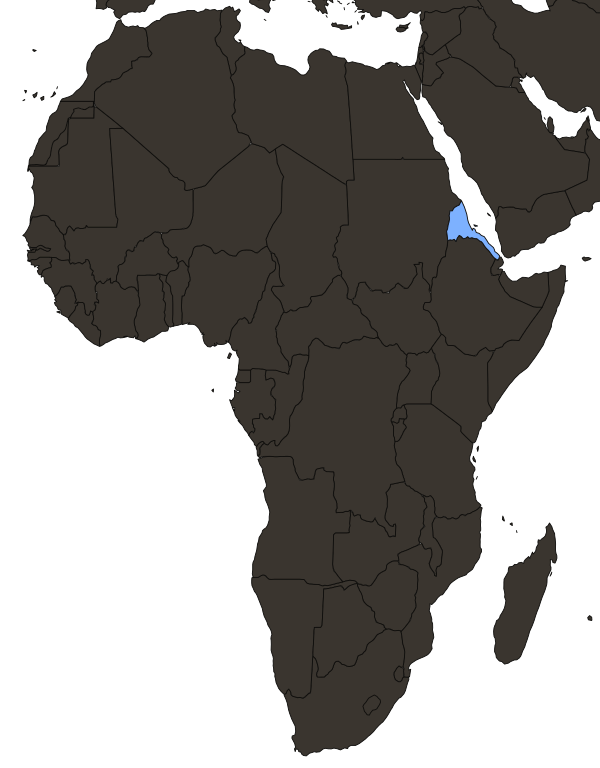
Where Eritrea ranks
All rankings →- #131of 197Population3.6 million
- #165of 196Median age19.2 years
- #160of 196Births per woman3.61
- #140of 196Life expectancy69.2 years
- #11of 185Refugees abroad554,891
- #97of 197Area121,144 km²
Which country has the biggest army? Largest armies in the world →
Which alliances is Eritrea in?
All alliances →Who runs Eritrea?
President Isaias Afwerki was born in Asmara on February 2, 1946. He left engineering studies at university in Addis Ababa in his first year to join the fight for independence from Ethiopia,. He led the Eritrean People's Liberation Front (EPLF), which won the war in May 1991. He became president on May 24, 1993. No national election has been held since. The 1997 constitution never came into force. His People's Front for Democracy and Justice (PFDJ) is the only legal party. In September 2001 he jailed 11 senior officials who had called for reforms and closed all independent newspapers. None of the prisoners have been seen since. Eritrea ranked last of 180 countries for press freedom in 2026 (Reporters Without Borders). Asked in 2010 when elections would be held, Isaias said: "Let's wait three or four decades." He turned 80 in 2026 and has named no successor. He is married to Saba Haile, a former fighter, and they have three children.
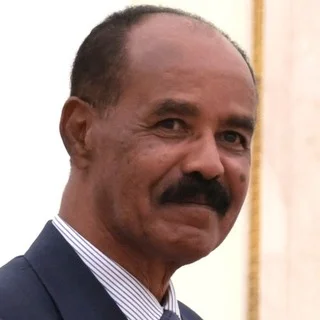
Photo (May 2023): Presidential Executive Office of Russia, kremlin.ru, Wikimedia Commons, CC BY 4.0 (cropped)
Who are Eritrea's allies and enemies?
Eritrea's main rival is Ethiopia (see the next question). Its closest partner is Egypt, which has its own dispute with Ethiopia over a dam on the Nile. On October 4, 2026, President Isaias met the leaders of Egypt and Somalia and Sudan's army chief, General Abdel Fattah al-Burhan, in New Alamein, Egypt. They declared that Red Sea security belongs only to the states on its coast. Eritrea backs Sudan's army in its war against the Rapid Support Forces, and Sudanese fighters have trained in camps in Eritrea (AFP). China buys most of Eritrea's exports. In late October 2026 Isaias attended the Russia-Africa summit in Moscow and met President Vladimir Putin. Russia has offered to host talks between Ethiopia and Eritrea. The United Arab Emirates used a base at the port of Assab for its war in Yemen and dismantled it between 2019 and 2021. On September 18, 2026 the United States lifted the sanctions it had put on Eritrea's army and ruling party in 2021.
Allies and partners


Rivals
 EthiopiaTies cut on October 1, 2026
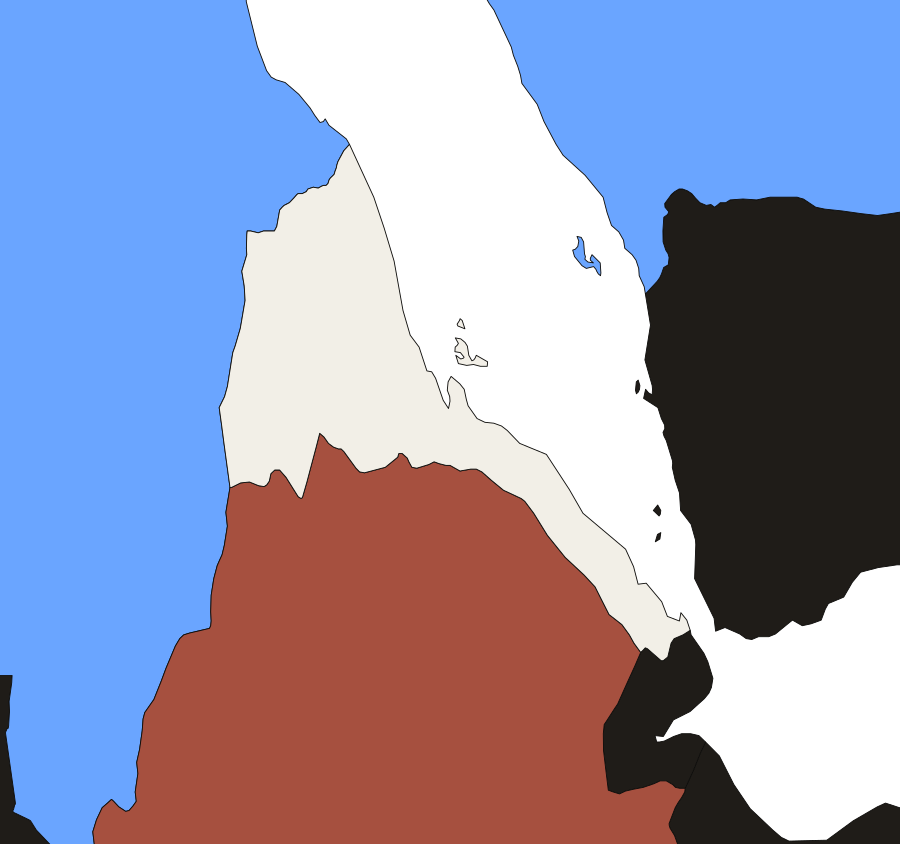
- Assab Port Ethiopia wants access to. Eritrea accuses Ethiopia of planning a war to take it.
- Massawa Eritrea's main port, about 100 km from Asmara.
- Zalambessa Border town. Eritrean troops crossed here in October 2026, then pulled back; Ethiopian troops took it on October 13.
- Badme Village where the 1998-2000 war began. A 2002 ruling gave it to Eritrea, but Ethiopia kept it.
- Eritrea
- Partner
- Rival
Are Ethiopia and Eritrea going to war?
Italy made Eritrea a colony in 1890. After British rule, it was joined to Ethiopia in 1952 and annexed in 1962, which started a 30-year war for independence. When Eritrea became independent in 1993, Ethiopia lost its coast. The two countries fought a border war in 1998-2000 that killed an estimated 70,000 to 100,000 people. In July 2018 Ethiopian Prime Minister Abiy Ahmed made peace with President Isaias. Eritrean troops then fought on Ethiopia's side in the 2020-22 war in Tigray. Since 2023 Abiy has called access to the sea "existential" for Ethiopia, and Eritrea fears he wants its port of Assab. On October 1, 2026 Ethiopia expelled 10 Eritrean diplomats, and Eritrea cut all ties. Ethiopia accuses Eritrea of backing a rebel offensive led by the Tigray People's Liberation Front. In early October Eritrean troops crossed into Tigray, according to the conflict monitor ACLED, and pulled back after Ethiopian drone strikes. Eritrea denies sending them. By November 1 the two armies faced each other at the border town of Zalambessa, with no ceasefire and no talks.
Who does Eritrea trade with?
Eritrea publishes almost no trade figures, so the chart uses those reported by its partners. In 2024 Eritrea exported $574 million of goods and imported $346 million. China bought 78.8% of exports (chart), almost all of it copper and zinc ore, and South Korea bought most of the rest. China also supplied 46.1% of imports. Its share of Eritrea's trade rose from 36% in 2017 to 66.5% in 2024. China's Zijin Mining owns 55% of the Bisha copper and zinc mine, and the state miner ENAMCO owns 45%. Bisha stopped processing ore in early October 2026 because of a fuel shortage. A second Chinese-run mine near Asmara began producing in April 2026. The World Bank estimates GDP at about $3.1 billion in 2025, or $860 per person, and government debt at 212% of GDP. The International Monetary Fund leaves Eritrea out of its forecasts because data are missing. Eritreans abroad must pay a 2% tax on their income to get passports and other services from Eritrean embassies.


Buys from
Share of Eritrea's imports
 China46.1%
 Turkey11.5%
 United States10.8%
 Italy7.8%
 Saudi Arabia3.9%
Goods, 2024. UN Comtrade figures reported by Eritrea's trade partners, compiled by CEPII (BACI).
Why do so many Eritreans flee?
By law, national service lasts 18 months. In practice it has been open-ended since the 1998-2000 war with Ethiopia, and many conscripts serve for more than a decade. They work in the army or in civilian jobs the state assigns, for pay too low to live on. Since 2003 every student has spent the last year of school at the Sawa military camp. In 2016 a UN Commission of Inquiry found that the endless service amounted to enslavement, a crime against humanity. In February 2025 the government banned people under 50 from leaving the country. Only four religions are allowed: the Orthodox, Catholic and Lutheran churches and Sunni Islam. UNHCR counts about 555,000 Eritrean refugees, roughly one Eritrean in seven (chart). Most live in Ethiopia and Sudan. Others cross Libya and the Mediterranean, and 7,583 Eritreans reached Italy by sea in 2025. In April 2026 seven players of the national football team disappeared in South Africa after a match. About 80 players and officials have defected over 20 years.
Refugees abroad as a share of all people from the country, end of 2025
Full ranking → Venezuela18.5%
 South Sudan16.4%
 Syria16.0%
- Eritrea13.3%
 Ukraine11.8%
 Afghanistan7.8%
UNHCR Refugee Population Statistics Database