
Country profile · Central Europe
 Slovenia
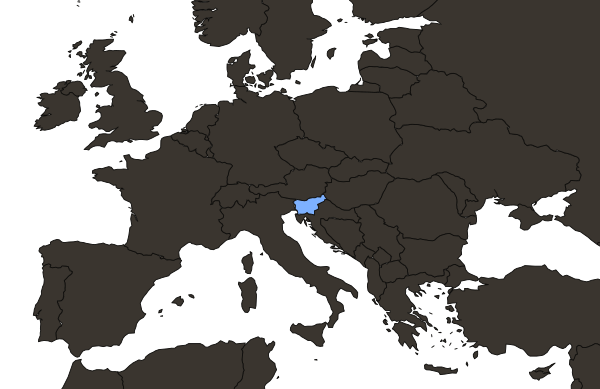
 is an Alpine country of about 2.14 million people between Italy, Austria, Hungary and Croatia. It was the first republic to leave Yugoslavia in 1991. It joined NATO and the EU in 2004. Prime Minister Janez Janša took office for the fourth time in June 2026. Medicines made for Swiss companies are its largest export.
Where Slovenia ranks
All rankings →- #147of 197Population2.1 million
- #32of 189GDP per person$37,357
- #14of 196Median age44.7 years
- #32of 196Life expectancy81.9 years
- #64of 196Births per woman1.58
- #26of 157Share born abroad14.9%
Which country has the biggest army? Largest armies in the world →
Which alliances is Slovenia in?
All alliances →Who runs Slovenia?
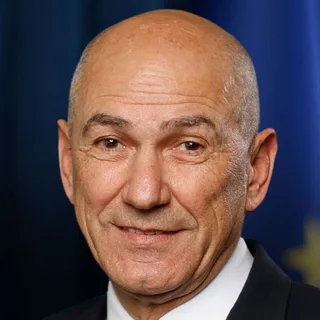
Prime Minister Janez Janša was born in Ljubljana on September 17, 1958. A Yugoslav military court jailed him in 1988, and he served as defense minister during the 1991 war of independence. He has led the Slovenian Democratic Party (SDS) since 1993 and was prime minister three times before. He is married with four children. In the election of March 22, 2026, Robert Golob's Freedom Movement came first with 29 of 90 seats. The SDS won 28, and Golob could not form a coalition. Parliament elected Janša on May 22, and his government took office on June 4, 2026 (chart). His coalition holds only 43 seats, so it relies on the Resni.ca party and two minority MPs. On October 11, 2026 voters rejected one of the government's laws in a referendum. Another vote, on its development law, is set for December 6. President Nataša Pirc Musar, a lawyer who once represented Melania Trump, has served since December 2022.
- SDS (Janša) 28
- NSi, SLS and Fokus 9
- Democrats 6
- Resni.ca (backs the government) 5
- Minority MPs 2
- Freedom Movement (Golob) 29
- Social Democrats 6
- Levica and Vesna 5
Official portrait (June 2026): Government of the Republic of Slovenia, Wikimedia Commons, public domain (cropped)
Who are Slovenia's allies and rivals?
Slovenia joined NATO on March 29, 2004 and the EU on May 1, 2004. In 2007 it became the first of the new EU members to adopt the euro. Slovenia and Croatia co-own the Krško nuclear plant, but they disagree over their sea border in the Bay of Piran. An arbitration court gave Slovenia most of the bay in 2017. Croatia had left the case in 2015 after a phone-tapping scandal, and it rejects the ruling. Austria has checked its border with Slovenia since 2015 and extended the checks into March 2027. Italy's checks run until December 18, 2026. Prime Minister Janez Janša visited Kyiv in July 2026, and his government backs EU sanctions on Russia. The Speaker of parliament, Zoran Stevanović, wants a referendum on leaving NATO. NATO puts Slovenia's defense spending at 1.61% of GDP in 2026, the lowest in the alliance. The government says an October 2026 budget change raises it to 2.03%.


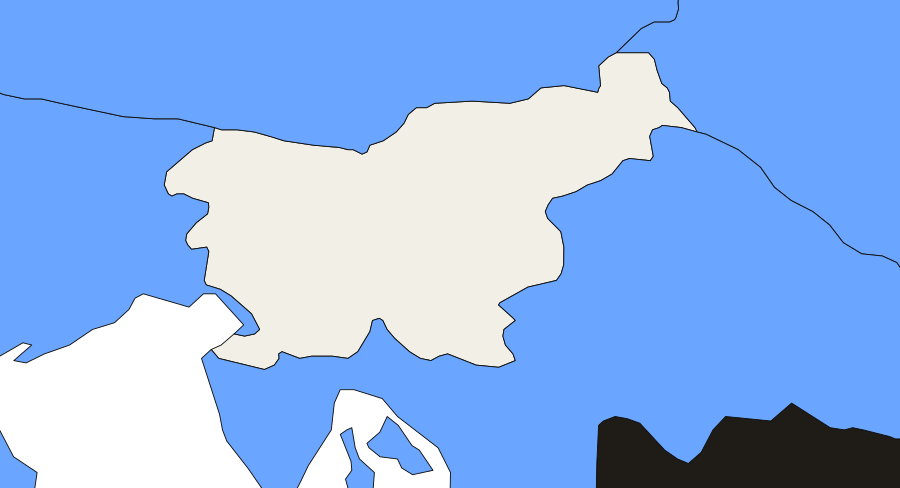
- Bay of Piran An arbitration court gave Slovenia most of the bay in 2017. Croatia rejects the ruling.
- Krško Nuclear plant owned half by Slovenia and half by Croatia. Its license runs to 2043.
- Šentilj Main crossing into Austria, which has checked this border since 2015.
- Slovenia
- Partner
Who does Slovenia trade with?
Slovenia exported $80.8 billion of goods in 2025 and imported $79.4 billion (UN Comtrade). Switzerland bought 42.2% of exports (chart) and supplied 23.9% of imports. Most of this is processing work. Slovenian plants make medicines for Swiss drug companies, mainly Novartis and Sandoz, which owns the Lek company. Medicines were 39.2% of exports. This trade adds little to Slovenia's GDP, and in 2026 lower pharmaceutical exports pushed goods trade into a deficit. China supplied 15.0% of imports. Krka, a Slovenian generic drug maker, passed €2 billion in sales in 2025. Renault built 2,251,416 Clio cars at its Novo Mesto plant until June 2026. The plant now makes the electric Twingo and the Dacia Spring. China's Hisense has owned the appliance maker Gorenje since 2018. The Port of Koper, Slovenia's only cargo port, handled a record 1.27 million containers (TEU) in 2025. The economy grew 1.5% in 2025, and the government's forecasters expect 3.8% in 2026.
Sells to
Share of Slovenia's exports
 Switzerland42.2%
 Germany10.2%
 Croatia6.8%
 Italy6.3%
 Austria4.0%


Goods, 2025. UN Comtrade (Slovenia's own figures; imports by country of origin).
How did Slovenia break away from Yugoslavia?
Slovenes lived under the Habsburg Empire until 1918, when they joined the Kingdom of Serbs, Croats and Slovenes, later Yugoslavia. In Tito's Yugoslavia, Slovenes were about one in thirteen people but produced about a fifth of its output. In 1988 a military court tried four men, among them Janez Janša, for revealing military secrets. The trial was held in Serbo-Croatian, not Slovene, and set off mass protests. In September 1989 Slovenia's assembly declared the right to secede. In April 1990 the opposition DEMOS coalition won the first free elections. In a referendum on December 23, 1990, 88.5% of all voters backed independence. Slovenia declared independence on June 25, 1991. The war with the Yugoslav army lasted ten days and killed 76 people. Few Serbs lived in Slovenia, and Belgrade cared more about Croatia. The last Yugoslav soldiers left on October 25, 1991, and the European Community recognized Slovenia on January 15, 1992.
Why did Slovenia change course on Israel?
Slovenia's policy on Israel changed sharply after the 2026 election. Under Prime Minister Robert Golob, parliament recognized Palestine on June 4, 2024, by 52 votes to none. The opposition boycotted the vote. On July 31, 2025 Golob's government banned arms trade with Israel, the first EU country to do so. It later banned imports from Israeli settlements and barred Prime Minister Benjamin Netanyahu and two of his ministers from entering Slovenia. On June 11, 2026, a week after it took office, the government of Prime Minister Janez Janša reversed all of these measures. On June 26 Janša told an Israeli newspaper that Slovenia would freeze its recognition of Palestine and move its embassy to Jerusalem. Neither step has been taken. President Nataša Pirc Musar says the recognition stands, and opening or closing an embassy needs her decree. Resni.ca, the party that keeps the government in power, opposes the embassy move. Israel opened its first embassy in Ljubljana on September 9, 2026.