
Country profile · Central Europe
 Austria
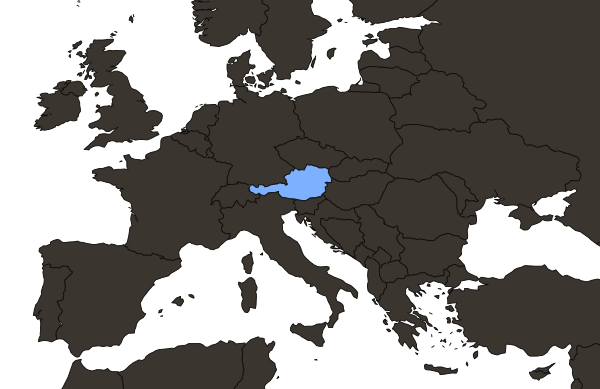
 is a landlocked country of about 9.2 million people in Central Europe. It has been in the EU since 1995 and permanently neutral since 1955, so it is not in NATO. Chancellor Christian Stocker leads a three-party coalition, while the far-right Freedom Party leads the polls. Germany buys almost 30% of Austria's exports.
Where Austria ranks
All rankings →Which alliances is Austria in?
All alliances →Who runs Austria?
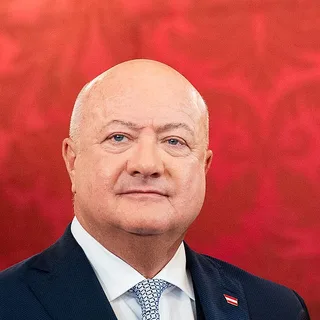
Austria is a parliamentary republic. President Alexander Van der Bellen, a former leader of the Greens, is head of state. The chancellor runs the government. Chancellor Christian Stocker was born in Wiener Neustadt in 1960 and worked there as a lawyer and deputy mayor. The far-right Freedom Party (FPÖ) won the election of September 29, 2024 with 28.8% of the vote, its first win. Its leader, Herbert Kickl, failed to form a government with Stocker's conservative People's Party (ÖVP). Stocker became chancellor on March 3, 2025, leading the first three-party government since 1949, with the Social Democrats (SPÖ) and the liberal NEOS. The coalition holds 110 of the 183 seats in the National Council (chart). In October 2026 the FPÖ polled 38% to 40%, about twice the ÖVP. Vice-Chancellor Andreas Babler of the SPÖ said on October 4, 2026 that he will step down. The next election is due in 2029.
- ÖVP 51
- SPÖ 41
- NEOS 18
- Opposition (FPÖ 57, Greens 16) 73
Photo (March 2025): Austrian Foreign Ministry (BMEIA), Michael Gruber, Wikimedia Commons, CC BY 2.0 (cropped)
Who are Austria's allies and rivals?
Austria joined the EU in 1995 and uses the euro. It is not in NATO, but it joined NATO's Partnership for Peace in 1995 and the European Sky Shield air-defense project in 2023. Germany is its largest trade partner. On June 3, 2026, Austria won a seat on the UN Security Council for 2027 and 2028, beating Germany in the vote. For years Austria was one of the EU members closest to Russia. President Vladimir Putin danced at Foreign Minister Karin Kneissl's wedding in 2018, and she later moved to Russia. Austria imported Russian gas from 1968 until Gazprom stopped deliveries in November 2024. Raiffeisen Bank International is still the largest Western bank in Russia. In May 2026 a Vienna court convicted a former intelligence officer, Egisto Ott, of spying for Russia, and Austria expelled three Russian diplomats. Because of its neutrality, Austria sends Ukraine humanitarian aid but no weapons.
Allies and partners
- European UnionMember since 1995; uses the euro
 GermanyBuys 29.6% of exports
 CzechiaPartner in the Slavkov group since 2015
 SlovakiaPartner in the Slavkov group since 2015
Tensions
 RussiaSpy convicted; three diplomats expelled in 2026
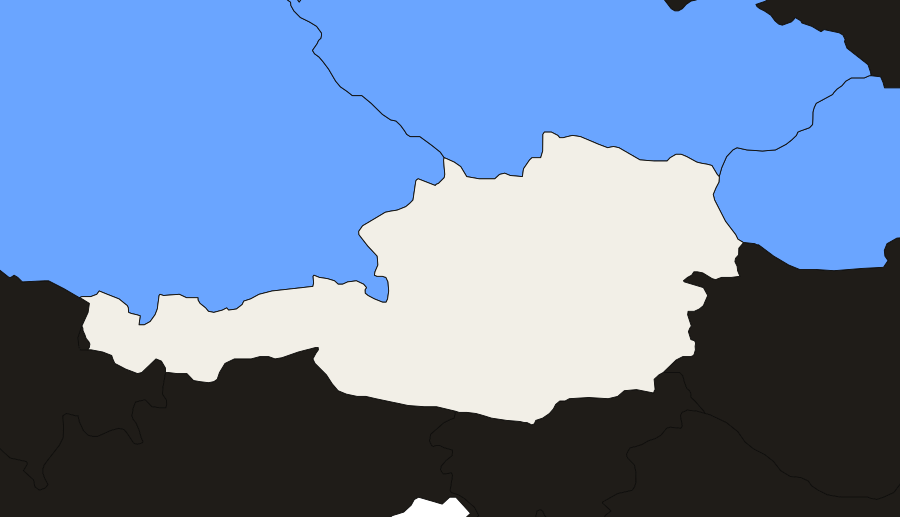
- Vienna One of the UN's four headquarters. The IAEA, OPEC and the OSCE are based here.
- Baumgarten Gas hub where Russian gas arrived from 1968. Since 2025 most gas enters from Germany instead.
- Zwentendorf Nuclear plant finished in 1978 but never switched on after 50.47% voted no in a referendum.
- Braunau am Inn Adolf Hitler's birthplace. His birth house opened as a police station in July 2026.
- Austria
- Partner
Who does Austria trade with?
Austria exported €189.8 billion of goods in 2025 and imported €196.9 billion (Statistik Austria). Germany bought 29.6% of exports, followed by the United States at 6.7% and Italy at 6.6% (chart). Germany also supplied 31.4% of imports, and China 9%. Machinery and vehicles make up 37.2% of exports, followed by metals, steel and chemicals. Exports to the United States fell 21.2% in 2025 after the US raised tariffs. The economy shrank by 0.7% in 2023 and 0.3% in 2024, and grew 0.7% in 2025. Inflation peaked at 11.2% in January 2023, above the euro area's peak. In September 2026 it was 3.6%, pushed up by fuel prices during the war with Iran. The budget deficit was 4.2% of GDP in 2025, so the EU opened an excessive deficit procedure against Austria in July 2025. Tourism set a record of 157.3 million overnight stays in 2025.
Sells to
Share of Austria's exports
- Germany29.6%
 United States6.7%
 Italy6.6%
 Switzerland5.4%
 Poland3.8%

Goods, 2025, as reported by Austria. UN Comtrade.
Why is Austria neutral?
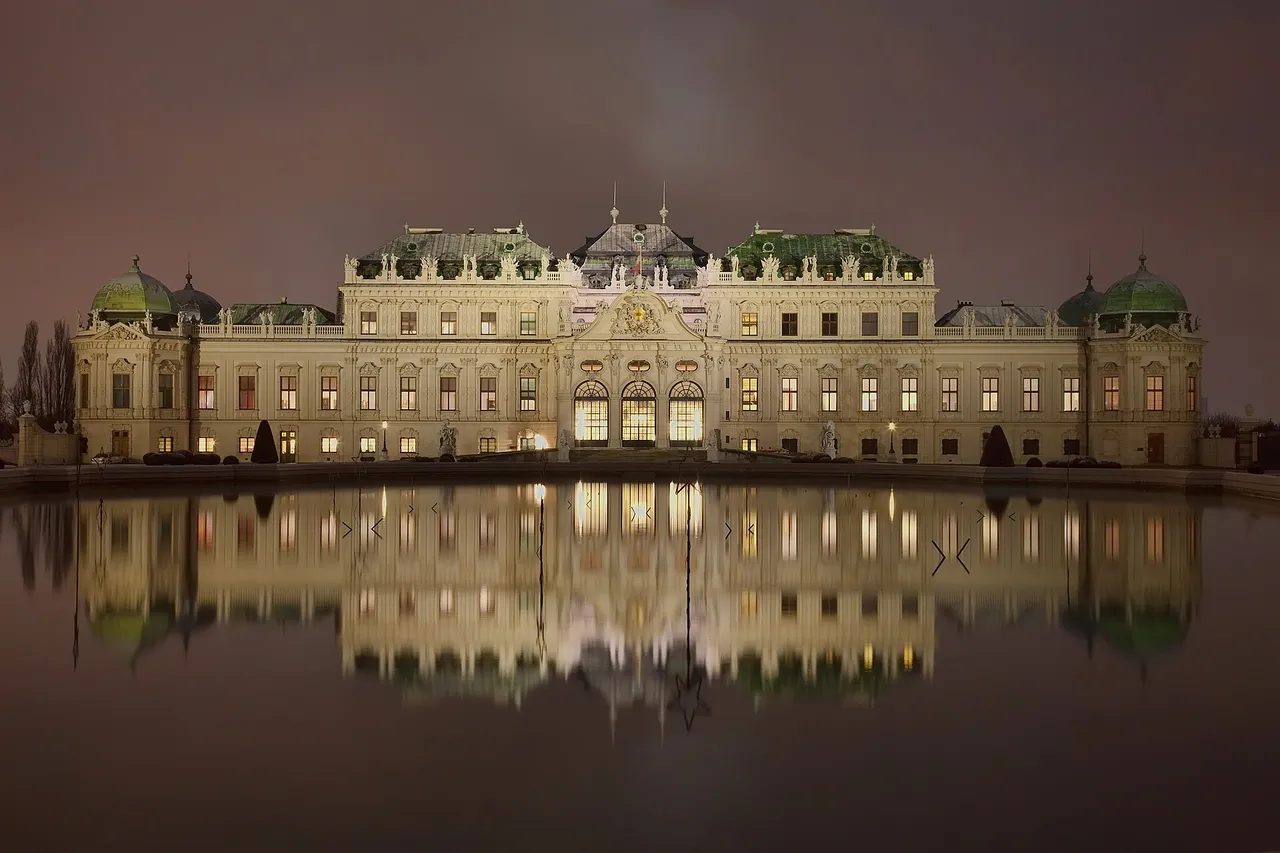
The Habsburg family ruled Austria from 1282 until the empire of Austria-Hungary collapsed in 1918. Nazi Germany annexed Austria in March 1938, and about 65,000 Austrian Jews were murdered in the Holocaust. After 1945 the United States, the Soviet Union, Britain and France occupied the country and divided Vienna into sectors. The State Treaty, signed at the Belvedere palace on May 15, 1955, ended the occupation. The last foreign troops left in October 1955. On October 26, 1955, now the National Day, parliament declared Austria permanently neutral. The law bans joining any military alliance or hosting foreign bases. In polls from 2024 and 2025, 59% to 74% of Austrians wanted to keep neutrality. Chancellor Christian Stocker says joining NATO is not an issue. Austria spends about 1.1% of GDP on defense (chart). The government plans to extend military service from six to nine months from 2027, but the bill has not passed.
Military spending as a share of GDP, 2025
Full ranking →- Poland4.5%
- Germany2.3%
- Italy1.9%
- Austria1.1%
- Switzerland0.8%
SIPRI Military Expenditure Database, 2026 edition
Who lives in Austria?
Austria had 9,215,956 people on January 1, 2026, and 22.9% of them were born abroad (Statistik Austria). The UN, which counts differently, puts the share at 25.5% (chart). Germans are the largest group of immigrants, followed by people from Bosnia, Türkiye and Romania. Austria took in 88,340 asylum applications in 2015 and a record 112,272 in 2022. In 2025 the number fell to 16,284. The government paused family reunification for refugees in July 2025. In July 2025 it deported a Syrian, the first deportation to Syria in about 15 years. At the end of 2025 Austria hosted 286,651 refugees, mostly from Syria, Ukraine and Afghanistan. Vienna passed two million residents in 2023 for the first time since 1910. Women have 1.30 children on average, a record low, and more people have died than were born every year since 2020.
Share of people born abroad, 2024
Full ranking →- Switzerland31.1%
 Australia30.4%
 New Zealand28.2%
- Austria25.5%
 Ireland23.1%
- Germany19.8%
UN DESA, International Migrant Stock 2024, 2024