
Resource · Food and farming
Cocoa
Côte d'Ivoire grows the most cocoa, 35.8% of the world's 4.7 million tonnes in 2024/25. Ghana grew 12.8% and Ecuador 12.1%. Côte d'Ivoire is also the largest grinder and exporter of cocoa beans. Prices hit a record $12,931 a tonne in December 2024, fell below $3,000 in February 2026 and stood near $5,500 in November 2026.
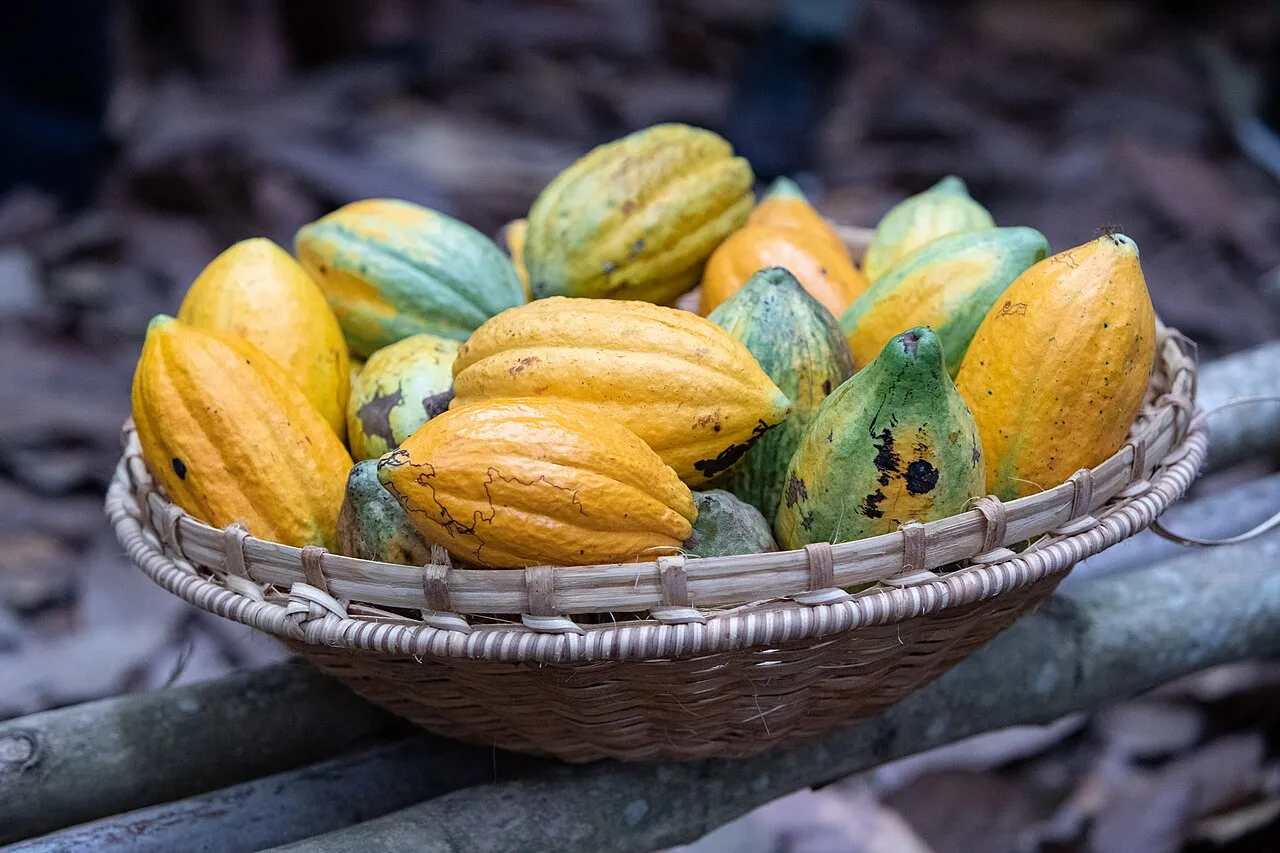
- Grown in 2024/25
- 4.73 million t
- up 8.5% on the season before
- Largest grower
 1.68 million t
- 35.8% of the world, 2024/25
- Largest grinder
- 744,000 t
- 15% of world grindings, 2023/24
- Largest bean importer
 818,000 t
- 27% of world bean imports, 2024
- Record price
- $12,931 a tonne
- December 18, 2024
Which countries grow the most cocoa?
Côte d'Ivoire grew the most cocoa in 2024/25, with 1.68 million tonnes, 35.8% of the world harvest. Ghana produced 600,000 tonnes (12.8%) and Ecuador 570,000 tonnes (12.1%). Africa as a whole grew 69% of the total, with Nigeria (7.0%) and Cameroon (6.6%) rounding out the top five.
Ghana's harvest fell by about a third in 2023/24, to 449,000 tonnes, before recovering. Ecuador nearly overtook Ghana that season, finishing within 30,000 tonnes.
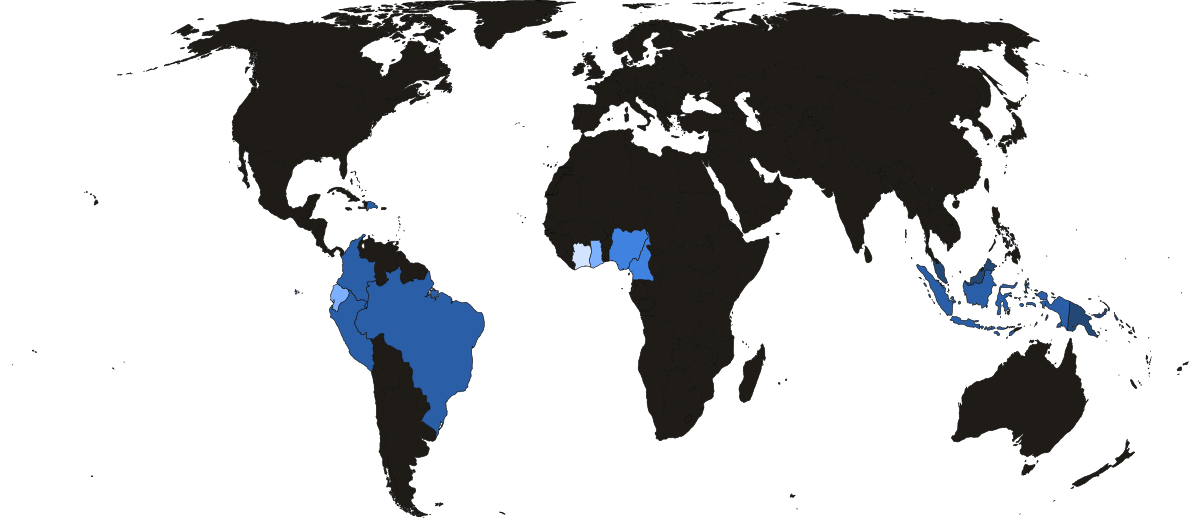


- Under 1%
- 1%–5%
- 5%–10%
- 10%–25%
- Over 25%
- No production
Who sets the price cocoa farmers get?
Côte d'Ivoire's Coffee-Cocoa Council (CCC) and Ghana's COCOBOD each fix a guaranteed farm price for the season. The CCC sets a price twice a year and sells most of the crop in advance. COCOBOD is Ghana's sole exporter.
Côte d'Ivoire's government cut its farm price 57% in March 2026, from a record 2,800 to 1,200 CFA francs a kilo. It kept 1,200 for 2026/27. Ghana cut its price about a fifth in February 2026, then set 42,400 cedis a tonne for 2026/27. Ghana now pays farmers nearly 80% more. In 2023/24, when Ivorian prices were higher, Ghana lost 160,000 to 250,000 tonnes to smuggling into Côte d'Ivoire and Togo.
What cocoa farmers are paid
US dollars a tonne, 2026/27 main crop
 Ghana$3,650
- Côte d'Ivoire$2,050
What happened to cocoa prices?
Cocoa prices tripled between 2022 and 2024. The ICCO daily price averaged $7,330 a tonne in 2024. On December 18, 2024, New York futures hit a record $12,931 a tonne. The ICCO puts the 2023/24 deficit at 492,000 tonnes, the largest in more than 60 years. Drought, heavy rains, cocoa swollen shoot virus and aging trees cut West African harvests.
Prices fell as the 2024/25 harvest recovered. World output rose 8.5% and grindings fell, leaving a small surplus. Futures dropped to $2,951 a tonne on February 27, 2026. Fears of a smaller 2026/27 crop lifted them to about $6,600 in September 2026. They were near $5,500 in early November.
The cocoa price boom
US dollars a tonne, yearly average
Which countries process the most cocoa?
Côte d'Ivoire ground the most cocoa in 2023/24, processing 744,000 tonnes of beans into cocoa liquor, butter and powder. The Netherlands was second at 600,000 tonnes, followed by Germany (460,000), Malaysia (383,000) and Indonesia (380,000). About 49% of the world's grindings happened in cocoa-growing countries.
High prices cut demand in 2024/25. The ICCO estimates that world grindings fell 3.3% to 4.65 million tonnes. Côte d'Ivoire's grindings fell about 8% to 695,000 tonnes, and Europe's fell about 5%.
Where cocoa beans are ground
Thousand tonnes, 2023/24
- Côte d'Ivoire744
- Netherlands600
 Germany460
 Malaysia383
 Indonesia380
 United States300
 Brazil233
- Ghana194
Which countries import the most cocoa?
The Netherlands imported 818,000 tonnes of cocoa beans in 2024, 27% of world imports. Malaysia was second at 490,000 tonnes, followed by Germany (253,000) and the United States (198,000). EU members together took 53% of the world's cocoa bean imports, including trade between them.
The EU's deforestation regulation applies to large and medium companies from December 30, 2026. It requires importers to prove that cocoa was not grown on land deforested after December 31, 2020. The law also covers coffee, palm oil, soy, rubber, cattle and wood.
Who buys the world's cocoa beans
Thousand tonnes, 2024
- Netherlands818
- Malaysia490
- Germany253
- United States198
- Indonesia157
 Canada129
 France128
 Belgium121
History
Which country grew the most cocoa 120 years ago?
Ecuador did. In 1902 Ecuador grew about 20% of the world's cocoa. Brazil grew 17%. The Portuguese colony of São Tomé and Príncipe and the British colony of Trinidad grew about 14% each. Nearly nine-tenths of the world harvest of 123,480 tonnes came from the Americas and São Tomé and Príncipe. The British Gold Coast, today's Ghana, grew 2.2%. Côte d'Ivoire had exported 135 kilograms of cocoa in 1901.
The Gold Coast took the lead within ten years. In 1879 Tetteh Quarshie, a Ga blacksmith, brought cacao pods home from the island of Fernando Po and planted them at Mampong. African farmers spread the crop across the colony. By 1911 the Gold Coast was the world's largest producer. By 1922 it grew about 40% of the world harvest. By 1927 Ecuador had fallen to fifth place, mainly because of witches' broom, a fungal disease of cacao trees. Côte d'Ivoire passed Ghana as the largest producer in the late 1970s.
Share of world cocoa harvest
19022024/25 Ecuador20%12%
- Brazil17%4%
 São Tomé and Príncipe14%<1%
- Ghana2.2%13%
- Côte d'Ivoire0%36%
History
How slave labor on São Tomé's cocoa estates took Cadbury to court
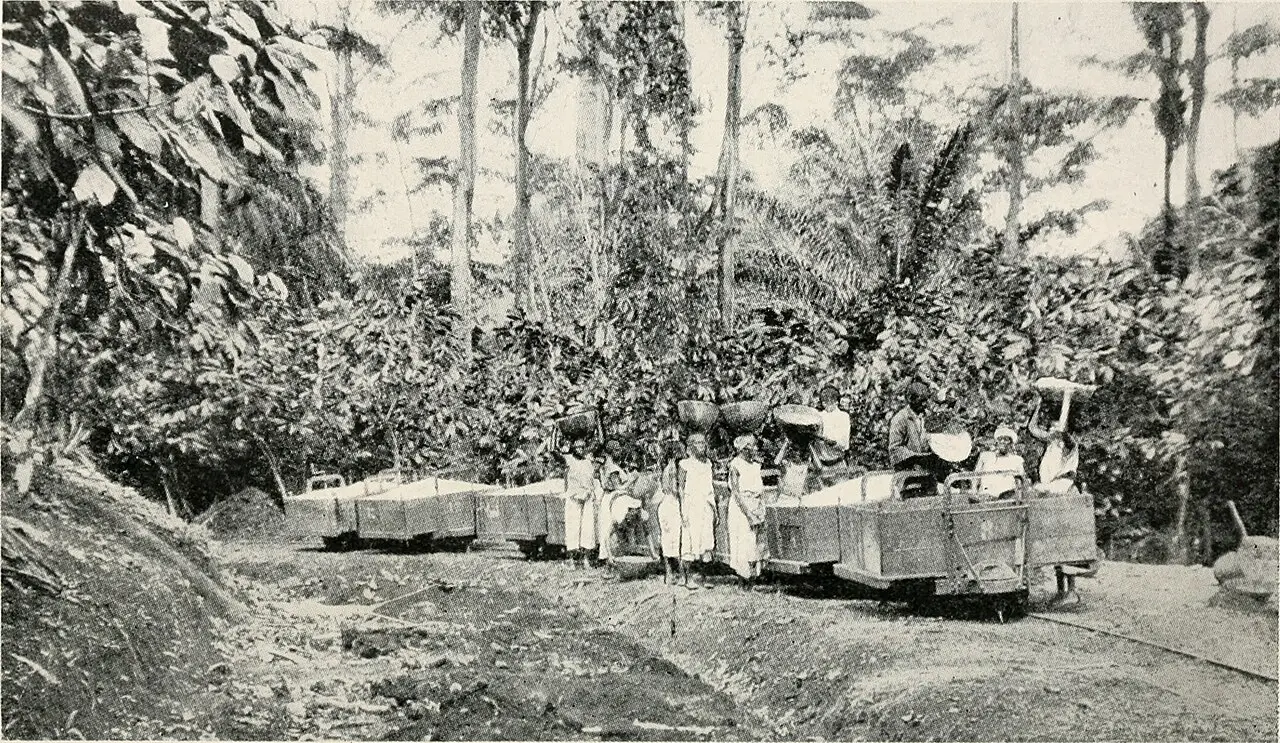
Cadbury sued a London newspaper that accused it of buying cocoa grown by slaves on the Portuguese islands of São Tomé and Príncipe. An estimated 67,000 Africans, most from Angola, were shipped to the plantations between 1888 and 1908 as contract laborers called serviçais. Portugal had formally ended slavery there by 1875. The British journalist Henry Nevinson walked through Angola in 1904 and 1905 and found shackles and human bones along the slave path. He calculated that one in five serviçais on Príncipe died every year.
William Cadbury heard of the slave labor in 1901. His firm bought about half its cocoa from São Tomé. In September 1908 the Standard accused Cadbury of hypocrisy. Cadbury sued for libel. In March 1909 Cadbury, Fry, Rowntree and the German firm Stollwerck stopped buying São Tomé cocoa. In December 1909 a jury in Birmingham found for Cadbury but awarded one farthing, a quarter of an old penny. Forced labor there lasted until 1975.
History
How cocoa made Houphouët-Boigny and paid for Côte d'Ivoire's civil war
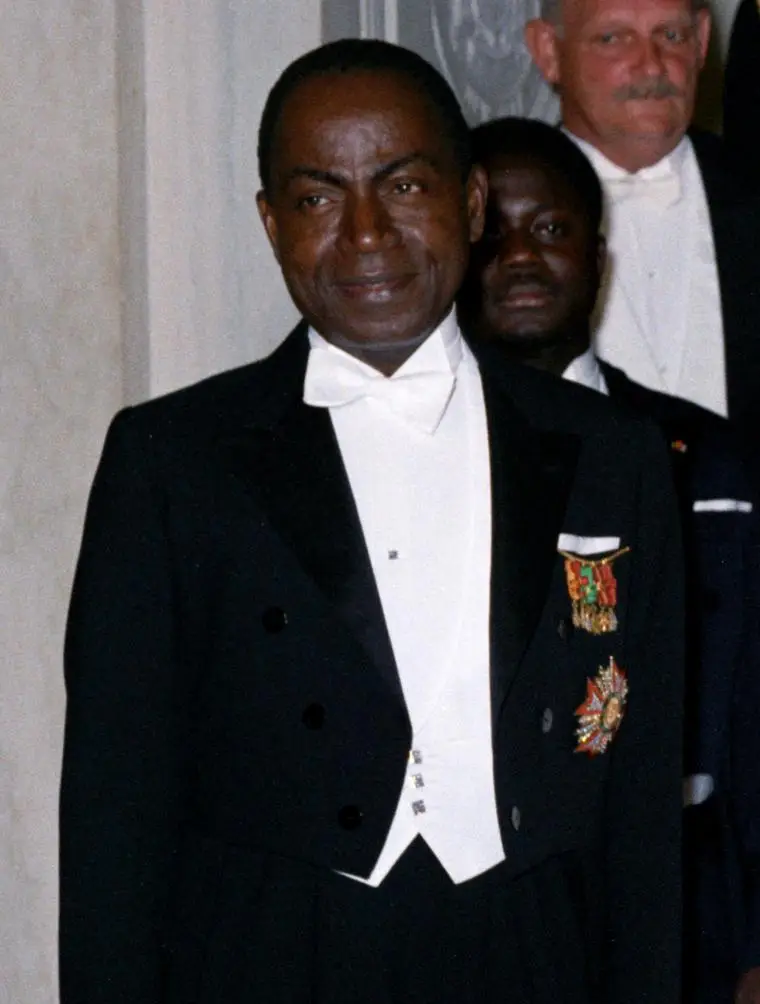
Cocoa gave Côte d'Ivoire its first president and paid for both sides of its civil war. Félix Houphouët-Boigny was a doctor and cocoa planter. In 1944 he became leader of the Syndicat Agricole Africain, a union of African planters. Members with enough coffee or cocoa land were exempt from forced labor. In 1945 he won a seat in the French parliament. In April 1946 the parliament passed his law abolishing forced labor in all French colonies. He ruled independent Côte d'Ivoire from 1960 until his death in 1993.
A 2002 army rebellion split the country in two. Global Witness found President Laurent Gbagbo's side put at least $58.8 million of cocoa money into the war. The rebels raised about $30 million a year by taxing cocoa. Gbagbo lost the November 2010 election to Alassane Ouattara but refused to leave. Ouattara called a cocoa export ban to cut off Gbagbo's money. About 3,000 people died before Gbagbo's capture in April 2011.
Other resources
All 33 resources → Brazil 35%
Food and farming
Coffee
Brazil grows 35% of the world's coffee. The EU drinks the most, 24% of the total.
 Thailand 32%
Industrial crop
Rubber
Thailand grows 32% of the world's natural rubber. China uses 46% of it.
 China 17.5%
Food and farming
Wheat
China grows the most wheat. Russia exports the most, 21% of world trade.