
Resource · Food and farming
Coffee
Brazil grows the most coffee: 63.0 million 60-kg bags in 2025/26 (3.78 million tonnes), 35.2% of the world harvest. Vietnam is second at 17.7%. Brazil is also the largest exporter, with 26% of world trade, and the European Union drinks the most. Arabica futures hit a record $4.38 a pound in October 2025, then fell about a third.
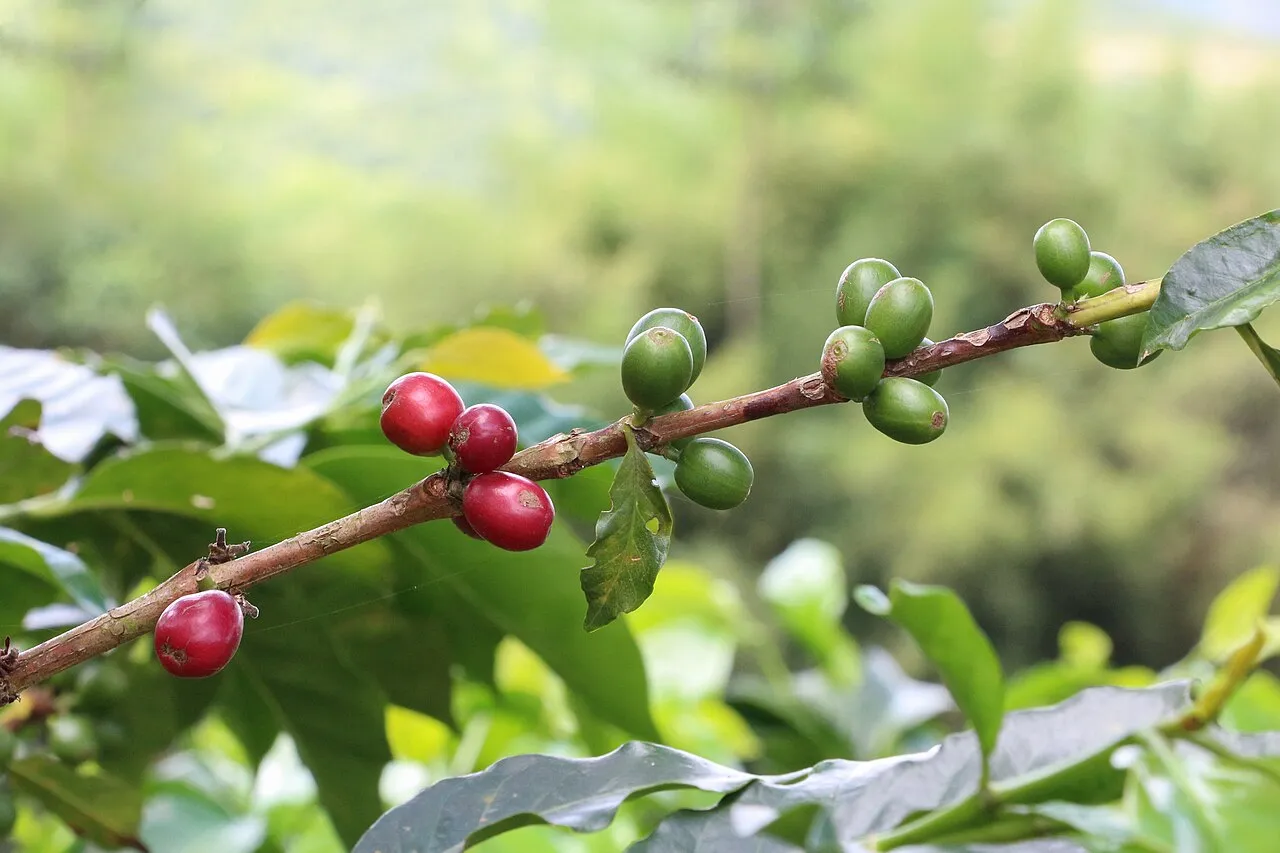
- Grown in 2025/26
- 10.7 million t
- 178.8 million 60-kg bags
- Largest grower
 35.2%
- of the world, 3.78 million t
- Largest exporter
- 2.27 million t
- 37.9 million bags, 26% of exports
- Largest consumer
 24%
- of the world's coffee, 41.6 million bags
- Record price
- $4.38 a pound
- arabica, October 23, 2025
Which countries grow the most coffee?
Brazil grew 63.0 million 60-kg bags of coffee in 2025/26 (3.78 million tonnes), 35.2% of the world harvest. Vietnam was second with 31.7 million bags (17.7%) and Colombia third with 12.5 million (7.0%). Nearly all coffee grows in the tropics, between the Tropic of Cancer and the Tropic of Capricorn.
The USDA forecasts a record world harvest of 189.7 million bags for 2026/27, led by record crops in Brazil, Vietnam, Ethiopia and Uganda.
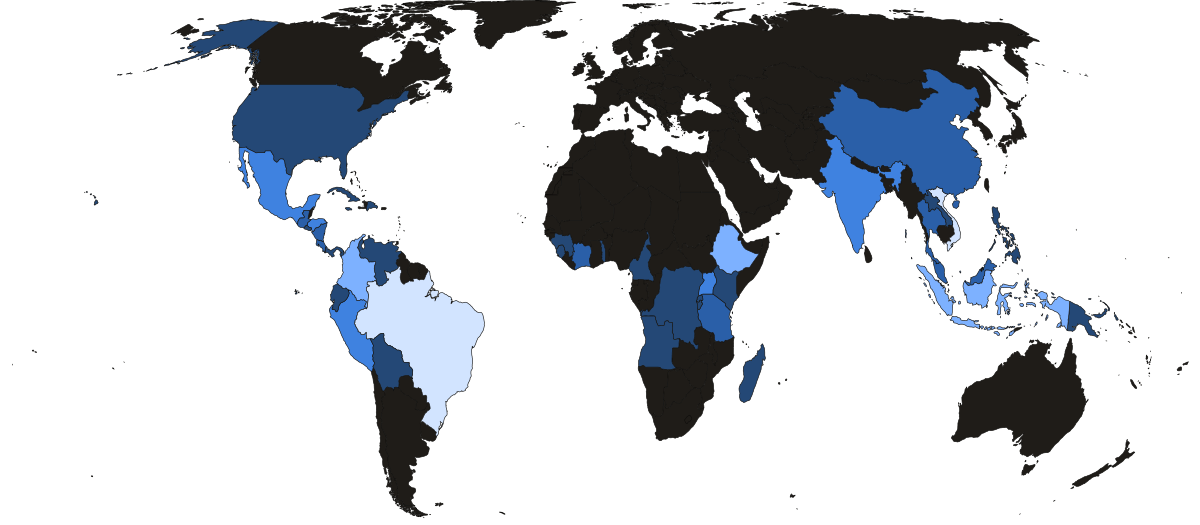
- Under 0.5%
- 0.5%–2%
- 2%–5%
- 5%–15%
- Over 15%
- No production
Who exports the most coffee?
Brazil exported 37.9 million bags of coffee in 2025/26 (2.27 million tonnes), 26% of world trade. Vietnam shipped 28.5 million bags (19.5%). The top five exporters sold 65% of all coffee traded. About three quarters of the coffee grown worldwide is exported, mostly as unroasted green beans.
Germany overtook the United States as Brazil's biggest buyer in 2025/26, taking 5.2 million bags, according to Brazil's exporters' council Cecafé. The EU and Switzerland also re-export about 7.9 million bags of roasted and instant coffee made from imported beans.
Who sells the world's coffee
Million 60-kg bags, 2025/26

Arabica or robusta: what is the difference?
Arabica made up 52.8% of world coffee output in 2025/26 (94.4 million bags) and robusta 47.2% (84.4 million bags). Brazil grew 40% of the world's arabica and Vietnam grew 36% of its robusta. Colombia, Ethiopia, Honduras and Peru grow only arabica. Vietnam, Indonesia, Uganda and India grow mostly robusta.
Arabica grows at higher altitudes and has a milder taste. Robusta grows in hot lowlands, contains about twice as much caffeine and is used in most instant coffee and in many espresso blends. Arabica originated in Ethiopia.
Where arabica and robusta grow, 2025/26
Share of world arabicaShare of world robusta- Brazil40%30%
 Vietnam1.3%36%
 Colombia13%0%
 Ethiopia12%0%
 Indonesia1.5%13%
 Uganda1.2%7.1%
 India1.8%5.6%
Who drinks the most coffee?
The European Union consumed 41.6 million bags of coffee in 2025/26 (2.49 million tonnes), 24% of the world total. The United States was the largest single country at 25.6 million bags (14.7%). Brazil ranked third at 22.3 million bags, the largest consumer among the coffee-growing countries.
Per person, the Nordic countries drink the most. Canada uses about 7.6 kg of green-bean-equivalent coffee per person a year, Brazil about 6.3 kg, the EU about 5.5 kg and the United States about 4.4 kg.
Who drinks the world's coffee
Million 60-kg bags, 2025/26
- European Union41.6
 United States25.6
- Brazil22.3
 Japan6.7
 Philippines6.5
 China6.4
 Canada5.1
- Vietnam4.9
Why did coffee prices hit records?
Arabica futures reached an all-time high of $4.38 a pound on October 23, 2025. Five years of poor weather cut Brazil's arabica harvest from 49.7 million bags in 2020/21 to 38.0 million in 2025/26. On August 6, 2025, the United States put a 50% tariff on Brazilian coffee. The White House removed it for most coffee on November 20, 2025.
By early November 2026, arabica traded at about $2.80 a pound, about a third below a year earlier, as Brazil harvested a record crop. From December 30, 2026, the EU will require importers to prove their coffee was not grown on land cleared after 2020.
Brazil's arabica harvest
Million 60-kg bags
History
How coffee spread from Yemen to the Dutch and French colonies
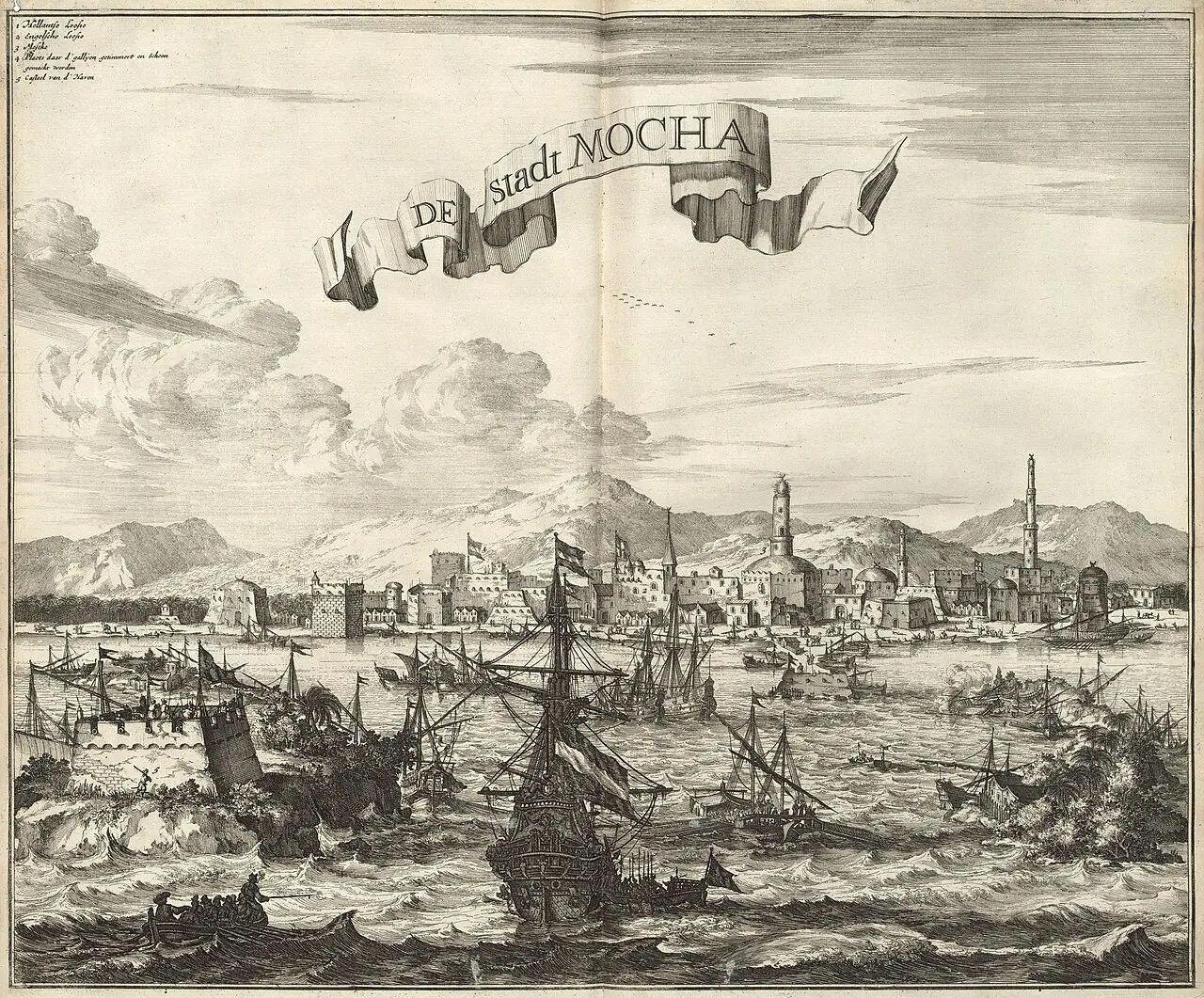
Coffee left Yemen when the Dutch and the French planted it in their own colonies around 1700. Sufis in Yemen drank coffee by the mid-15th century to stay awake during night prayers. The Ottoman Empire took Yemen's coast in 1538 and taxed coffee at the port of Mocha. The Zaydi imams drove the Ottomans out in 1636. The Dutch and English East India Companies kept trading houses at Mocha, then the world's coffee market.
In 1699 the Dutch East India Company planted coffee from India on Java. In 1723 Gabriel de Clieu, a French naval officer, carried a seedling to Martinique. Water ran so short on the voyage that he shared his ration with the plant for more than a month. By 1789 the French colony of Saint-Domingue grew about half of the world's coffee, on plantations worked by enslaved Africans. Their revolt in 1791 began the Haitian Revolution, and in 1804 the colony became independent as Haiti.
History
Why Brazil's coffee planters turned against their emperor
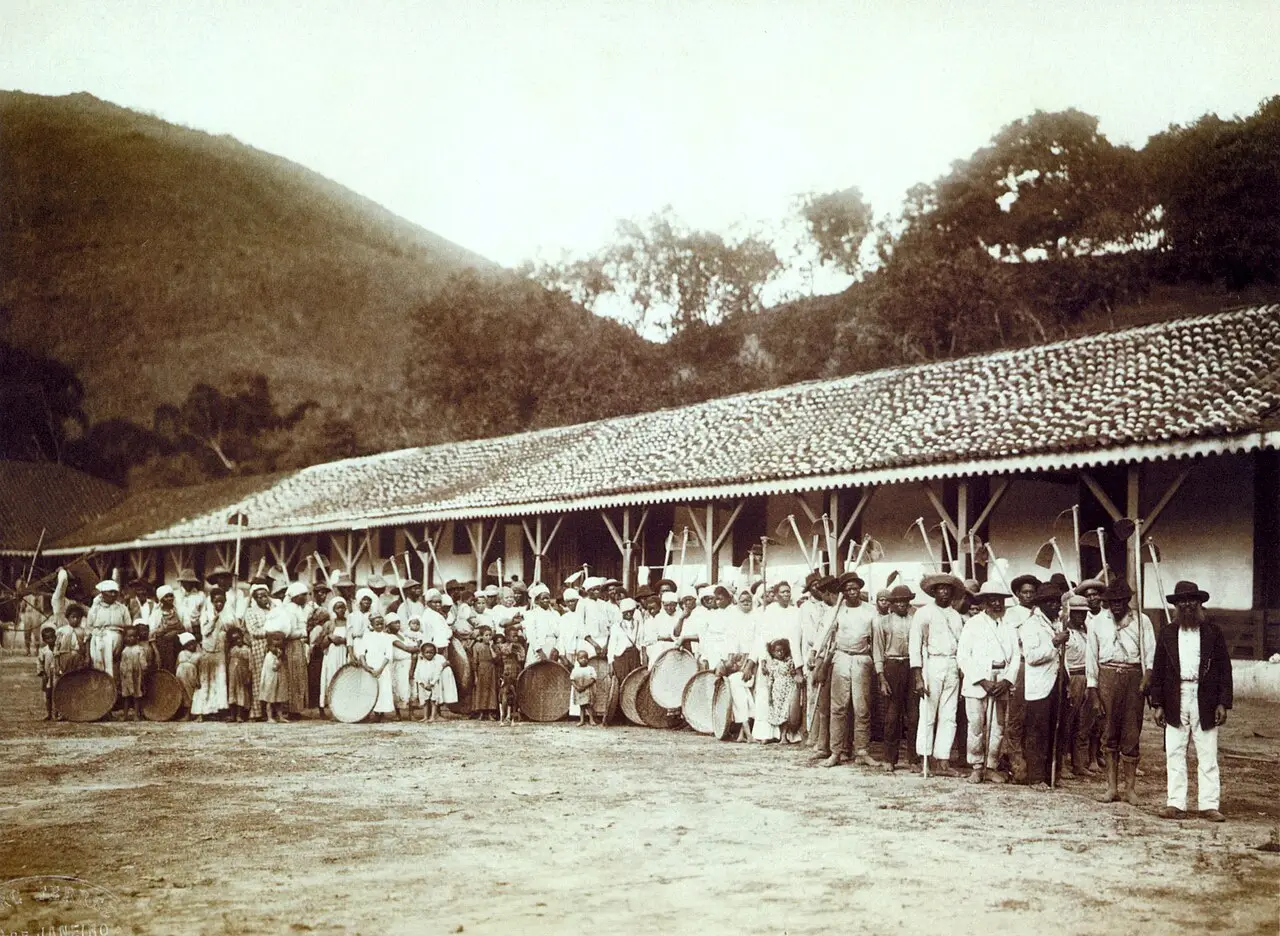
Brazil's coffee planters turned against the monarchy after it abolished slavery in 1888 without compensation. By the 1840s Brazil was the world's largest coffee grower, with about 40% of the harvest, mostly from the Paraíba Valley near Rio de Janeiro. About 1.7 million enslaved Africans were landed in Brazil between 1801 and 1850. Brazil banned the Atlantic slave trade in 1831, but the trade went on illegally until a new law in 1850, passed under pressure from Britain's Royal Navy.
On 13 May 1888 Princess Isabel, regent while her father, Emperor Pedro II, was in Europe, signed the Golden Law. It freed about 700,000 people. Brazil was the last country in the Americas to end slavery. Many planters of the Paraíba Valley then joined the republicans and were nicknamed the "republicans of May 14." On 15 November 1889 Marshal Deodoro da Fonseca led a military coup that ended the monarchy. Pedro II died in exile in Paris in 1891.
History
Who grew the world's coffee before the Great Depression?
In 1929 Brazil grew 67.5% of the world's coffee, 1.58 million of 2.34 million tonnes. Colombia was second with 9.0%. Since 1906 the states of São Paulo, Minas Gerais and Rio de Janeiro had bought surplus coffee and held it off the market to keep the world price high. Coffee earned more than half of Brazil's export income.
The price of coffee collapsed after the Wall Street crash of October 1929 began the Great Depression. A revolt in October 1930 overthrew President Washington Luís, a São Paulo politician, and Getúlio Vargas took power on 3 November. Between 1931 and 1944 Brazil's federal coffee agencies bought and destroyed more than 70 million 60-kg bags of coffee, most of it burned near the port of Santos. That is more than Brazil's whole harvest in 2025/26. Vietnam grew almost no coffee in 1929. It expanded robusta after its Doi Moi reforms of 1986 and passed Colombia as the second-largest grower around 2000.
Share of world coffee output
19292025/26

Other resources
All 33 resources →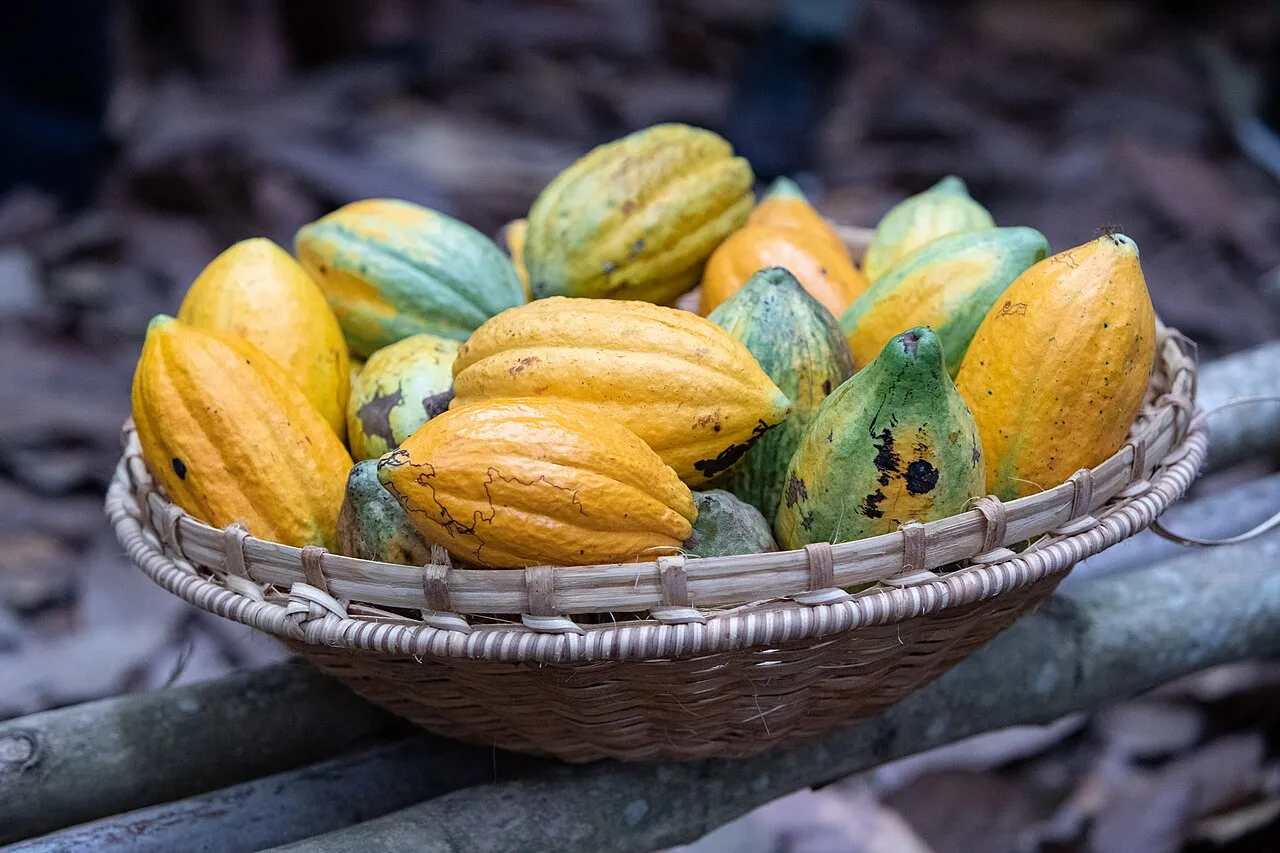
 Côte d'Ivoire 36%
Food and farming
Cocoa
Côte d'Ivoire grows 36% of the world's cocoa. Ghana and Ecuador follow.
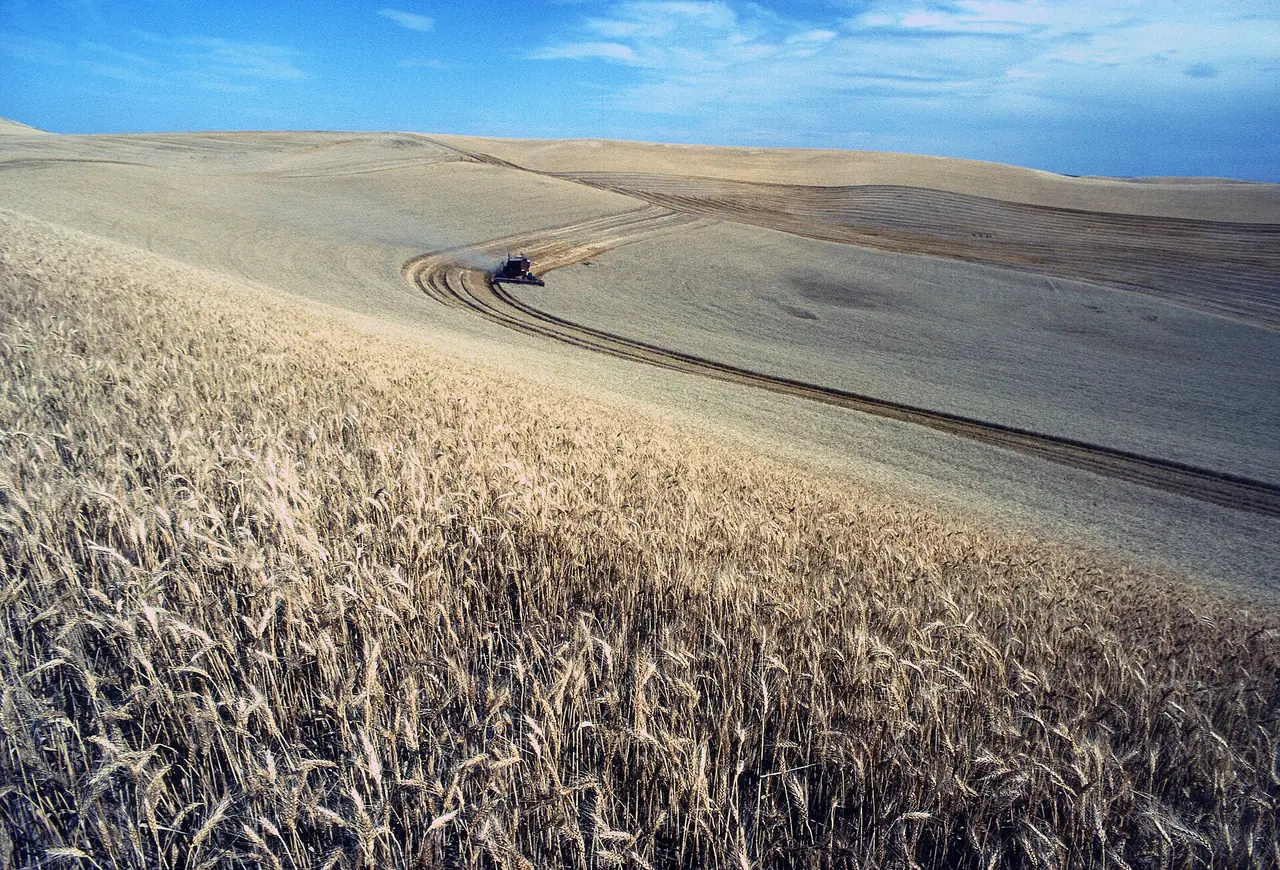 China 17.5%
Food and farming
Wheat
China grows the most wheat. Russia exports the most, 21% of world trade.
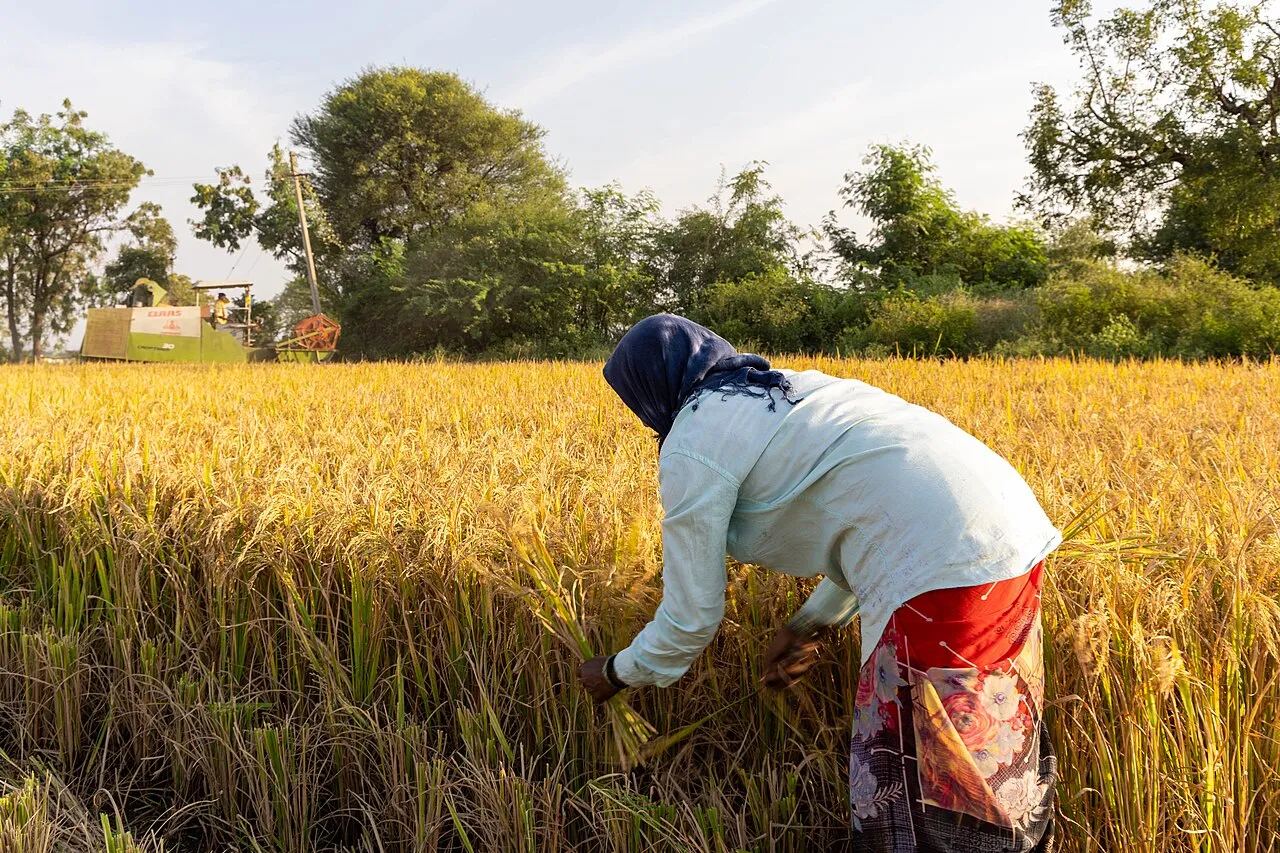 India 27%
Food and farming
Rice
India grows the most rice and exports 38% of world trade.