
Resource · Food and farming
Soybeans
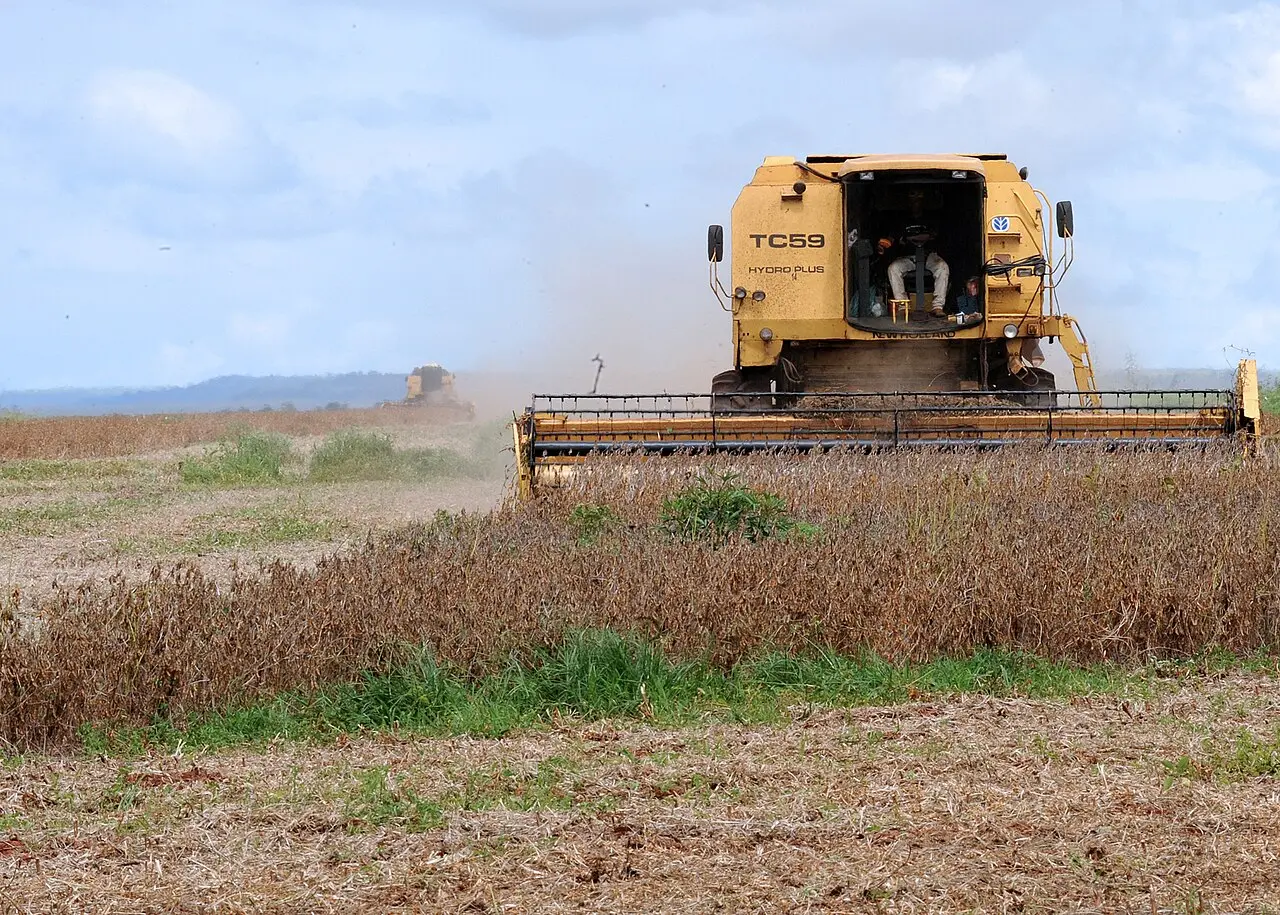
Brazil grows the most soybeans: 144 million tonnes in 2024, 36.2% of the world's 398 million. The United States is second at 119 million tonnes. Brazil is also the largest exporter, with 61% of the soybeans traded worldwide. China buys about 60% of world imports and crushes more soybeans than any other country, for animal feed and cooking oil.
- Grown in 2024
- 398 million t
- FAO; USDA puts 2025/26 at 429 million t
- Largest grower
 36.2%
- of the world, 144 million t, 2024
- Largest exporter
- 61%
- of world exports, 114 million t, 2025/26
- Largest importer
 60%
- of world imports, 113 million t, 2025/26
- Crosses a border
- 43%
- of the soybeans grown, against 27% of wheat
Which countries grow the most soybeans?
Brazil grew 144 million tonnes of soybeans in 2024, 36.2% of the world harvest of 398 million tonnes. The United States grew 119 million tonnes (29.9%) and Argentina 48.2 million (12.1%). Those three countries together produced 78% of the world's soybeans. The Americas as a whole grew about 85%.
Brazil overtook the United States as the largest grower in 2019 by FAO figures, producing 114 million tonnes against the United States' 97 million. Brazil has grown more every year since. By USDA estimates, Brazil's 2025/26 crop reached a record 180.5 million tonnes.
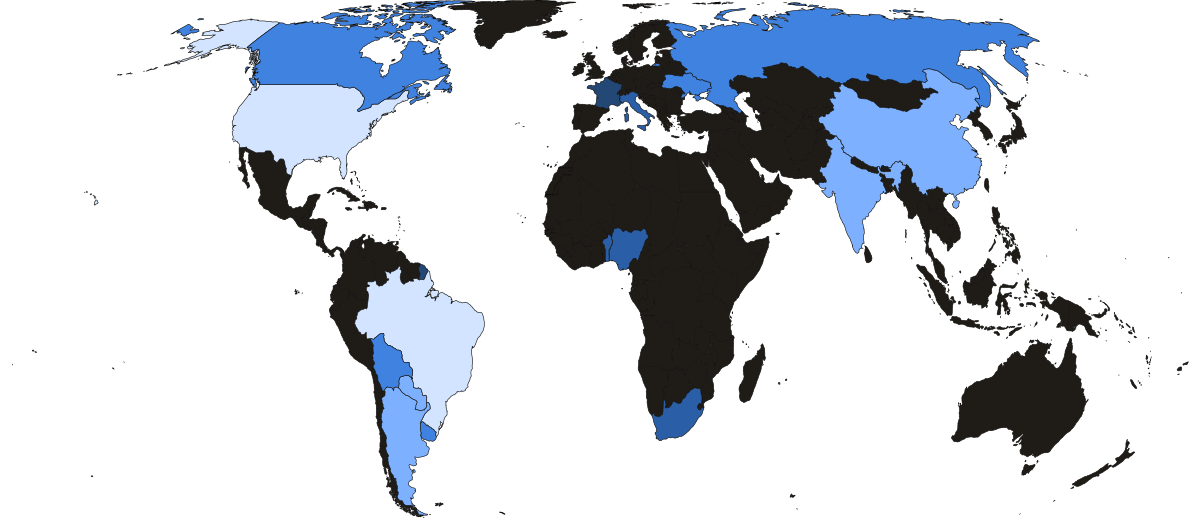
Soybean production, million tonnes, 2024
Food production by country →
- Under 0.5
- 0.5–2
- 2–10
- 10–50
- Over 50
- No production
Who exports the most soybeans?
Brazil exported 114.5 million tonnes of soybeans in 2025/26, 61% of the 186.6 million tonnes traded worldwide. The United States shipped 41.2 million tonnes (22%). Together they sold 83% of all soybeans traded. Brazil has exported more than the United States every year since 2012/13.
Argentina exported only 9.0 million tonnes of whole soybeans but led the world in soybean meal exports (29.7 million tonnes, 34% of the total) and soybean oil exports (6.81 million tonnes, 44%). Argentina crushes most of its crop at home.
Who sells the world's soybeans
Million tonnes, 2025/26


Who imports the most soybeans?
China imported 113.0 million tonnes of soybeans in 2025/26, about 60% of the 189.4 million tonnes bought worldwide. The European Union was a distant second at 14.0 million tonnes (7.4%). China's share has stayed between 57% and 65% every year since 2011/12. In 2000/01 it was 25%.
China grows only 20.6 million tonnes of soybeans (FAO, 2024) but uses about 134 million (USDA, 2025/26). It imports about 84% of what it uses. Soybean meal feeds China's pig herd, the world's largest, and a huge poultry industry.
China's share of soybean imports
Share of world soybean imports, 2025/26
- China60%
- European Union7.4%
- Argentina4%
- Mexico3.6%
- Everyone else25%
China
- 113 million tbought by China in 2025/26
- 84%of the soybeans China uses are imported
What are soybeans used for?
About 87% of the soybeans used worldwide are crushed into meal and oil. Crushing 376.3 million tonnes of soybeans in 2025/26 yielded 294.1 million tonnes of meal and 73.6 million tonnes of oil. Only 25.9 million tonnes (6%) were eaten directly as tofu, soy milk, soy sauce and other whole-bean foods.
Almost all soybean meal goes to animal feed: 99% in 2025/26. Most feeds chickens and pigs. Poultry take about 37% of all soy and pigs about 20% (2018 figures). About three quarters of soybean oil is eaten, as cooking oil and in processed food. Most of the rest goes to biodiesel and renewable diesel.
What the world's soybeans are used for
Share of the soybeans used worldwide, 2025/26
- Crushed for meal and oil87%
- Eaten as food6%
- Seed, whole-bean feed and losses7.1%
What crushing makes
- 294 million tof soybean meal, 99% fed to animals
- 74 million tof soybean oil, about three quarters eaten
How did the trade war hit US soybean exports?
US soybean exports fell from 58.1 million tonnes in 2017/18 to 41.2 million in 2025/26. On July 6, 2018, China put a 25% tariff on US soybeans. China's imports of US soybeans fell 49% that year, to 16.6 million tonnes.
On March 10, 2025, China added a 10% tariff. Chinese customs recorded no US soybean imports in September and October 2025. After Trump met Xi on October 30, 2025, the White House said China would buy 25 million tonnes a year in 2026 to 2028. By late October 2026, China had booked 15 to 16 million tonnes. US soybeans still pay a 13% tariff in China; Brazil's pay 3%.
US soybean exports
Million tonnes, by US marketing year
History
How soybeans paid for Japan's railway in Manchuria
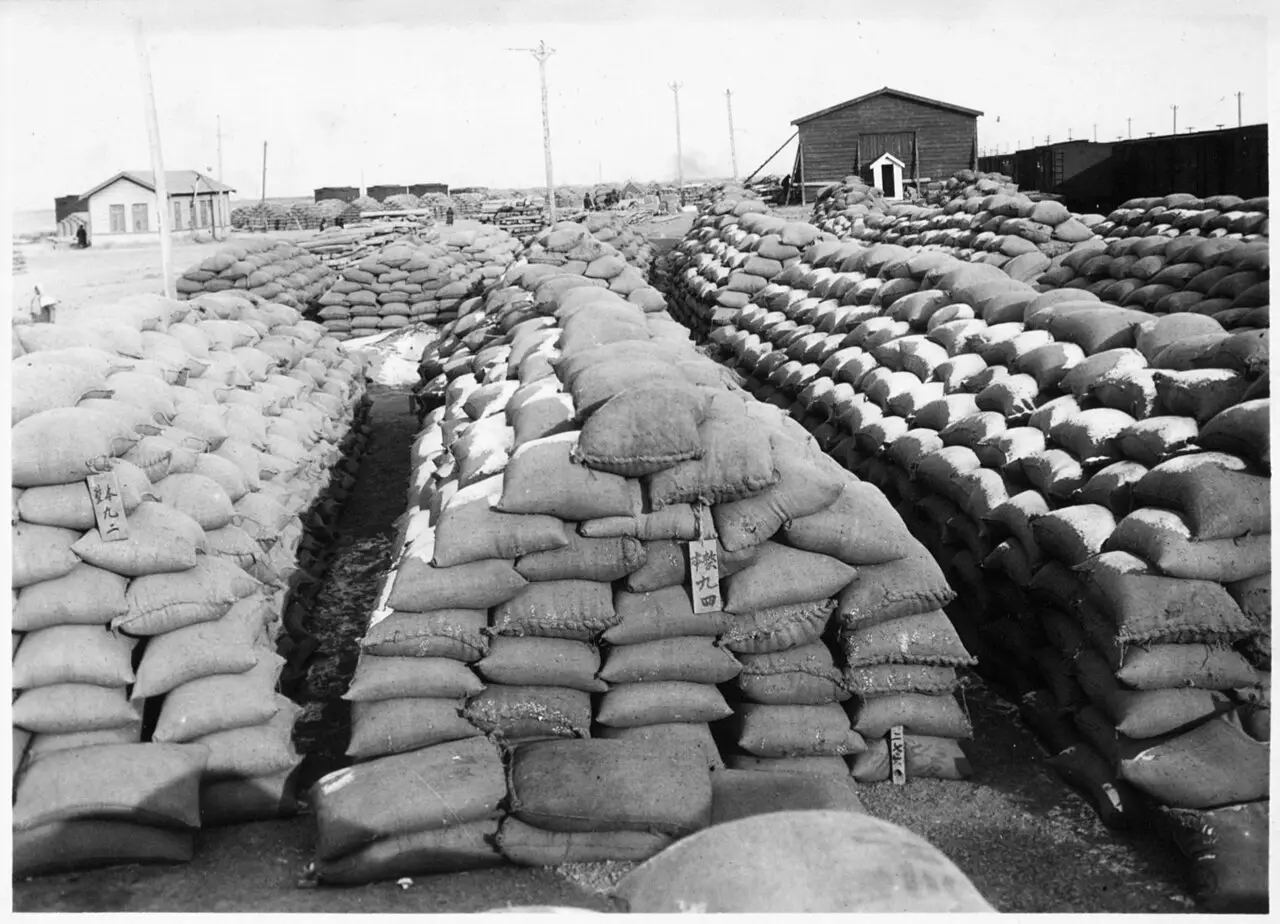
After Japan won the Russo-Japanese War in 1905, soybeans became the most important freight on the Manchurian railway it took from Russia. Japan's South Manchuria Railway Company ran the line from November 1906, with Goto Shinpei as its first president. Chinese settlers, mostly from Shandong and Hebei, farmed the beans. Japan controlled the transport, finance and export. Mitsui & Co. made the first large soybean shipments from Dairen (now Dalian) to Britain in 1908. In the season ending June 1909, about 300,000 tons of Manchurian soybeans sailed to Europe. By 1929 soybeans made up 60% of Manchuria's exports.
Japan's Kwantung Army guarded the railway. On 18 September 1931 two of its officers, Itagaki Seishiro and Ishiwara Kanji, had a small charge set off on the track near Mukden. The plotters blamed Chinese soldiers, and the Kwantung Army occupied Manchuria within months. On 1 March 1932 Japan proclaimed Manchukuo, with Puyi, the last Qing emperor, as head of state.
History
Which country grew the most soybeans before World War II?
In 1931 China grew about 86% of the world's soybeans, counting Manchuria, which alone grew 41%. The United States grew 3.7%. Brazil and Argentina had no recorded crop.
After the attack on Pearl Harbor in December 1941, the war in the Pacific cut the United States off from imported fats. Most of those imports were coconut oil from the Philippines and palm oil from Southeast Asia. On 16 January 1942 the US Department of Agriculture raised the national soybean goal from 7 million to 9 million acres and offered price supports. Farmers harvested about 10 million acres for beans that year. US output rose from 2.9 million tonnes in 1941 to 5.1 million in 1942. That year the United States grew more soybeans than Manchuria for the first time. By 1970 the United States grew 70% of the world's soybeans. Today Brazil grows 36.2% and the United States 29.9%. China grows 5.2%.
Share of world soybean output
19312024- China86%5.2%
- Brazil0%36%
 United States3.7%30%
 Argentina0%12%
History
How Nixon's 1973 soybean ban sent Japan to Brazil
In June 1973 the United States suspended soybean exports, and Japan answered by paying to farm Brazil's Cerrado savanna. Soviet grain purchases, a collapse in Peru's anchovy catch and poor US weather had more than tripled soybean prices. On 27 June 1973 the Commerce Department put soybeans under export control.
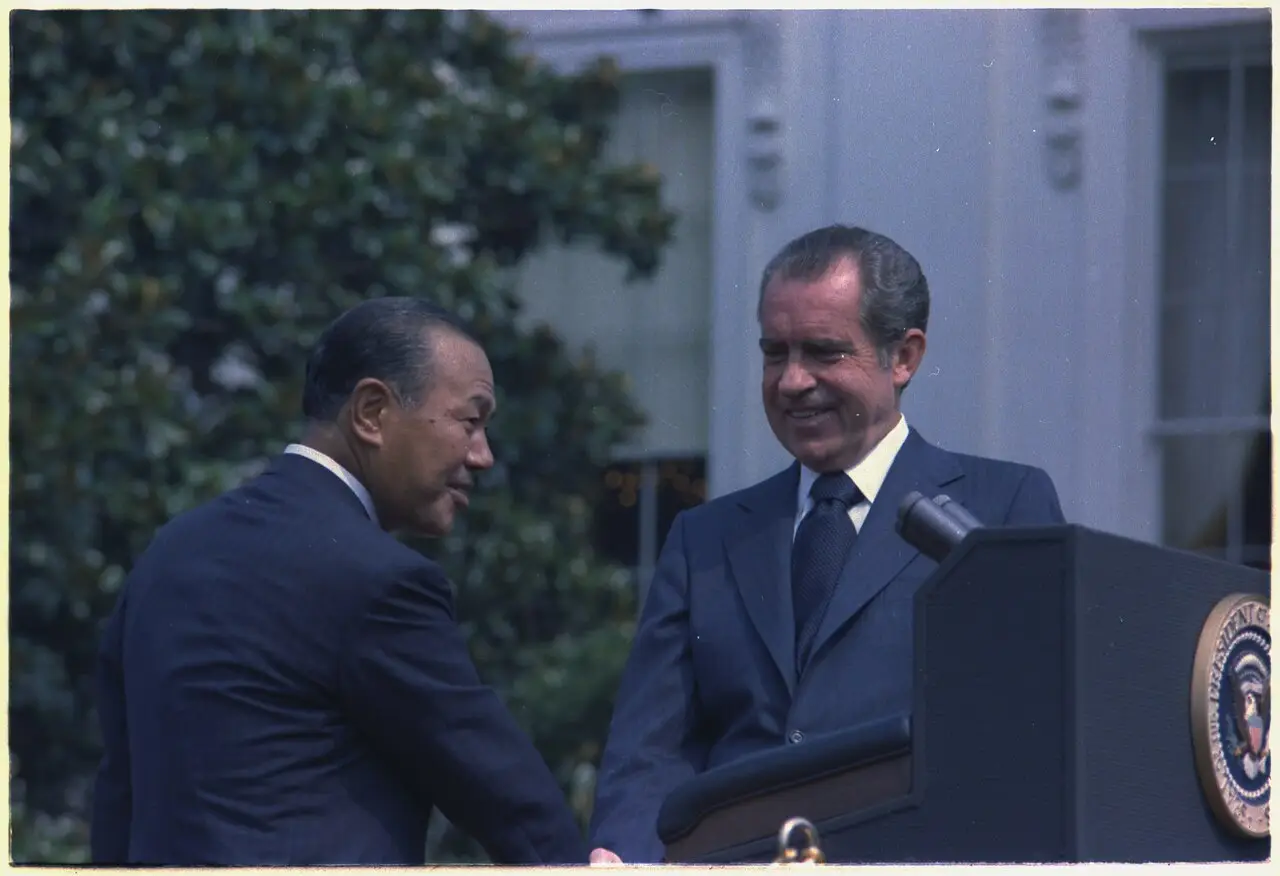
Japan imported over nine-tenths of its soybeans, mostly from the United States. The Japanese called it the "soybean shock." On 31 July 1973, according to the American record, President Richard Nixon told Japan's prime minister, Kakuei Tanaka, that the embargo "might have been good domestic politics" but was "disastrous in terms of our foreign policy." In September 1974 Tanaka visited Brazil and signed a joint communique on agricultural development with President Ernesto Geisel. Their program, PRODECER, farmed about 345,000 hectares of Cerrado from 1979 to 2001. Brazil's output tripled between 1973 and 1980, mostly in the south. Japan still buys about two-thirds of its soybeans from the United States.
Other resources
All 33 resources →
 Indonesia 57%
Food and farming
Palm oil
Indonesia grows 57% of the world's palm oil. It is the most-produced vegetable oil.
 China 17.5%
Food and farming
Wheat
China grows the most wheat. Russia exports the most, 21% of world trade.
 India 27%
Food and farming
Rice
India grows the most rice and exports 38% of world trade.