
Resource · Food and farming
Palm oil
Indonesia grows the most palm oil: 47.0 million tonnes in 2025/26, 57.2% of world production (82.1 million tonnes). Malaysia is second with 20.6 million tonnes (25.0%). Together they grow 82% of the total. Palm oil is the world's most-produced vegetable oil, about a third of all vegetable oil output. Indonesia started its B50 biodiesel mandate on July 1, 2026.
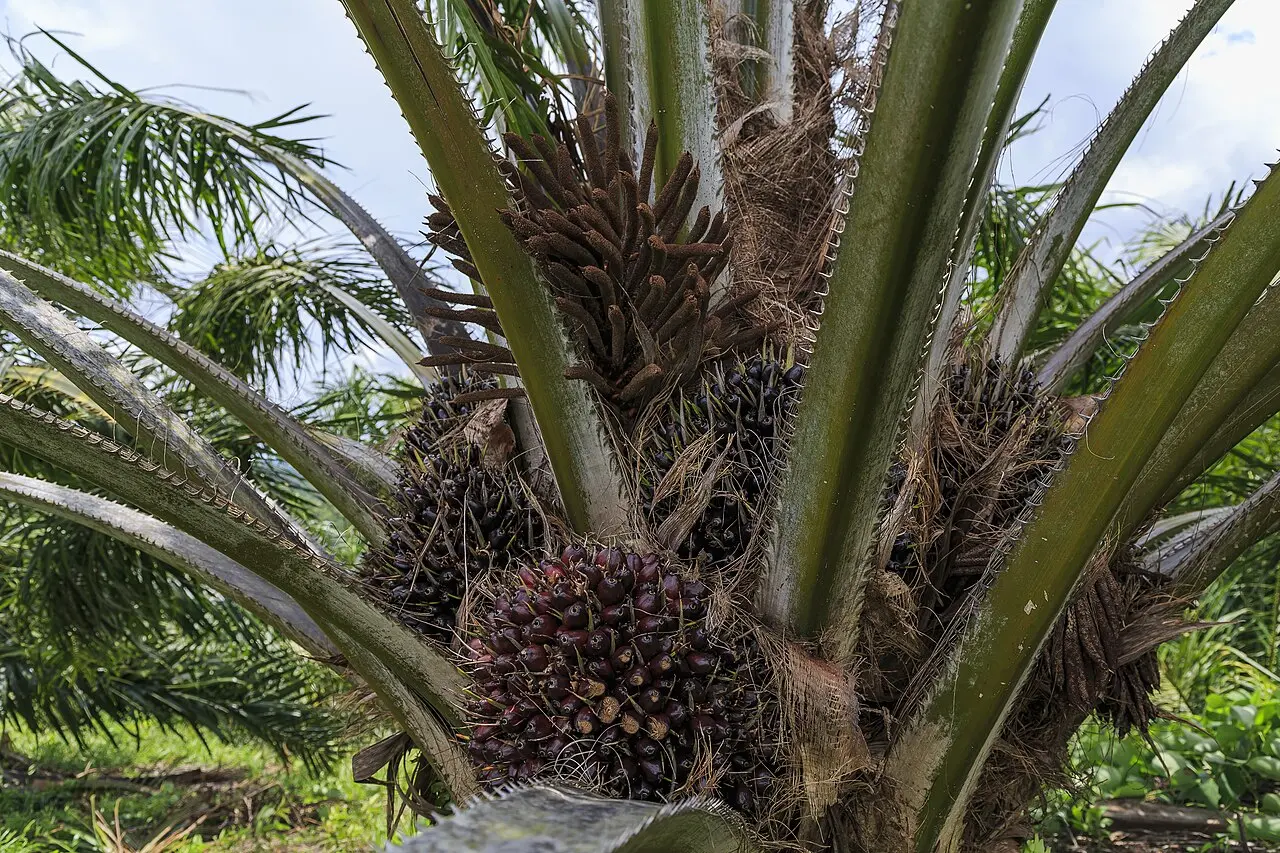
- Produced in 2025/26
- 82.1 million t
- the most of any vegetable oil
- Largest grower
 57.2%
- of the world, 47.0 million t
- Second grower
 25.0%
- of the world, 20.6 million t
- Largest importer
 19.2%
- of world imports, 8.1 million t
- Biodiesel mandate
- B50
- Indonesia, from July 1, 2026
Which countries grow the most palm oil?
Indonesia grew 47.0 million tonnes of palm oil in 2025/26, 57.2% of world production (82.1 million tonnes). Malaysia was second with 20.6 million tonnes (25.0%) and Thailand third with 3.9 million (4.8%). The oil palm grows only in the wet tropics, roughly within 10 degrees of the equator. It is native to West Africa.
Indonesia's output nearly doubled from 23.6 million tonnes in 2010/11 to 47.0 million in 2025/26. Malaysia's grew only from 18.2 million to 20.6 million. The USDA forecasts world output at 78.9 million tonnes in 2026/27, 3.9% less than in 2025/26. It expects dry weather from the 2026 El Niño to cut yields.
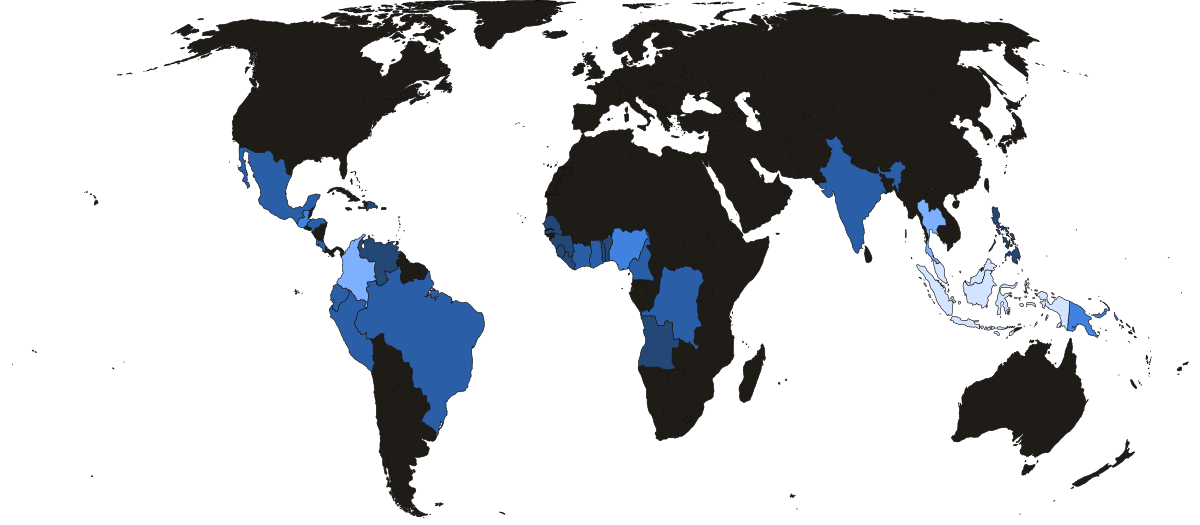

- Under 0.25%
- 0.25%–1%
- 1%–2%
- 2%–10%
- Over 10%
- No production
Who exports the most palm oil?
Indonesia exported 25.0 million tonnes of palm oil in 2025/26, 53.5% of world trade (46.8 million tonnes). Malaysia shipped 15.7 million tonnes (33.6%). Together they sold 87.1% of all palm oil traded. About 57% of the world's palm oil crop is exported.
Indonesia exported only about half its crop, because it uses the rest at home, mostly for biodiesel. Malaysia exported 76% of its harvest. Indonesia's exports peaked at 28.3 million tonnes in 2018/19. The USDA forecasts 21.6 million tonnes for 2026/27, as Indonesia's biodiesel mandate takes more of the crop.
Who sells the world's palm oil
Million tonnes, 2025/26
- Indonesia25.0
- Malaysia15.7
 Thailand1.0
 Papua New Guinea0.82
 Colombia0.78
 Guatemala0.73
 Honduras0.40
 Ecuador0.26
Who imports the most palm oil?
India imported 8.1 million tonnes of palm oil in 2025/26, 19.2% of world imports (42.1 million tonnes). China bought 3.8 million tonnes (8.9%) and Pakistan 3.4 million (8.0%). The European Union imported 3.2 million tonnes, down from 7.1 million in 2019/20.
The EU's imports fell after the EU decided in 2019 to phase palm oil biofuel out of its renewable-energy targets by 2030. In January 2025, a WTO panel found, on a complaint by Indonesia, that parts of those rules broke WTO law. From December 30, 2026, the EU's deforestation regulation requires large and medium importers to prove their palm oil was not grown on land cleared after 2020.
Who buys the world's palm oil
Million tonnes, 2025/26
- India8.1
 China3.8
 Pakistan3.4
 European Union3.2
 Bangladesh1.7
 Egypt1.5
 United States1.5
 Philippines1.3
What is palm oil used for?
Food accounts for 63.3% of world palm oil use (48.9 million tonnes in 2025/26). Industry and biodiesel account for 35.7% (27.6 million tonnes). Palm oil is used as cooking and frying oil, in margarine, baked goods, instant noodles, confectionery and ice cream. It is semi-solid at room temperature, so food makers can use it instead of hydrogenated oils, which contain trans fats.
Indonesia alone used 22.8 million tonnes in 2025/26, two thirds of it for industry. Indonesia's B50 biodiesel mandate started on July 1, 2026. It requires diesel to contain 50% palm-based biodiesel. All fuel stations were due to sell B50 by October 1, 2026.
What the world's palm oil is used for, 2025/26
Share of 77.2 million tonnes used
- Food63%
- Industry and biodiesel36%
- Animal feed and waste1%
Who uses the most
- 22.8 million tIndonesia, two thirds of it industrial
- 8.4 million tIndia, 93% of it as food
Why did Indonesia ban palm oil exports?
Indonesia banned palm oil exports in 2022 to bring down the price of cooking oil at home. Bulk cooking oil cost about 19,800 rupiah a liter in early April, against a government target of 14,000 rupiah. President Joko Widodo's ban took effect on April 28 and covered crude and refined palm oil. Exports resumed on May 23.
World palm oil prices had already peaked in March 2022, at $1,777 a tonne, after Russia's invasion of Ukraine cut sunflower-oil supplies. They fell by almost half between May and September. During the ban, mills paid farmers 40 to 70% less for their fruit, according to the farmers' association Apkasindo.
Palm oil price in 2022
US dollars a tonne, monthly average
History
How palm oil drew Britain into the Niger Delta
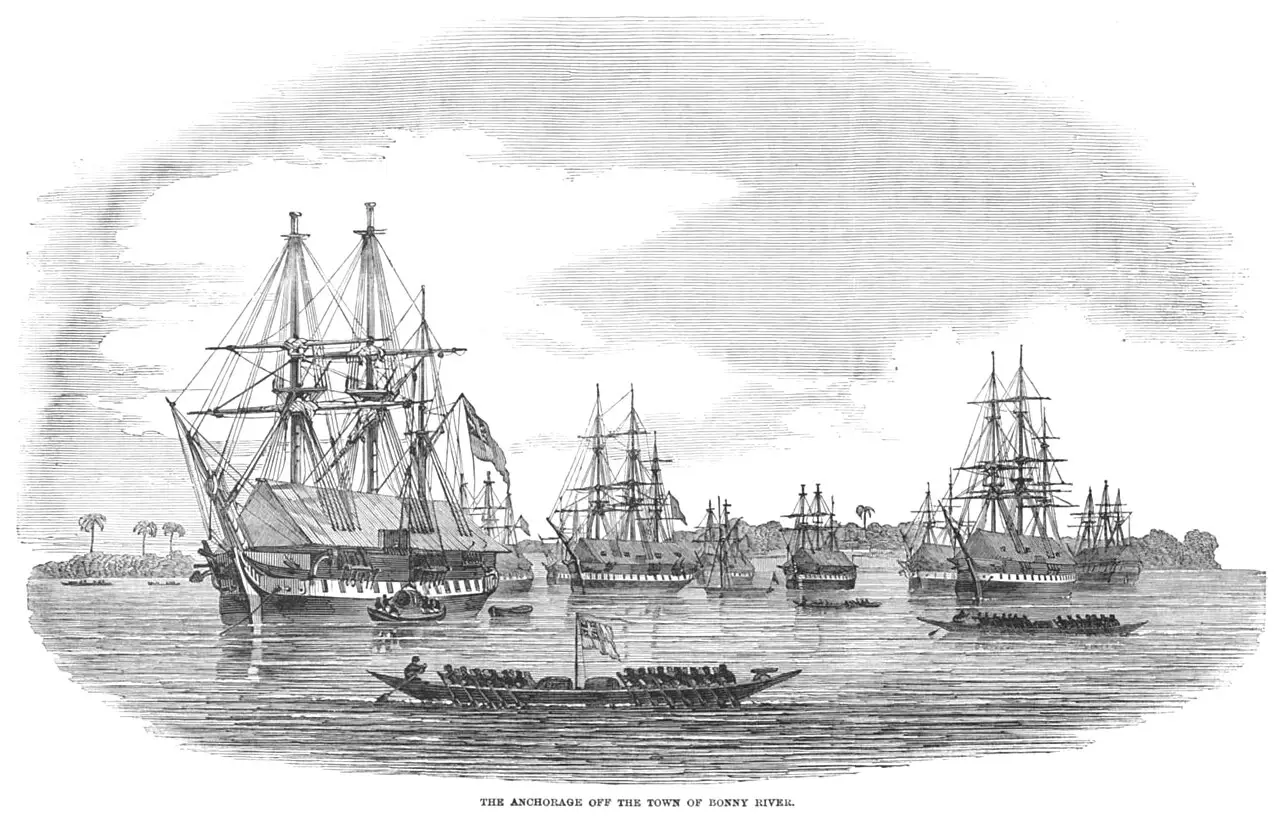
Palm oil became Britain's main trade on the Niger Delta coast after Britain banned its part in the Atlantic slave trade in 1807. By the early 1850s Britain imported about 32,000 tonnes of palm oil a year, for soap, candles and machine grease. Enslaved people inside Africa produced much of the oil and carried it to the coast.
Jaja, born about 1821 in Igboland, was sold as a boy into slavery at Bonny. He bought his freedom and in 1869 founded his own kingdom, Opobo, which controlled the inland oil markets. He shipped oil directly to Liverpool and kept British firms out of those markets. In September 1887 the acting British vice-consul, Harry Johnston, invited Jaja aboard the gunboat HMS Goshawk for talks, then deported him. Jaja died in July 1891 at Tenerife, on his way home from exile in the West Indies. The coast Britain claimed became part of Nigeria in 1914.
History
How Lever Brothers used forced labor to grow palm oil in the Congo
Lever Brothers, the British maker of Sunlight soap, ran palm oil concessions in the Belgian Congo from 1911 that depended on forced labor. William Lever wanted his own oil supply, but British officials in West Africa would not give him plantation land, so he made a deal with Belgium. The colony had been King Leopold II's Congo Free State until 1908.
On 14 April 1911 Lever signed a convention with the Belgian colonial minister, Jules Renkin, for up to 750,000 hectares of palm forest. Lever promised that the Congolese would "have their eight hours' day, like ourselves." Company agents and Belgian officials used tax drives, fruit quotas and the chicotte, a hippo-hide whip. The former Belgian diplomat Jules Marchal called it "a system of forced labour pure and simple." In 1931, during the Great Depression, Pende villagers killed a Belgian official. Troops with machine guns put down the revolt. The Belgian newspaper Le Soir estimated about 100 rebels killed.
History
Was Nigeria once the world's largest palm oil producer?
Yes. In 1961 Nigeria grew 45% of the world's palm oil, and Africa as a whole grew 77%. In 1848 four oil palm seedlings were planted as ornamentals in the botanical garden at Buitenzorg (now Bogor) on Java. Much of Southeast Asia's early plantation stock descended from them.
The Belgian Adrien Hallet started the first commercial oil palm plantations in Sumatra in 1911. The Frenchman Henri Fauconnier planted Malaya's first commercial estate in 1917. His novel about Malaya won the Prix Goncourt in 1930. Plantations made cleaner oil at lower cost than Africa's hand-processed oil. The Nigerian Civil War of 1967 to 1970 was fought in much of Nigeria's palm belt, and Malaysia passed Nigeria in 1971. Malaysia's Federal Land Development Authority, set up in 1956, settled about 114,400 mostly Malay families on plots of oil palm or rubber by 1990. Indonesia's plantation area grew more than tenfold from 1980 to 2000, and Indonesia passed Malaysia in 2006.
Share of world palm oil production
19612025/26
Other resources
All 33 resources →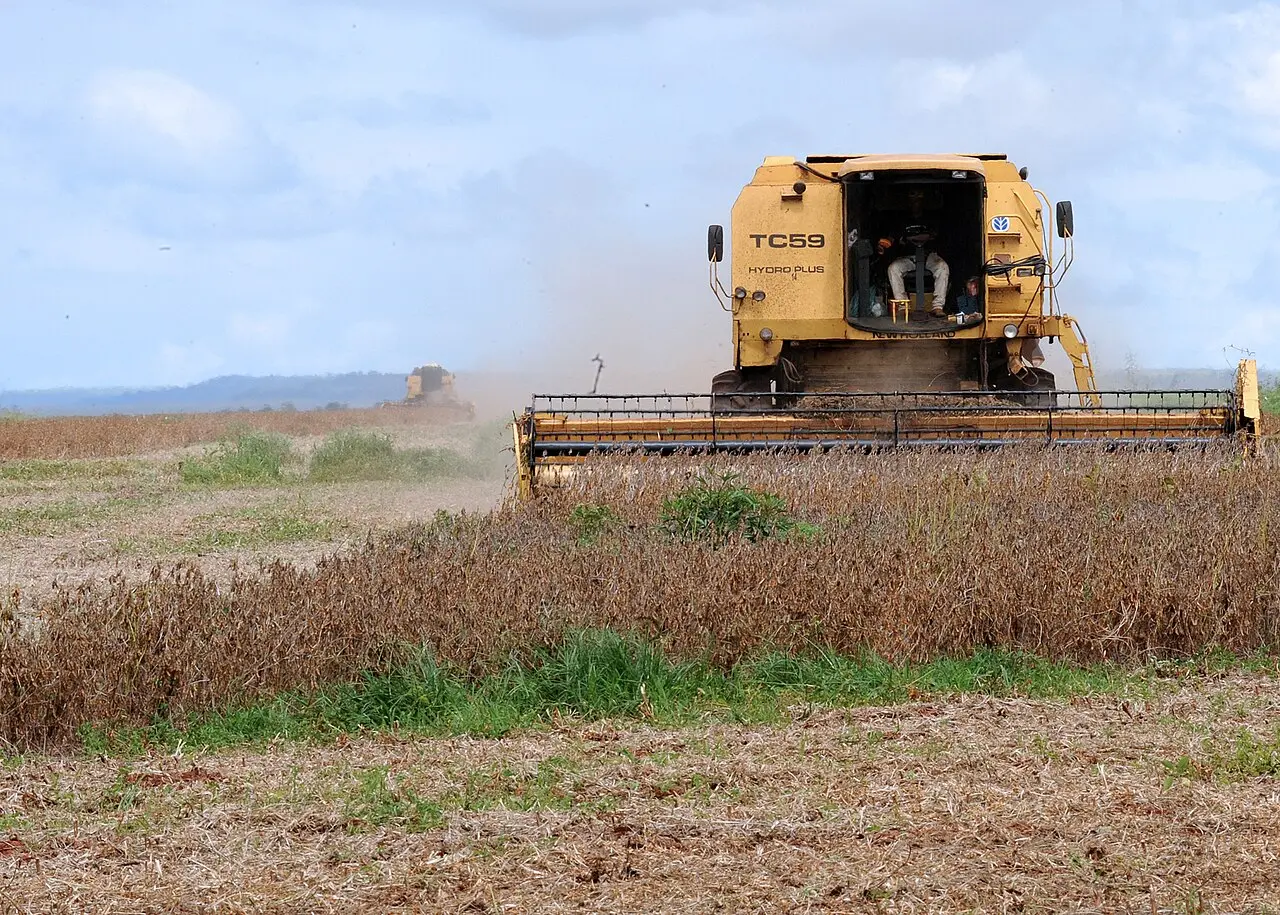
 Brazil 36%
Food and farming
Soybeans
Brazil grows 36% of the world's soybeans. China buys 60% of all traded soybeans.
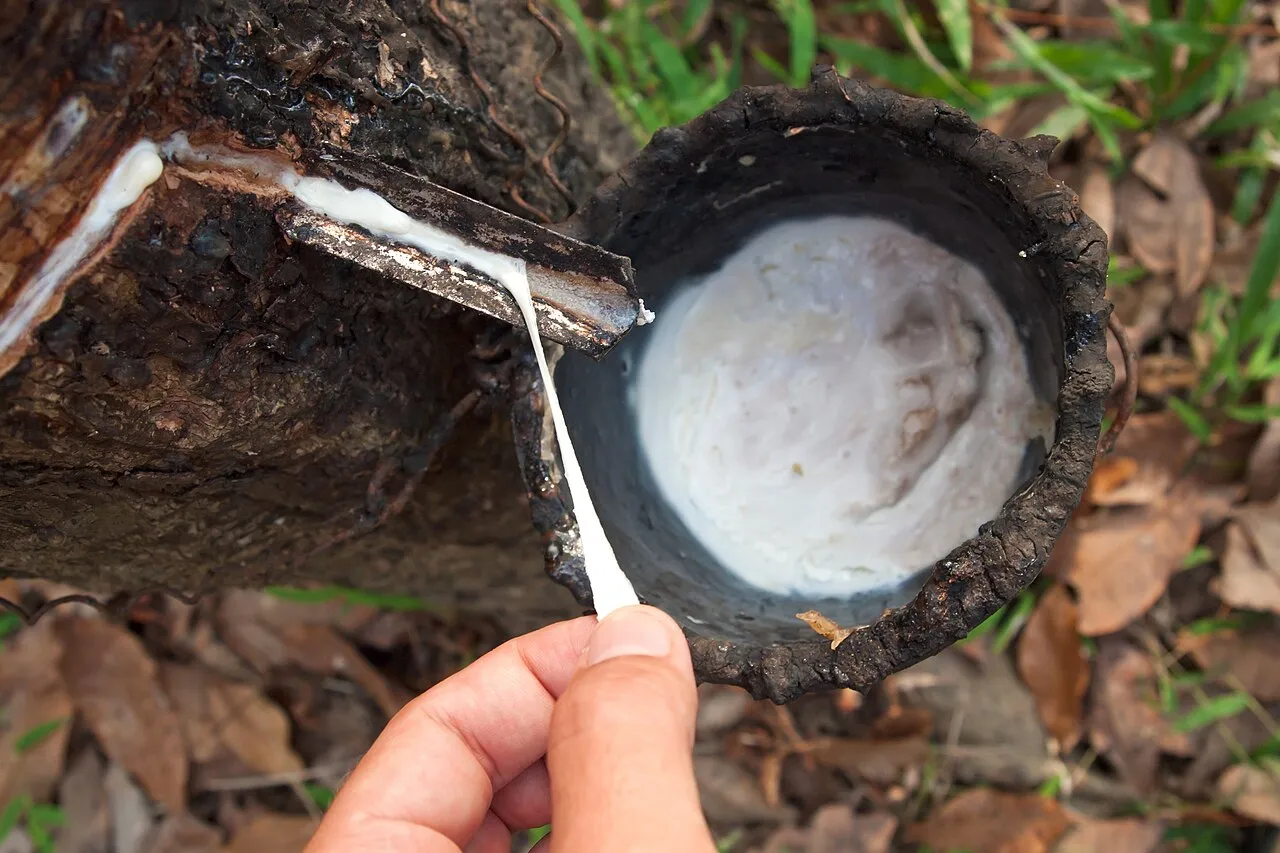 Thailand 32%
Industrial crop
Rubber
Thailand grows 32% of the world's natural rubber. China uses 46% of it.
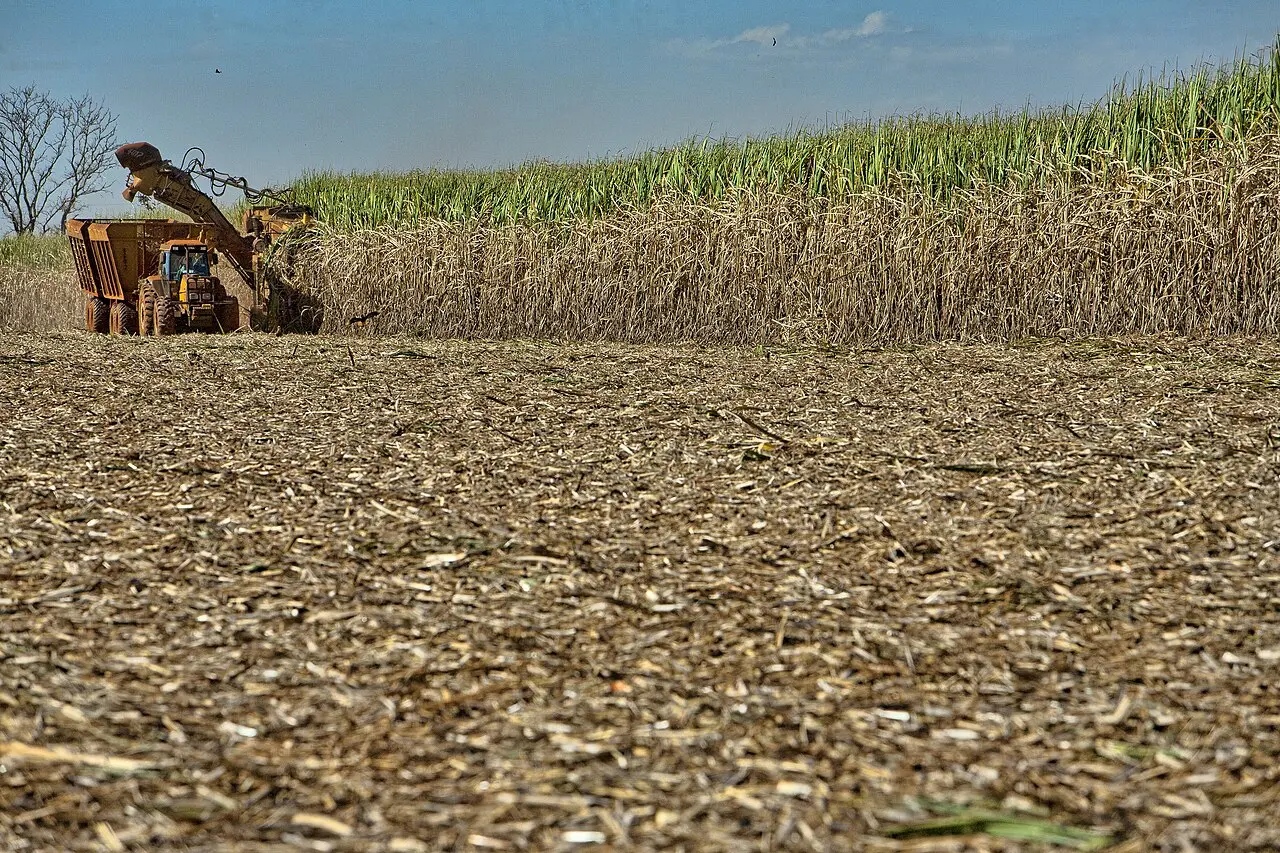 Brazil 24%
Food and farming
Sugar
Brazil makes 23.5% of the world's sugar and sells 54% of its exports.