
Resource · Food and farming
Rice
Rice is the staple food of more than half the world's people. India grows the most, with 26.6% of the 2024 harvest. China is a close second at 25.4%. India is also the largest exporter, with about 38% of the rice traded in 2026. Only about 11% of the rice grown crosses a border, far less than wheat's 27%.
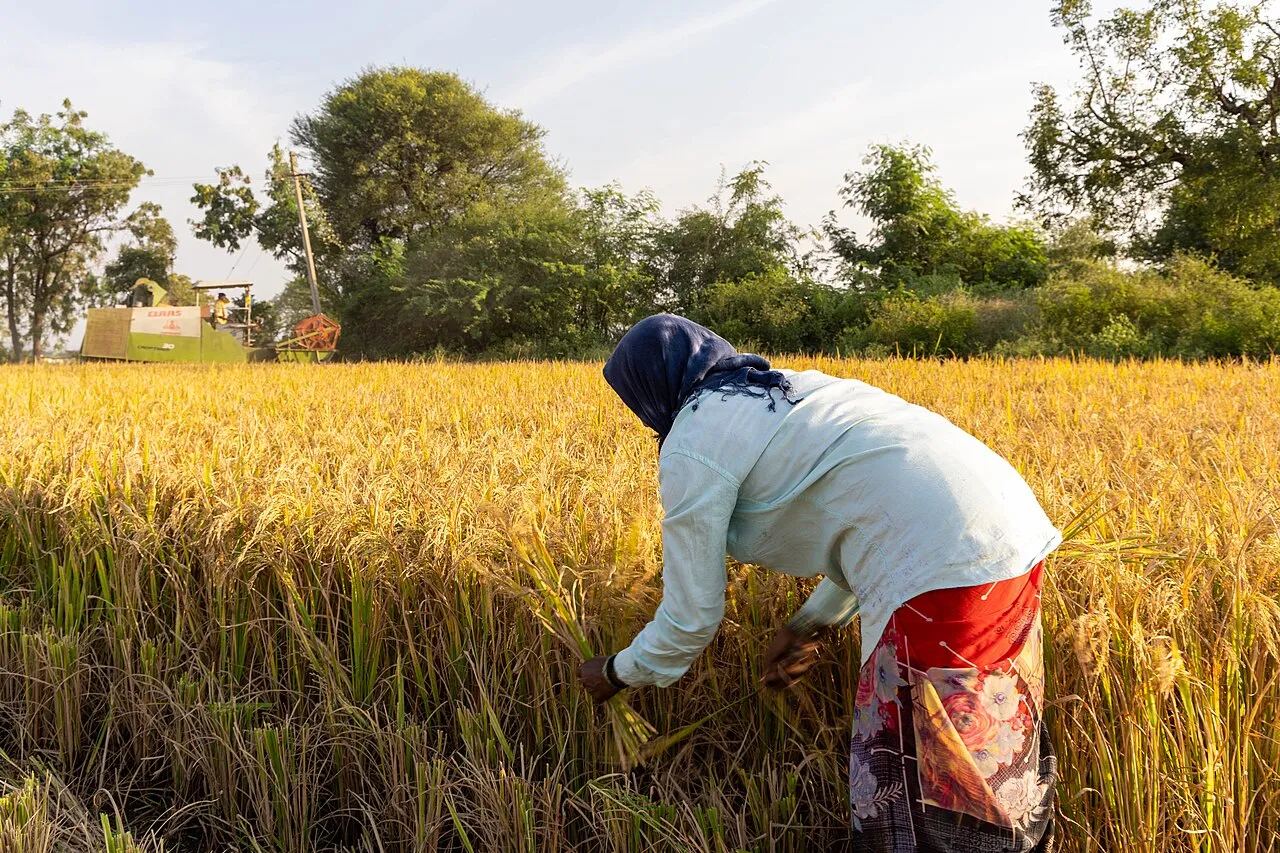
- Grown in 2025/26
- 546 million t
- milled, a record harvest
- Largest grower
 218 million t
- 26.6% of the world, 2024
- Largest exporter
- 22.5 million t
- 38% of world exports, 2026 forecast
- Largest importer
 5.5 million t
- USDA forecast for 2026
- Crosses a border
- 11%
- of the rice grown, against 27% of wheat
Which countries grow the most rice?
India grew 218 million tonnes of paddy rice in 2024, 26.6% of the world harvest of 820 million tonnes. China harvested 208 million tonnes, 25.4%. Bangladesh, Indonesia and Vietnam came next. These five countries together grew 71% of the world's rice. About 90% of all rice comes from Asia.
China gets far more rice per hectare than India. By USDA figures, China harvested about 7.2 tonnes of paddy rice per hectare in 2025/26, against India's 4.4 tonnes. But India plants nearly twice the area: 52.8 million hectares against China's 29.0 million.
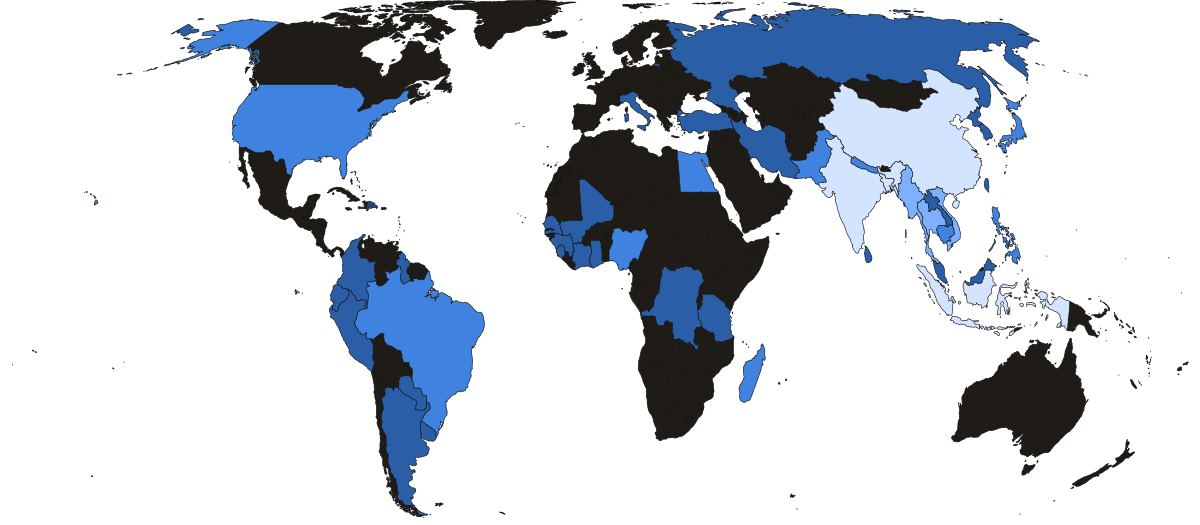
Rice production, million tonnes, 2024
Food production by country →- Under 1
- 1–5
- 5–20
- 20–50
- Over 50
- No production
Who exports the most rice?
The USDA expects India to export 22.5 million tonnes of milled rice in 2026, about 38% of the 59.0 million tonnes traded worldwide. Vietnam is next at 8.1 million tonnes, then Thailand at 6.8 million and Pakistan at 4.6 million.
India's government lifted the last of its export restrictions in early 2025. India then shipped 21.7 million tonnes in 2025, up from 17.9 million in 2024. In 2026, the war between the United States, Israel and Iran disrupted India's basmati shipments to Iran and the Gulf. India's basmati exports fell 5.5% in the first half of 2026, but its total rice exports rose 5%.
Who sells the world's rice
Million tonnes, 2026


Who imports the most rice?
The USDA expects the Philippines to import 5.5 million tonnes of milled rice in 2026, more than any other country. China is set to buy 3.8 million tonnes, much of it broken rice for feed and brewing. Vietnam ranks third at 3.1 million tonnes: it imports cheap rice from Cambodia and India for processing and re-export while exporting its own higher-grade rice.
Rice imports are spread out. The top eight importers take only 39% of world trade, compared with 88% for the top eight exporters.
Who buys the world's rice
Million tonnes, 2026
- Philippines5.5
 China3.8
 Vietnam3.1
 Nigeria2.9
 European Union2.3
 Iraq1.8
 Côte d'Ivoire1.7
 Saudi Arabia1.7
Which countries grow more rice than they eat?
India grows 33 million tonnes more milled rice than it uses, producing 154.0 million tonnes against 121.1 million consumed in 2025/26. Thailand grows 20.7 million tonnes and uses 12.8 million, exporting most of the surplus. China's production and consumption are nearly balanced, at 146.3 million and 147.4 million.
The Philippines uses 5.4 million tonnes more rice than it grows. Nigeria falls 2.6 million tonnes short. Both countries depend on imports to fill the gap.
Rice grown and rice used
Million tonnes of milled rice, 2025/26
- 146.3China147.4
- 154.0India121.1
- 37.7
 Bangladesh38.3
- 33.8
 Indonesia35.3
- 26.2Vietnam22.3
- 20.7
 Thailand12.8
- 12.4Philippines17.7
- 5.9Nigeria8.5
What happened when India banned rice exports?
On July 20, 2023, India banned exports of non-basmati white rice to hold down prices at home. India then supplied about 40% of the world's rice trade. The Thai 5% broken white rice benchmark rose from about $545 before the ban to $648 in early August 2023. It peaked at $665 in January 2024, the highest price since 2008.
On September 28, 2024, India replaced the ban with a minimum export price of $490 a tonne. It removed that floor on October 23, 2024. By early October 2025, the benchmark had fallen to about $340. On October 29, 2026, it was back at about $480, supported by high prices inside Thailand and by floods.
The price of Asia's benchmark rice
US dollars a tonne, Thai white rice, 5% broken
History
How rice made South Carolina a slave society
From about 1708, South Carolina had an enslaved African majority, the only mainland British colony to have one. Rice was the crop that kept it that way. Carolina's rice exports rose from about 269,000 pounds a year around 1700 to more than 66 million pounds a year around 1770. Enslaved Africans cleared the swamps and worked the rice fields, and malaria killed many of them.
On 9 September 1739, about 20 enslaved men led by a man called Jemmy rose near the Stono River and marched toward Spanish Florida, which promised freedom to runaways. They killed more than 20 white colonists before the militia stopped them. It was the largest slave revolt in Britain's mainland colonies. In 1774, South Carolina's delegates won an exemption for rice from the First Continental Congress's export boycott of Britain. In June 1863, Harriet Tubman guided Union gunboats up the Combahee River. The troops burned rice plantations and freed more than 700 enslaved people.
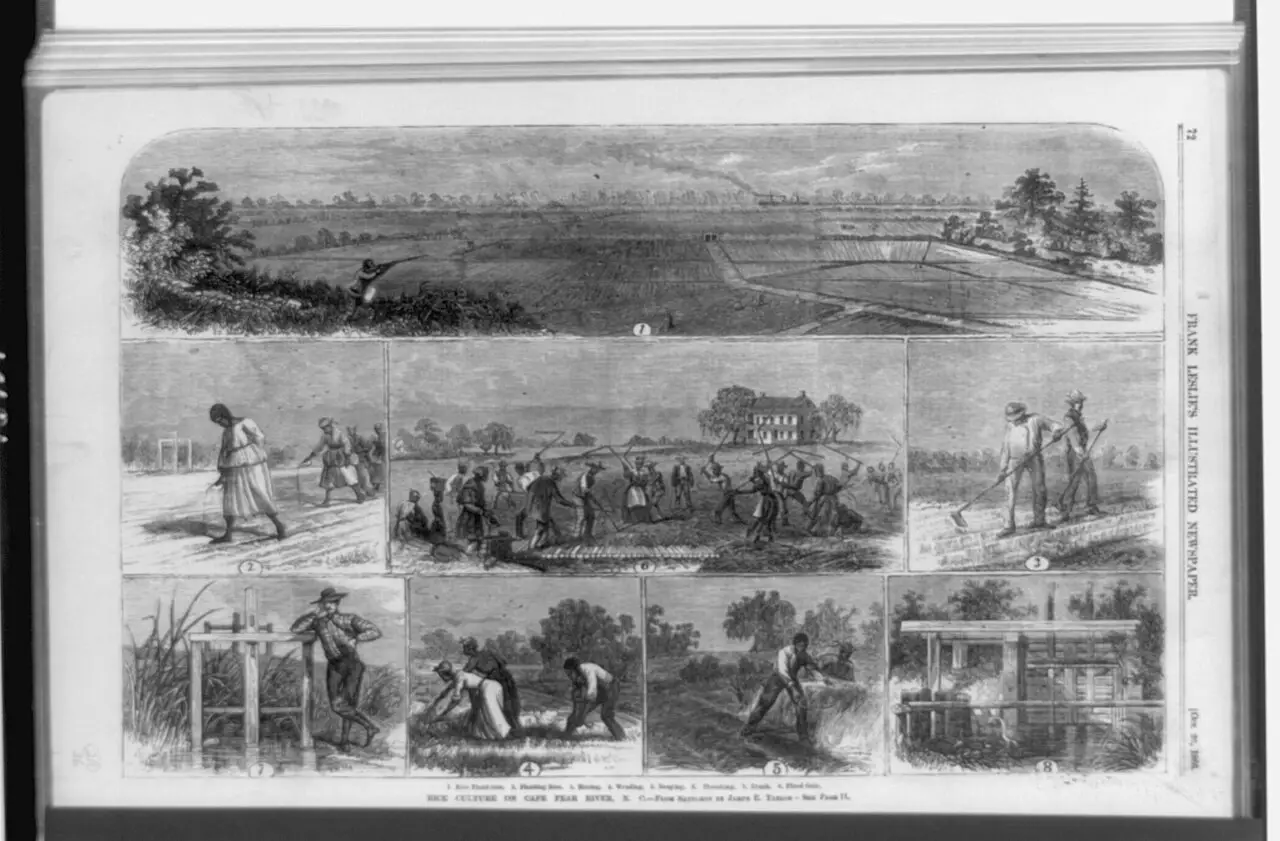
History
How rice riots brought down Japan's government in 1918
In 1918, protests over the price of rice spread across Japan and forced Prime Minister Terauchi Masatake to resign. During the First World War, inflation had cut real wages by more than 30%. In the month to late July 1918, the price of polished rice rose 60%. Women in the fishing town of Uozu, in Toyama Prefecture, then tried to stop rice from being shipped out. In Kobe, crowds burned the offices of Suzuki Shoten, a trading house accused of hoarding rice. Troops and police killed over 30 protesters and arrested more than 25,000 people. Terauchi, a general and former Governor-General of Korea, resigned on 21 September 1918.
Hara Takashi, the leader of the largest party, took over on 29 September. He was the first commoner to become prime minister. To lower rice prices, Tokyo pushed rice farming in Korea and Taiwan from 1920. Korean rice went to Japan, while many Korean farmers ate cheaper millet from Manchuria.
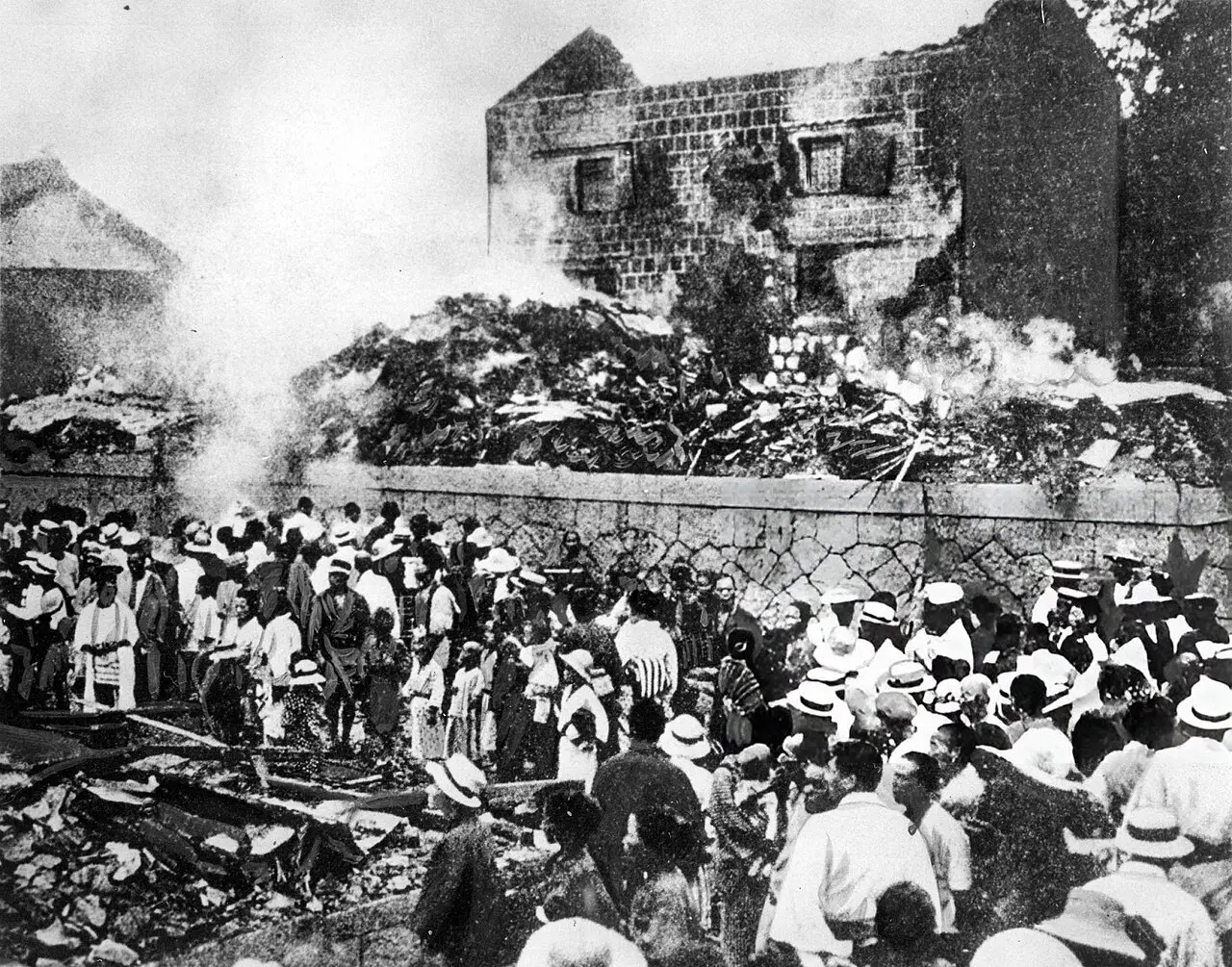
History
Which country exported the most rice before World War II?
In 1934-38, Burma, then under British rule, exported about 3.1 million tonnes of rice a year, 36% of all the rice traded worldwide. Burma, Siam and French Indochina together sold over two-thirds of it. Britain had annexed Lower Burma in 1852. Settlers then cleared the Irrawaddy delta to grow rice for export. Much of Burma's rice went to India, especially Calcutta.
Japan took Rangoon on 8 March 1942 and cut off Burma's rice. The loss hit Bengal hardest. British forces also seized or destroyed about 45,000 boats in Bengal against a possible Japanese invasion. A cyclone struck coastal Bengal in October 1942. Winston Churchill's War Cabinet refused or cut requests for grain imports, citing shipping needs. The Bengal famine of 1943 killed between 2 and 3 million people. Jawaharlal Nehru later called the famine part of "the final judgment on British rule in India." Today Myanmar sells under 4% of the world's traded rice, and India sells about 38%.
Share of world rice exports
1934-382026 Myanmar36%3.9%
- Thailand16%12%
- Vietnam and Cambodia16%19%
 United States0.9%4.3%
Other resources
All 33 resources → China 17.5%
Food and farming
Wheat
China grows the most wheat. Russia exports the most, 21% of world trade.
 Canada 31%
Food and farming
Potash and phosphate
Morocco holds 68% of the world's phosphate rock reserves.
 Brazil 35%
Food and farming
Coffee
Brazil grows 35% of the world's coffee. The EU drinks the most, 24% of the total.