
Resource · Critical mineral
Tin
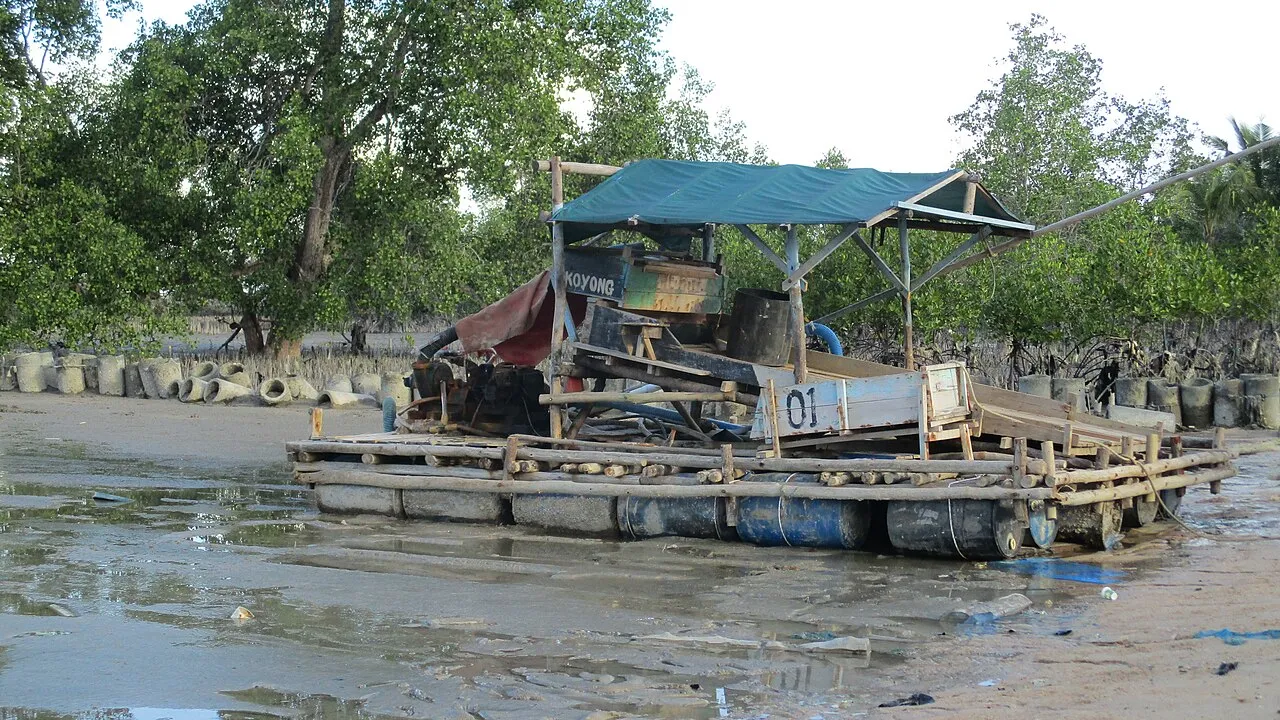
Tin is a soft metal used mostly in solder, which holds the parts of almost every circuit board in place. China mined 24.5% of the world's tin in 2025 and smelted about half of all refined tin. Indonesia is the largest exporter. Supply problems in Myanmar, DR Congo and Indonesia helped push prices to a record in June 2026.
- Mined in 2025
- 290,000 t
- of tin, estimate
- Largest miner
 24.5%
- 71,000 tonnes, 2025
- Smelted in China
- 49%
- of refined tin, 2023
- Into solder
- 52%
- of the tin used worldwide
- Record price
- $57,525
- a tonne, June 2, 2026
Which countries mine the most tin?
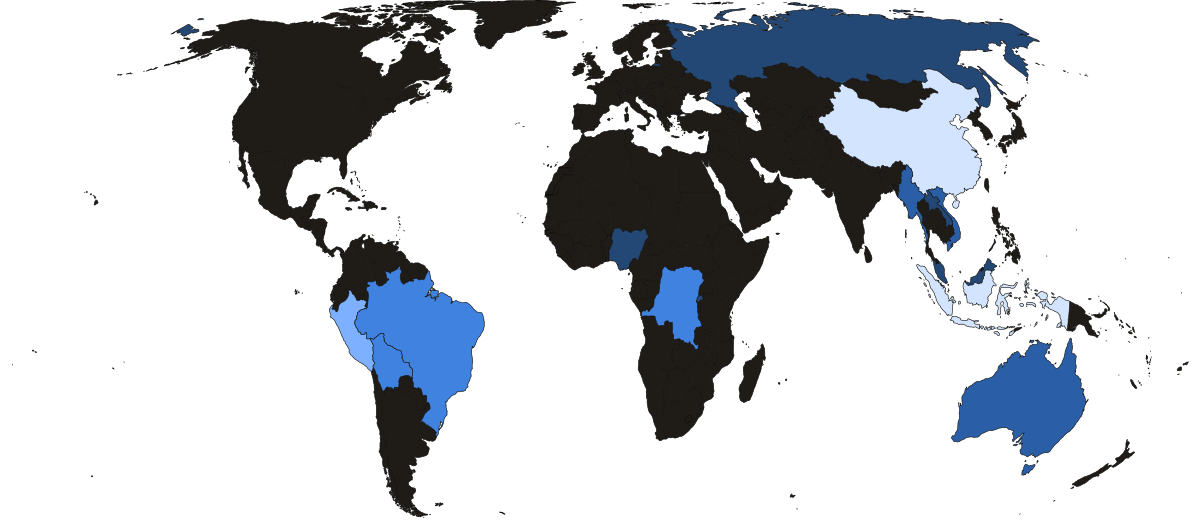
China mined 71,000 tonnes of tin in 2025, about 24.5% of the world's 290,000 tonnes. Indonesia mined 61,000 tonnes (21%). Together they produced 45.5% of all tin mined. Peru, Brazil and DR Congo followed, and the top five countries mined 76% of the world total.
DR Congo's Bisie mine, run by Alphamin Resources, produced 18,576 tonnes in 2025. That was about 6.4% of world output and roughly two-thirds of DR Congo's total.
- Under 2%
- 2%–5%
- 5%–10%
- 10%–20%
- Over 20%
- No production
Who smelts the world's tin?
China smelted 177,000 tonnes of tin in 2023, about 49% of the world's 358,000 tonnes. Indonesia smelted 19%. China smelted about two and a half times the 70,000 tonnes it mined that year. Chinese smelters import ore and concentrate, much of it from Myanmar.
Five Chinese firms were among the ten largest tin refiners in 2025. Yunnan Tin alone produced 91,000 tonnes. Malaysia and Thailand also smelt far more than they mine, refining imported concentrate.
Who smelts the world's tin
Share of world refined tin, 2023

What is tin used for?
Solder accounts for 52% of all tin used. Almost every circuit board's components are held on with tin-based solder. Within that, electronics make up 30% of all tin use, solar panels 11% and industrial solder 7%.
Chemicals take 16% (for PVC stabilizers, catalysts and glass coatings), tinplate for food and drink cans takes 11%, and lead-acid batteries take 8%. The world used 389,000 tonnes of refined tin in 2025, about 18,000 tonnes more than was produced.
What the world's tin goes into
Share of tin used worldwide
- Solder52%
- Chemicals16%
- Tinplate for cans11%
- Lead-acid batteries8%
- Bronze and other copper alloys6%
- Other7%
How much goes into one
- 30%of the world's tin goes into solder for electronics
- 11%goes into solder for solar panels
- 389,000 tof refined tin used in 2025, 18,000 t more than was produced
- 77%of the refined tin the US uses is imported; it has mined none since 1993
Why is tin supply at risk?
Three major tin producers have had disruptions since 2023. The United Wa State Army suspended all mining in Myanmar's Wa State, home to the Man Maw mine, in August 2023. Myanmar's output fell from about 40,500 tonnes in 2022 to 12,000 in 2025. A slow restart began late that year.
Alphamin halted DR Congo's Bisie mine on March 13, 2025, as M23 rebels advanced, and restarted it in April. Indonesia's government is cracking down on illegal mining. Energy minister Bahlil Lahadalia said on February 13, 2026, that it was studying a tin export ban. The LME tin price hit a record $57,525 a tonne on June 2, 2026.
Myanmar's tin mining since the Wa ban
Tonnes of tin mined
Which country has the most tin reserves?
Indonesia holds about 1.4 million tonnes of tin reserves, 23% of the world's 6 million tonnes. China holds 20%. Brazil and Myanmar each hold 12%. Peru mines 11.4% of the world's tin but holds only 2.5% of reserves, enough for about 4.5 years at 2025 rates. DR Congo mines 9.3% but holds 1.5%.
Russia and Australia hold far more reserves than their mine output suggests. Russia holds 7.7% of reserves but mines 1.6% of the world total.
Who mines tin and who has it
Share of mining, 2025Share of reserves- China25%20%
 Indonesia21%23%
 Peru11%2.5%
 Brazil9.7%12%
 DR Congo9.3%1.5%
 Bolivia5.2%6.7%
 Myanmar4.1%12%
 Australia4.1%9.5%
 Russia1.6%7.7%
History
How tin wars brought Britain into the Malay states
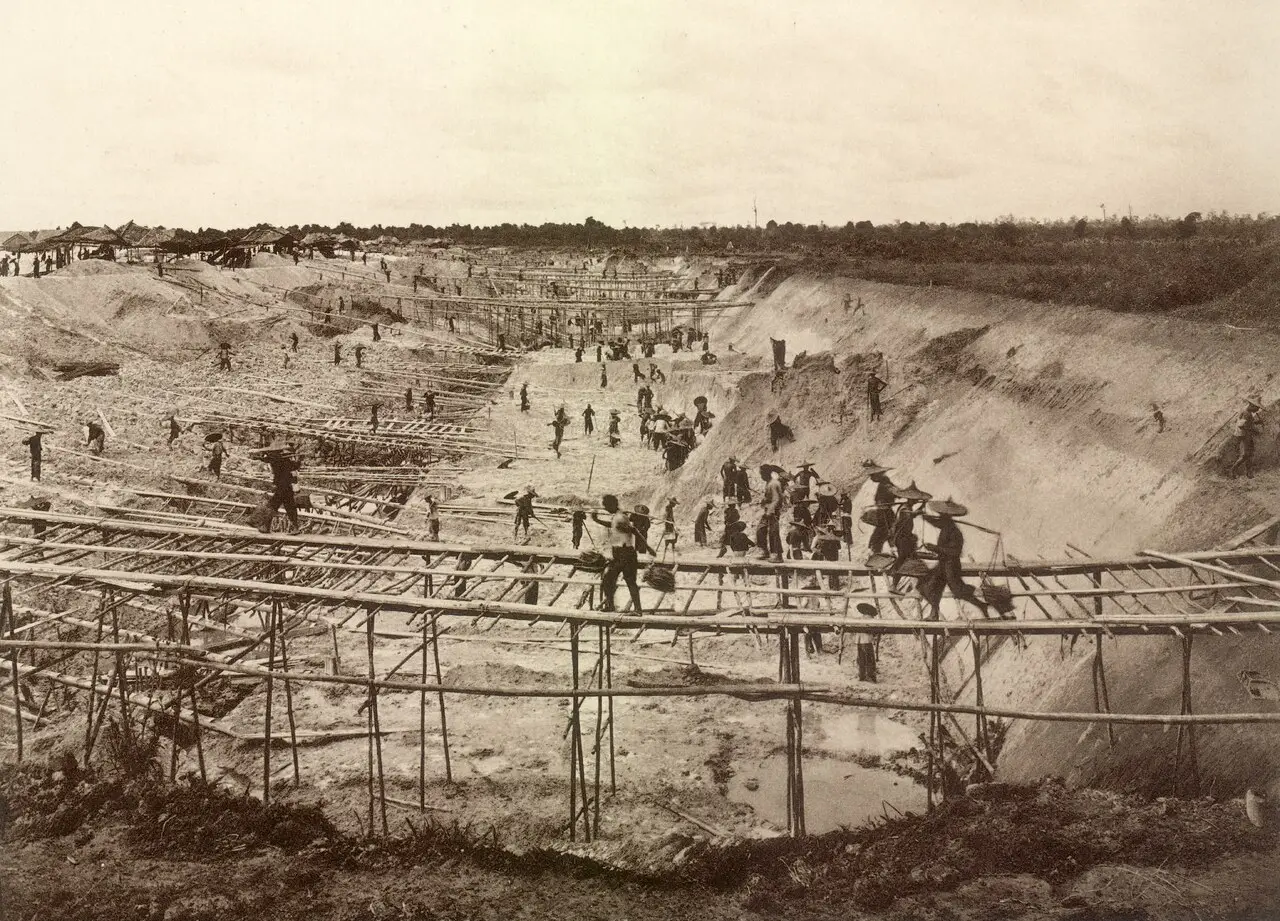
Tin was found at Larut, in Perak, around 1848. Malay chiefs brought in thousands of Chinese miners to dig it. The miners split into two rival secret societies, the Ghee Hin and the Hai San. Between 1861 and 1874 they fought four wars over the mines. The fighting halted tin output and spilled into piracy in the Strait of Malacca.
Britain used the chaos to step in. In the Pangkor Treaty of 20 January 1874, Britain recognized Raja Abdullah, a claimant to the Perak throne, as sultan. In return Perak accepted a British Resident whose advice had to be followed on everything except religion and custom. The first Resident, James Birch, was speared to death on 2 November 1875. Britain then fought the Perak War. In 1895 Perak and three other British-run states formed the Federated Malay States. According to the British official Frank Swettenham, their Chinese miners produced more than half of the world's tin around 1900.
History
How Bolivia's tin barons ran a country
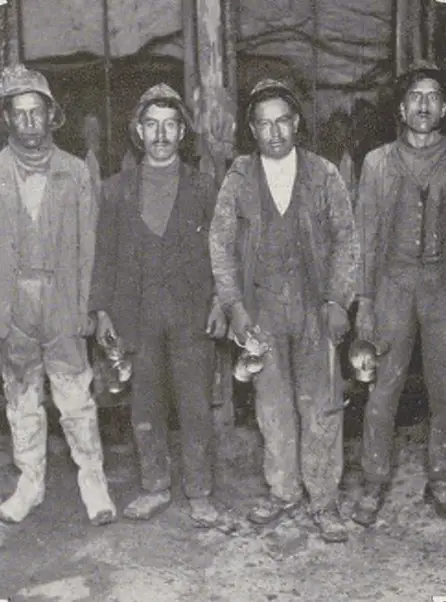
Tin replaced silver as Bolivia's main export around 1900. By 1925 it made up more than 70% of Bolivia's exports. In 1894 Simón Patiño, a merchant's clerk, accepted a share in a mine near Llallagua to settle a $250 debt, according to his biographers. In 1900 his miners struck a very rich vein of tin there. During World War II he was believed to be one of the five wealthiest men in the world. After a heart attack in 1924 he never returned to Bolivia.
Patiño, Mauricio Hochschild and the Aramayo family were known as the tin barons. On 21 December 1942 government troops fired on striking miners at Patiño's Catavi mine. The government counted 19 dead. The miners' estimates ran up to 400. In April 1952 the Revolutionary Nationalist Movement and armed miners defeated the army. The new president, Víctor Paz Estenssoro, gave all adults the vote. On 31 October 1952 he nationalized the three big tin companies.
History
Which countries mined the most tin a century ago?
In 1929, the peak year before the Great Depression, British Malaya, Bolivia and the Dutch East Indies together mined 78% of the world's tin. World output fell from 193,000 long tons in 1929 to 85,000 in 1933. In 1931 producers formed a quota cartel, and the Bolivian tin baron Simón Patiño played a leading role in it.
In 1956 producing and consuming countries created the International Tin Council in London. It bought and sold tin to hold the price steady. On 24 October 1985 the council ran out of money, owing almost £900 million to banks and brokers. The London Metal Exchange suspended tin trading. Bolivia's state mining company, Comibol, then dismissed about 23,000 of its roughly 30,000 workers. Many moved to the Chapare lowlands and grew coca. South Crofty, the last working tin mine in Cornwall, closed in 1998. Malaya and Bolivia mined 60% of the world's tin in 1929. In 2025 Malaysia and Bolivia mined 7%.
Share of world tin mining
19292025
Other resources
All 33 resources →
 Chile 23%
Industrial metal
Copper
China refines 48% of the world's copper but mines only 8%.
 Indonesia 67%
Battery metal
Nickel
Indonesia mines 67% of the world's nickel; Chinese firms run 75% of its smelters.
 China 69%
Critical mineral
Rare earths
China mines 69% of rare earths, refines 85% and makes 94% of the magnets.