
Resource · Industrial crop
Cotton
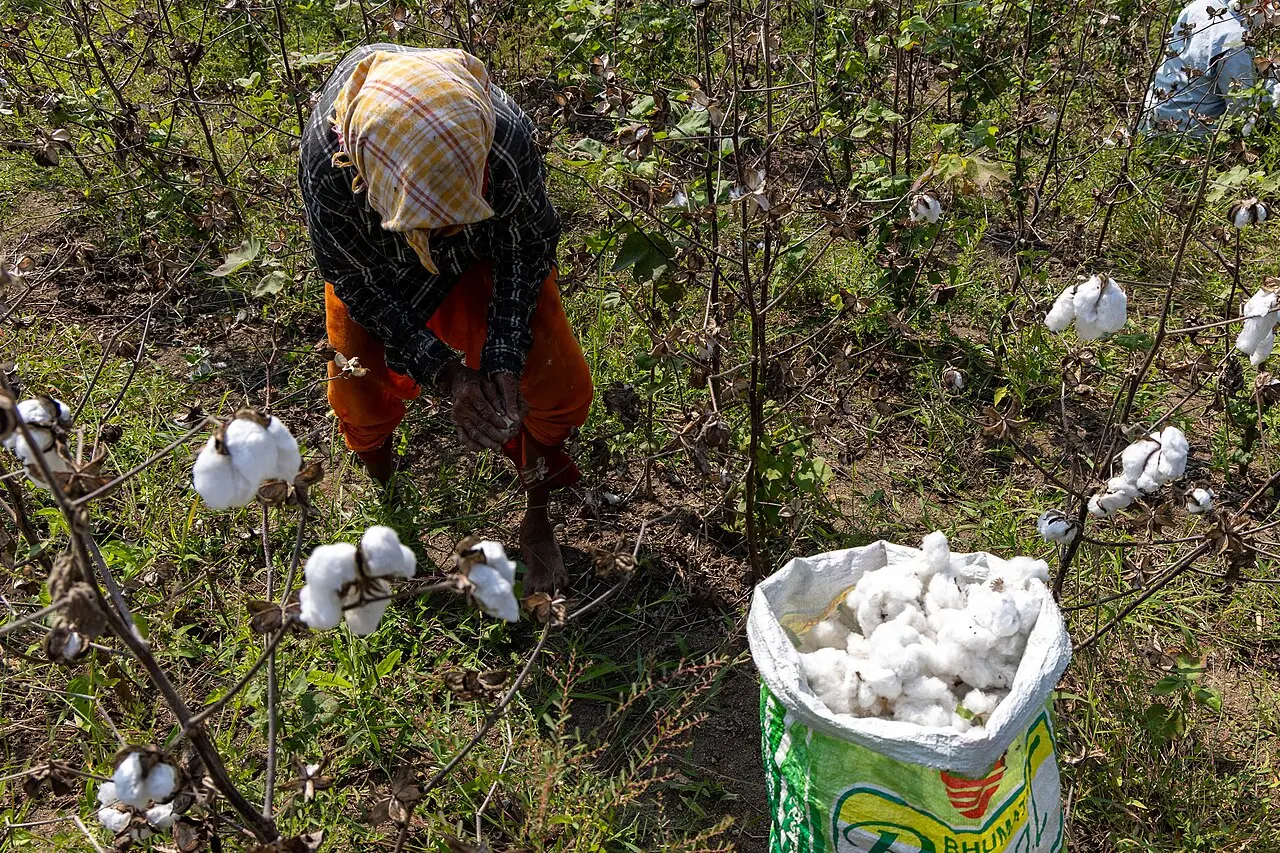
China grows the most cotton: 7.79 million tonnes in 2025/26 (35.8 million 480-lb bales), 29.3% of the world's 26.6 million tonnes. India is second at 19.5%, Brazil at 15.4% and the United States at 11.4%. Brazil overtook the United States as the largest exporter in 2023/24. China's mills also spin the most cotton, 34.4% of the world total.
- Grown in 2025/26
- 26.6 million t
- 122.0 million 480-lb bales
- Largest grower
 29.3%
- of the world, 7.79 million t in 2025/26
- Largest exporter
 33.8%
- of world exports, 3.37 million t, 2025/26
- Grown in Xinjiang
- 92.8%
- of China's cotton in 2025 (China's statistics bureau)
- Largest importer
 18.1%
- of world imports, 1.78 million t, 2025/26
Which countries grow the most cotton?
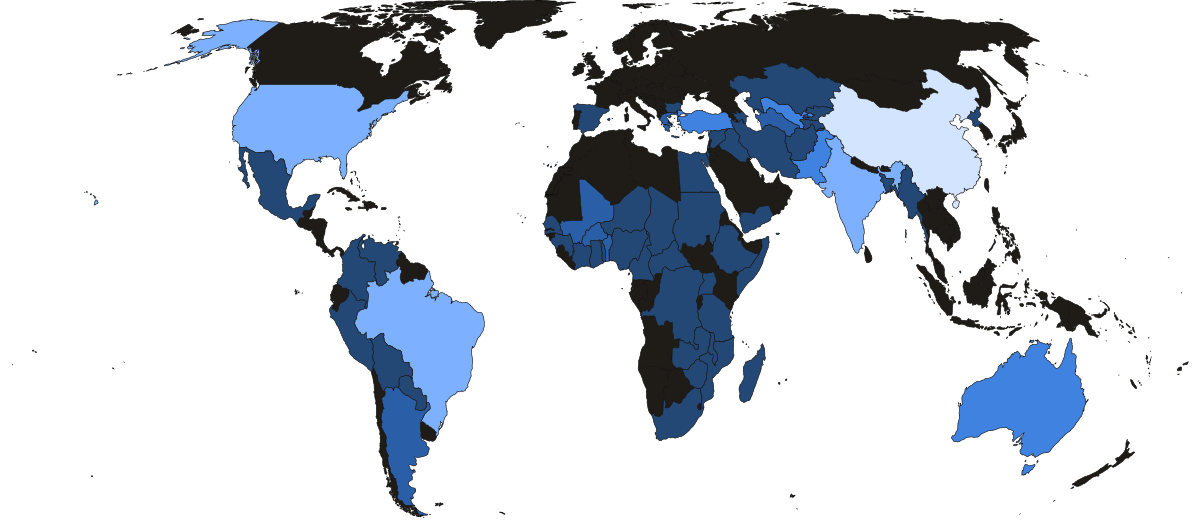
China grew 7.79 million tonnes of cotton in 2025/26 (35.8 million 480-lb bales), 29.3% of the world harvest of 26.6 million tonnes. India grew 5.18 million tonnes (19.5%), Brazil 4.08 million (15.4%) and the United States 3.03 million (11.4%). Those four countries together produced 75.6% of the world's cotton.
Brazil's output has risen sharply, from 2.55 million tonnes in 2022/23 to 4.08 million in 2025/26. Benin is Africa's largest grower. Greece is the European Union's largest, at about 245,000 tonnes. The USDA forecasts a 3.7% drop in world output for 2026/27.

- Under 0.5%
- 0.5%–2%
- 2%–10%
- 10%–25%
- Over 25%
- No production
Who exports the most cotton?
Brazil exported 3.37 million tonnes of cotton in 2025/26 (15.5 million bales), 33.8% of the 10.0 million tonnes traded worldwide. The United States shipped 2.68 million tonnes (26.8%) and Australia 1.22 million (12.2%). Those three sold 72.8% of all cotton traded.
Brazil overtook the United States as the largest cotton exporter in 2023/24. The United States had been first every year since 1993/94. A severe drought in Texas cut the US crop that year to its lowest in 40 years. Brazil has held first place every year since, and the USDA forecasts a fourth consecutive record for Brazil in 2026/27.
Who sells the world's cotton
Million 480-lb bales, 2025/26

 Benin

Who imports the most cotton?
Vietnam imported 1.78 million tonnes of cotton in 2025/26 (8.2 million bales), 18.1% of the 9.8 million tonnes bought worldwide. China bought 1.58 million tonnes (16.1%) and Bangladesh 1.57 million (16.0%). Vietnam and Bangladesh grow almost no cotton; they import nearly all of what their spinning and garment mills use.
China was the world's largest cotton importer in 2023/24 at 3.26 million tonnes. Its imports then fell 65% in 2024/25, pushed down by record harvests in Xinjiang, China's tariffs on US cotton from March 2025 and import quotas. India's imports reached a record 1.13 million tonnes in 2025/26 after the Indian government waived the 11% import duty for several months.
Who buys the world's cotton
Million 480-lb bales, 2025/26
Who spins the most cotton?
China's mills used 9.06 million tonnes of cotton in 2025/26 (41.6 million bales), 34.4% of the world total of 26.3 million tonnes. India was second at 5.72 million tonnes (21.7%) and Pakistan third at 2.16 million (8.2%). Vietnam (6.7%) and Bangladesh (6.1%) round out the top five.
Cotton makes up about 19% of the world's fiber output, according to Textile Exchange. Polyester accounts for about 59%. World fiber output reached a record of about 132 million tonnes in 2024.
Who spins the world's cotton
Million 480-lb bales, 2025/26
- China41.6
 India26.3
 Pakistan9.9
- Vietnam8.2
 Bangladesh7.4
 Turkey6.8
 Uzbekistan3.5
- Brazil3.4
What is the issue with Xinjiang cotton?
In 2025, 92.8% of China's cotton was grown in Xinjiang, according to China's statistics bureau. That is roughly a quarter of the world's cotton. The US government says that Uyghurs and other minorities in Xinjiang face forced labor. China's government denies this.
The US Uyghur Forced Labor Prevention Act (UFLPA) took effect on June 21, 2022. It bars goods made wholly or partly in Xinjiang, or by about 190 listed entities, unless importers prove they were not made with forced labor. The US government added 43 companies to the list in August 2026. The European Union's Forced Labour Regulation will ban products made with forced labor from December 14, 2027.
Xinjiang's share of China's cotton
Where China's cotton grows, 2025
- Xinjiang93%
- Rest of China7%
The rules
- June 21, 2022US forced-labor law on Xinjiang goods in force (UFLPA)
- ~190entities on the UFLPA Entity List (Oct 2026)
- Dec 14, 2027EU forced-labor ban applies
History
How the cotton gin spread slavery across the American South
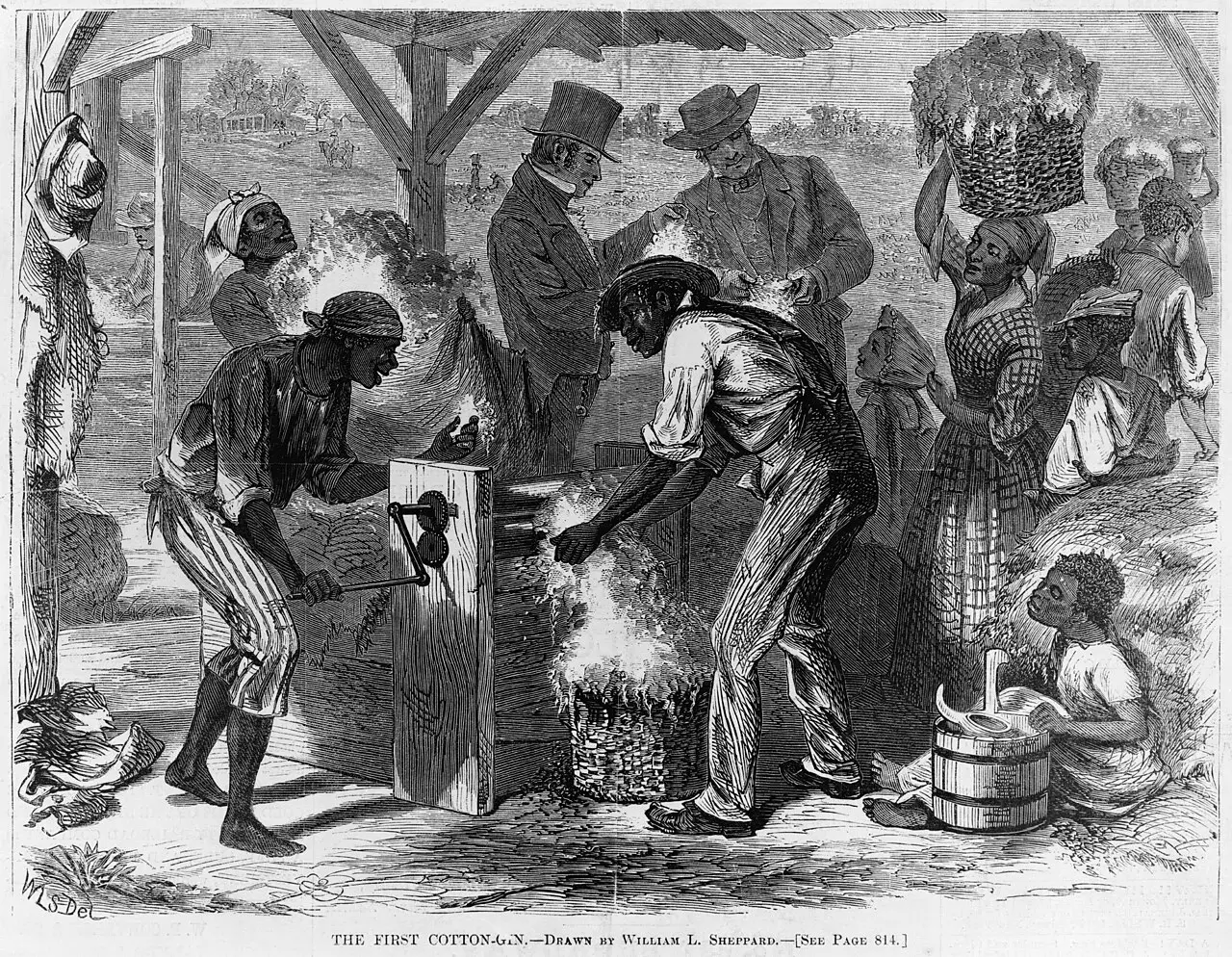
Eli Whitney's cotton gin, built in Georgia in 1793, made cotton the crop that spread slavery across the South. Whitney was a Yale graduate working as a tutor at Mulberry Grove, the plantation of Catherine Greene. His machine pulled short-staple cotton through wire teeth and left the seeds behind. Cleaning one pound by hand took a worker several hours. One gin could clean up to 50 pounds a day. Planters copied the machine, and Whitney made little money from his patent.
The enslaved population grew from about 700,000 in 1790 to nearly four million in 1860. About a million enslaved people were moved from the Upper South to the cotton states. Many were marched in chained groups called coffles. President Andrew Jackson signed the Indian Removal Act in 1830. Under it, the Choctaw, Chickasaw, Creek, Cherokee and Seminole were pushed west of the Mississippi, and their land became cotton country. By 1860 cotton was over half of all US exports.
History
Why didn't cotton bring Britain into the American Civil War?
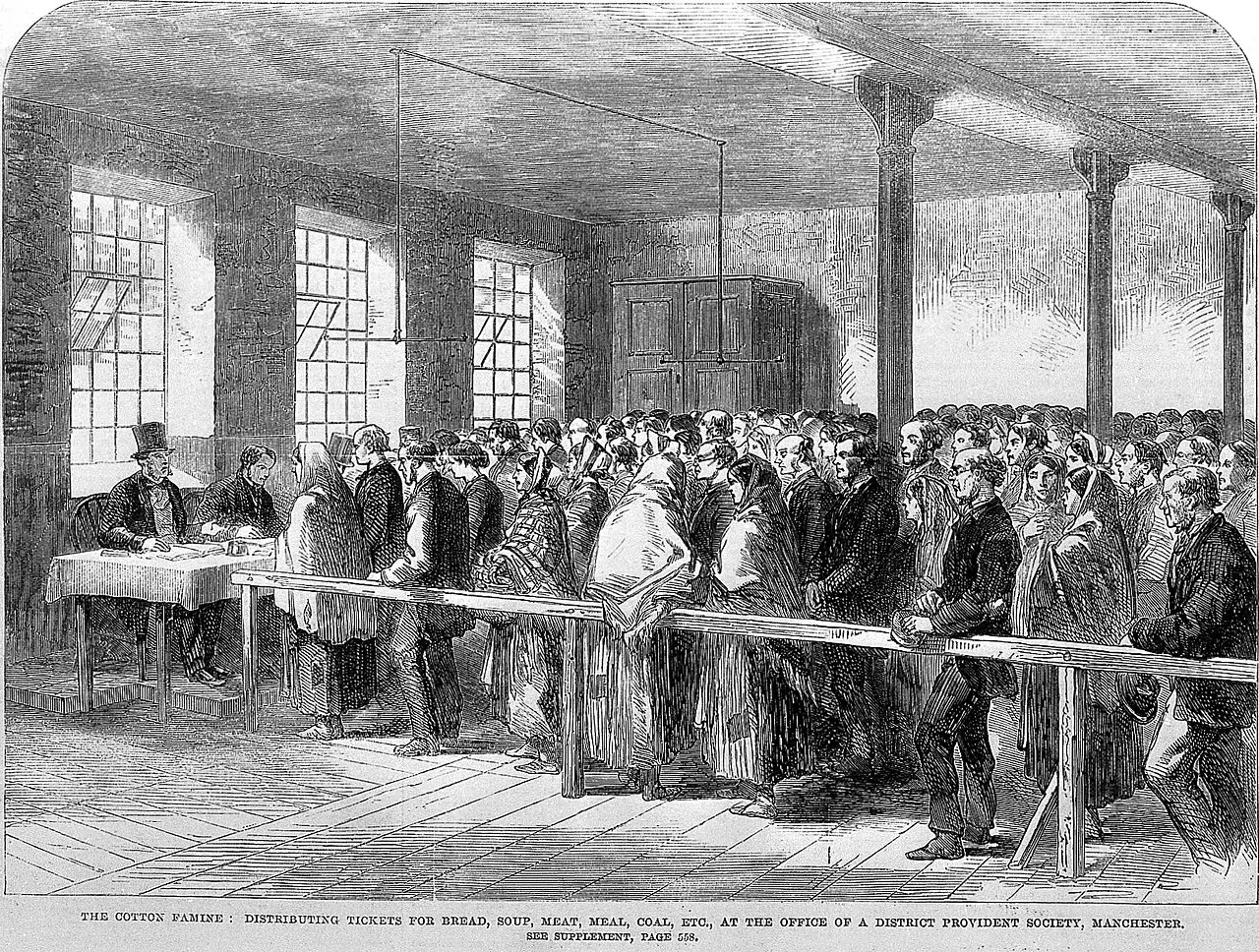
Britain stayed out because its cotton warehouses were full in 1861, and because by late 1862 the war looked like a fight over slavery. In 1858 Senator James Henry Hammond of South Carolina had told the US Senate: "No power on earth dares make war upon it. Cotton is king." In 1860 about 80% of the raw cotton imported by Britain's mills came from the American South. In 1861 Southern planters held cotton back to push Britain and France into recognizing the Confederacy.
By late 1862 the Union blockade had left hundreds of thousands of Lancashire mill workers out of work or on short time. On 24 September 1862 the British prime minister, Lord Palmerston, wrote that the time for mediation was "fast approaching". News then reached London that the Union army had stopped Robert E. Lee at Antietam. President Lincoln had also issued the preliminary Emancipation Proclamation. In November the British cabinet declined a French proposal for joint mediation.
History
Who grew the most cotton 100 years ago?
The United States grew the most cotton 100 years ago. In 1926 it harvested 17.8 million of the world's 27.8 million bales of commercial cotton, 63.8% of the total. It was a record US crop at the time. British India was second at 15.2%, Egypt third at 6.1% and China fourth at 4.8%. British troops had been stationed in Egypt since 1882. The Soviet Union, whose cotton grew mostly in Uzbekistan, grew 2.7%.
The US share fell during the Great Depression. From 1933 the US government paid farmers to plow up planted cotton and grow less. Meanwhile the Soviet Union, China and Brazil expanded their crops. By 1936 the US share was down to 40%. Today China grows the most cotton, and Egypt grows 0.27%.
Share of world cotton harvest
19262025/26 United States64%11%
- India15%20%
 Egypt6.1%<1%
- China4.8%29%
- Brazil1.6%15%
Other resources
All 33 resources →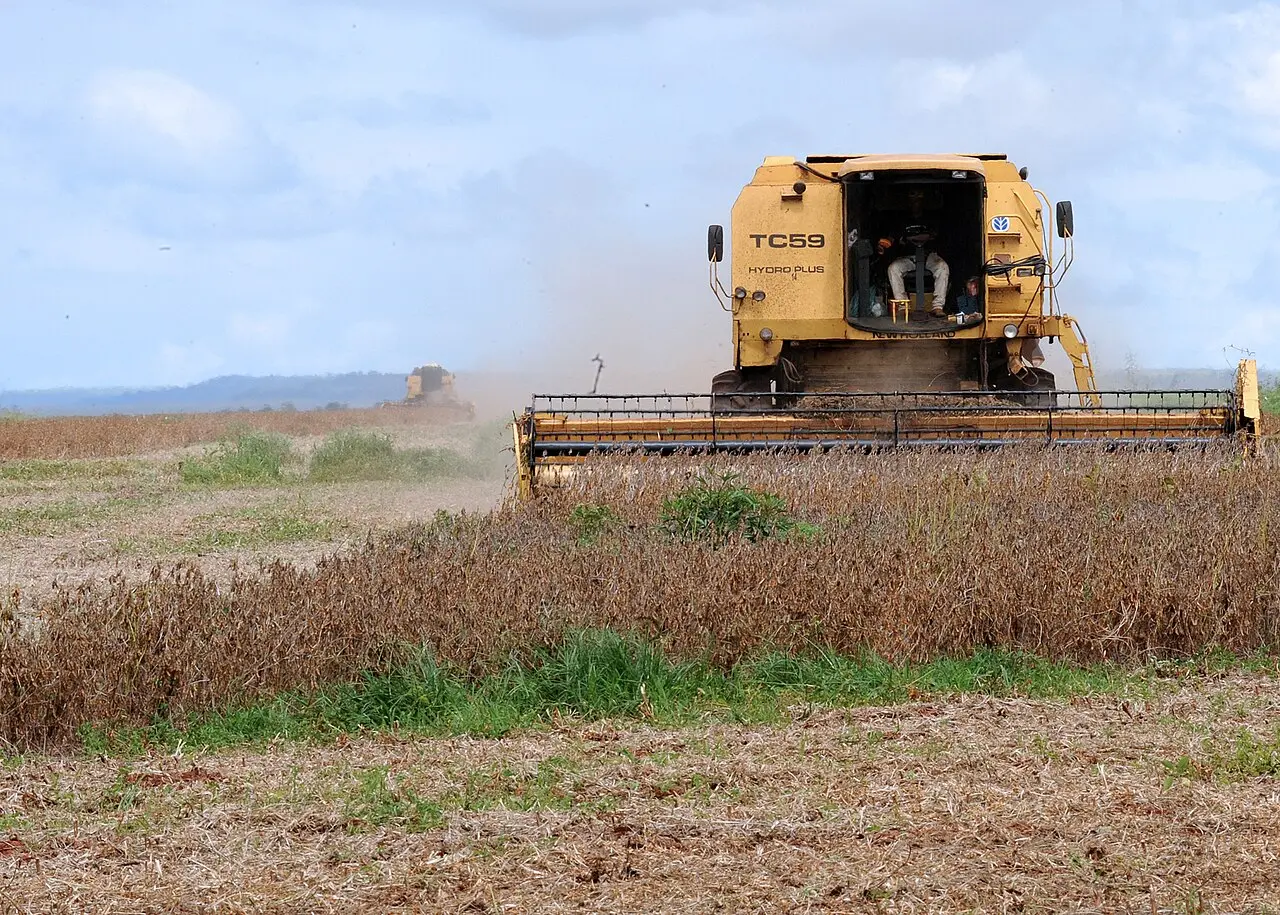 Brazil 36%
Food and farming
Soybeans
Brazil grows 36% of the world's soybeans. China buys 60% of all traded soybeans.
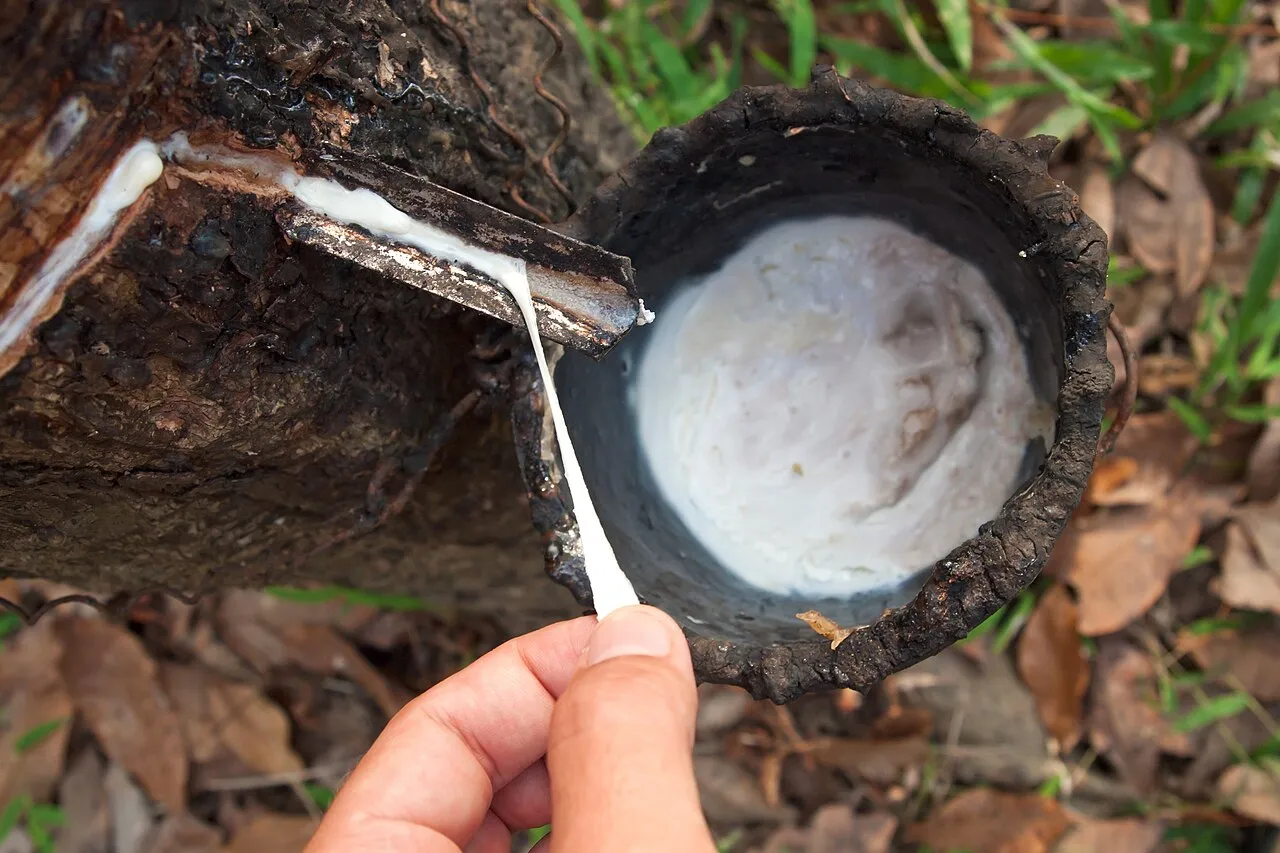
 Thailand 32%
Industrial crop
Rubber
Thailand grows 32% of the world's natural rubber. China uses 46% of it.
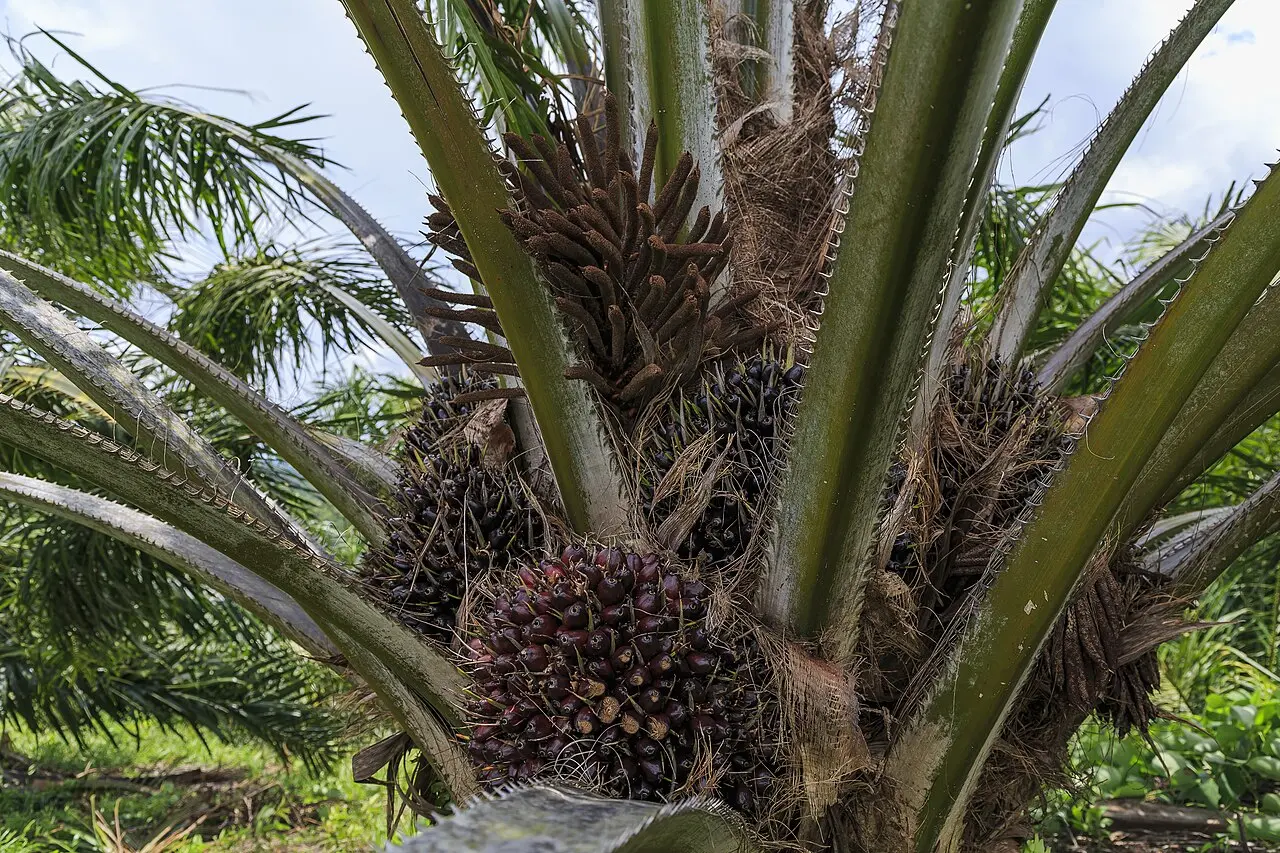
 Indonesia 57%
Food and farming
Palm oil
Indonesia grows 57% of the world's palm oil. It is the most-produced vegetable oil.