
Country profile · Central Africa
 Central African Republic
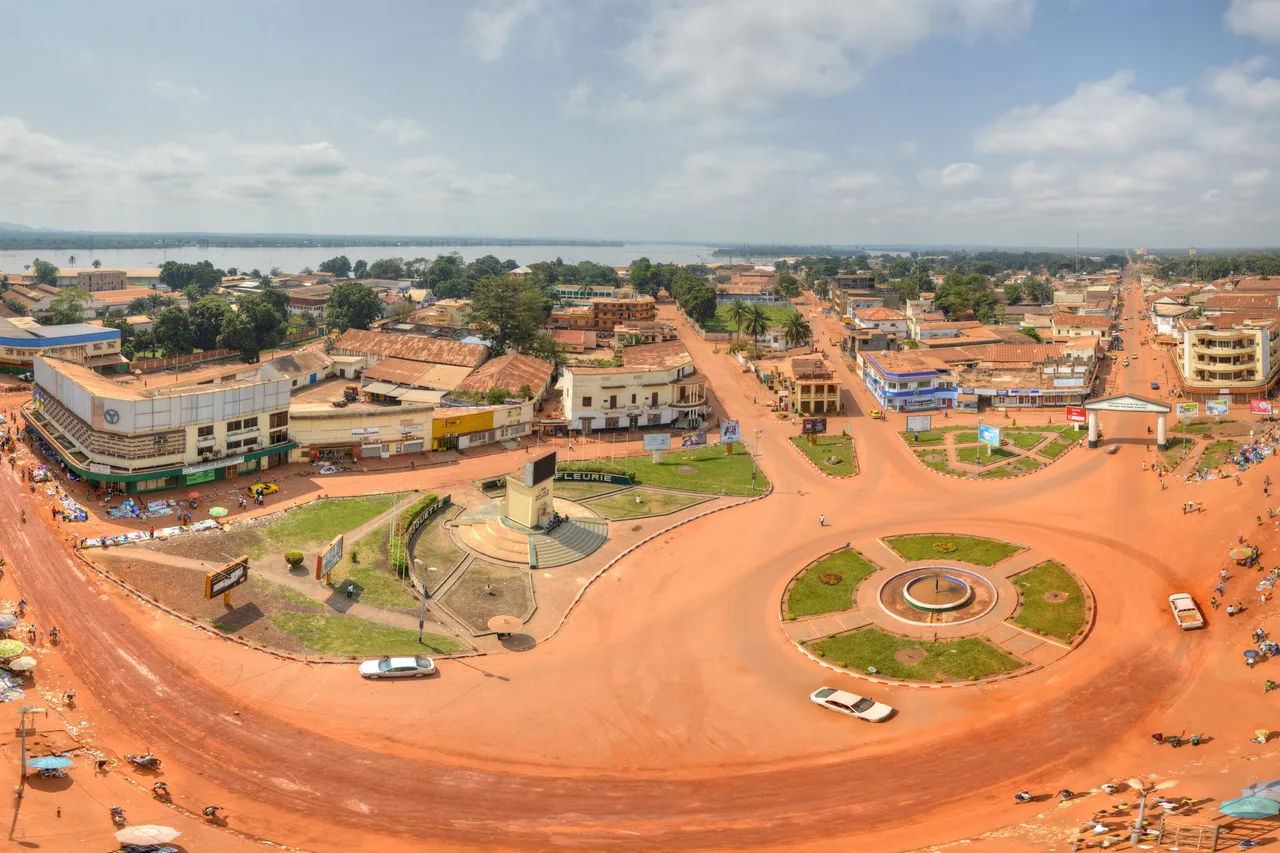
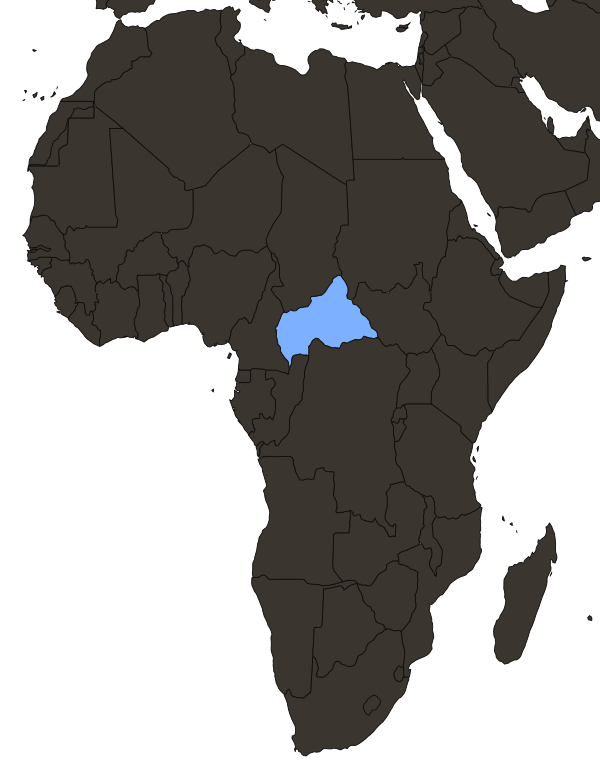
The Central African Republic is a landlocked country in the middle of Africa with about 5.5 million people. It was a French colony until independence in 1960. Armed groups have been fighting since 2013. UN peacekeepers, Russian fighters and Rwandan troops protect the government. It is one of the poorest countries in the world, and its people are the youngest: half are under 14.5.
Where the Central African Republic ranks
All rankings →- #196of 196Median age14.5 years
- #194of 196Life expectancy57.9 years
- #193of 196Births per woman5.81
- #10of 185Refugees from the country674,222
- #181of 191GDP per person$841
- #20of 146Military share of spending12.5%
Which country has the biggest army? Largest armies in the world →
Which alliances is the Central African Republic in?
All alliances →Armed groups in the Central African Republic
All armed groups →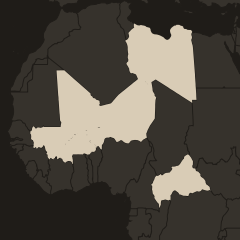
Who runs the Central African Republic?
President Faustin-Archange Touadéra has led the Central African Republic since March 30, 2016. He was born on April 21, 1957, in Bangui. He is a mathematician who headed the University of Bangui. He served as prime minister under President François Bozizé from 2008 to 2013. He was re-elected in 2020. A referendum on July 30, 2023, which the opposition boycotted, removed the two-term limit and made terms seven years long.
In the election of December 28, 2025, President Touadéra won 77.9% of the vote, according to the Constitutional Council. The main opposition alliance boycotted it. The runner-up, Anicet-Georges Dologuélé, got 13.5%. A Bangui court ruled in October 2025 that Dologuélé had lost his citizenship by becoming French in 1994; he had given up French nationality that August. President Touadéra began his third term on March 30, 2026. The prime minister is Félix Moloua. Former President Bozizé leads a rebel coalition from exile in Guinea-Bissau. A Bangui court sentenced him to life in 2023, and the UN-backed Special Criminal Court began trying him in his absence for crimes against humanity in June 2026. On October 15, 2026, five civil society leaders were arrested after calling a strike against higher fuel prices. On November 13, several hundred people marched in Bangui to demand their release and cheaper fuel. The main opposition alliance, the BRDC, organized the march, and the government had allowed it. As of mid-November the five were still held.
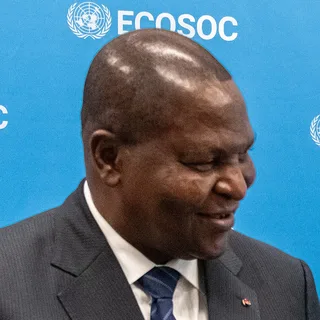
Photo (September 2023): Ronny Przysucha, U.S. Department of State, Wikimedia Commons, public domain (cropped)
Who are the Central African Republic's allies and enemies?
Russia is the main security partner. Fighters of the Wagner group arrived in 2018 as "instructors." Together with Rwandan troops, they helped beat back a rebel attack on Bangui in January 2021. About 1,500 Russians were in the country in early 2026. In 2025 Russia asked the government to replace Wagner with Africa Corps, which reports to Russia's defense ministry, and to pay for it. The handover has been partial. Wagner-linked firms run the Ndassima gold mine. UN experts and Human Rights Watch have reported killings of civilians by Russian forces.
Rwanda has had troops in the country since December 2020. France, the former colonial ruler, suspended budget support and military cooperation in 2021, saying Bangui was "complicit" in an anti-French campaign. France's last troops left in 2022. Ties have warmed since 2024. Chad brokered peace deals with three armed groups in 2025. About 80% of imports come by road from the port of Douala in Cameroon.
Allies and partners


Rivals
- CPC rebel coalitionArmed groups led by ex-president Bozizé
- Azande Ani Kpi GbeMilitia fighting the army in the southeast
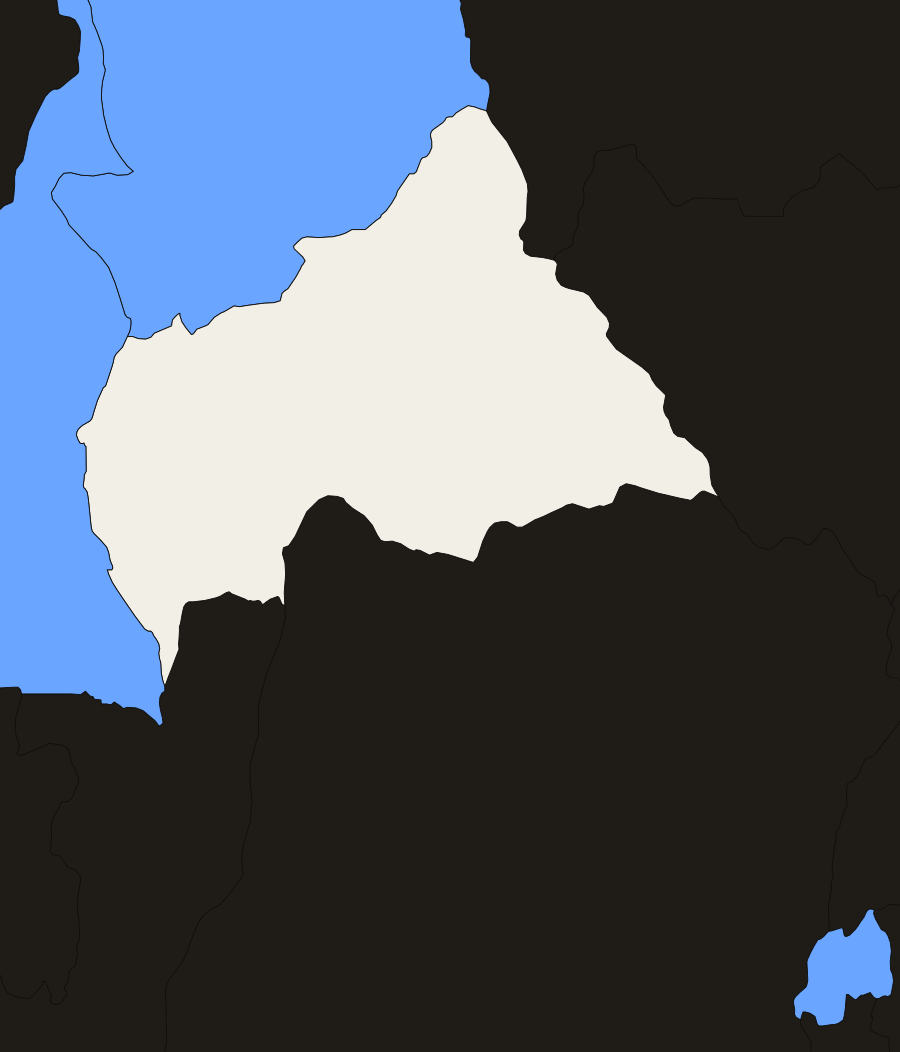
- Bangui The capital. Rebels reached its edge in January 2021 before Rwandan and Russian forces pushed them back.
- Ndassima Gold mine run by a Wagner-linked company since 2020. The United States put sanctions on the company in 2023.
- Am-Dafock Border town attacked on June 30, 2026 by Central African rebels backed by fighters from Sudan. About 17,500 people fled.
- Zemio Town in the southeast where the Azande Ani Kpi Gbe militia fights the army and its Russian allies.
- Central African Republic
- Partner
Why is there a war in the Central African Republic?
On March 24, 2013, the Seleka, a mostly Muslim rebel alliance from the northeast, took Bangui and ousted President Bozizé. Mostly Christian and animist militias called anti-balaka fought back, attacking Muslims. A UN inquiry estimated that 3,000 to 6,000 people were killed in 2013 and 2014. The inquiry found that anti-balaka abuses amounted to ethnic cleansing of Muslims. About 935,000 people had fled their homes inside the country by the end of 2013.
France sent troops from December 2013 to 2016. The UN peacekeeping mission, MINUSCA, took over in September 2014. On November 12, 2026, the UN Security Council renewed it until November 15, 2027, and cut its troop ceiling from 14,046 to 12,000. The Council also asked the mission to hand some of its tasks to the government step by step. A 2019 peace deal with 14 armed groups did not end the fighting. In 2025, deals brokered by Chad led two of the largest groups to disband. By October 2026, 1,907 fighters had been disarmed since July 2025, the UN says. But a militia fights in the southeast, the Lord's Resistance Army is kidnapping civilians again, and rebels backed by Sudanese fighters attack across the Sudan border. More than 650,000 Central Africans live abroad as refugees (chart). About 417,000 were displaced inside the country in August 2026.
Refugees by country of origin
Full ranking → South Sudan2,386,499
 Myanmar1,524,378
 DR Congo1,176,489
 Somalia892,037
- Central African Republic674,222
 Eritrea554,891
UNHCR Refugee Population Statistics Database
Who does the Central African Republic trade with?
Official trade is small. In 2024, recorded goods exports were worth about $122 million and imports about $534 million (central bank figures). Fuel was about a third of imports. Timber, gold and diamonds are the main exports. Most gold leaves unrecorded. In 2023, the United Arab Emirates, the main market for gold, bought more than half of all exports by partner countries' figures (chart).
In 2025, official gold exports jumped from about 0.8 tonnes to 7.4 tonnes after a higher official gold price and a crackdown on smuggling. Gold overtook timber. China buys most of the logs. Wagner-linked businesses alone mine about 5 tonnes of gold a year, according to the Global Initiative against Organized Crime. Imports come mostly by a 1,400 km road from Douala in Cameroon. In June 2026 the World Bank approved a $1.12 billion program to modernize the route.
Sells to
Share of the Central African Republic's exports
 United Arab Emirates54.0%
 China14.0%
 France6.0%
 Turkey5.0%
 Belgium4.0%


Exports: 2023, partner countries' figures (CEPII BACI via OEC). Imports: 2024, the country's own figures (UN Comtrade).
Why is the Central African Republic so poor?
Decades of coups and war, no sea coast and weak government explain the poverty. GDP per person was $841 in 2025, according to the IMF. In the UN's Human Development Index, the Central African Republic ranks 191st of 193 countries. The World Bank says 67% of people live in extreme poverty. In the countryside the figure is 78%. Life expectancy is 57.9 years. Women have 5.8 children on average and lives are short, so the population is the youngest in the world (chart). About 18% of people have electricity.
In 2026, 2.3 million people, more than a third of the population, need humanitarian aid. The government collects less than 10% of GDP in taxes. Foreign grants were 46% of its income in 2024. Debt payments took 41% of revenue in early 2026. In 2022 the government made bitcoin legal money, then reversed the law in 2023. In February 2025 a cryptocurrency launched from President Touadéra's account lost about 97% of its value within two days.

