
Country profile · East Africa
 Uganda
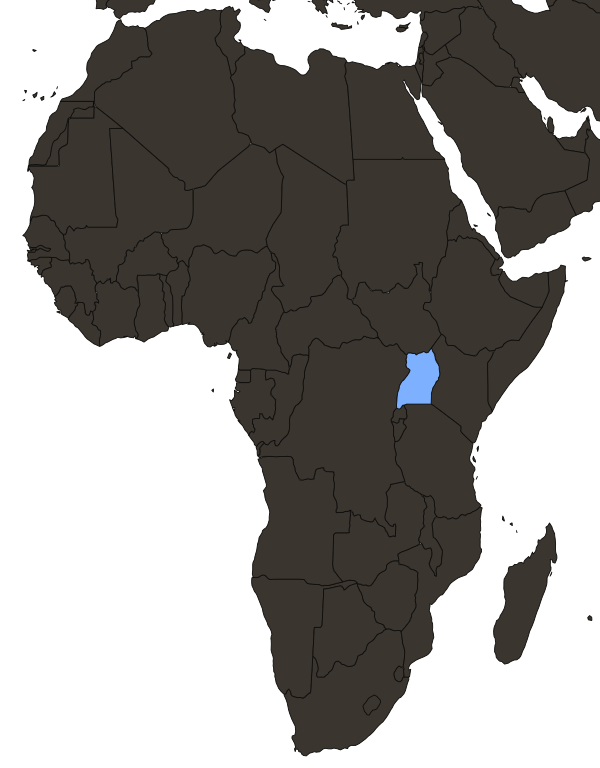
 is a landlocked country in East Africa. Its 2024 census counted 45.9 million people. President Yoweri Museveni has ruled since 1986 and began a seventh term in May 2026. Uganda hosts more than 2 million refugees, more than any other African country. Gold is now its largest export, and its first oil is due by mid-2027.
Where Uganda ranks
All rankings →Which alliances is Uganda in?
All alliances →Who runs Uganda?
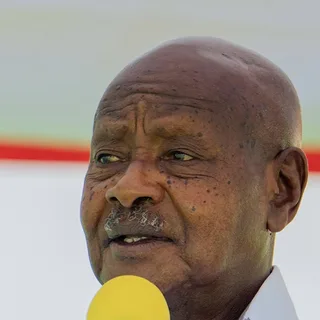
Uganda is a presidential republic. President Yoweri Museveni was born in 1944 in Ntungamo, in western Uganda. His rebel National Resistance Army took Kampala on January 26, 1986, after the dictatorships of Idi Amin (1971 to 1979) and Milton Obote. Parliament removed presidential term limits in 2005 and the age limit in 2017. Museveni was declared the winner of the January 15, 2026 election with 71.65%, against 24.72% for the singer and opposition leader Bobi Wine. The internet was shut down from January 13 to 26, and Amnesty International says security forces likely killed at least 16 people. Bobi Wine fled the country in March 2026. Museveni began a seventh term on May 12, 2026, running to 2031. Museveni's son, General Muhoozi Kainerugaba, has commanded the army since March 2024. A movement Muhoozi leads is collecting signatures for his 2031 bid. Opposition leader Kizza Besigye, seized in Nairobi in November 2024, is on trial for treason. Museveni's National Resistance Movement holds 372 of the 529 seats in Parliament (chart).
- NRM 372
- Independents 68
- NUP (Bobi Wine) 49
- Others (incl. 10 army seats) 40
Photo (April 2024): Emmasento, Wikimedia Commons, CC0 (cropped)
Who are Uganda's allies and rivals?
Uganda has troops in Somalia, Congo and South Sudan. It has 4,500 troops in the African Union mission in Somalia, the largest contingent. The army chief says they will all leave by August 1, 2027. Al-Shabaab killed 54 Ugandan soldiers at Bulo Marer in May 2023. Since November 30, 2021, Ugandan and Congolese troops have fought the Allied Democratic Forces, an Islamic State affiliate, in eastern Congo. Ugandan troops moved into Bunia in February 2025, bringing the force to about 5,000. UN experts have also accused Ugandan military officials of helping the M23 rebels. Uganda denies it. In March 2025 President Yoweri Museveni sent special forces to Juba to protect South Sudan's President Salva Kiir, and they are still there. Kenya is Uganda's route to the sea. More than 95% of its fuel arrives through Kenya. The United States signed a $1.7 billion health deal with Uganda in September 2026. China's Exim Bank is Uganda's largest bilateral lender.
Allies and partners
 United States$1.7 billion health deal signed in 2026
 ChinaLargest bilateral lender; runs an oil field
 KenyaOver 95% of fuel comes through Kenya
 South SudanUgandan troops protect President Kiir
 RwandaBorder reopened in 2022; ties now warm
Rivals
- Allied Democratic ForcesIslamic State affiliate; fought in Congo since 2021
- Al-ShabaabKilled 54 Ugandan soldiers in Somalia in 2023
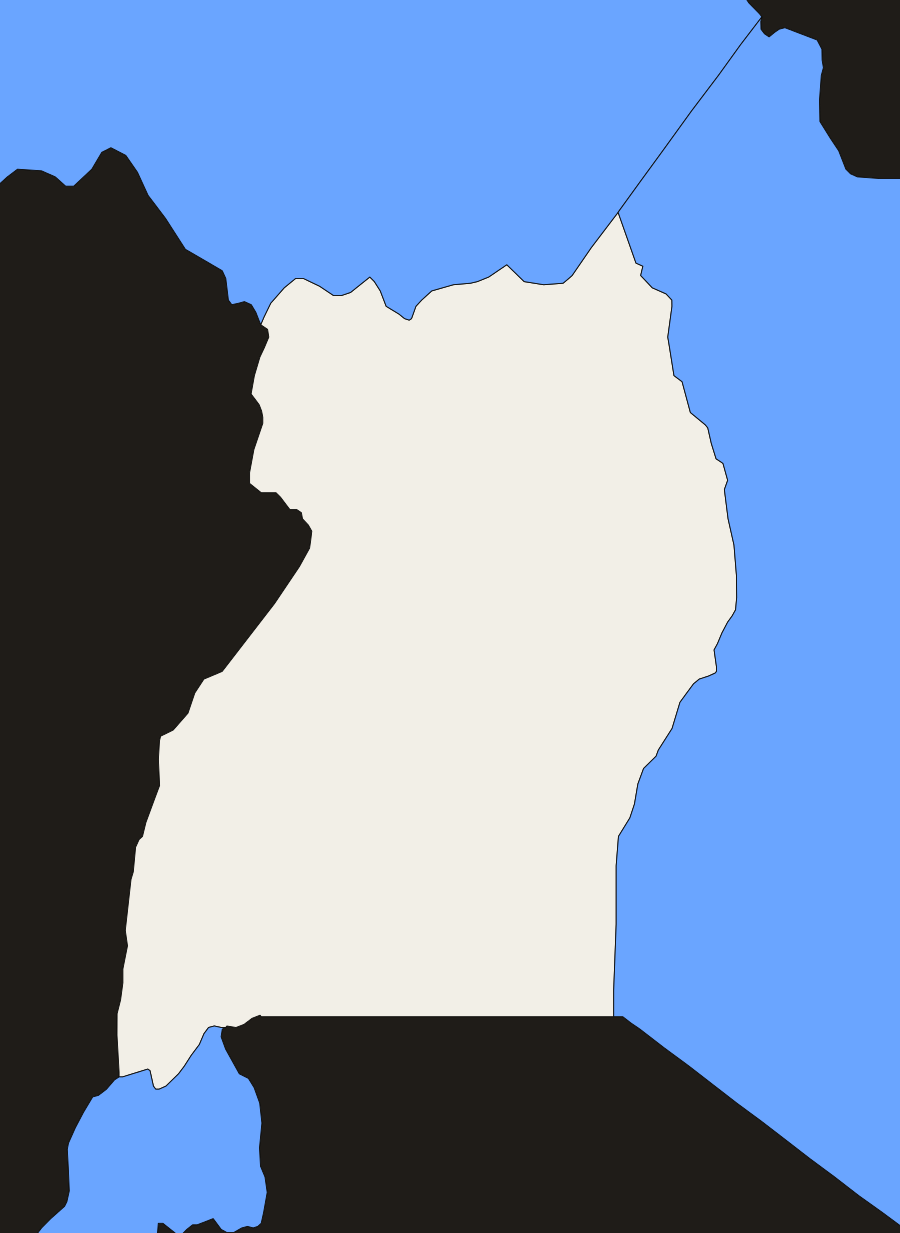
- Bunia Capital of Congo's Ituri province. Ugandan troops arrived in February 2025.
- Juba Capital of South Sudan. Ugandan special forces have guarded President Salva Kiir since March 2025.
- Kabaale, Hoima Start of the 1,443 km EACOP oil pipeline to Tanga in Tanzania, near the Lake Albert oil fields.
- Migingo Island Tiny fishing island in Lake Victoria claimed by both Uganda and Kenya.
- Uganda
- Partner
Who does Uganda trade with?
The United Arab Emirates bought 40.5% of Uganda's exports in 2025, mostly gold (chart). China supplied 17.7% of imports, followed by Tanzania with 14.3%, mostly raw gold for refining. Uganda exported $12.8 billion of goods in 2025 and imported $18.85 billion (UN Comtrade). Gold exports rose from $3.3 billion in 2024 to $5.8 billion in 2025 (Bank of Uganda). Gold overtook coffee as the largest export. Uganda mines little gold itself. Most of it is imported from Congo, South Sudan and Tanzania, refined and sold on. UN experts noted in July 2026 that Uganda declared 62 tonnes of gold exports, while Congo's Ituri province officially exported just over half a tonne. Coffee earned about $2.2 billion in the 2024/25 season. Italy is the biggest buyer of Ugandan coffee. In October 2026 the shilling fell to a record low of about 4,150 to the dollar, and the central bank raised its main rate from 9.75% to 12%.
Sells to
Share of Uganda's exports
 United Arab Emirates40.5%
- Hong Kong10.5%
 Italy5.6%
- Kenya5.3%
 DR Congo5.2%
Buys from
Share of Uganda's imports
- China17.7%
 Tanzania14.3%
- Kenya8.6%
 India7.9%
- United Arab Emirates6.0%
Goods including gold, 2025, as reported by Uganda. UN Comtrade.
Why does Uganda host so many refugees?
Uganda hosted 2,050,820 refugees and asylum seekers on September 30, 2026, the most in Africa (UNHCR). At the end of 2025 it ranked fourth in the world (chart). More than half come from South Sudan and about a third from Congo, with smaller groups from Sudan, Somalia, Burundi and Eritrea. In 2025 more than 124,000 new refugees arrived in seven months. Under the Refugees Act of 2006, refugees may work, move freely and farm a plot of land in settlements such as Nakivale. In practice the plots are shrinking and work permits are hard to get. Funding has fallen fast. Uganda received about $490 million in 2015 for about 500,000 refugees. In 2026 it expects about $165 million for four times as many people (Office of the Prime Minister). About one million refugees lost food aid in May 2025. Those still on aid get about $3 a month. In February 2026 Uganda stopped recognizing new arrivals as a group and began judging each case.


When will Uganda start pumping oil?
Oil was discovered near Lake Albert in 2006. The fields hold about 6 billion barrels, of which about 1.4 billion can be recovered (Petroleum Authority of Uganda). TotalEnergies runs the Tilenga project and China's CNOOC runs Kingfisher. The crude will leave through the East African Crude Oil Pipeline (EACOP), 1,443 km from Kabaale to the port of Tanga in Tanzania. It is the world's longest electrically heated crude pipeline, because the oil must be kept above 50°C. It costs about $5 billion. TotalEnergies owns 62%, Uganda's and Tanzania's state oil companies 15% each, and CNOOC 8%. Standard Chartered and other banks refused to finance it, and activists say about 30 insurers refused to cover it. The pipeline was 92.7% complete at the end of August 2026. First oil was once planned for 2020, then 2025 and 2026. It is now due before the end of June 2027. President Yoweri Museveni named the crude "Pearl Sweet" in September 2026.