
Country profile · East Africa
 Tanzania
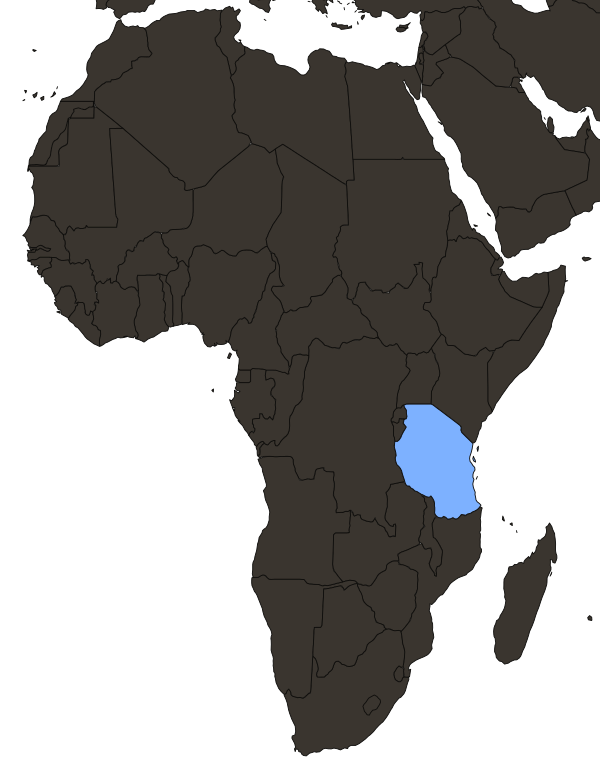
 is a country of 61.7 million people (2022 census) in East Africa, formed in 1964 by the union of Tanganyika and Zanzibar. Its ruling party, under different names, has governed since independence in 1961. President Samia Suluhu Hassan was declared re-elected with 97.66% in October 2025, and at least 518 people were killed in the protests that followed.
Where Tanzania ranks
All rankings →Which alliances is Tanzania in?
All alliances →Who runs Tanzania?
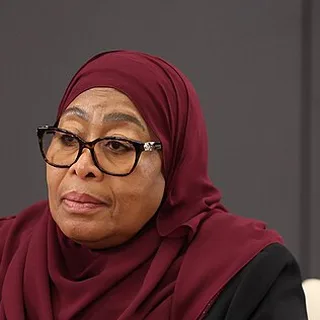
Tanzania is a presidential republic. President Samia Suluhu Hassan was born in 1960 in Makunduchi, on Zanzibar. She worked as a project manager for the UN World Food Programme before entering politics. She became Tanzania's first female vice president after the 2015 election. When President John Magufuli died in March 2021, she was sworn in as the country's first female president. Her party, Chama Cha Mapinduzi (CCM), was formed in 1977 from the parties that had ruled the mainland since independence in 1961 and Zanzibar since 1964. Before the October 29, 2025 election, the electoral commission barred the main opposition party, Chadema. Samia was declared the winner with 97.66% of the vote. The opposition holds 12 of 396 seats in parliament (chart). Chadema's leader, Tundu Lissu, has been in jail since April 2025, charged with treason. The verdict is due on November 6, 2026. Samia's husband, Hafidh Ameir, died on September 7, 2026.
- Chama Cha Mapinduzi (CCM) 384
- Opposition 12
Photo (June 2026): Kremlin.ru, Wikimedia Commons, CC BY 4.0 (cropped)
Who are Tanzania's allies and rivals?
China built the TAZARA railway from Dar es Salaam to Zambia in 1970 to 1975. In 2025 a Chinese state company won a 30-year concession worth about $1.4 billion to rebuild it, and construction began in July 2026. China's foreign minister endorsed the 2025 election during a visit in January 2026. Western governments were critical. The European Parliament called the vote "neither free nor fair". In December 2025 the United States began a review of relations. Washington has partly suspended visas for Tanzanians since January 1, 2026. In May 2026 it barred a senior police officer over the torture of a Kenyan activist and a Ugandan journalist. In June 2026 President Samia Suluhu Hassan made a state visit to Russia, the first by a Tanzanian president since 1969. Tanzania had 964 UN peacekeepers in January 2026, the 11th-largest contingent. Its troops also help fight insurgents in northern Mozambique.
Allies and partners
 ChinaRebuilding the TAZARA railway to Zambia
 UgandaIts oil will flow to the port of Tanga
 MozambiqueDefense agreements signed October 7, 2026
 ZambiaLinked by the TAZARA railway since 1975
Tensions
 United StatesReviewing relations since December 2025
 MalawiDispute over the border on Lake Nyasa
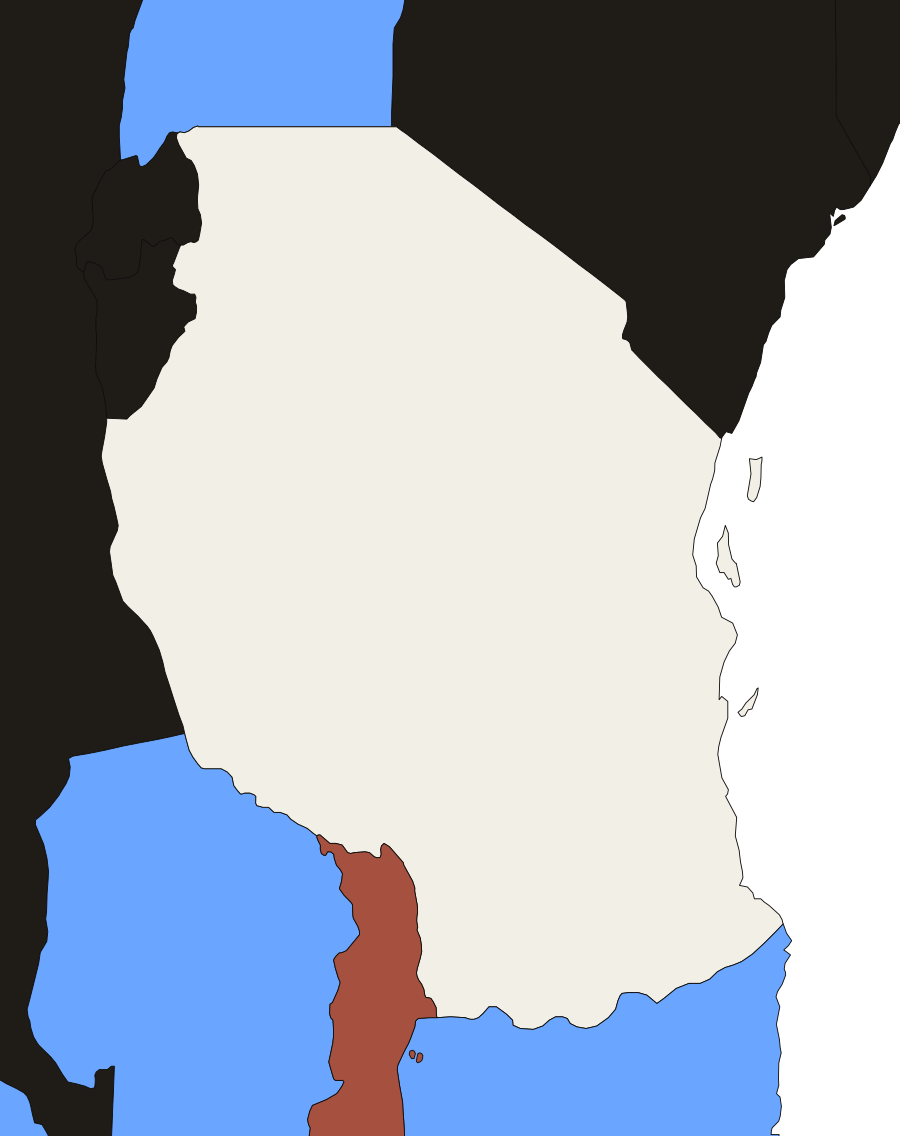
- Dar es Salaam Main port. It handled a record 33.7 million tonnes in 2025/26. More than half of its transit cargo went to DR Congo.
- Chongoleani End of the 1,443 km pipeline from Uganda's oil fields, 92.7% built in September 2026. First oil is expected in 2027.
- Lake Nyasa Malawi claims the whole lake under an 1890 treaty. Tanzania claims the border runs down the middle.
- Ngorongoro Conservation area where the government has moved Maasai families out since 2022. About 1,678 of 23,000 targeted households had left by March 2026.
- Tanzania
- Partner
- Tensions
Who does Tanzania trade with?
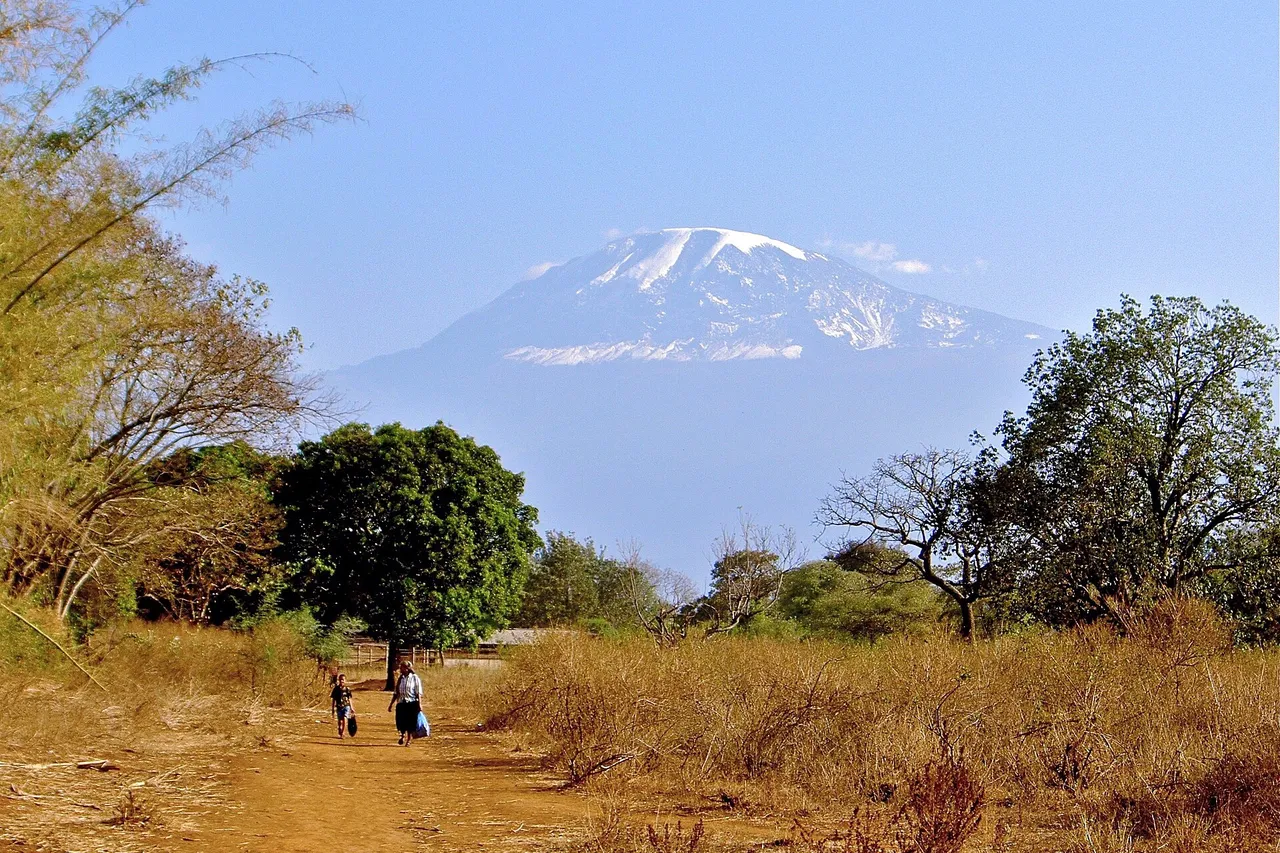
Tanzania sold $10.1 billion of goods in 2025 and bought $16.2 billion (UN Comtrade). South Africa bought 28.8% of exports, mostly gold, and China supplied 35.5% of imports (chart). Gold earned about $4.7 billion in 2025, making up 45.7% of goods exports (Bank of Tanzania). Since 2024 miners must offer 20% of their gold to the domestic market, and the central bank has bought about 28 tonnes. Tobacco and cashew nuts are the next largest exports. Tourism brought about 2.3 million visitors in 2025, many drawn to Mount Kilimanjaro, Africa's highest mountain, and to the Serengeti. The port of Dar es Salaam serves six landlocked neighbors. An electric railway has run from Dar es Salaam to the capital, Dodoma, since August 2024. A $42 billion liquefied natural gas project with Equinor and Shell still has no final investment decision. The economy grew 5.9% in 2025, and the IMF expects 6% in 2026.
Sells to
Share of Tanzania's exports
 South Africa28.8%
 United Arab Emirates13.1%
 India9.3%
- China5.1%
 Switzerland4.3%
Buys from
Share of Tanzania's imports
- China35.5%
- India12.7%
- United Arab Emirates10.2%
 Japan4.3%
- South Africa3.3%
Goods, 2025, as reported by Tanzania. UN Comtrade.
What happened after Tanzania's 2025 election?
Protests broke out on election day, October 29, 2025, in Dar es Salaam, Mwanza, Mbeya, Arusha and other cities. The government shut down the internet until November 3 and imposed a curfew. Security forces fired on crowds. A commission set up by President Samia Suluhu Hassan reported in April 2026 that 518 people were killed, 197 of them by gunshots, and 2,390 were injured. Twenty-one of the dead were children, and the commission said the toll could be higher. The Uppsala Conflict Data Program counts 1,009 deaths in Tanzania in 2025 (chart), and the opposition says more than 1,000. The African Union and Southern African observers said the vote did not meet their standards. Thousands were arrested and many charged with treason. Most were later freed or pardoned. A second inquiry into who was responsible began in August 2026 and has 150 days to report. In July 2026 Samia announced a reconciliation commission and a plan for a new constitution.
Deaths in organized violence, 2025
Full ranking →


Uppsala Conflict Data Program (UCDP), Georeferenced Event Dataset, version 26.1
How fast is Tanzania's population growing?
The 2022 census counted 61.7 million people, up from 44.9 million in 2012. The population grew by an average of 3.2% a year in that decade. A woman in Tanzania has 4.8 children on average (2022 survey), ranging from 2.8 in Dar es Salaam to 6.6 in Simiyu. The UN expects about 129.6 million people by 2050, which would make Tanzania the 15th-largest country in the world (chart). Tanzania has more than 120 ethnic groups, and none is a majority. Julius Nyerere, the first president, made Kiswahili the national language in 1961, and the great majority of people speak it. Surveys by Pew suggest about 61% of Tanzanians are Christian and 35% Muslim. Zanzibar is almost entirely Muslim. About 38% of the land is set aside for wildlife and other protected areas. Since 2022 the government has moved Maasai families out of the Ngorongoro Conservation Area. By March 2026 only 1,678 of about 23,000 targeted households had moved.
Population in 2050, UN forecast
Full ranking → Ethiopia225.0 million
 DR Congo218.2 million
 Egypt161.6 million
 Philippines134.4 million
- Tanzania129.6 million
 Vietnam110.0 million
UN World Population Prospects 2024