
Country profile · Oceania
 Solomon Islands
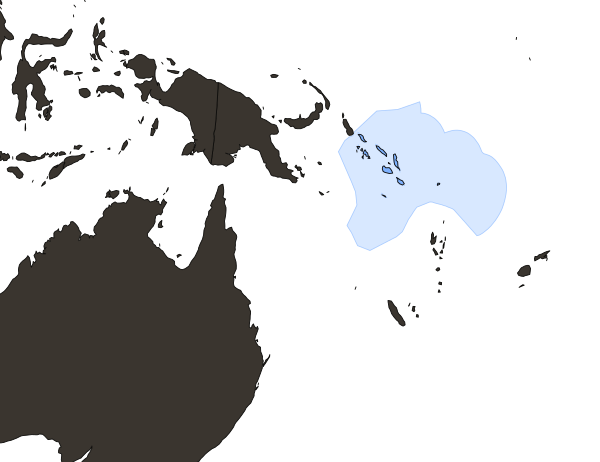
 is a country of more than 900 islands in the southwest Pacific, east of Papua New Guinea. It has about 840,000 people (UN, 2025). It was a British protectorate until independence in 1978, and King Charles III is still head of state. It has no army. In 2019 it switched recognition from Taiwan to China, and in 2022 it signed a security pact with China, alarming Australia and the United States.
Where Solomon Islands ranks
All rankings →Which alliances is Solomon Islands in?
All alliances →Who runs Solomon Islands?
Prime Minister Matthew Wale was born on June 13, 1968 in Ambu village on Malaita. He has been a member of parliament since 2008 and leads the Solomon Islands Democratic Party. He served as opposition leader from 2019 to 2026 and was a critic of the 2022 security pact with China.
In March 2026 twelve ministers quit the government of Prime Minister Jeremiah Manele, who had held office since May 2024. Manele refused to call parliament until the courts ordered him to. On May 7, 2026 he lost a no-confidence vote, 26 to 22. On May 15 parliament elected Wale by the same margin. In late August one of Wale's own ministers filed a no-confidence motion against him, then withdrew it in early September. Former Prime Minister Manasseh Sogavare, who made the switch to China, now leads the opposition. In November 2026 the government proposed changes to the constitution to limit no-confidence votes and MPs switching parties. On October 28 Prime Minister Wale was flown to Australia for urgent medical treatment, and he was still recovering there in early November.
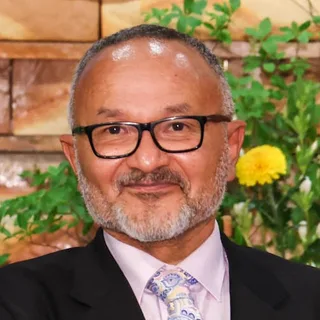
Photo (July 2026): Cabinet Public Relations Office, Prime Minister's Office of Japan, Wikimedia Commons, CC BY 4.0 (cropped)
Who are Solomon Islands' allies and enemies?
On September 16, 2019 the government of Prime Minister Manasseh Sogavare decided to drop Taiwan and recognize China. In 2022 Solomon Islands signed a security pact with China. A leaked draft let China send police and military forces at Honiara's request and let Chinese ships stop to resupply. The final text has never been published. Chinese police advisers have worked in Honiara since 2022.
Australia led a regional mission that restored order from 2003 to 2017 and is the largest aid donor. Since taking office in May 2026, Prime Minister Wale has turned back toward Australia. He is reviewing the China pact. In September 2026 the two countries agreed in principle on a new treaty. Leaked messages put Australia's extra money at more than A$980 million. In July 2026 Prime Minister Wale signed a deal letting Solomon Islands police patrol on US Coast Guard ships. He also protested when China test-fired a missile into the South Pacific in July. He still calls China an important partner.
Allies and partners
 AustraliaLargest aid donor; new treaty agreed in principle
 ChinaRecognized in 2019; security pact under review
 United StatesEmbassy reopened in 2023; Coast Guard patrol deal
 Papua New GuineaNeighbor; sent police during the 2021 riots
 New ZealandAid donor; sent troops during the 2021 riots
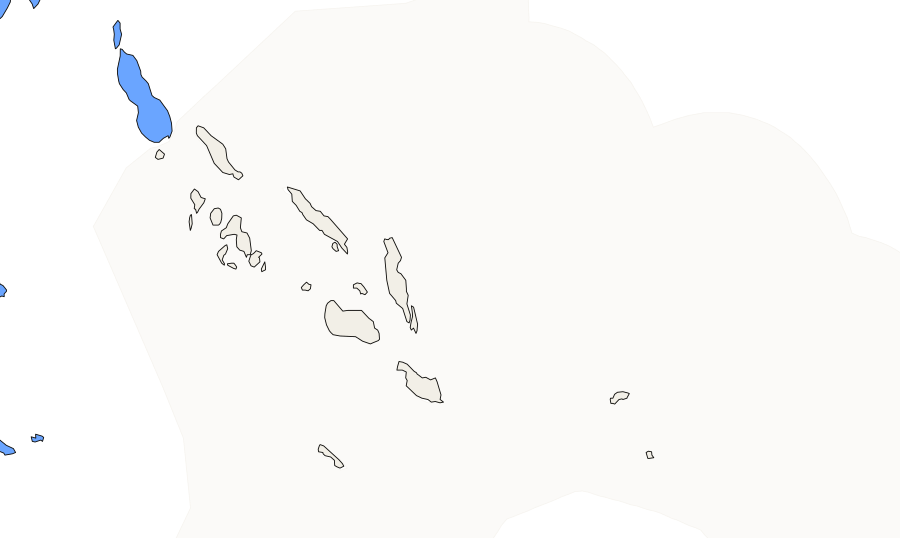
- Honiara The capital, on Guadalcanal. Rioters burned much of its Chinatown in 2006 and again in 2021.
- Malaita Most populous province. Its leaders opposed the 2019 switch to China, and many 2021 rioters came from here.
- Noro Tuna cannery, the country's biggest fish exporter.
- Rennell Bauxite mining island. A ship carrying bauxite ran aground here in 2019 and spilled about 300 tonnes of oil.
- Solomon Islands
- Partner
Who does Solomon Islands trade with?
In 2025 Solomon Islands exported goods worth SBD 6.1 billion (about $730 million), 41% more than in 2024, and imported SBD 5.5 billion, according to the central bank. Minerals, mostly gold from the reopened Gold Ridge mine on Guadalcanal, were 53% of exports. For decades logs were the main export, about 69% in 2019. In 2025 they were 16%, and the natural forests could be logged out by 2036. Fish, mostly tuna, was 10%, then palm oil and cocoa.
China bought 58% of exports in 2024, mostly logs (chart). Rice was more than a quarter of food imports. Aid grants were worth about 11% of GDP in 2025, and Australia gave the most. GDP per person was about $2,100, according to the IMF. Solomon Islanders have taken more than 12,000 work placements in Australia under its Pacific labor scheme.
Sells to
Share of Solomon Islands' exports
- China58.0%
- Australia13.5%
 Italy11.0%
 Netherlands3.2%
 Spain2.6%
Buys from
Share of Solomon Islands' imports
- China35.2%
 Singapore17.8%
- Australia12.3%
 Malaysia4.1%
- Papua New Guinea4.1%
Goods, 2024. Partner countries' figures in UN Comtrade; Solomon Islands has not reported by country.
Why does Solomon Islands have no army?
Solomon Islands has had no armed forces since independence. The police keep order. From 1998 militias from Guadalcanal drove out settlers from the neighboring island of Malaita. A Malaitan militia, the Malaita Eagle Force, fought back. Police weapons fueled the fighting. On June 5, 2000 the Malaita Eagle Force, with police help, held Prime Minister Bartholomew Ulufa'alu hostage and forced him out. About 200 people were killed in these "Tensions."
In July 2003 an Australian-led mission arrived, collected 3,730 guns and stayed until 2017. The police force has about 1,500 officers. In 2017 about 125 officers in special units began carrying guns again; most officers are unarmed. Riots burned Honiara's Chinatown in 2006 and again in November 2021, when protesters, many from Malaita, demanded Sogavare's resignation over the switch to China and older grievances. Three people died. Australia, Papua New Guinea, Fiji and New Zealand sent forces. Of the countries without an army, only Costa Rica, Panama and Mauritius have more people (chart).
Which country has the biggest army? Largest armies in the world →
Countries without an army, by population
Full ranking → Costa Rica5.2 million
 Panama4.6 million
 Mauritius1.3 million
- Solomon Islands0.8 million
 Iceland0.4 million
 Vanuatu0.3 million
Constitutions, government sources and US State Department country reports; population from UN World Population Prospects 2024, November 2026