Relations · South Asia

India-United Kingdom relations

FriendlyTrade deal partners, former colony and colonial power

India and the United Kingdom are close partners but not allies, since India has no treaty allies. Their free trade deal entered into force on July 15, 2026, and it cut tariffs on most goods. The 2021 census counted about 1.86 million people of Indian ethnicity in England and Wales, the largest non-White group. British rule in India began with the Battle of Plassey in 1757 and ended with independence on August 15, 1947.

Updated November 18, 2026 · Trade data from CEPII BACI, votes from the UN

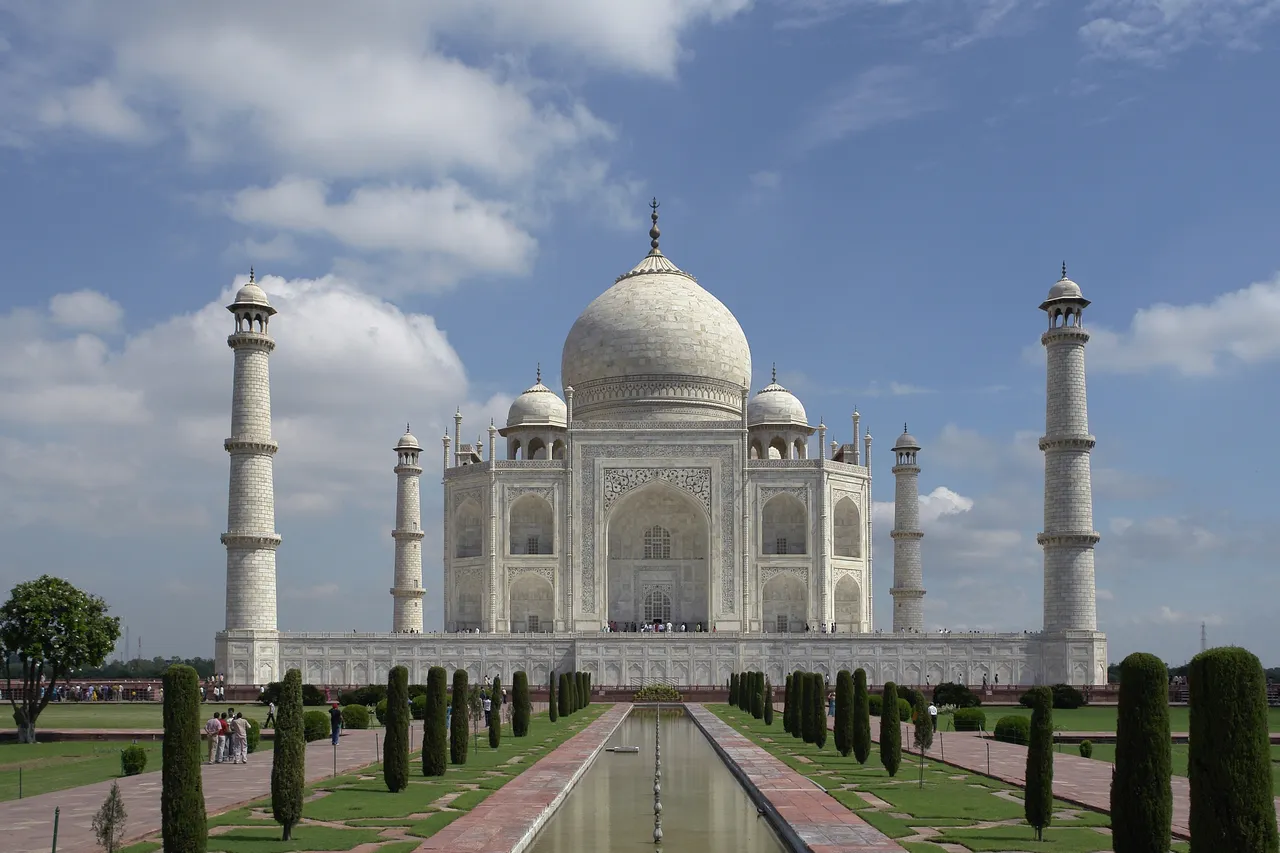
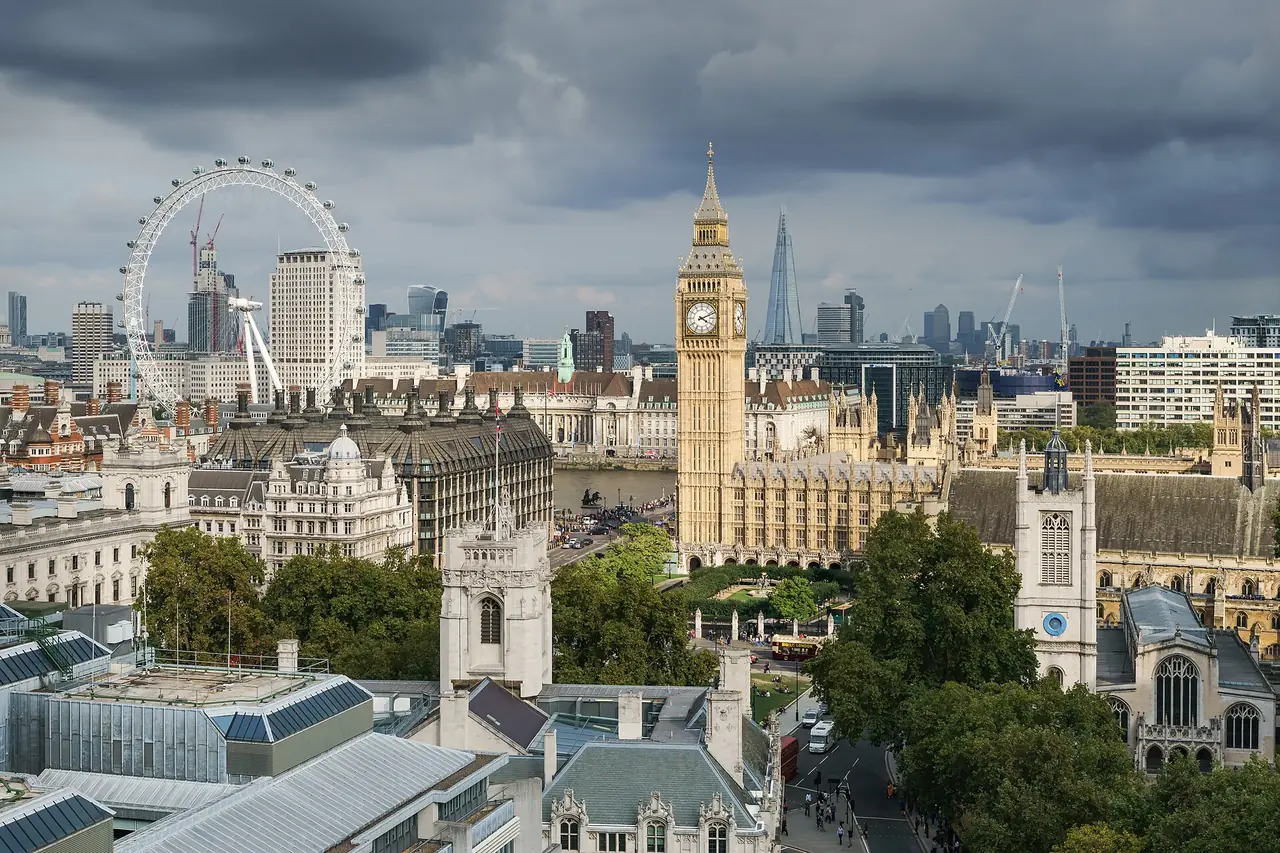
The Taj Mahal in Agra seen from its gardens, with the long reflecting pool in front The Palace of Westminster and Big Ben by the Thames, with the London Eye and the City of London behind
The Taj Mahal, Agra. Photo: Yann Forget, edited by King of Hearts, Wikimedia Commons, CC BY-SA 4.0 · Palace of Westminster, London. Photo: Colin, Wikimedia Commons, CC BY-SA 4.0
  • 1947Diplomatic relations since independence
  • $21.2bnGoods traded in 2024
  • 190 yearsBritish rule, from Plassey in 1757 to 1947
  • 76%Same UN votes in 2025
  • 1,044,779India-born people in the UK (2024)
  • July 2026Free trade deal entered into force

Where relations stand today

Checked November 18, 2026

Relations are close, and both governments are focused on the free trade deal that took effect in July 2026. Prime Minister Andy Burnham, in office since July 20, 2026, has backed the partnership with Prime Minister Narendra Modi.

Recent milestones

  • The Prince and Princess of Wales began a three-day visit to India on November 16 for the Earthshot Prize in Mumbai. Prince William played street cricket with Sachin Tendulkar, and a meeting with Modi in New Delhi was set for November 18.
  • Modi and Burnham held their first phone call and backed the trade deal and the Vision 2035 plan. According to Downing Street, Modi called his home city of Ahmedabad 'the Manchester of India', linking it to Burnham's Manchester.
  • The Comprehensive Economic and Trade Agreement entered into force. At the G7 summit in Evian in June, a microphone caught Modi telling Starmer "We did it" after they agreed the start date.
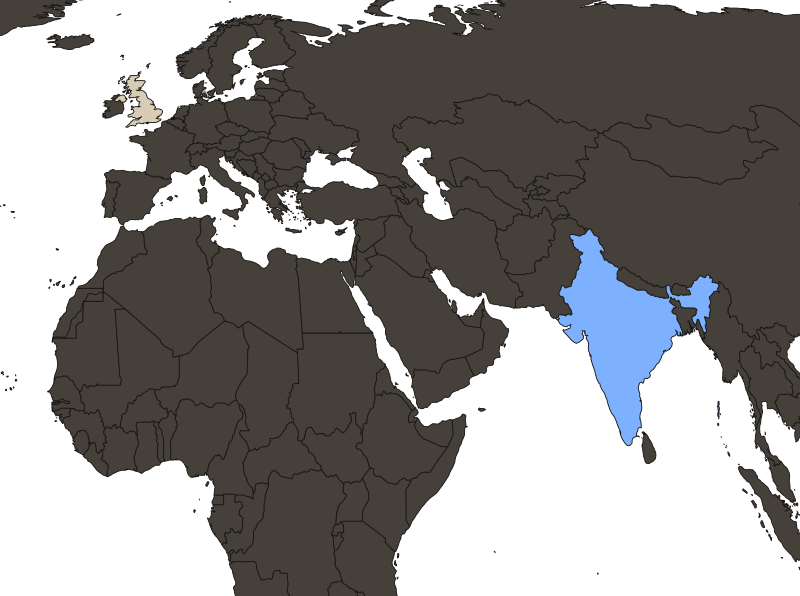
Map showing India and the United Kingdom with markers at Plassey and Amritsar India United Kingdom Plassey Amritsar

Why are India and the UK close?

What ties them

  • Trade deal. The Comprehensive Economic and Trade Agreement entered into force on July 15, 2026. The UK removed tariffs on 99% of Indian goods, and India cut tariffs on 90% of tariff lines.
  • Diaspora. About 1.86 million people of Indian ethnicity live in England and Wales. Indians were the largest group granted British citizenship in the year to June 2026, at 24,851.
  • Defense cooperation. In October 2025, their aircraft carriers trained together for the first time. Indian MiG-29s practiced dogfights with British F-35s during Exercise Konkan.
  • Shared institutions. Both are members of the Commonwealth and the G20. The UK backs a permanent UN Security Council seat for India.

What divides them

  • Colonial history. British rule in India lasted 190 years, counting from Plassey in 1757. Many Indian writers and politicians say it caused famines and drained India's wealth, while UK governments have expressed regret but never apologized.
  • The Koh-i-Noor diamond. India has repeatedly asked for the return of the 105.6-carat diamond, taken when the Company annexed Punjab in 1849. The UK government says it was obtained legally under the 1849 treaty.
  • Sikh activism. India wants the UK to curb pro-Khalistan groups, and in 2023 protesters pulled down India's flag at the High Commission in London. British Sikh campaigners pressed India to free Scottish blogger Jagtar Singh Johal, who was released on bail on October 1, 2026 after nearly nine years without a conviction.
  • Extraditions. India wants fugitives including diamond merchant Nirav Modi and businessman Vijay Mallya returned, and the UK says its courts decide each case. Nirav Modi lost his last legal challenge in July 2026 but was still in a London jail in August.

How much do India and the United Kingdom trade?

Download CSV

India sells to United Kingdom

$15.3bn

  • Phones and transmitters14%
  • Refined petroleum12%
  • Medicines6%
  • Jewelry3%

United Kingdom sells to India

$5.8bn

  • Steel scrap8%
  • Whisky7%
  • Silver7%
  • Aluminum scrap5%
Goods traded between India and the United Kingdom, 1995 to 2024US dollars, both directions, shares of 2024 sales

India is the United Kingdom's #13 trading partner (1.9% of its goods trade). United Kingdom is India's #13 (1.8%). UK government figures show that services made up 63% of India-UK trade in the year to June 2026, and the UK's largest export to India was spending by Indian students and visitors in Britain. Source: CEPII BACI (version 202601), goods only.

Have India and the UK fought a war?

1757

Battle of Plassey

Sides
East India Company (Robert Clive) against Siraj ud-Daulah, Nawab of Bengal
Result
Company victory after the Nawab's cavalry stood aside
Losses
22 Company dead; over 500 Nawab casualties (National Army Museum)
Fought over
Control of Bengal

1764

Battle of Buxar

Sides
East India Company against Bengal's deposed Nawab, Awadh and Mughal Emperor Shah Alam II
Result
Company victory, then the 1765 grant of Bengal's tax rights
Fought over
Control of Bengal and Bihar

1767-1799

Anglo-Mysore Wars

Sides
East India Company against Mysore under Haidar Ali and Tipu Sultan
Result
Tipu Sultan killed at Seringapatam in 1799; Mysore partitioned
Fought over
Control of southern India

1775-1818

Anglo-Maratha Wars

Sides
East India Company against the Maratha Confederacy
Result
Peshwa Baji Rao II surrendered in 1818; Company supremacy
Fought over
Control of central and western India

1857-1859

Indian Rebellion of 1857

Sides
Rebel sepoys and Indian rulers against the Company, British troops and loyal Indian troops
Result
Rebellion crushed; the Crown took India from the Company in 1858
Deaths
About 6,000 British; Indian deaths in the hundreds of thousands (historian Saul David)
Encyclopedia entry →

A short history of India-UK relations

WarTreaty or peaceCrisis

The East India Company · 1600-1857

  1. 1600Elizabeth I charters the CompanyOn December 31, 1600, the Earl of Cumberland and 215 others received a monopoly of English trade east of the Cape of Good Hope.
  2. 1616Thomas Roe at Jahangir's courtEmperor Jahangir received King James I's ambassador, Sir Thomas Roe, at Ajmer on January 10, 1616. Roe stayed until 1619 without winning the trade treaty he wanted, and no Mughal source records his visit.
  3. 1757Battle of PlasseyRobert Clive's 3,000 men beat the Nawab of Bengal's 50,000 after Clive secretly promised the throne to the Nawab's cavalry commander, Mir Jafar. The Bengal treasury, 2.5 million pounds, then went to the Company on 100 boats down the Ganges.
  4. 1765The Company wins Bengal's taxesAt the Treaty of Allahabad, Mughal Emperor Shah Alam II granted the Company the right to collect revenue in Bengal, Bihar and Orissa. Historian William Dalrymple writes that the emperor's 'throne' was Clive's armchair, hoisted onto a dining table and covered with a bedspread.
  5. 1857The 1857 rebellionCompany sepoys revolted at Meerut on May 10, and about 6,000 British soldiers and civilians died in the fighting. Historian Saul David puts the Indian death toll in the hundreds of thousands, and some estimates are far higher.

Crown rule · 1858-1947

  1. 1858India passes to the CrownParliament passed the Government of India Act on August 2, 1858, moving India from the Company to the Crown. Queen Victoria was proclaimed Empress of India on January 1, 1877, while famine was killing millions in southern India.
  2. 1919Amritsar massacreOn April 13, troops under General Dyer fired on an unarmed crowd at Jallianwala Bagh. The official British count was 379 dead, and an Indian National Congress inquiry estimated about 1,000.
  3. 1930Gandhi's Salt MarchGandhi walked from Sabarmati to Dandi from March 12 to April 6. British authorities had jailed about 60,000 people by the end of 1930.
  4. 1939Indian Army in World War IIAbout 2.5 million Indians served in World War II, which the Commonwealth War Graves Commission calls the largest volunteer army in history. About 1.4 to 1.7 million had served in World War I.
  5. 1943Bengal famineThe British Famine Inquiry Commission counted about 1.5 million deaths, and economist Amartya Sen estimated 2.7 to 3 million. A 2019 IIT Gandhinagar study found that drought did not cause the famine and blamed policy failures.
  6. 1947Independence and partitionIndia and Pakistan became independent on August 15, 1947, and 10 to 20 million people were displaced. Estimates of the deaths range from 200,000 to 2 million.

Independent India · 1949-2026

  1. 1949London DeclarationOn April 28, Jawaharlal Nehru agreed that a republican India would stay in the Commonwealth, with the King as Head of the Commonwealth. India became a republic on January 26, 1950.
  2. 2007Tata buys Corus and Jaguar Land RoverTata Steel bought Corus, the former British Steel, for 6.2 billion pounds in April 2007. Tata Motors bought Jaguar Land Rover from Ford for $2.3 billion in 2008.
  3. 2022Rishi Sunak becomes prime ministerOn October 25, Sunak became the first British prime minister of Indian origin. He is married to Akshata Murty, daughter of Infosys co-founder N.R. Narayana Murthy.
  4. 2025Trade deal signed at ChequersTrade ministers Piyush Goyal and Jonathan Reynolds signed the trade deal on July 24, 2025, with Prime Ministers Narendra Modi and Keir Starmer present. Modi then posted about "Chai Pe Charcha" (a chat over tea) with Starmer.
  5. 2026Trade deal enters into forceThe deal took effect on July 15, 2026, after India won a larger duty-free quota under a new UK steel safeguard. The UK removed tariffs on 99% of Indian goods that day.

Treaties between India and the UK

  • 1947Indian Independence ActThe UK Parliament created India and Pakistan as independent dominions from August 15, 1947. Royal assent was given on July 18, 1947.Spent
  • 1949London DeclarationAllowed a republican India to stay in the Commonwealth with the King as Head of the Commonwealth. It became the founding text of the modern Commonwealth.In force
  • 1992Extradition TreatySigned September 22, 1992. The first person extradited under it was Samirbhai Vinubhai Patel in October 2016, to face trial over the 2002 Gujarat riots.In force
  • 2021Comprehensive Strategic PartnershipModi and Boris Johnson agreed the partnership and a Roadmap 2030 on May 4, 2021. A Migration and Mobility Partnership signed the same day created 3,000 visas a year each way for young professionals.In force
  • 2025India-UK Vision 2035A 10-year plan replacing Roadmap 2030, adopted at Chequers on July 24, 2025. It is reviewed yearly by the two foreign ministers.In force
  • 2025Comprehensive Economic and Trade AgreementSigned July 24, 2025 by trade ministers Piyush Goyal and Jonathan Reynolds. The UK cut tariffs on 99% of Indian goods. India halved its whisky tariff from 150% to 75%, and it falls to 40% by year 10. In force since July 15, 2026.In force

Both are in

G20Commonwealth

Only India

BRICSSCOQuadNAM

Only United Kingdom

NATOG7AUKUSFive EyesOECD

How often do India and the United Kingdom vote the same way at the UN?

In 2025, India and the United Kingdom voted the same way on 76% of the recorded votes in the UN General Assembly. India and the UK cast the same vote on 54% to 56% of recorded UN General Assembly votes from 2021 to 2024, and on 76% in 2025. Compare their votes →

Abstaining while the other votes yes or no counts as half agreement. Data: UN Digital Library voting data, 1991 to 2025.

How well do you know India and the United Kingdom?

10 questions on their wars, treaties, trade and size. About three minutes, no signup.

India vs United Kingdom: how they compare

All rankings →

Questions about India and the United Kingdom

Did the British East India Company have its own army?

Yes. Its charters allowed it to wage war, and it kept three armies, in Bengal, Madras and Bombay. Most soldiers were Indian sepoys under British officers. Historian William Dalrymple puts the force at about 200,000 men by 1803, twice the size of the British army. The National Army Museum gives about 250,000 for the early 1800s.

When did India become independent from Britain?

India became independent on August 15, 1947, under the Indian Independence Act. British India was split into India and Pakistan. India became a republic on January 26, 1950 and stayed in the Commonwealth under the London Declaration of April 28, 1949.

Do India and the UK have a free trade agreement?

Yes. The Comprehensive Economic and Trade Agreement was signed on July 24, 2025 and entered into force on July 15, 2026. The UK removed tariffs on 99% of Indian goods. India cut tariffs on 90% of tariff lines, including halving its whisky tariff from 150% to 75%.

How many Indians live in the United Kingdom?

The UN counted about 1.04 million India-born people in the UK in mid-2024. The 2021 census of England and Wales counted 1.86 million people of Indian ethnicity, 3.1% of the population. Indians were the largest group granted British citizenship in the year to June 2026.

Has Britain apologized for colonizing India?

No British government has apologized for colonial rule. David Cameron called the Amritsar massacre 'deeply shameful' in 2013 but declined to apologize. Theresa May called it a 'shameful scar' in 2019 and said Britain deeply regretted it, but she did not apologize either. The assembly of India's Punjab state had asked for a formal apology on February 20, 2019.

Why is the Koh-i-Noor diamond in Britain?

The East India Company took the 105.6-carat diamond when it annexed Punjab in 1849, and it was presented to Queen Victoria in 1850. It is kept in the Tower of London. The UK government says it was obtained legally under the 1849 treaty. India has repeatedly asked for its return, and critics say the handover was coerced because Maharaja Duleep Singh was 10.

More relations

All relations →
7 days free cancel anytime
Get the app