Country profile · Western Balkans
 Kosovo
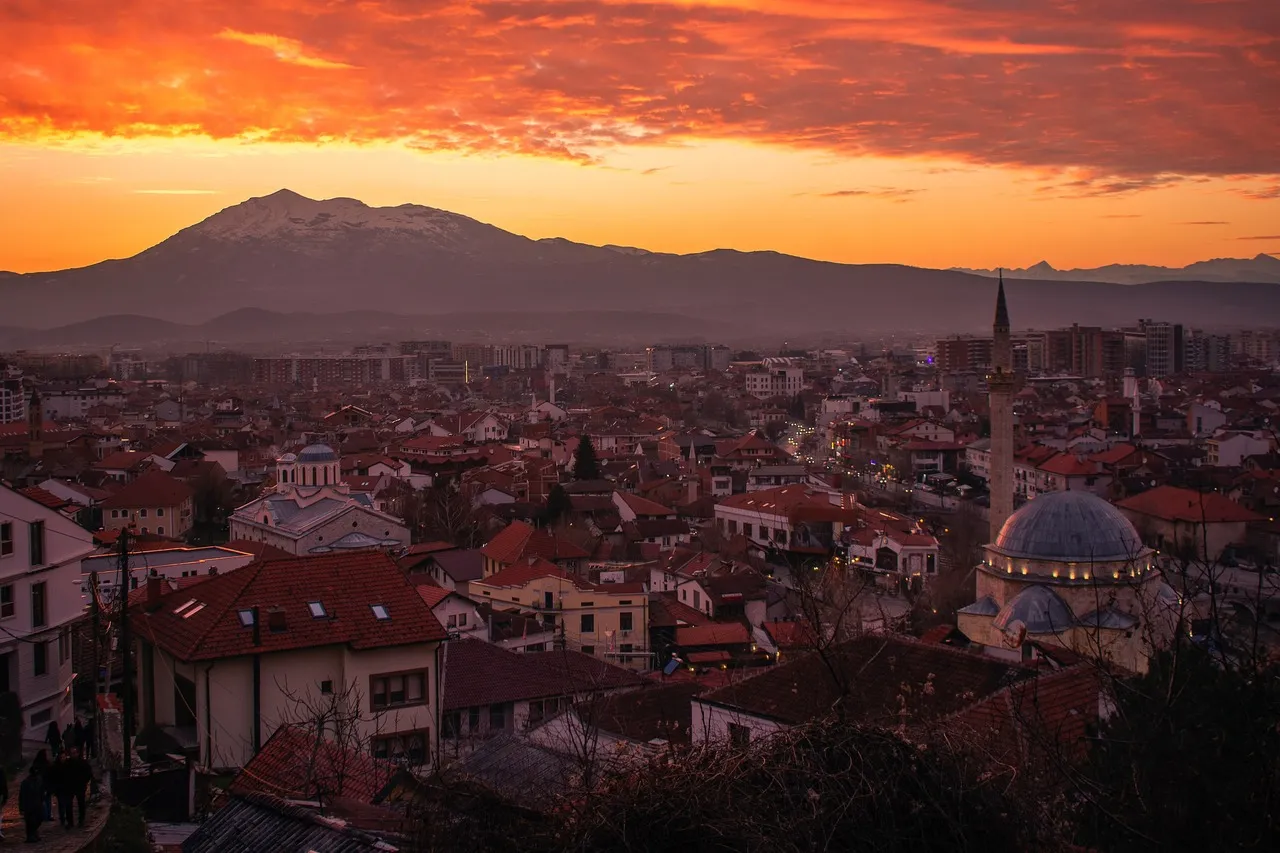
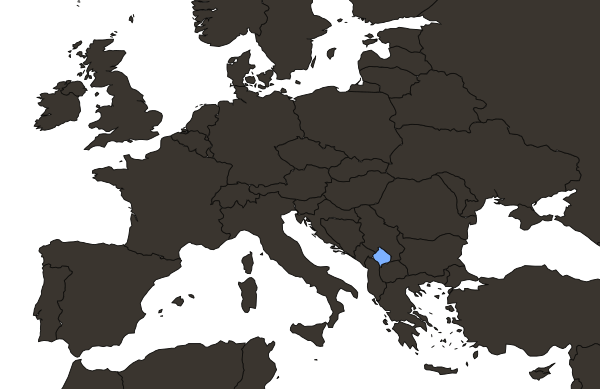
 is a landlocked Balkan country of about 1.6 million people, nine in ten of them ethnic Albanians. It declared independence from Serbia on February 17, 2008, after a 1998-99 war and NATO bombing. More than 100 UN members recognize it, but Serbia, Russia and China do not. Prime Minister Albin Kurti has led governments since 2021.
Where Kosovo ranks
All rankings →- #98of 191GDP per person$7,796
- #10of 129Money sent home17.3%
- #88of 196Median age32.6 years
- #53of 196Life expectancy78.4 years
- #175of 188Government debt17.5%
- #162of 197Area10,887 km²
Which country has the biggest army? Largest armies in the world →
Which alliances is Kosovo in?
All alliances →Disputed territories involving Kosovo
All disputed territories →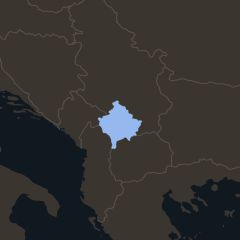
Who runs Kosovo?
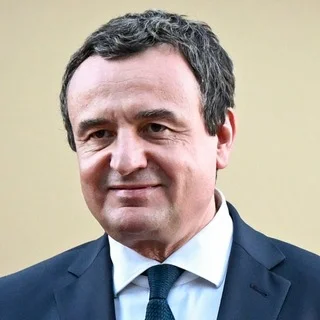
Prime Minister Albin Kurti was born in Pristina on March 24, 1975. Serbian authorities arrested him in April 1999 and sentenced him to 15 years in prison, but he was pardoned in December 2001. In 2005 he founded the Vetëvendosje (Self-Determination) movement. He is married to a Norwegian researcher, and they have one daughter. Kurti has led governments since March 2021. After the February 2025 election, parliament needed about 57 sessions just to elect a speaker. Snap elections followed in December 2025 and June 2026, when Vetëvendosje won 53 of the 120 seats (chart). Kurti's fourth government won a vote on September 13, 2026. On October 7, 2026 MPs elected Justina Shiroka Pula, a former energy minister, as president. In return, parliament passed an opposition law to curb the Kosovo Specialist Chambers, a court in The Hague that had sentenced former president Hashim Thaçi to 25 years for war crimes on September 16. The new president sent the law back on October 22 after EU criticism.
- Vetëvendosje (Kurti) 53
- Other minority MPs (most back the government) 11
- PDK, LDK, AAK and Srpska Lista 56
Photo (May 2025): European Union, Wikimedia Commons, free with attribution (cropped)
Who are Kosovo's allies and enemies?
The United States backed Kosovo's independence. It leads part of KFOR, the NATO peacekeeping force, from Camp Bondsteel, the largest US base in the Balkans. About 590 of KFOR's roughly 4,600 troops are American. In June 2026 NATO said it would cut the force to 3,000 to 3,500 troops. Ties with the Trump administration have cooled. In September 2025 the US suspended its strategic dialogue with Kosovo, blaming Prime Minister Albin Kurti's government. Washington first wants Kosovo to create an association of Serb-majority municipalities, which it agreed to in 2013 but never set up. Albania is Kosovo's closest ally, and in March 2025 the two signed a defense declaration with Croatia. Turkey sold Kosovo five Bayraktar TB2 drones in 2023. The EU has lifted the penalties it imposed on Kosovo in 2023, but Kosovo's 2022 application to join the EU has not moved. Kosovo is not in NATO. Serbia claims Kosovo as its province, and Russia blocks Kosovo's membership of the UN.
Allies and partners
 United StatesRuns Camp Bondsteel; dialogue suspended in 2025
 AlbaniaClosest ally; defense pact with Croatia in 2025
 GermanyLargest diaspora; top source of imports
 TurkeySold Kosovo Bayraktar drones
 European UnionVisa-free travel since 2024; membership bid stalled

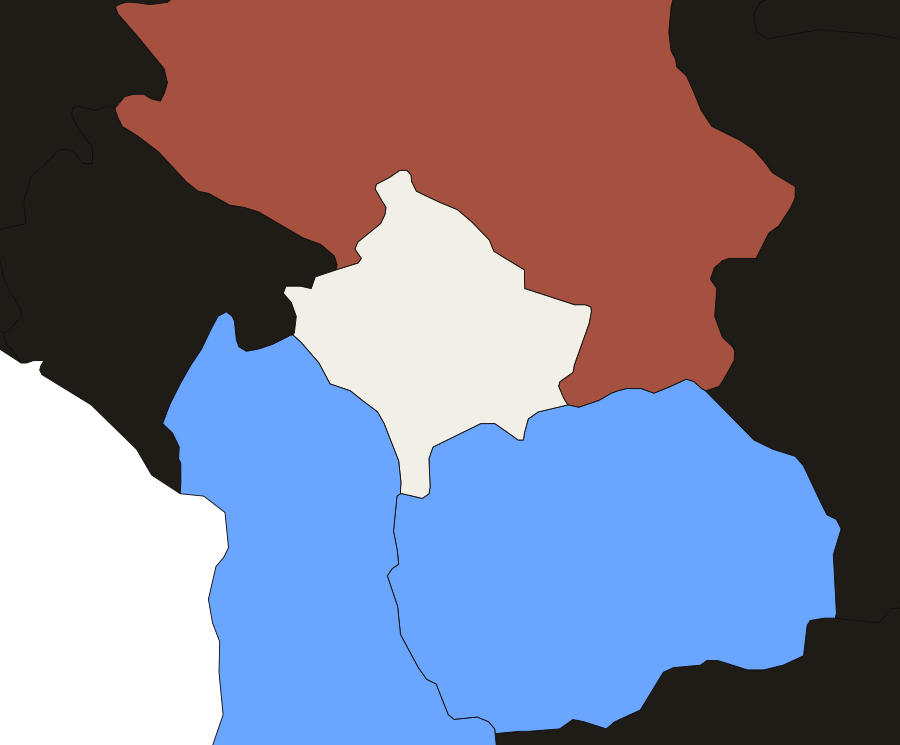
- Mitrovica Divided city. Its main bridge over the Ibar, between the Albanian south and the Serb north, is still closed to cars.
- Camp Bondsteel Largest US base in the Balkans, the home of KFOR's eastern command.
- Merdare Only crossing open to Serbian goods since Kosovo partly lifted its 2023 ban in October 2024.
- Kosovo
- Partner
- Rival
Who does Kosovo trade with?
In 2025 Kosovo exported €942 million of goods and imported €7.05 billion, according to the Kosovo Agency of Statistics. So exports covered only 13.4% of imports. Albania bought 17.0% of exports and North Macedonia 14.7% (chart). The main exports were base metals, food and drinks, plastics, and furniture and mattresses. Germany, Turkey and China were the top suppliers. Kosovo banned Serbian goods on June 14, 2023, citing security. Since October 2024 they may enter only through the Merdare crossing, and Serbia's share of imports fell from 6.6% in 2022 to 3.3% in 2025. Money from Kosovars abroad helps pay for the trade gap. Kosovo has used the euro since 2002 without being in the eurozone. Almost all its electricity comes from two old lignite (brown coal) plants near Pristina, and power cuts returned in January 2026. GDP per person was $7,796 in 2025, the second lowest in Europe after Ukraine (IMF). Government debt is only 17.5% of GDP.
 North Macedonia


Which countries recognize Kosovo?
There is no agreed count. Kosovo's foreign ministry counted the Bahamas, in December 2025, as the 121st state to recognize it. Kenya, Sudan and Syria also recognized Kosovo in 2025. Serbia says 28 states have withdrawn their recognition, but Kosovo says recognition cannot be withdrawn. The United States, the United Kingdom, Japan and 22 of the 27 EU members recognize Kosovo. Spain, Slovakia, Cyprus, Romania and Greece do not, mostly because they fear encouraging separatists at home. Russia and China side with Serbia, and both can veto new members in the UN Security Council, so Kosovo cannot join the UN. It is a member of the IMF and the World Bank, but its bid to join the Council of Europe has been stalled since 2024. In 2010 the International Court of Justice said that the declaration of independence did not violate international law. Israel recognized Kosovo in 2020, and in March 2021 Kosovo opened an embassy in Jerusalem, the first Muslim-majority country to do so.
Why do so many people leave Kosovo?
About 800,000 people born in Kosovo live abroad, roughly one in three, according to the World Bank. Most live in Germany, which had 323,260 Kosovo citizens at the end of 2025, and in Switzerland. Many fled the 1998-99 war. Serbian forces drove out more than 850,000 Kosovo Albanians (UNHCR), and about 13,600 people were killed or went missing (Humanitarian Law Center). NATO bombed Serbia for 78 days until its forces withdrew in June 1999. Others left to find work. Germany gives Western Balkan workers visas without formal qualifications, and Kosovars got the most approvals in 2025. Visa-free travel to the EU's Schengen area since January 2024 brought no mass exodus, but 37,451 people emigrated that year. In a May 2026 poll, 44% of people aged 18 to 24 said they would move abroad for good. Money sent home was about 17% of GDP in 2025 by the World Bank's measure (chart). Kosovo's central bank uses a narrower measure and counts €1.41 billion, about 13% of GDP.
Money sent home, share of GDP, 2025
Full ranking →- Kosovo17.3%
 Bosnia and Herzegovina10.7%
 Montenegro9.7%
 Moldova9.4%
- Albania8.4%
 Serbia6.6%
World Bank World Development Indicators, from KNOMAD and IMF balance of payments data, October 2026