How did the British Empire get so big?
A small, wet island off the coast of Europe built the largest empire in history. It took sea power, an industrial revolution, and a corporation with its own army.
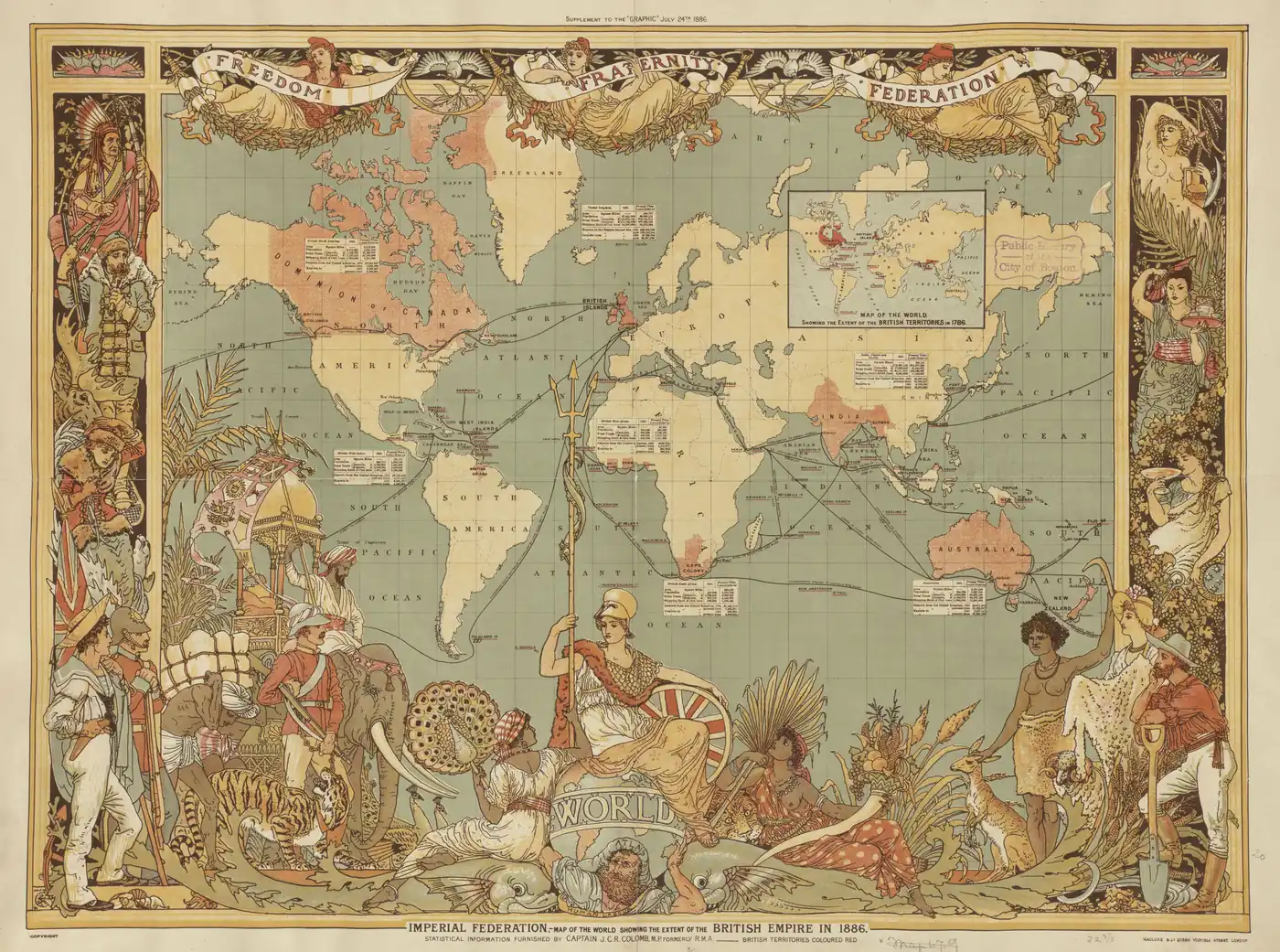
At its peak in 1921, the British Empire covered about 13.7 million square miles, roughly a quarter of the world's land. It governed some 458 million people, about one in every four humans alive. No empire before or since has been larger. And the country that built it is smaller than the state of Oregon.
How does that happen? There is no single answer, but there are five ingredients that, taken together, explain most of it: a navy that controlled the world's sea lanes, an industrial revolution that no one else had yet, a private company that conquered a subcontinent, a willingness to take other people's land, and a financial system that turned conquest into compound interest.
The navy came first
England became a serious naval power under Elizabeth I in the late 1500s, when English captains like Francis Drake raided Spanish treasure ships in the Caribbean and the government began investing in a permanent fleet. The Spanish Armada's defeat in 1588 was partly English skill and partly weather, but it established a principle England would follow for the next three centuries: control the sea and you control access to everything on it.
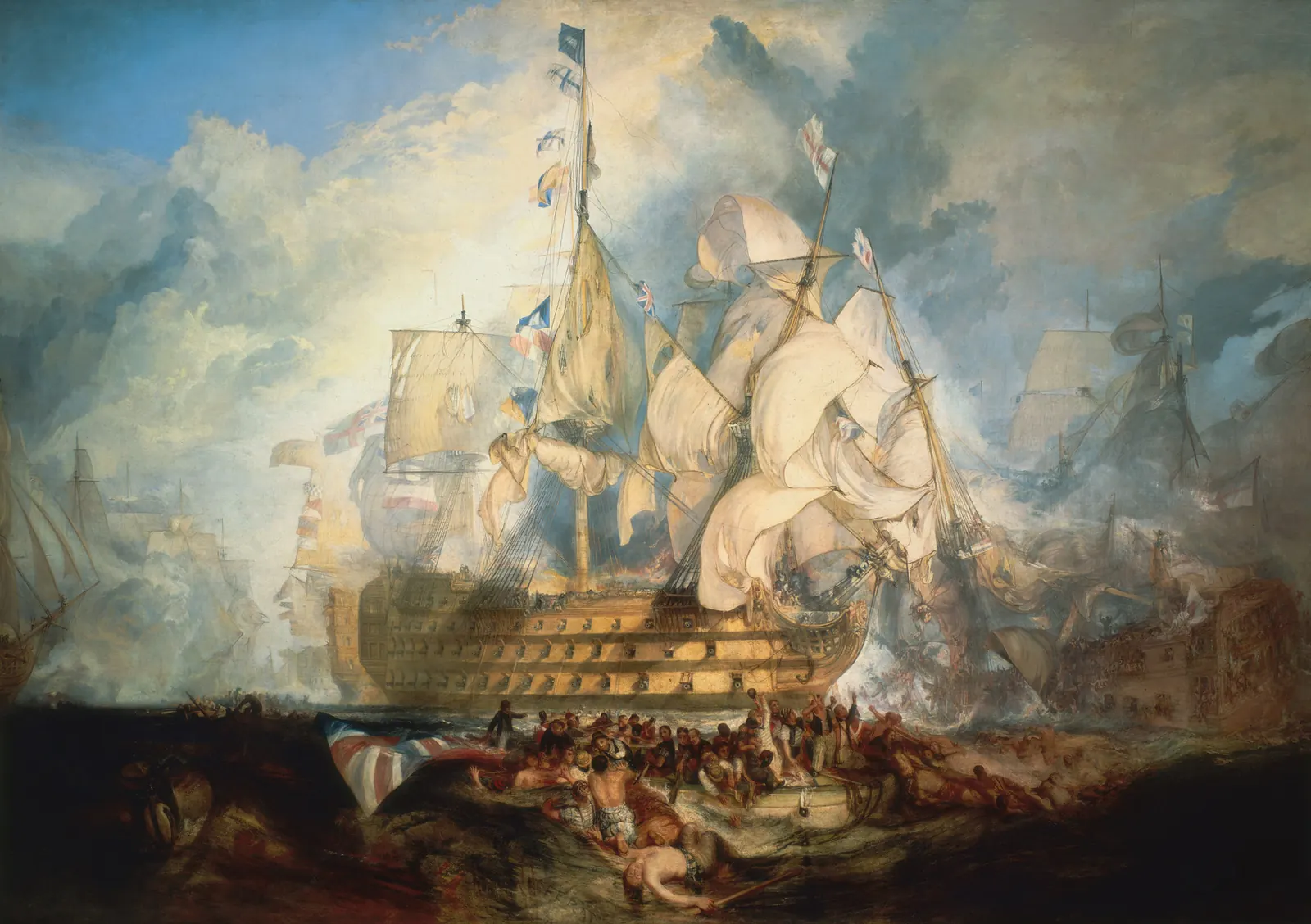
The decisive moment came at Trafalgar in 1805. Admiral Horatio Nelson destroyed the combined French and Spanish fleets off the coast of Spain without losing a single ship. Nelson was killed by a musket ball during the battle, but the victory gave Britain something no country had held since Rome: effective control of the world's oceans. For roughly a century after Trafalgar, no rival fleet could challenge the Royal Navy in open water.
The navy made the empire possible because empires built across oceans depend entirely on the ability to move troops, supplies, and trade goods by sea. The Royal Navy controlled five chokepoints that mattered: Gibraltar, the Suez Canal, the Cape of Good Hope, the Strait of Malacca, and the English Channel. Any ship going almost anywhere passed through a bottleneck where Britain could tax it, inspect it, or sink it.
Coal and iron made it cheap
Naval power explains how Britain could project force across the globe. The Industrial Revolution explains why that force was so overwhelming.
Britain industrialized first, starting around 1760, and the head start lasted about a century. By 1850, a country with 2% of the world's population was producing roughly 45% of the world's manufactured goods. It burned more coal than the rest of the world combined. British factories turned out iron, steel, textiles, and weapons at prices and volumes no pre-industrial economy could match.
This mattered for empire in two ways. First, industrial weapons gave British soldiers a massive advantage over opponents who did not have them. A regiment armed with rifled muskets and, later, machine guns could defeat forces many times its size. At the Battle of Omdurman in Sudan in 1898, a British-Egyptian force of about 25,000 killed roughly 12,000 Sudanese fighters and wounded thousands more, losing 47 of its own men. The technology gap was the gap between the industrial world and everyone else.
Second, the Industrial Revolution created a constant demand for raw materials and new markets. British mills needed cotton from Egypt and India. British foundries needed tin from Malaya and copper from Southern Africa. And British manufacturers needed customers for the cheap textiles, tools, and machinery pouring out of Manchester and Birmingham. Empire provided both the inputs and the buyers, often by force: when China wanted nothing Britain made, British merchants smuggled in opium from India, and when China tried to stop the trade, Britain went to war twice.
A corporation conquered India
The strangest chapter in the empire's growth is India, which was not conquered by the British state but by a private company with shareholders.
Queen Elizabeth I chartered the East India Company in 1600 as a trading monopoly. For 150 years it did what the charter said: it traded spices, silk, and tea from fortified posts along the Indian coast. The turn came in 1757 at the Battle of Plassey, where Robert Clive led about 3,000 Company troops against roughly 50,000 soldiers of the Nawab of Bengal. Clive won less by fighting than by bribery. He had already paid off the Nawab's own commander, Mir Jafar, before the battle started. Most of the enemy army simply stood aside and watched.
Eight years later, Clive negotiated the right to collect taxes across Bengal, Bihar, and Orissa directly from the Mughal emperor. A trading company had become the tax collector for tens of millions of people. By the early 1800s, the Company commanded about 260,000 soldiers, roughly twice the size of the British Army itself. It minted its own coins, ran its own courts, and declared war without asking London.
The Company's rule ended after the Sepoy Mutiny of 1857, when Indian soldiers in its own army rose up. Britain crushed the revolt and transferred India directly to the Crown. The British Raj that followed governed 300 million people with about 1,000 British officials, a feat of extraction that rested on Indian intermediaries, railways built to move troops and exports, and a policy of divide and rule. India's share of world economic output fell from roughly 24% in 1700 to about 4% by 1950.
The scramble for everyone else
India was the biggest prize, but the pattern repeated across the globe. In each case, the formula was similar: find a strategic or economic interest, send traders or missionaries, follow them with soldiers when things went wrong, and formalize control as a colony or protectorate.
The Scramble for Africa was the most dramatic example. In 1870, Europeans controlled about 10% of the African continent. By 1914, they controlled 90%. Britain took the largest share: Egypt for the Suez Canal, Southern Africa for diamonds and gold, East Africa for strategic position, West Africa for palm oil and trade routes. Cecil Rhodes, the mining magnate who gave his name to Rhodesia, dreamed of building a railway from Cairo to the Cape, entirely on British soil. He never managed it, but the ambition tells you the scale of thinking.
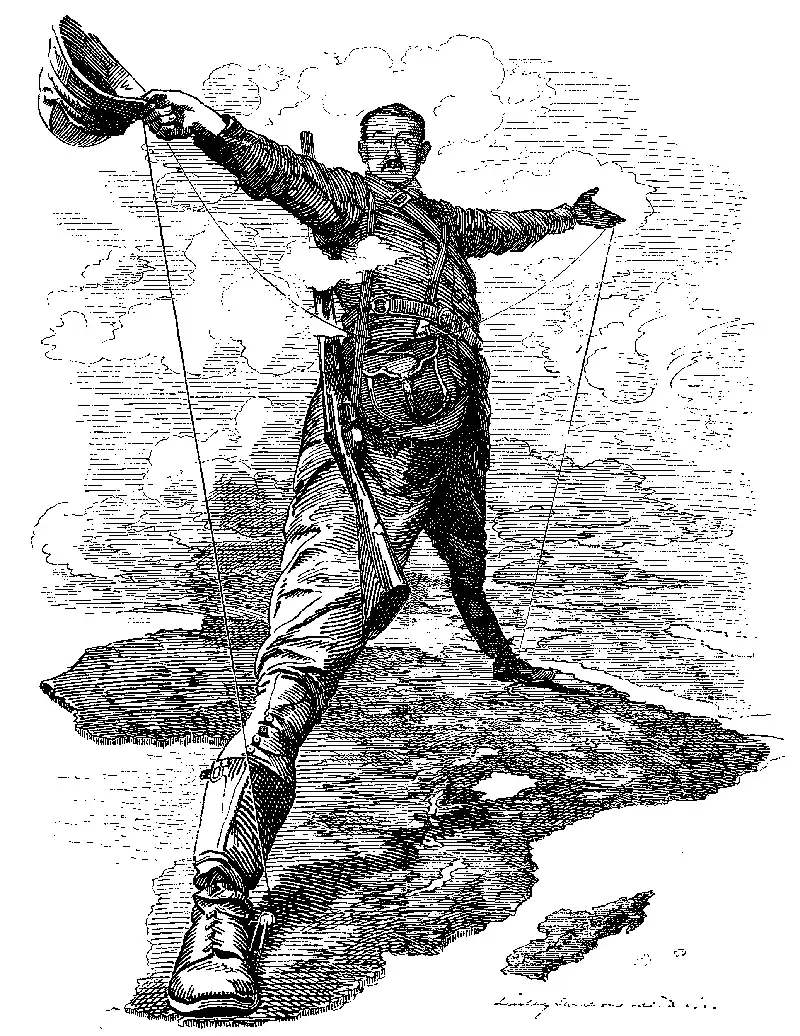
In the Caribbean, sugar plantations built on the Atlantic slave trade made tiny islands some of Britain's most profitable colonies. In Southeast Asia, Britain took Malaya for its tin and rubber and controlled the Strait of Malacca, the passage between the Indian and Pacific Oceans. In the Middle East, the collapse of the Ottoman Empire after World War I handed Britain mandates over Iraq, Palestine, and Transjordan. In Australia, New Zealand, and Canada, British settlers displaced indigenous populations and built societies that remained loyal to the Crown for generations.
Why it fell apart
The same two world wars that gave Britain its last territorial gains also bankrupted the empire. World War I cost nearly 900,000 British Empire lives and turned Britain from the world's largest creditor into a debtor. World War II finished the job. Britain won, but only by borrowing billions from the United States and drawing on colonial troops and resources. By 1945, the country was exhausted and broke.
The colonies had paid attention. Indian nationalists led by Gandhi had been demanding independence for decades, and after 1945 Britain no longer had the money or the will to refuse. India gained independence in 1947. The partition that followed killed between one and two million people. Over the next two decades, colony after colony followed: Ghana in 1957, Nigeria in 1960, Kenya in 1963, dozens more across Africa, Asia, and the Caribbean. Harold Macmillan, the British prime minister, told the South African parliament in 1960 that "the wind of change is blowing through this continent." He was describing what was already obvious: the empire was over.
The last significant handover came in 1997, when Britain returned Hong Kong to China. It had taken 350 years to build the largest empire in history and about 50 to take it apart.
What the empire left behind
The British Empire left behind English, now spoken by roughly 1.5 billion people and the default language of international business, science, and aviation. It left behind common law in dozens of countries, parliamentary systems modeled on Westminster, and cricket. It also left behind borders drawn by men who had never seen the land they were dividing, economies structured to export raw materials to a metropole that no longer needed them, and ethnic and religious tensions that partition and divide-and-rule had sharpened, from Kashmir to Northern Ireland to Israel and Palestine.
Fourteen British Overseas Territories still exist, from Gibraltar to the Falkland Islands to Bermuda. The Commonwealth of Nations has 56 member states, and King Charles III remains the head of state of 14 countries besides the United Kingdom. But the quarter of the world that was once colored pink on the map now governs itself, and the debates over what the empire did, who it enriched, and what it destroyed are further from settled than ever.
Test what you learned
5 questions on this article. About two minutes, no signup.
Orbis has a full course on this
The British Empire. 51 lessons, each ending with a quiz like this one.