Alliance · Union
Eurozone
Euro area
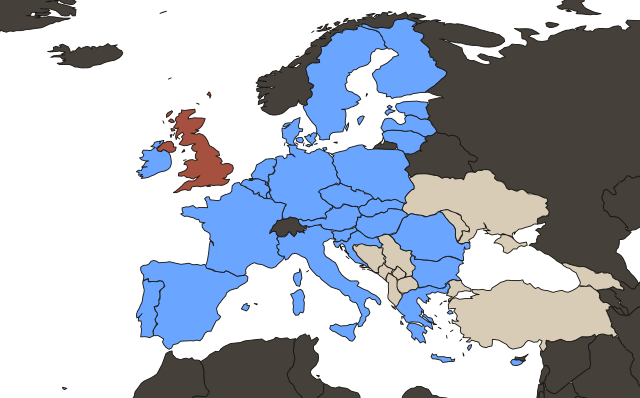
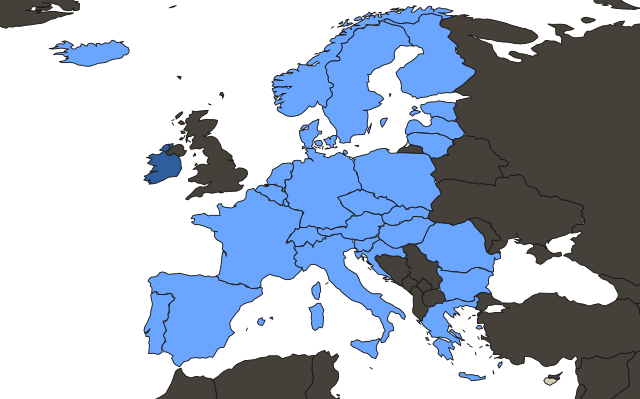
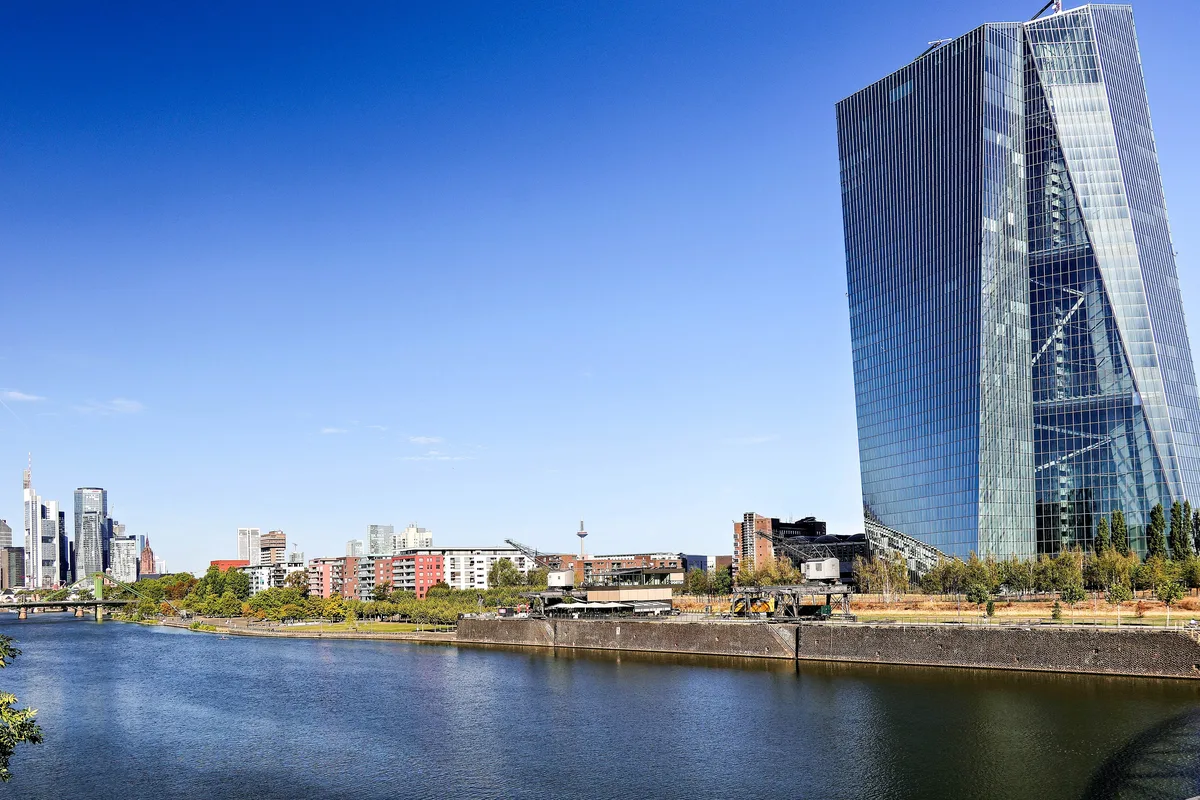
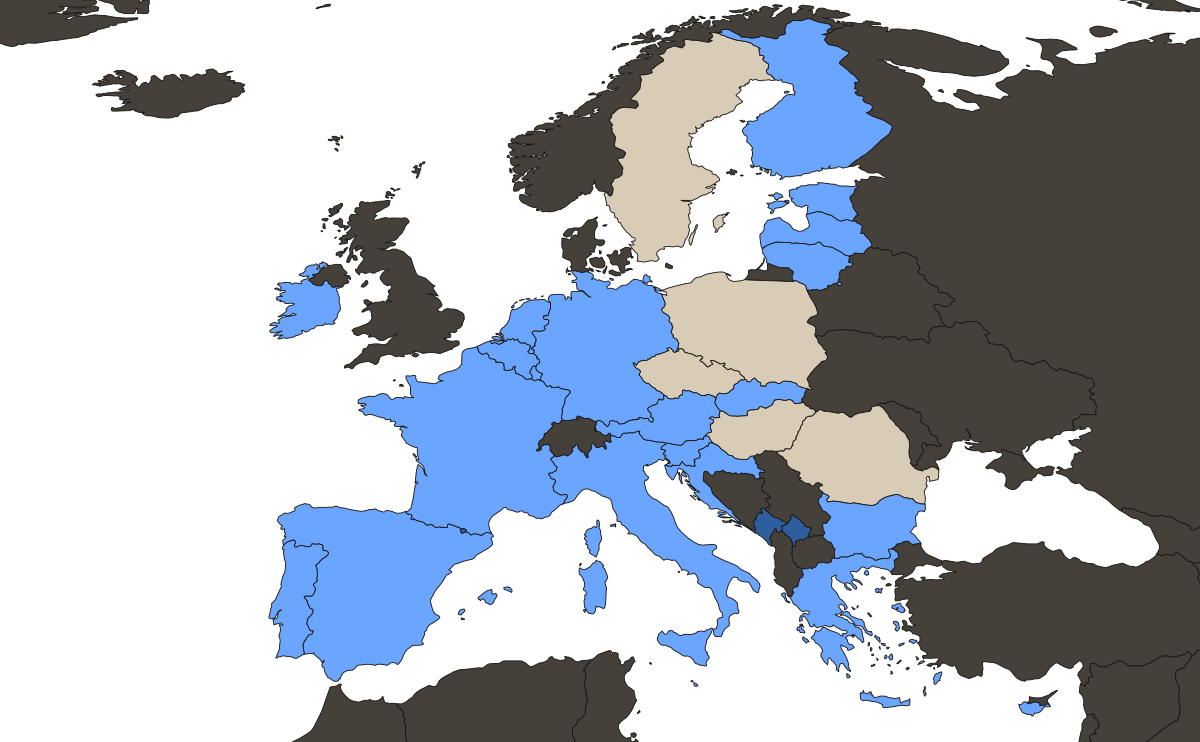
The eurozone is the group of 21 European Union countries that use the euro as their currency. It started in 1999 with 11 members. Bulgaria joined on January 1, 2026 as the 21st. The European Central Bank in Frankfurt sets interest rates for all of them. Six EU countries still use their own currencies. Four microstates use the euro by agreement, and Montenegro and Kosovo use it without one.
- Members
- 21
- Bulgaria joined last, on January 1, 2026
- Started
- 1999
- As book money in 11 countries
- Cash since
- 2002
- Notes and coins from January 1
- Central bank
- ECB, Frankfurt
- President: Christine Lagarde
- Latest member
 Bulgaria
- Joined January 1, 2026
Which countries use the euro?
Twenty-one EU countries use the euro. Eleven adopted it on January 1, 1999 as book money: Austria, Belgium, Finland, France, Germany, Ireland, Italy, Luxembourg, the Netherlands, Portugal and Spain. Notes and coins arrived on January 1, 2002. Greece joined in 2001. After that came Slovenia (2007), Cyprus and Malta (2008), Slovakia (2009), Estonia (2011), Latvia (2014), Lithuania (2015), Croatia (2023) and Bulgaria (2026).
Bulgaria became the 21st member on January 1, 2026 at a rate of 1.95583 lev per euro. The lev stayed legal tender until February 1, 2026, and banks exchanged lev for free until June 30, 2026. No country has ever left the eurozone, and the EU treaties have no exit procedure for it.
- Member
- Must join one day
- Uses the euro without being a member
- Not a member
How the eurozone grew
Countries that joined in each year, and the total after


 199911 founders
 200112
 200713

 200815
 200916
 201117
 201418
 201519
 202320
- 202621
Which countries use the euro without being in the eurozone?
Six countries and territories outside the EU use the euro as their everyday currency without being eurozone members. Some French overseas territories and the UK bases on Cyprus also use it. Four have formal agreements with the EU that let them mint their own euro coins in limited quantities: Andorra, Monaco, San Marino and Vatican City. Andorra's agreement was signed on June 30, 2011. Two others use the euro without any agreement: Montenegro and Kosovo. Both switched from the Deutsche Mark to the euro in 2002.
The EU has said that Montenegro's unilateral use of the euro "runs counter to the underlying reasoning" of the EU treaties. Montenegro has proposed joining the EU and adopting the euro together, around 2028.
-
 MonacoBy agreement
Monaco mints its own euro coins under a monetary agreement with the EU.
-
 San MarinoBy agreement
San Marino mints its own euro coins under a monetary agreement with the EU.
-
 Vatican CityBy agreement
Vatican City mints its own euro coins under a monetary agreement with the EU.
-
 AndorraBy agreement
Andorra signed its monetary agreement with the EU on June 30, 2011. It had used the euro informally before that.
-
 MontenegroWithout agreement
Montenegro switched from the Deutsche Mark to the euro in 2002 with no EU agreement. It is an EU candidate country.
-
 KosovoWithout agreement
Kosovo switched from the Deutsche Mark to the euro in 2002 with no EU agreement.
Which EU countries do not use the euro?
Six EU members do not use the euro. Denmark has a legal opt-out, negotiated after Danish voters rejected the Maastricht Treaty in 1992. In a referendum on September 28, 2000, 53.2% voted against the euro on 87.6% turnout. The Danish krone is pegged to the euro. The other five, Sweden, Poland, Czechia, Hungary and Romania, are legally required to adopt the euro one day but have not set firm dates.
The ECB's June 2026 convergence report found none of the five ready. Hungary's government targets meeting the criteria around 2030. Czechia's government stopped its annual euro-readiness reports in May 2026 and plans to write the koruna into the constitution.
-
 DenmarkOpt-out
Denmark has a legal opt-out from the euro. Voters rejected it 53.2% to 46.8% in 2000. The krone is pegged to the euro in ERM II.
-
 SwedenNo date set
Voters said no in 2003 (55.9%). Sweden stays out by not entering ERM II. In 2026 the Moderates promised an inquiry into the euro if they stayed in power. The left bloc won the September 2026 election by 176 seats to 173.
-
 PolandNo date set
Finance Minister Andrzej Domanski says Poland is "not in a hurry." Poland is under an excessive deficit procedure.
-
 CzechiaNo date set
In May 2026 the Babis government stopped annual euro-readiness reports and plans to write the koruna into the constitution. The ECB found Czechia's inflation below the reference value.
-
 HungaryAround 2030
The Magyar government targets meeting the euro criteria around 2030. Hungary has debt above 60% of GDP and is under an excessive deficit procedure.
-
 RomaniaNo date set
Romania meets none of the economic criteria except public debt. In August 2026 President Nicusor Dan announced a cross-party agreement on the euro but gave no date.
What happened in the euro crisis?
In 2010 Greece could no longer borrow on the markets. Euro-area countries lent it 52.9 billion euros in bilateral loans, and the IMF lent it more on top. A second program through the EFSF provided 141.8 billion euros, and a third through the ESM disbursed 61.9 billion euros. Greece exited its last program on August 20, 2018. In December 2025 Greece's finance minister, Kyriakos Pierrakakis, was elected Eurogroup president.
In 2013 Cyprus agreed a rescue program of up to 10 billion euros. The deal wound down Laiki Bank and converted about 47.5% of uninsured deposits above 100,000 euros at Bank of Cyprus into shares. It was the euro area's first large depositor bail-in. Ireland, Spain and Portugal also received assistance and exited before Greece.
Within our mandate, the ECB is ready to do whatever it takes to preserve the euro. And believe me, it will be enough.
Euro-area countries lent 52.9 billion euros in 2010. The EFSF provided 141.8 billion euros from 2012. The ESM disbursed 61.9 billion euros from 2015. Greece exited on August 20, 2018.
The ESM disbursed 6.3 billion euros and the IMF 1 billion euros. Uninsured deposits at Laiki Bank were wiped out. Capital controls lasted from 2013 until April 2015.
Who runs the euro?
The European Central Bank in Frankfurt sets interest rates for the 21 members. Its Governing Council has six Executive Board members and the 21 national central bank governors. Christine Lagarde has been president since November 2019. On October 29, 2026 she announced she will step down on February 7, 2027, nine months early. She was the first woman to lead both the IMF and the ECB. As a teenager she was on France's national synchronized-swimming team.
The Eurogroup, chaired by Greek finance minister Kyriakos Pierrakakis since December 2025, coordinates economic policy among euro-area finance ministers. Boris Vujcic of Croatia became ECB vice-president on June 1, 2026.

The euro, year by year
- 1992The Maastricht Treaty, signed on February 7, creates Economic and Monetary Union
- 1998The European Central Bank is established in Frankfurt on June 1
- 1999The euro launches as book money in 11 countries on January 1
- 2002Euro notes and coins enter circulation on January 1
- 2010Greece receives its first bailout as the euro crisis begins
- 2012ECB President Mario Draghi pledges to do "whatever it takes" on July 26
- 2023Croatia becomes the 20th member on January 1
- 2026Bulgaria becomes the 21st member on January 1
Is it in the eurozone?
Short answers for the countries people ask about most.

Is the United Kingdom in the eurozone?
NoThe United Kingdom had a Maastricht opt-out and never joined the euro. It left the EU on January 31, 2020 and uses the pound sterling.
Is Denmark in the eurozone?
NoDenmark has a legal opt-out from the euro. Voters rejected it in a 2000 referendum. The Danish krone is pegged to the euro in ERM II.
Is Sweden in the eurozone?
NoSweden is required to join in principle but stays out by not entering ERM II. Voters said no in a 2003 referendum.
Is Poland in the eurozone?
NoPoland is an EU member that uses the zloty. Its government says it is in no hurry to adopt the euro.

Is Switzerland in the eurozone?
NoSwitzerland is not in the EU and uses the Swiss franc.
Is Montenegro in the eurozone?
NoMontenegro uses the euro as its everyday currency but is not an EU member or eurozone member. It adopted the euro unilaterally in 2002.
Is Kosovo in the eurozone?
NoKosovo has used the euro unilaterally since 2002 but is not a member of the EU or the eurozone.
Is Croatia in the eurozone?
YesCroatia became the 20th eurozone member on January 1, 2023.
Is Bulgaria in the eurozone?
YesBulgaria became the 21st member on January 1, 2026, at a rate of 1.95583 lev per euro.
Is Hungary in the eurozone?
NoHungary uses the forint. The Magyar government aims to meet the euro criteria around 2030.