
Country profile · Central Europe
 Czechia
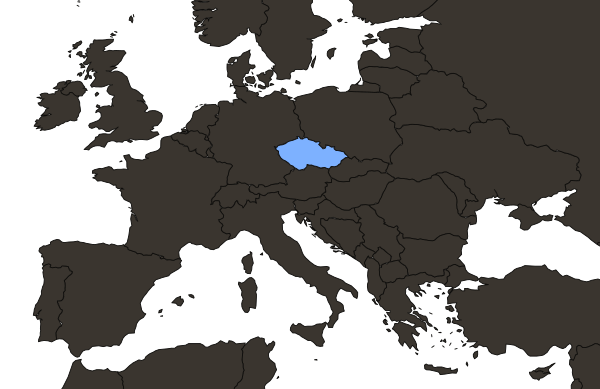
 is a landlocked country of about 10.9 million people in Central Europe. It joined NATO in 1999 and the EU in 2004. Prime Minister Andrej Babiš, a billionaire born in Slovakia, has led the government since December 2025. Germany buys almost a third of Czech exports. Czechia hosts more Ukrainian refugees per person than any other EU country.
Where Czechia ranks
All rankings →Which alliances is Czechia in?
All alliances →Who runs Czechia?
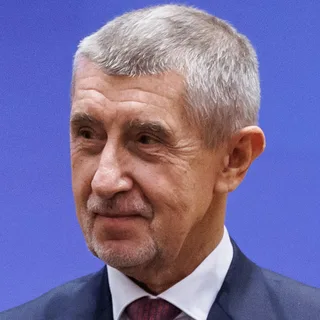
Czechia is a parliamentary republic. Prime Minister Andrej Babiš was born in Bratislava, now in Slovakia, in 1954. He founded the Agrofert group and is one of the richest Czechs. He was prime minister from 2017 to 2021. His party, ANO, won 34.51% and 80 of the 200 seats in the October 2025 election. Babiš became prime minister again on December 9, 2025, leading a coalition with the far-right SPD and the Motorists that holds 108 seats (chart). He put Agrofert into a trust in February 2026, but the European Commission says the trust does not resolve his conflict of interest. In March 2026 the Chamber of Deputies refused to lift his immunity in an EU subsidy fraud case. President Petr Pavel is a retired general who chaired NATO's Military Committee from 2015 to 2018. In the Senate election of October 2026, the governing parties won none of the 27 seats.
- ANO 80
- SPD 15
- Motorists 13
- Opposition (ODS 27, STAN 22, Pirates 18, KDU-ČSL 16, TOP 09 9) 92
Photo (December 2025): Nebojša Tejić/STA for the Government of Slovenia, Wikimedia Commons, public domain (cropped)
Who are Czechia's allies and rivals?
Czechia joined NATO on March 12, 1999 and the EU on May 1, 2004, but it still uses the koruna. Prime Minister Andrej Babiš and Slovakia's Prime Minister Robert Fico restored joint government meetings in January 2026. In June 2026 the leaders of Czechia, Slovakia, Poland and Hungary revived the Visegrad Group. Babiš's government stays out of the EU's €90 billion loan to Ukraine and will not pay into NATO's aid package for Ukraine. NATO counts Czech defense spending at 1.78% of GDP in 2026, and the government promises 2% in 2027. Czechia is buying 24 US F-35 fighter jets. Relations with Russia have been bad since April 2021, when the government blamed Russian military intelligence for two blasts at an ammunition depot in Vrbětice in 2014. Czechia then expelled 18 Russian embassy staff. Czechia is one of Israel's closest friends in the EU. China cut contact with President Pavel after he met the Dalai Lama in July 2025.
Allies and partners
- European UnionMember since 2004; keeps the koruna
 GermanyBuys about 30% of exports
 SlovakiaJoint government meetings restored in 2026
 PolandPartner in the revived Visegrad Group
 IsraelCzechia vows to block EU sanctions


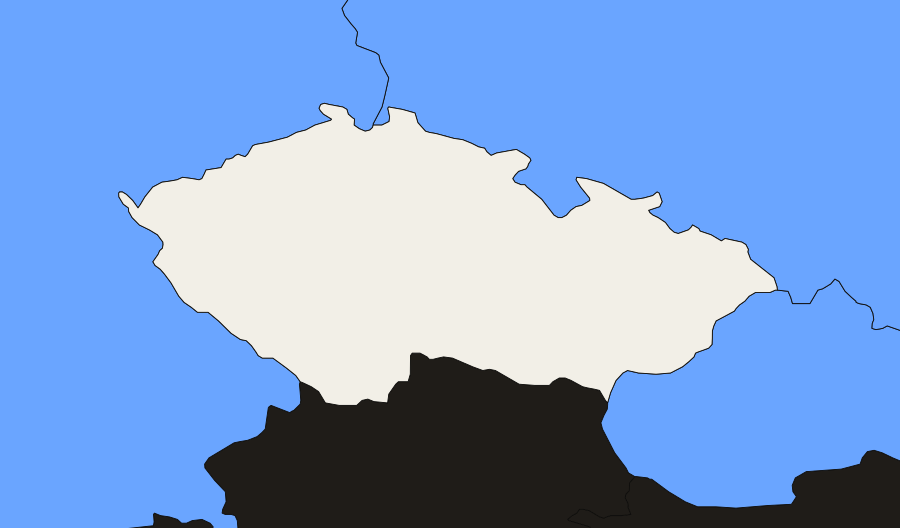
- Vrbětice Ammunition depot hit by two blasts in 2014 that killed two people. Czechia blamed Russian military intelligence in 2021.
- Dukovany Nuclear plant with four reactors. South Korea's KHNP signed a deal in June 2025 to build two more here.
- Temelín Nuclear plant with two reactors, chosen in 2026 for the first Rolls-Royce small reactor, due in the mid-2030s.
- Czechia
- Partner
Who does Czechia trade with?
Czechia exported $282 billion of goods in 2025, as reported to UN Comtrade. Germany bought 31.5% of exports and supplied 20.2% of imports (chart). China supplied 16.2% of imports. Cars are the biggest export. Czech plants built 1,445,776 cars in 2025, the second-highest number ever. Škoda, which Volkswagen owns, built 947,140 of them. Russian oil stopped flowing through the Druzhba pipeline in March 2025, and a pipeline from Italy now brings crude instead. Azerbaijan supplied 42% of Czechia's crude in 2025. Czechia bought no Russian gas in 2025. Nuclear power made about 42% of the country's electricity. In June 2025 Czechia signed a deal with South Korea's KHNP to build two new reactors at Dukovany for CZK 407 billion, with the first due to start test operation in 2036. Inflation peaked at 18% in September 2022 and was 2.5% in September 2026. Babiš's government opposes joining the euro.


How does Czechia help Ukraine?
In February 2024 President Petr Pavel launched an initiative to find artillery shells for Ukraine around the world. Czech officials found the shells and arranged the deals, and other countries paid most of the cost. Ukraine got 1.5 million shells in 2024 and 1.8 million in 2025, 4.4 million in all by early 2026. Prime Minister Andrej Babiš had called the shells overpriced, but his government kept the initiative running. Since 2026 no Czech state money goes into it, and Czechia only coordinates. The number of countries paying fell from 18 to 9, and about one million shells are expected in 2026. Czechia also took in many Ukrainians. At the end of August 2026, 398,360 people held temporary protection in Czechia, or 36.5 per 1,000 people, the most per person in the EU (Eurostat). UNHCR counts 37.3 refugees per 1,000 people at the end of 2025 (chart). In May 2026 the government proposed tighter rules for Ukrainians' benefits and protection.
Refugees per 1,000 people, end of 2025
Full ranking →

UNHCR Refugee Population Statistics Database
Why did Czechoslovakia split?
Czechoslovakia was founded on October 28, 1918, now Czechia's national holiday. Under the Munich Agreement of September 30, 1938, Britain, France and Italy let Nazi Germany take the Sudetenland, and Czechoslovakia was not invited to the talks. Germany occupied the rest of the Czech lands in March 1939. After 1945 about three million Germans were expelled. The communists took power in February 1948. In August 1968 Soviet, Polish, Hungarian and Bulgarian troops invaded to end the reforms of the Prague Spring, and at least 137 Czechoslovaks were killed by the end of that year. The Velvet Revolution began with a student march on November 17, 1989, and the playwright Václav Havel became president in December 1989. Czech and Slovak leaders then agreed to split the country without a referendum. In September 1992 only 36% of Czechs and 37% of Slovaks supported the split. Czechia and Slovakia became separate countries on January 1, 1993.