Country profile · Western Balkans
 Montenegro
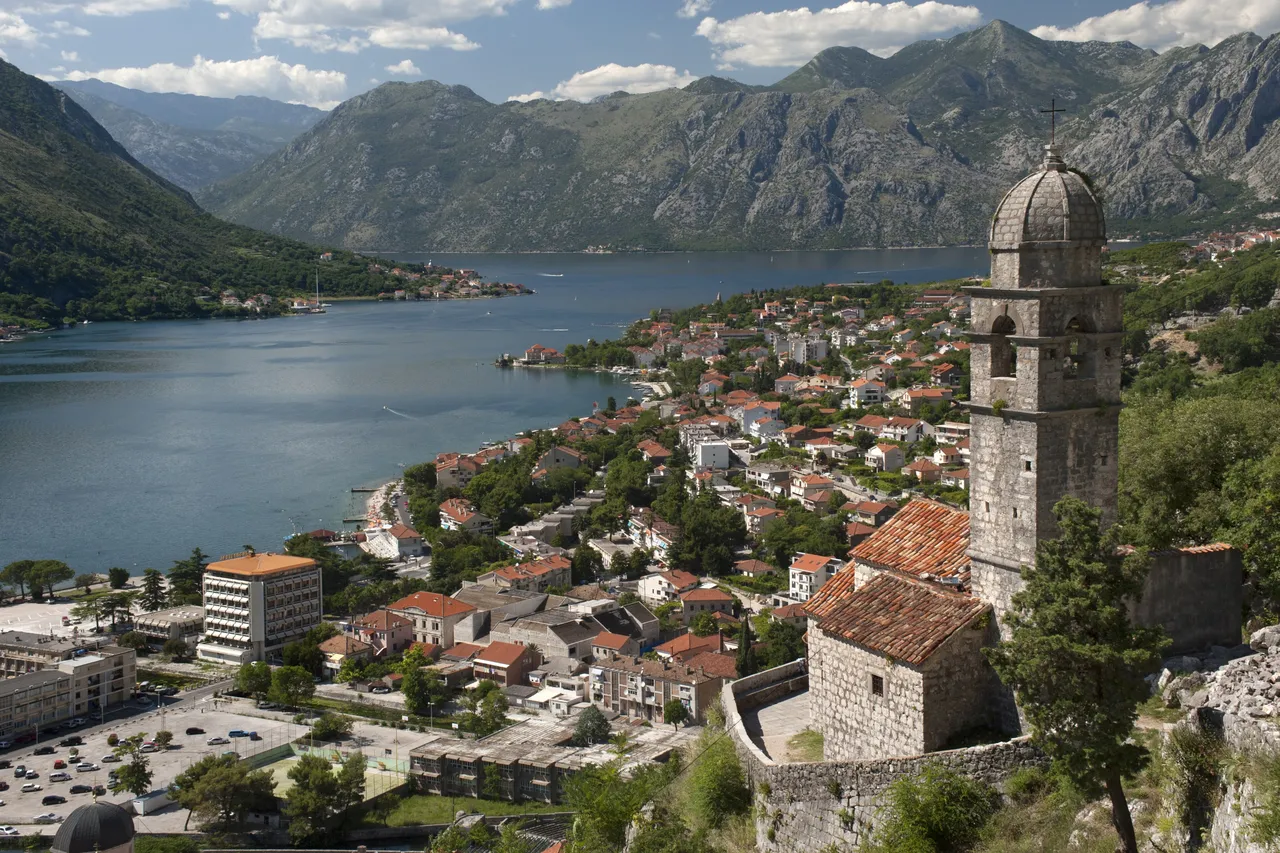
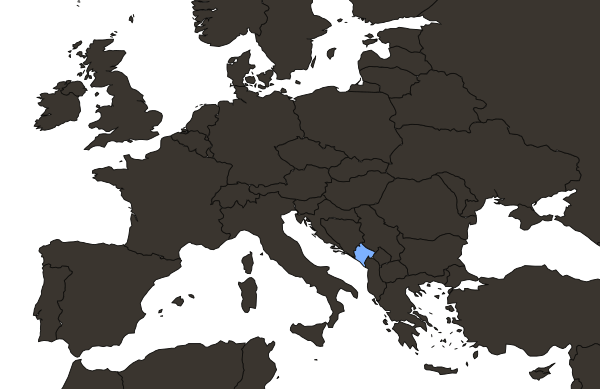
 is a small Balkan country on the Adriatic Sea with 623,633 people (2023 census). It left its union with Serbia after a referendum in May 2006 and joined NATO in 2017. It uses the euro without being in the EU. It is the furthest ahead of the countries trying to join the EU, and it aims to become a member in 2028.
Where Montenegro ranks
All rankings →- #20of 129Money sent home9.7%
- #29of 141Refugees per 1,000 people19.4
- #31of 97Debt owed to China15.9%
- #68of 191GDP per person$14,784
- #44of 196Median age40.0 years
- #67of 196Life expectancy77.4 years
Which country has the biggest army? Largest armies in the world →
Montenegro's region
All regions →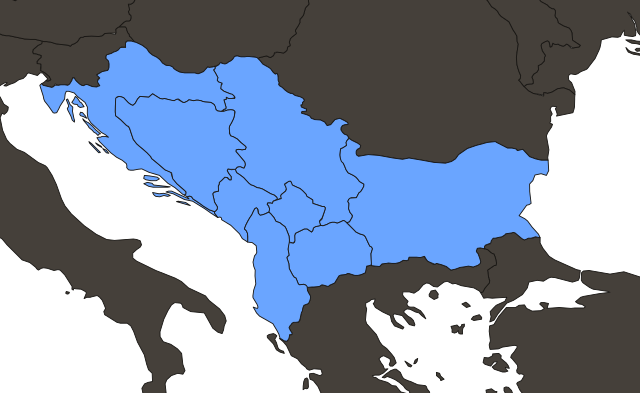
Which alliances is Montenegro in?
All alliances →Who runs Montenegro?
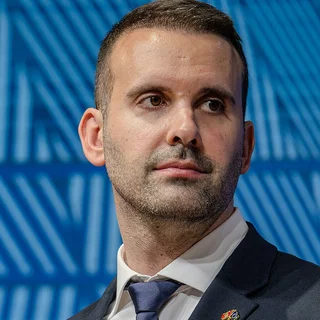
Prime Minister Milojko Spajić was born in Pljevlja on September 24, 1987. He studied econometrics in Japan on a Japanese government scholarship and worked for Goldman Sachs in Singapore from 2014. He was finance minister from 2020 to 2022 and co-founded the Europe Now! party in 2022. He has been prime minister since October 31, 2023.
His coalition joins Europe Now!, the Democrats, pro-Serbian parties, and Bosniak and Albanian parties. Andrija Mandić, a pro-Serbian leader, is Speaker of parliament. One pro-Serbian party left the coalition in January 2026, but the government kept its majority in the 81-seat parliament. In 2024, US court filings showed that Spajić had bought 750,000 LUNA crypto tokens for $75,000 in 2018 from Terraform Labs, the company of Do Kwon. Do Kwon was arrested in Montenegro in 2023 and sentenced to 15 years in the United States in December 2025. President Jakov Milatović, who founded Europe Now! with Spajić, broke with him in 2024 and often sends laws back to parliament. The next election is due by mid-2027.
- Europe Now! (Spajić) 24
- Together (DPS) 21
- For the Future of Montenegro 13
- Democrats and URA 11
- Bosniak Party 6
- Others 6
Photo (June 2024): Julien Nizet for the Belgian Presidency of the Council of the EU, Wikimedia Commons, CC BY 2.0 (cropped)
Who are Montenegro's allies and enemies?
Montenegro joined NATO on June 5, 2017. Prosecutors said a group had planned a coup on election day in October 2016 to stop NATO entry. A court convicted 14 people in 2019, including two Russian military intelligence officers and the pro-Serbian leaders Andrija Mandić and Milan Knežević. A retrial acquitted all 13 remaining defendants in 2024, and an appeals court confirmed the acquittals in February 2026. Mandić is now Speaker of parliament.
Serbs are 32.9% of the population, and Serbia is the largest trade partner. In May 2026 Serbia's President Aleksandar Vučić refused to attend Montenegro's 20th independence anniversary, calling it a celebration of "secession" from Serbia. After Vučić's list lost Serbia's October 2026 election, Prime Minister Spajić spoke of a "new era" with Serbia. Croatia barred Mandić and two other officials in 2024, after Montenegro's parliament passed a resolution on Jasenovac, a death camp run by Croatia's fascist regime in World War II. Montenegro expelled 11 Russian diplomats in 2022 and follows EU sanctions on Russia. Since November 1, 2026 Russians need visas to visit, and Russia will require visas for Montenegrins from December 30. China lent $944 million for the first stretch of a highway.
Allies and partners
 European UnionMembership talks near the end; uses the euro
 United StatesNATO ally since 2017
 Bosnia and HerzegovinaGood neighbor; border treaty in force
 AlbaniaNATO ally and fellow EU candidate


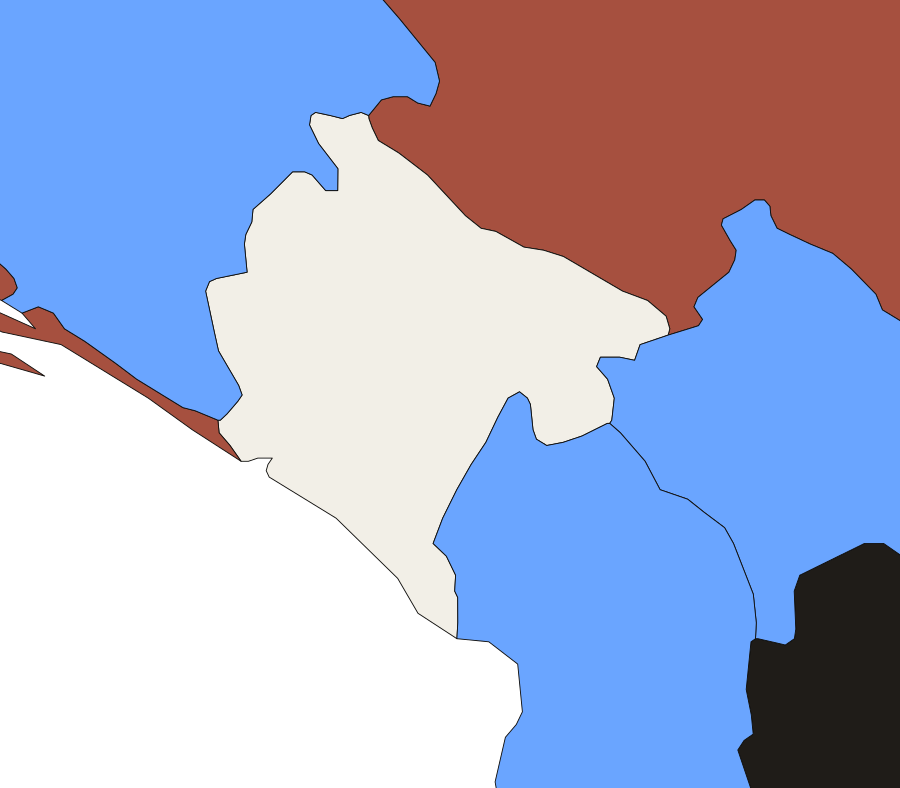
- Prevlaka Croatian headland at the mouth of the Bay of Kotor. The sea border here has never been settled.
- Bar–Boljare highway Its first 41 km, from near Podgorica to Mateševo, opened in 2022. China's Exim Bank lent $944 million for them.
- Velika Plaža Beach near Ulcinj. A 2025 deal with the UAE would let an Emirati developer build on part of it. The deal has not taken effect, and the Constitutional Court is reviewing it.
- Montenegro
- Partner
- Tensions
Who does Montenegro trade with?
In 2025 Montenegro exported €572 million of goods and imported €4.46 billion (MONSTAT). Exports covered only 12.8% of imports. Serbia bought 26.4% of exports and supplied 17.4% of imports, ahead of China at 12.3% (chart). Electricity was the largest export, followed by metal ores, wine, meat and medicines. The KAP aluminum smelter in Podgorica stopped making aluminum after its power contract ended in 2021.
Tourism pays for most of the gap. Montenegro counted 2.73 million tourist arrivals and 15.4 million nights in 2025, almost all of them on the coast. Visitors from Serbia and Russia spent the most nights. The economy grew 3.3% in 2025, and the average net wage was €1,012 a month. Public debt fell from 106% of GDP in 2020 to 58.7% in September 2026. From 2019 to 2022 Montenegro sold citizenship for investments starting at €250,000. The government approved 866 of the 1,113 applicants, most of them Russian or Chinese, and their families got passports too. EU pressure ended the scheme.
Sells to
Share of Montenegro's exports
 Serbia26.4%
- Bosnia and Herzegovina9.2%
 Slovenia6.5%
- Albania4.7%
 Kosovo4.7%
Buys from
Share of Montenegro's imports
- Serbia17.4%
 China12.3%
 Germany10.2%
 Italy5.9%
- Bosnia and Herzegovina5.7%
Goods, 2025. MONSTAT, Montenegro's statistics office.
When will Montenegro join the EU?
Montenegro applied to join the EU in 2008 and opened membership talks in June 2012. In June 2024 it became the first candidate to pass the EU's interim check on the rule of law. Since December 2024 it has closed chapters quickly: by November 6, 2026, 23 of the 33 chapters were provisionally closed. On November 4 the European Commission said Montenegro had met all its conditions and could close the rest by the end of 2026, if EU governments agree. EU ambassadors set up a group to draft the accession treaty in April 2026. The government's goal is "28 by 28": to become the EU's 28th member by 2028. The treaty could be signed around June 2027, and then all 27 members must ratify it.
The main obstacle is Croatia, which has blocked the chapter on foreign policy since December 2024. In October 2026 Croatia's government sent other EU capitals 8 demands. They include compensation for Croatians held in the Morinj prison camp in 1991 and 1992, help finding 14 missing people, a land border deal, and the return of the training ship Jadran, which has stayed in Montenegro since 1991. At Croatia's request, EU leaders left the end-2026 target out of their October conclusions. EU surveys in spring 2026 found that more than 60% of Montenegrins support joining.
Why does Montenegro use the euro?
In 1999 Montenegro was still in a federation with Serbia, led from Belgrade by Slobodan Milošević. Montenegro's government brought in the German mark alongside the Yugoslav dinar to protect its economy from Belgrade's policies. The mark became the only legal currency in 2001. When Germany switched to the euro, Montenegro switched too, and the euro became its only currency in March 2002. It did this without any agreement with the EU or the European Central Bank. Kosovo uses the euro in the same way.
As a result, Montenegro has no seat at the European Central Bank, cannot print money, and has no lender of last resort for its banks in a crisis. The EU said in 2007 that adopting the euro alone "is not compatible with the Treaty." It treats Montenegro as a special case, because the switch was made in exceptional circumstances. In October 2026 the EU and Montenegro agreed how Montenegro's readiness to join the eurozone will be judged after it joins the EU. Formal membership of the eurozone will need a later decision and the usual economic tests.