Region · Between North and South America
The Caribbean and Central America
US buildup, Cuba’s fuel cut off, Haiti at warUpdated November 19, 2026
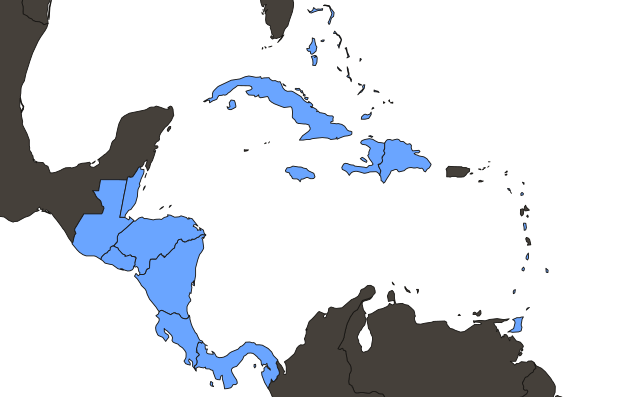
The Caribbean and Central America stretch from Guatemala and Belize south to Panama and east across the island chain from Cuba to Trinidad and Tobago. The region includes 20 independent states. Since 2025 the United States has struck boats it says carried drugs, captured Venezuela’s president, blockaded Cuba’s fuel supply and pressured Panama to remove a Hong Kong-based port operator. Haiti’s capital is largely controlled by armed gangs.
- Countries
- 20
- Guatemala, Honduras and Nicaragua and 17 more
- People
- 93.2 million
- UN, 2025
- Economy
- $662bn
- IMF, 2025, without Cuba
- Panama Canal revenue
- $6.6 bn
- FY2026 preliminary, a record
- Remittances received
- ~$54 bn
- Guatemala, Honduras, El Salvador and Nicaragua combined, 2025
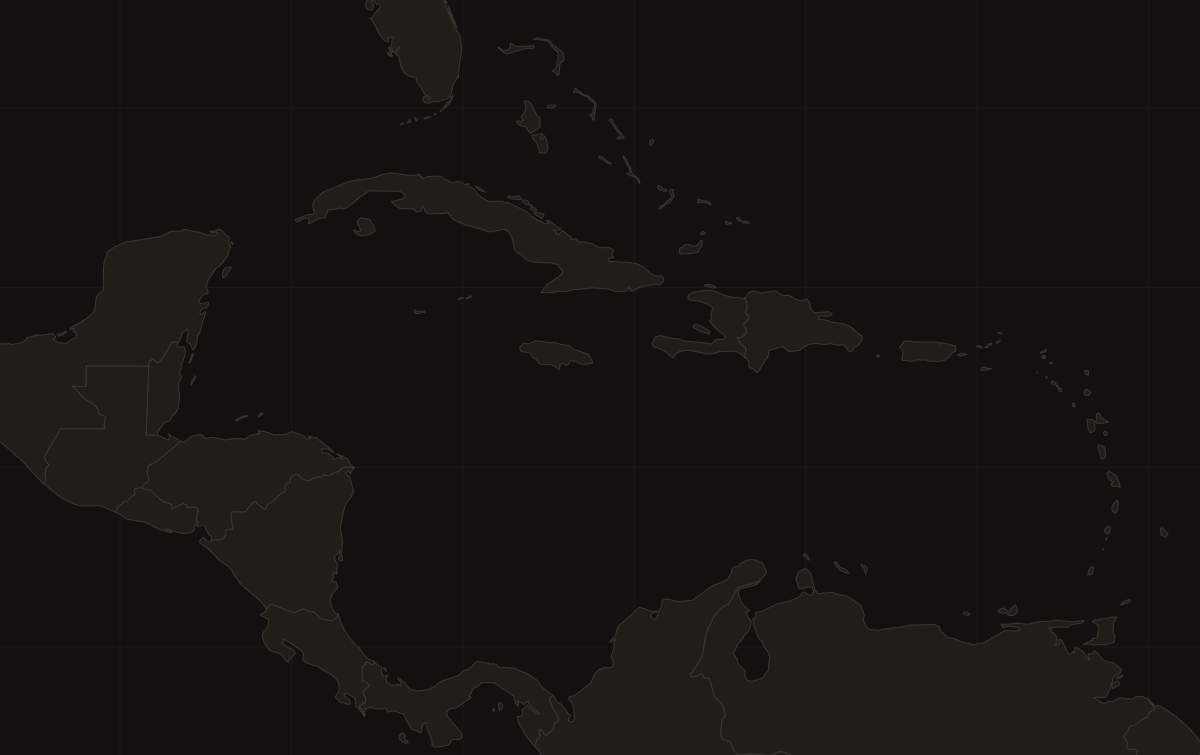
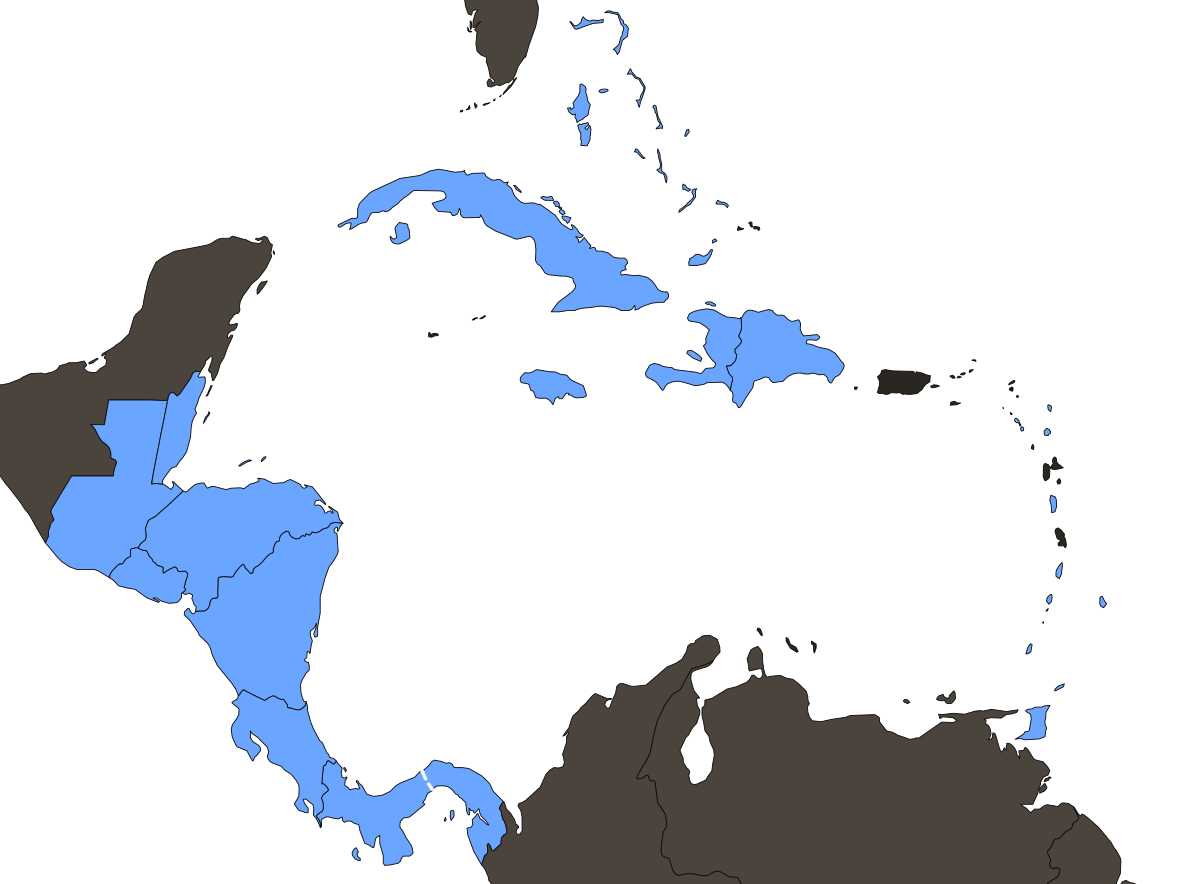
Map of the Caribbean and Central America
Central America runs from Guatemala to Panama along the land bridge between North and South America. The Caribbean islands arc from Cuba and the Bahamas east to Trinidad, just off the coast of Venezuela.
 Cuba
Haiti
Dominican
Republic Jamaica Guatemala Honduras Nicaragua Costa Rica Panama El Salvador Belize The Bahamas Trinidad and
Tobago Mexico United States Venezuela Colombia Caribbean Sea Gulf of Mexico Atlantic Ocean Pacific Ocean Havana 1 2 3 4 5 6 7 8 9 10
- 1Havana and Matanzas Cuba’s capital and its main fuel terminal, both at the center of the 2026 blockade
- 2Guantánamo Bay US naval base held since 1903. Cuba says the lease is illegal
- 3Port-au-Prince Haiti’s capital, where armed gangs control 72% (Haitian police estimate) to 90% (UN estimate) of the metropolitan area
- 4Dajabón crossing Main crossing on the Dominican-Haitian border, where a wall is being built
- 5Roosevelt Roads, Puerto Rico Reopened US naval station and hub for the Caribbean military buildup
- 6Caracas Site of the January 3, 2026 US raid that captured President Maduro
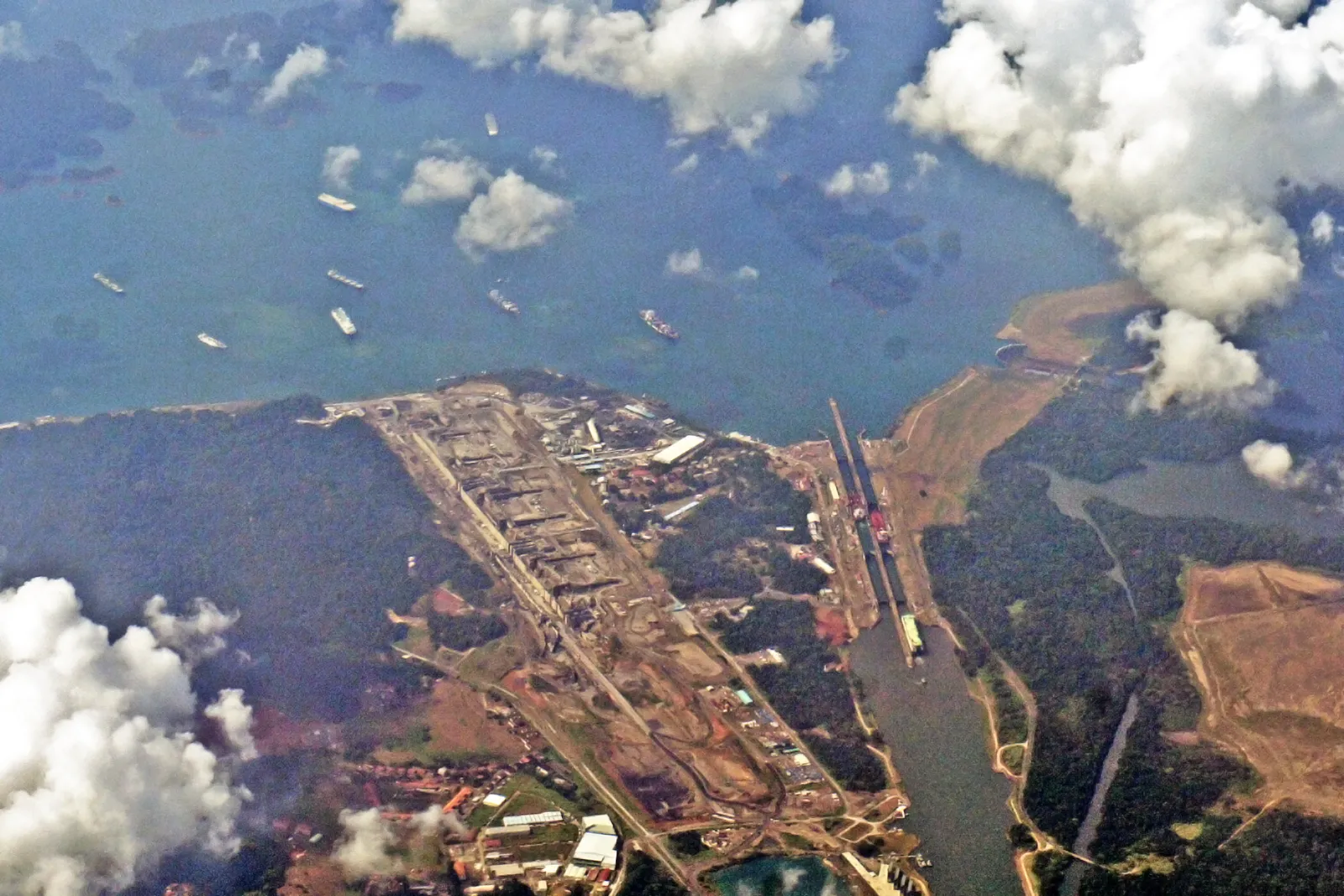
- 7Panama Canal About 14,000 transits a year and $6.6 bn in revenue in FY2026
- 8Darién Gap Migrant crossings fell 99%, from 302,203 in 2024 to 3,091 in 2025
- 9Soto Cano Air Base Home of Joint Task Force Bravo, the main US military base in Central America
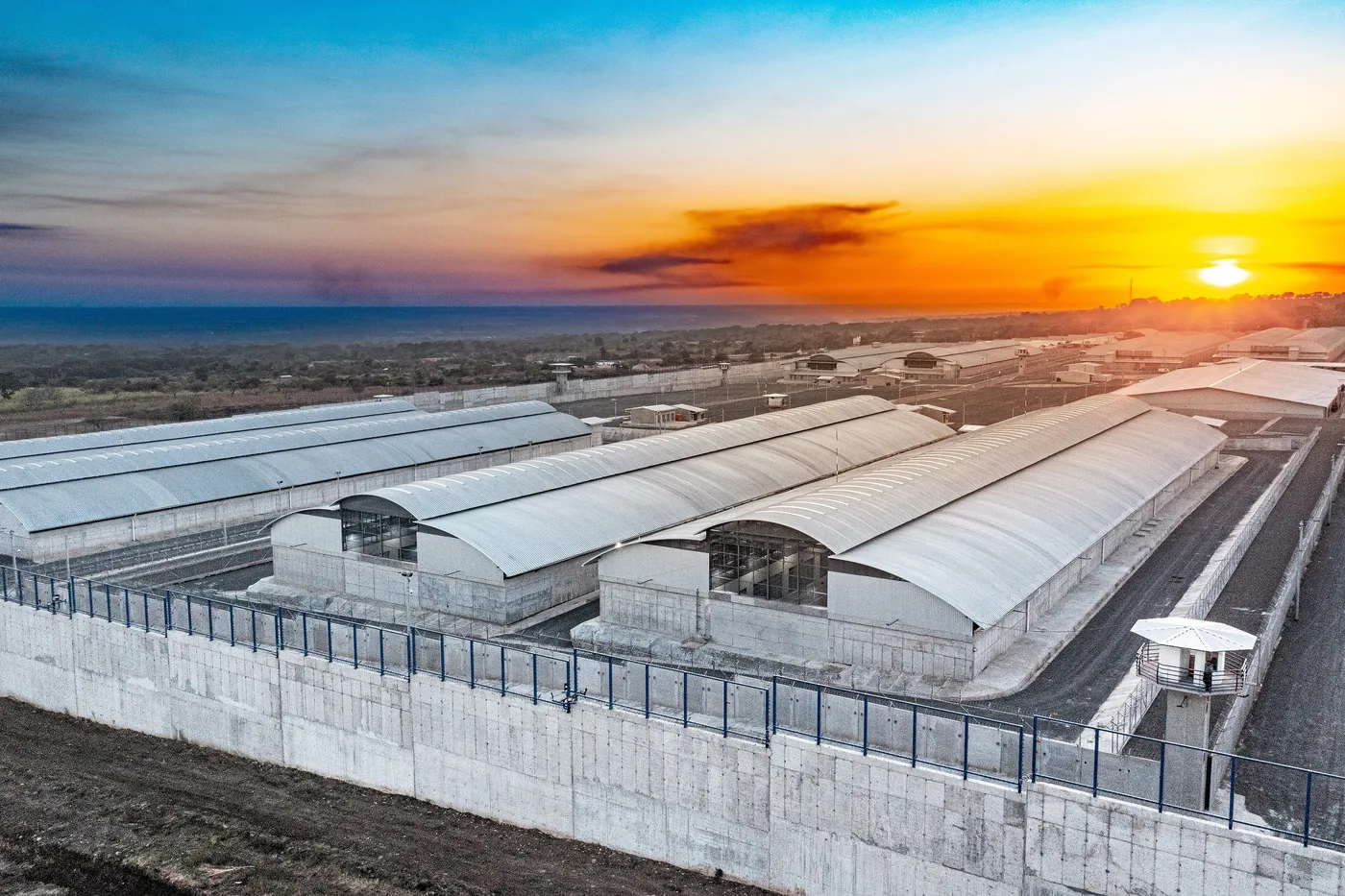
- 10CECOT prison Bukele’s mega-prison, symbol of El Salvador’s mass-incarceration crackdown
Why do the Caribbean and Central America matter?
13,951
Panama Canal transits in FY2026
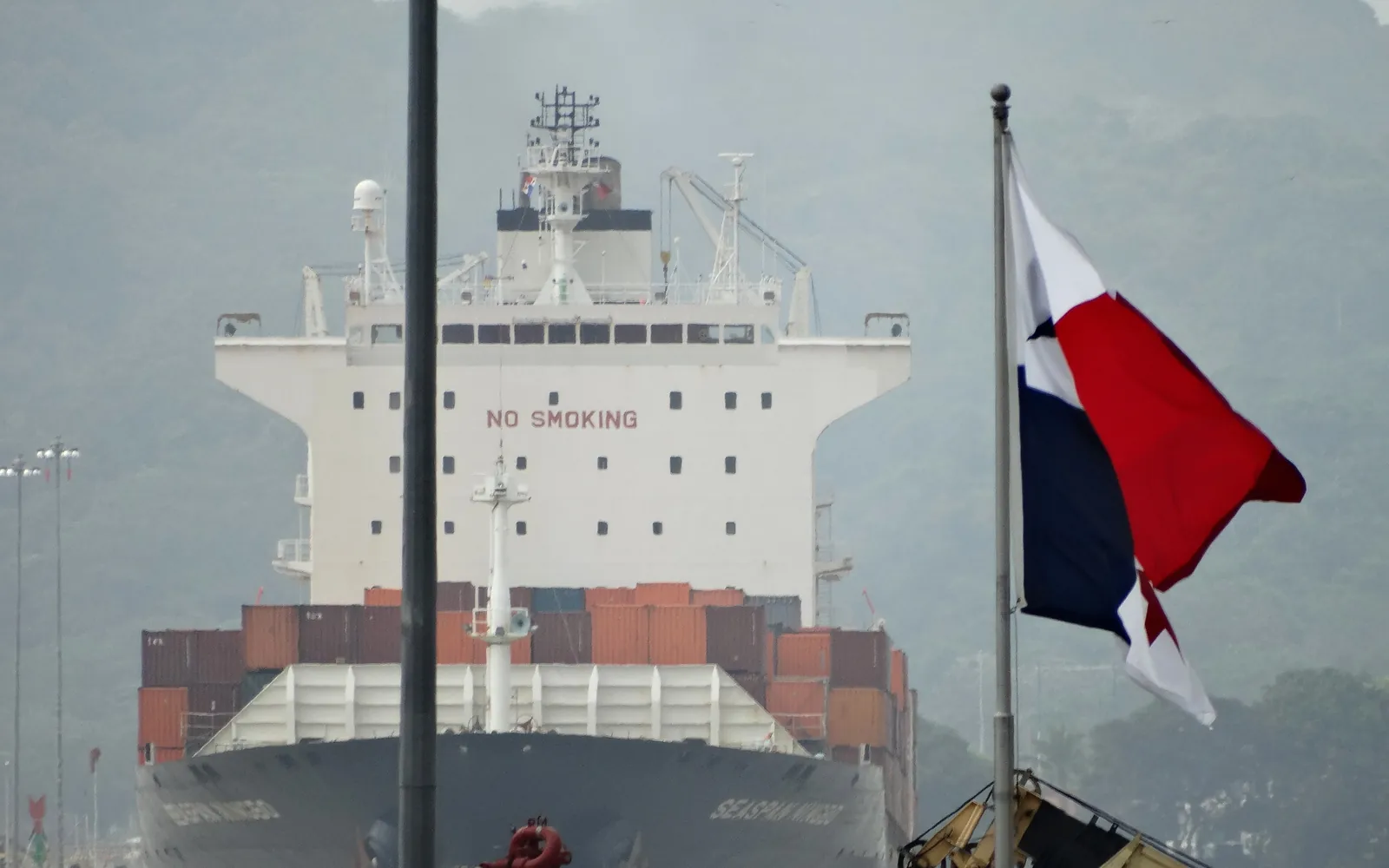
The canal links the Atlantic and Pacific oceans. It handled a record 521 million PC/UMS tons, a measure of ship capacity, in FY2026.
~$54 bn
Remittances received, 2025
Guatemala, Honduras, El Salvador and Nicaragua received about $54 billion from workers abroad, mostly in the United States.
4,100 t
Record cocaine output, 2024
The UNODC estimated a record 4,100 tons of cocaine produced in 2024. Major trafficking routes to the United States run through the eastern Pacific, Central America and the Caribbean.
Who has power in the Caribbean and Central America?
The United States is the dominant outside power and has sharply increased its military presence since late 2025. China has lost ground after Panama left the Belt and Road and a Hong Kong company lost its concession to run two canal ports. Russia holds on through Cuba and Nicaragua but lost its biggest regional partner when the US captured Venezuela’s president.

United StatesGaining
It captured Venezuela’s president, blockaded Cuba’s fuel, reopened a naval station in Puerto Rico and launched a strike campaign against boats it says carried drugs. Its December 2025 strategy declared a “Trump Corollary” to the Monroe Doctrine.

ChinaLosing ground
Panama left the Belt and Road in February 2025, and Hong Kong’s CK Hutchison lost its Panama Canal port concession in January 2026. China’s government warned Panama of a “heavy price.”

RussiaLosing ground
Russia sent a tanker to Cuba in March 2026 and has up to 230 military personnel authorized in Nicaragua through December 2026. But it lost Venezuela as its biggest regional partner after Maduro’s capture.

CubaLosing ground
ECLAC estimates that Cuba’s economy shrank 3.8% in 2025. In August 2026 it projected a 10.3% contraction in 2026. Its grid has collapsed repeatedly. Its official population fell to 9.4 million after years of emigration.

El SalvadorGaining
Bukele’s mass-incarceration model has spread in rhetoric and policy. Salvadoran troops fight Haiti’s gangs, mostly outside the UN-backed Gang Suppression Force. He will run for a third term on February 28, 2027.

Dominican RepublicGaining
It is the region’s fastest-growing large economy and received a record 11.6 million visitors in 2025. It is building a wall on the Haitian border. It deported 270,214 Haitians in 2025, according to the UN, or 379,553, according to Dominican authorities.
What is the United States doing in the Caribbean?
The United States has sharply expanded its military presence in the Caribbean. It has used force against Venezuela and economic pressure against Cuba. Since September 2025 it has run a strike campaign against suspected drug boats that killed about 243 people in roughly 69 strikes by October 27, 2026, according to the Washington Office on Latin America. The US says the boats carried drugs. Relatives of some of those killed say they were fishermen.
On January 3, 2026, US forces captured Venezuela’s president Nicolás Maduro in Caracas. Since January 2026 the US has blockaded fuel shipments to Cuba through an executive order that threatens tariffs on any country that supplies Cuba with oil. It indicted former president Raúl Castro on May 20, 2026. On November 5, 2026, it sanctioned five Cuban-flagged tankers and the firms that run them.
The US also pressured Panama to leave China’s Belt and Road and signed a military access agreement in April 2025. On March 7, 2026, it launched the Americas Counter Cartel Coalition at a summit in Florida.
Why is Cuba running out of power?
Cuba is short of power because its oil-fired grid depends on imported fuel, and most fuel imports have stopped. Cuba produces only about 40% of its fuel needs at home. Venezuela’s oil shipments stopped after the US captured Maduro on January 3, 2026. Mexico paused its fuel shipments on January 27, 2026, and halted them entirely later in the year. A US executive order of January 29, 2026, threatens tariffs on any country that sends oil to Cuba.
One Russian tanker delivered about 700,000 barrels to the Matanzas terminal on March 31, 2026. On May 14, 2026, Cuba’s energy ministry said the island had “absolutely no fuel.” The grid has collapsed nationwide at least six times since late 2024, including on March 16, 2026, when about 10 million people lost power. As of November 11, 2026, Cuba had a generation deficit of 1,820 megawatts. ECLAC projects Cuba’s economy will shrink 10.3% in 2026.
1,820 MW
Generation deficit on November 11, 2026
Cuba’s grid cannot meet demand. The island’s grid has collapsed nationwide at least six times since late 2024, and the US fuel blockade has been in place since January 2026.
The countries of the Caribbean and Central America
All countries → GuatemalaPresident Bernardo Arévalo19Mpeople$123bneconomy
 HondurasPresident Nasry Asfura11Mpeople$40bneconomy
 NicaraguaCo-President Daniel Ortega7.0Mpeople$22bneconomy
- El SalvadorPresident Nayib Bukele6.4Mpeople$37bneconomy
 Costa RicaPresident Laura Fernández5.2Mpeople$103bneconomy
 PanamaPresident José Raúl Mulino4.6Mpeople$90bneconomy
 BelizePrime Minister Johnny Briceño423kpeople$3bneconomy
- CubaPresident Miguel Díaz-Canel11Mpeople
- Dominican RepublicPresident Luis Abinader12Mpeople$128bneconomy
 HaitiPrime Minister Alix Didier Fils-Aimé12Mpeople$32bneconomy
 JamaicaPrime Minister Andrew Holness2.8Mpeople$23bneconomy
 Trinidad and TobagoPrime Minister Kamla Persad-Bissessar1.5Mpeople$26bneconomy
 Bahamas403kpeople$17bneconomy
 Barbados283kpeople$8bneconomy
 Saint Lucia180kpeople$3bneconomy
 Grenada117kpeople$1bneconomy
 Saint Vincent and the Grenadines100kpeople$1bneconomy
 Antigua and Barbuda94kpeople$2bneconomy
 Dominica66kpeople$744meconomy
 Saint Kitts and Nevis47kpeople$1bneconomy
Who belongs to what?
The region’s countries split between Central American and Caribbean blocs, with some overlap. Belize belongs to both SICA and CARICOM. The Dominican Republic is in SICA but not CARICOM. Costa Rica is the region’s only OECD member.
| Country | SICA | CARICOM | Commonwealth | OECD | NAM |
|---|---|---|---|---|---|
| Guatemala | Member | No | No | No | Member |
| Honduras | Member | No | No | No | Member |
| Nicaragua | Member | No | No | No | Member |
| El Salvador | Member | No | No | No | Observer |
| Costa Rica | Member | No | No | Member | Observer |
| Panama | Member | No | No | No | Member |
| Belize | Member | Member | Member | No | Member |
| Cuba | No | No | No | No | Member |
| Dominican Republic | Member | No | No | No | Member |
| Haiti | No | Member | No | No | Member |
| Jamaica | No | Member | Member | No | Member |
| Trinidad and Tobago | No | Member | Member | No | Member |
| Bahamas | No | Member | Member | No | Member |
| Barbados | No | Member | Member | No | Member |
| Saint Lucia | No | Member | Member | No | Member |
| Grenada | No | Member | Member | No | Member |
| Saint Vincent and the Grenadines | No | Member | Member | No | Member |
| Antigua and Barbuda | No | Member | Member | No | Member |
| Dominica | No | Member | Member | No | Member |
| Saint Kitts and Nevis | No | Member | Member | No | Member |
Wars and disputed land in the Caribbean and Central America
All conflicts →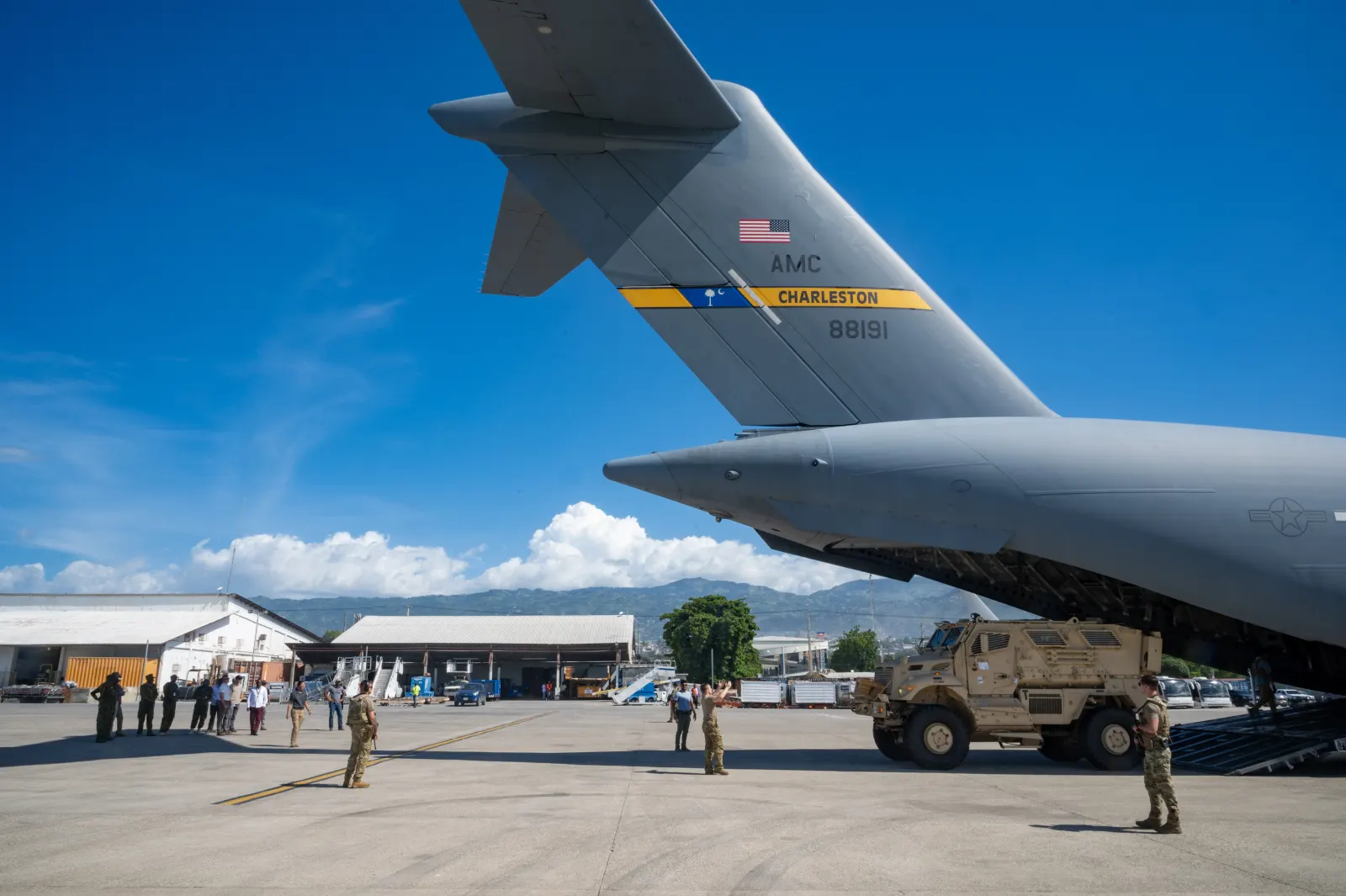
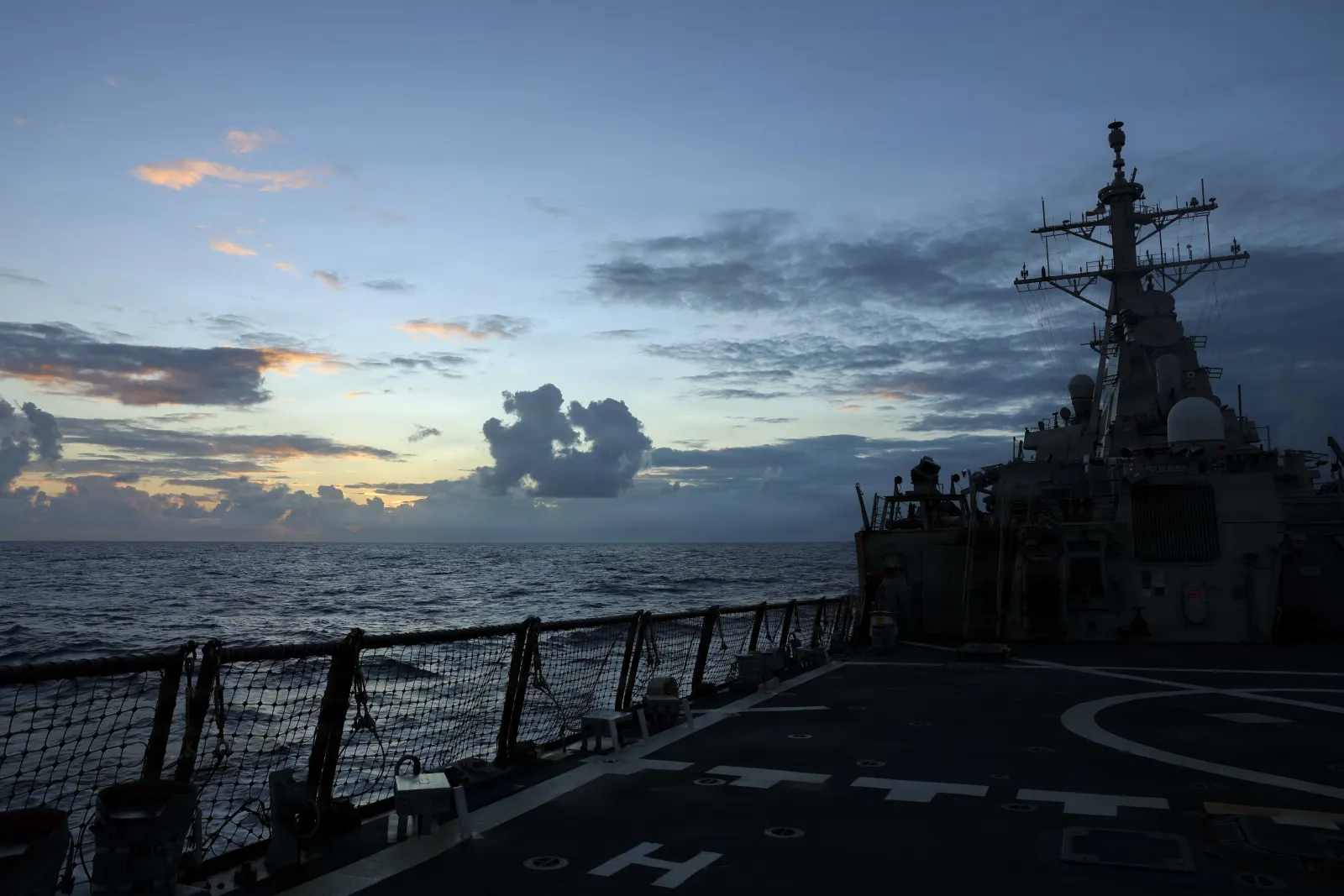
Who controls Haiti?
No one controls all of Haiti. Prime Minister Alix Didier Fils-Aimé is the sole executive, after the Transitional Presidential Council dissolved on February 7, 2026. Haiti has no nationally elected officials. The last senators’ terms expired in 2023.
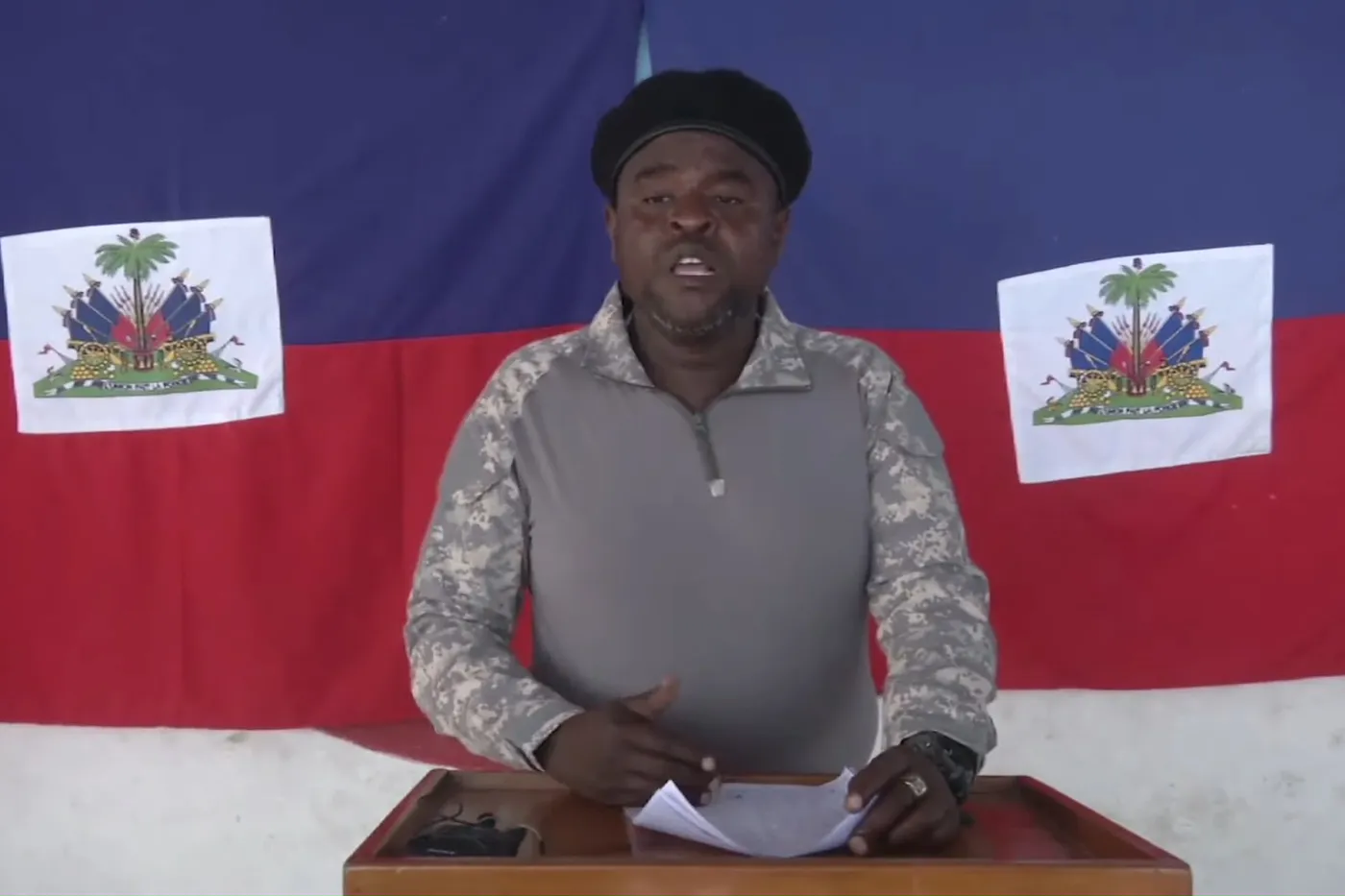
On the ground, the armed gang coalition Viv Ansanm holds most of Port-au-Prince. Estimates range from 72% of the capital, according to Haiti’s police chief, to about 90%, according to the UN. The US has designated Viv Ansanm a foreign terrorist organization. The UN counted about 4,217 people killed in January through September 2026, and more than 1.5 million are displaced.
A Gang Suppression Force authorized by the UN Security Council in September 2025 has about 1,500 troops of a planned 5,550. Haiti’s first presidential election in a decade is now scheduled for July 18, 2027.
People killed in Haiti by quarter, 2026 (UN)
Why does Bukele matter beyond El Salvador?
Nayib Bukele, El Salvador’s president, matters because other governments copy his crackdown on gangs and because El Salvador has removed limits on re-election. Since March 2022 a state of exception has been renewed 56 times, and 93,334 people have been detained. The government says homicides have collapsed. Socorro Jurídico Humanitario, a Salvadoran human rights group, counts 564 deaths in custody.
Other leaders have copied the approach. Guatemala declared a state of siege in January 2026 after gang attacks killed police officers. Costa Rica’s Laura Fernández campaigned on a tough-on-crime platform. Salvadoran troops now fight Haiti’s gangs, mostly outside the UN-backed Gang Suppression Force.
Bukele has also changed the rules on presidential terms. A 2025 reform allows indefinite re-election. He is the candidate for the February 28, 2027 election, which could bring his time in power to 14 years. His government has worked closely with the Trump administration and jailed Venezuelans deported by the United States in its CECOT prison in 2025.
How did the Caribbean and Central America get here?
- 1804Haiti becomes the first independent Black republic
- 1898-1914The US takes Puerto Rico, leases Guantánamo, opens the canal
- 1959The Cuban Revolution; the US embargo follows in 1962
- 1977The Torrijos-Carter Treaties promise Panama the canal
- 1979-1996The Sandinista revolution, then wars in Nicaragua, El Salvador and Guatemala until peace deals in 1992 and 1996
- 1999Panama takes full control of the canal
- Jul 2021Haiti’s president Jovenel Moïse is assassinated
- Mar 2022El Salvador begins its state of exception
- Sep 2025US boat strikes begin; Operation Southern Spear follows
- Jan 2026The US captures Maduro and blockades Cuba’s fuel
What to watch
Feb 28, 2027
El Salvador’s election
Bukele is running for a third term under new rules that allow indefinite re-election. A win could extend his time in power to 14 years.
Jul 18, 2027
Haiti’s first vote in a decade
The electoral council has moved the first round twice, from August 30, 2026 to December 13, 2026 and then to July 18, 2027. The Gang Suppression Force mandate expires March 31, 2027.
Late 2026-2027
ICJ rules on Essequibo
Guyana expects the International Court of Justice to rule on Venezuela’s claim to about two-thirds of Guyana’s territory between November 2026 and early 2027. No date has been announced.
Questions about the Caribbean and Central America
Which countries are in Central America?
Seven countries are in Central America: Guatemala, Belize, El Salvador, Honduras, Nicaragua, Costa Rica and Panama. Belize is the only one with English as its official language. The Central American Integration System (SICA) adds the Dominican Republic as an eighth member.
Is Cuba still communist?
Yes. Cuba is a one-party state led by the Communist Party. Miguel Díaz-Canel is president and first secretary of the party. Freedom House rates Cuba 9 out of 100, making it one of the least free countries in the world. The 9th Party Congress, due in April 2026, was postponed indefinitely.
Who controls the Panama Canal?
Panama does. The canal has been owned and operated by Panama through the Panama Canal Authority since December 31, 1999, when the United States transferred control under the 1977 Torrijos-Carter Treaties. In fiscal year 2026 it handled a record 521 million PC/UMS tons, a measure of ship capacity, and earned about $6.6 billion in revenue, according to preliminary figures.
Why is there a US base in Cuba?
The United States has held Guantánamo Bay since 1903 under a lease signed after the Spanish-American War. Cuba’s government says the lease is illegal and wants the base returned. The United States says the lease can only be ended by agreement of both sides or by the US abandoning the base.
Is Haiti the poorest country in the Americas?
Yes. Haiti’s GDP was about $32.1 billion in 2025, according to the IMF. With nearly 12 million people, that is about $2,700 per person, the lowest in the Americas. It has no nationally elected officials, its capital is largely controlled by armed gangs, and more than 1.5 million people are displaced.
What is CARICOM?
CARICOM is the Caribbean Community, a bloc of 15 member states. Its members include Jamaica, Trinidad and Tobago, the Bahamas, Barbados, Belize, Haiti, Guyana, Suriname and the smaller Eastern Caribbean states. The Dominican Republic is not a member, but it belongs to the wider CARIFORUM group. In 2026 CARICOM split over the US military buildup, with Trinidad and Tobago backing the United States.