Relations · Caribbean

Cuba-United States relations

HostileEmbassies open, but the US blocks fuel to Cuba

Cuba and the United States are adversaries, and relations are hostile. The US has kept an embargo on Cuba since 1962, and since early 2026 it has cut off fuel shipments to the island. Cuba says US forces killed 32 of its military and intelligence personnel in the raid on Caracas, Venezuela, on January 3, 2026. Both countries still have embassies in each other's capitals, reopened in 2015 after 54 years. About 1.39 million people born in Cuba live in the United States.

Updated November 19, 2026 · Trade data from CEPII BACI, votes from the UN

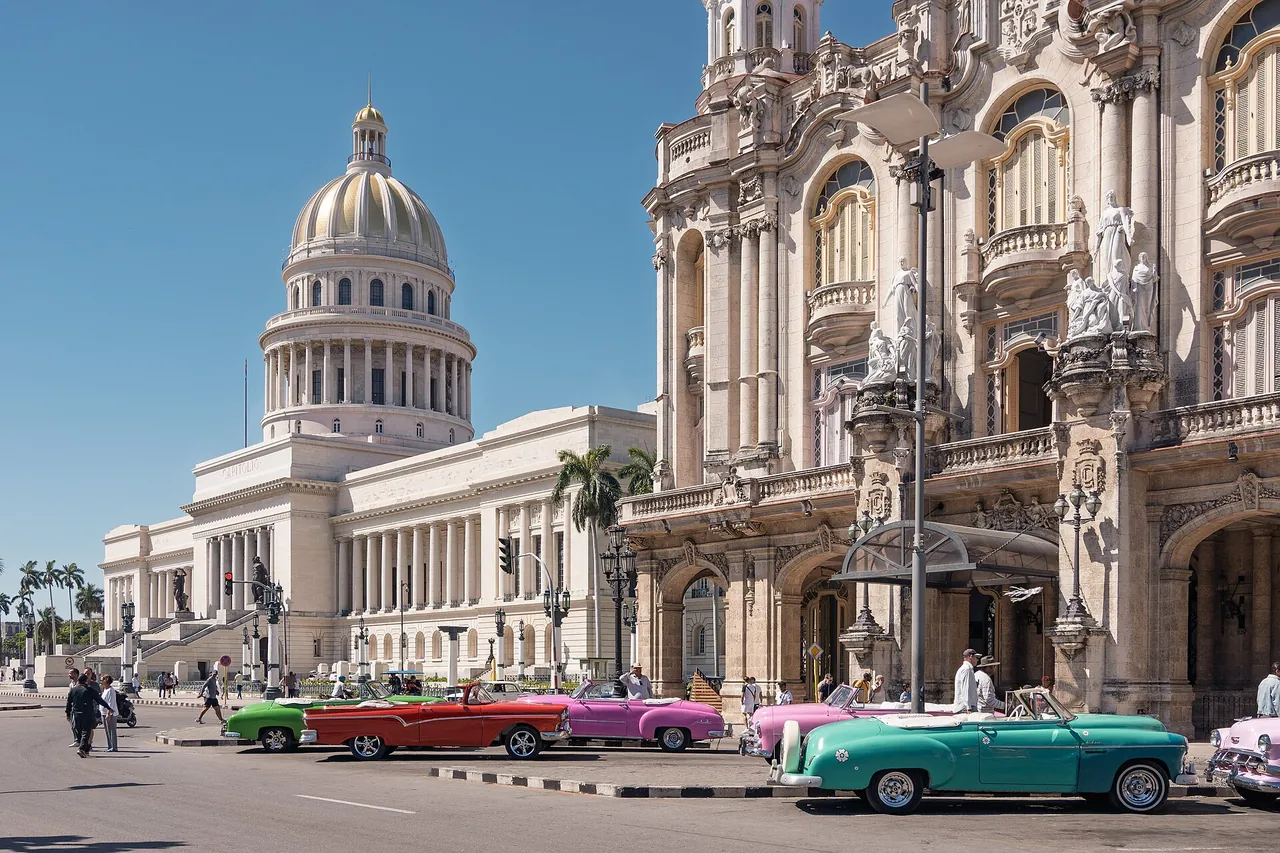
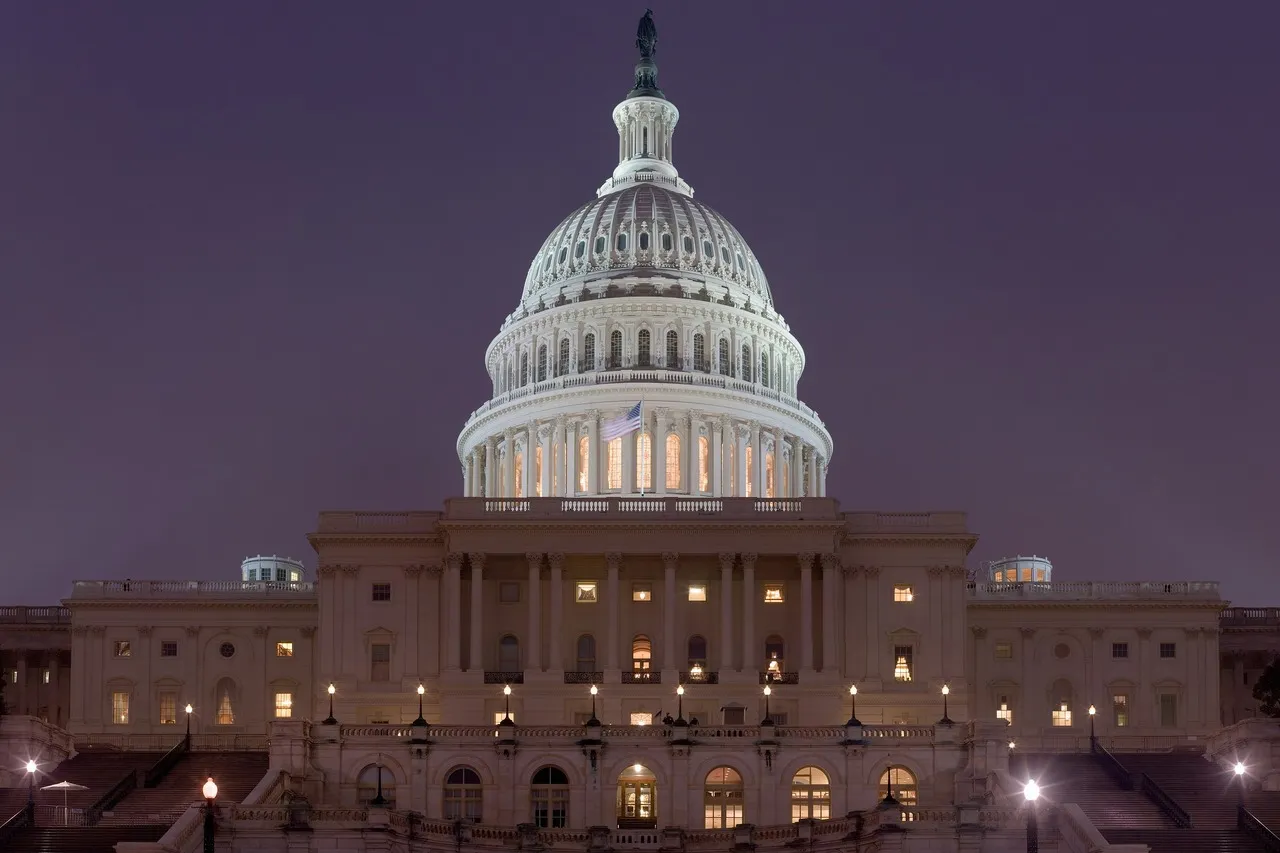
The domed National Capitol in Havana under a blue sky, with brightly painted classic American cars parked in front of the ornate Gran Teatro The US Capitol in Washington, lit up at night
The National Capitol and the Gran Teatro on the Paseo del Prado, Havana, March 2025. Photo: Fraganda, Wikimedia Commons, CC BY-SA 4.0 · The US Capitol, Washington. Photo: Diliff, Wikimedia Commons, public domain
  • 1902Diplomatic relations since (broken 1961 to 2015)
  • $524mGoods traded in 2024
  • 1962US embargo on Cuba, now written into law
  • 6%Same UN votes in 2025
  • 1,394,750Cuban-born people living in the US, 2024
  • $4,085/yrGuantánamo rent; Cuba refuses to cash the checks

Where relations stand today

Checked November 19, 2026

The US is cutting off fuel shipments to Cuba and has sanctioned President Miguel Díaz-Canel. On November 12, 2026, President Trump said he would "certainly consider" military force, and Cuba activated its wartime structures the next day.

Latest

  • On November 12, President Trump told radio host Hugh Hewitt that he would "certainly consider" military force and wanted "to get Cuba done before I leave." On November 13, President Díaz-Canel activated Cuba's wartime structures and said Cuba is "determined to repel any attempt at foreign military aggression."
  • On November 5, Secretary of State Marco Rubio sanctioned 10 people and firms tied to Cuba's oil shipping and military, including China-based suppliers. The same day, the Treasury opened four sectors of Cuba's economy to sanctions.
  • On October 28, the UN General Assembly adopted a resolution against the US embargo by 130 votes to 17, the fewest yes votes since 1995 and the most no votes ever. The US expelled Cuban diplomat Richard Tur de la Concepción after a scuffle with a US official at the UN on October 27.
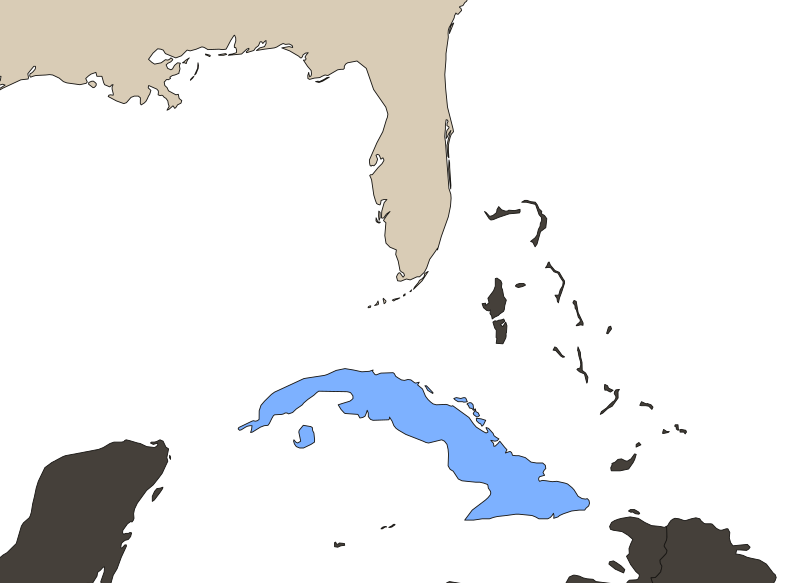
Map of the Caribbean showing Cuba, southern Florida, Havana, Key West and Guantánamo Bay Cuba United States Guantánamo Bay Havana Key West

Why are Cuba and the United States enemies?

What ties them

  • Trade. A US law passed in 2000 lets American companies sell food to Cuba for cash, and the US sold Cuba $520 million of goods in 2024, mostly frozen chicken. US Census Bureau figures show a record $1.1 billion of US exports to Cuba in January to September 2026.
  • People. About 1.39 million people born in Cuba lived in the United States in 2024, three out of four Cuban-born people living abroad. The Cuban Adjustment Act of 1966 lets Cubans who have been in the US for a year apply for a green card.
  • Migration accords. A 1994 agreement commits the US to admit at least 20,000 Cubans a year through legal channels. Cuba accepted 170 deportees on a US flight on February 9, 2026, the first of several that year.

What divides them

  • The embargo. Cuba's government calls the US embargo "el bloqueo" (the blockade) and says it has cost Cuba $178.7 billion since 1959. The US calls it an embargo, and the Helms-Burton Act of 1996 wrote it into law, so a president cannot lift it alone.
  • The fuel cutoff. Since January 2026 the US has cut Cuba off from Venezuelan oil, and since February the US Coast Guard has turned back or seized tankers bound for Cuba. Cuba calls this "collective punishment," and Secretary of State Marco Rubio says Cuba's leaders use energy as "a tool of social control."
  • Guantánamo Bay. The US Navy has held Guantánamo Bay since 1903, and a 1934 treaty says the lease lasts until both countries agree to end it or the US leaves. Cuba's government calls the base illegal and has refused to cash the rent checks since 1959.
  • The terrorism list. The US listed Cuba as a state sponsor of terrorism in 1982, removed it in 2015 and listed it again in January 2021. Biden moved to remove it on January 14, 2025, but Trump reversed that on January 20, and Cuba says the listing has no legitimate grounds.

How much do Cuba and the United States trade?

Download CSV

Cuba sells to United States

$5m

  • Paintings99%
  • Sculptures1%
  • Plastic goods0%
  • Rubber hoses0%

United States sells to Cuba

$519m

  • Chicken58%
  • Cars12%
  • Pork5%
  • Prepared meat4%
Goods traded between Cuba and the United States, 1995 to 2024US dollars, both directions, shares of 2024 sales

Cuba is the United States's #120 trading partner (0% of its goods trade). United States is Cuba's #3 (11.1%). US sales are mostly food, allowed by a 2000 law as an exception to the embargo and paid in cash. Cuba's sales to the US are almost all paintings and art. Source: CEPII BACI (version 202601), goods only.

Have Cuba and the United States fought a war?

1961

Bay of Pigs Invasion

Sides
Brigade 2506, about 1,400 Cuban exiles trained and armed by the CIA, against Cuba's army and militia under Fidel Castro
Result
Cuban forces defeated the brigade by April 19 and captured about 1,189 exiles
Deaths
About 114 exiles and four US airmen flying for the CIA; 176 Cuban soldiers, not counting militia
Encyclopedia entry →

1983

US Invasion of Grenada

Sides
US forces against Grenada's army and 700 to 800 Cubans, mostly construction workers who were army reservists
Result
The US-led force took the island; captured Cubans were sent home
Deaths
24 or 25 Cubans killed and 59 wounded, by different counts; 19 Americans killed

2026

US Raid on Caracas

Sides
US forces against Venezuelan forces and Cuban military and intelligence personnel guarding President Maduro
Result
Maduro captured; Cuban advisers left Venezuela, and Venezuelan oil to Cuba stopped
Deaths
Cuba says 32 of its personnel were killed; Venezuela says 47 of its soldiers died

A short history of Cuba-US relations

WarTreaty or peaceCrisis

Spain and the US · 1854-1898

  1. 1854The Ostend ManifestoUS diplomats James Buchanan, John Mason and Pierre Soulé, meeting in Ostend, Belgium, urged buying Cuba from Spain for up to $120 million. If Spain refused, they said, the US should take the island by force.
  2. 1898The USS Maine explodesThe battleship blew up in Havana harbor on February 15, 1898, killing 266 crew. An 1898 Navy board blamed a mine, but a historian at the US Navy's history command now says an internal explosion is more likely.
  3. 1898The Spanish-American WarCongress promised not to annex Cuba and went to war with Spain in April 1898. Spain gave up Cuba in the Treaty of Paris on December 10, and US military rule followed.

The Platt years · 1901-1958

  1. 1901The Platt AmendmentA US law gave the United States a right to intervene in Cuba and required Cuba to lease land for naval stations. Cuba wrote these terms into its constitution.
  2. 1902Cuba independentUS military rule ended on May 20, 1902. Herbert Goldsmith Squiers became the first US envoy to Cuba on May 27.
  3. 1906The second US occupationAfter unrest in Cuba, the US took over the island's government again on September 29, 1906. Charles Magoon ruled as provisional governor until January 28, 1909.

Revolution and Cold War · 1959-1991

  1. 1959Castro takes powerFidel Castro's revolution overthrew the Batista government on January 1, 1959. In April, Vice President Nixon met Castro in Washington and wrote that he was "either incredibly naive about Communism or under Communist discipline."
  2. 1961Relations break offPresident Eisenhower broke off diplomatic relations on January 3, 1961. Three Marines lowered the flag at the embassy: Jim Tracy, Larry Morris and Mike East.
  3. 1961Bay of PigsAbout 1,400 CIA-trained Cuban exiles of Brigade 2506 landed on April 17 and were defeated by April 19. In December 1962, lawyer James Donovan won the prisoners' release for about $53 million in baby food and medicine.
  4. 1962The full embargoPresident Kennedy declared a full embargo on Cuba on February 3, 1962. Press secretary Pierre Salinger later wrote that Kennedy first had him buy 1,200 Cuban cigars.
  5. 1962The Cuban Missile CrisisIn October 1962 the US found Soviet nuclear missiles in Cuba, and a 13-day standoff followed. The Soviet Union removed the missiles, and the US pledged not to invade Cuba.
  6. 1980The Mariel boatliftAbout 125,000 Cubans reached Florida between April and October 1980 after Fidel Castro opened the port of Mariel.

Exodus, thaw and pressure · 1994-2026

  1. 1994The rafter crisisAbout 31,000 to 35,000 Cubans left by sea in the summer of 1994. A migration accord signed on September 9 set a floor of 20,000 legal US admissions a year.
  2. 1996Brothers to the Rescue shootdownCuban jets shot down two planes of the Miami exile group Brothers to the Rescue on February 24, 1996, killing four people, and Cuba said it acted in self-defense. President Clinton signed the Helms-Burton Act on March 12, writing the embargo into law.
  3. 2014Obama and Castro restore relationsBarack Obama and Raúl Castro announced restored relations on December 17, 2014, and both embassies reopened on July 20, 2015. In Havana on March 22, 2016, Obama said: "I have come here to bury the last remnant of the Cold War in the Americas."
  4. 2026The Caracas raid and fuel cutoffCuba says 32 of its personnel were killed in the US raid on Caracas on January 3, 2026. Trump declared a national emergency over Cuba on January 29, and the US Coast Guard began stopping fuel ships in February.

Treaties between Cuba and the United States

  • 1903Guantánamo Bay LeaseCuba leased Guantánamo Bay and Bahía Honda to the US for coaling and naval stations, at $2,000 a year in gold. Cuba kept "ultimate sovereignty." Fidel Castro wrote that Cuba cashed only one rent check, in 1959, by mistake.In force (US view); Cuba says illegal
  • 1934Treaty of RelationsIt ended the Platt Amendment but kept the Guantánamo lease, which lasts until both countries agree to end it or the US leaves. Cordell Hull and Sumner Welles signed for the US, and Ambassador Manuel Márquez Sterling signed for Cuba.In force
  • 1994Migration AccordsThe accords were signed on September 9, 1994 and updated on May 2, 1995. The US agreed to admit at least 20,000 Cubans a year through legal channels and to return migrants caught at sea.In force
  • 2015Restoration of Diplomatic RelationsLetters exchanged on June 30, 2015 restored diplomatic relations on July 20, 2015. The interests sections in both capitals became embassies.In force
  • 2017Joint Statement on MigrationThis statement, signed on January 12, 2017, ended "wet foot, dry foot," the policy that let Cubans who reached US soil stay. Cuba agreed to take back migrants the US turned away.In force

Only Cuba

NAM

Only United States

NATOG7G20QuadAUKUSFive EyesOECD

How often do Cuba and the United States vote the same way at the UN?

In 2025, Cuba and the United States voted the same way on 6% of the recorded votes in the UN General Assembly. The UN General Assembly votes every year on a resolution against the US embargo on Cuba. In 2024, 187 countries voted yes and only the US and Israel voted no. In 2026 the vote was 130 yes, 17 no and 25 abstentions. Compare their votes →

Abstaining while the other votes yes or no counts as half agreement. Data: UN Digital Library voting data, 1991 to 2025.

How well do you know Cuba and the United States?

10 questions on their wars, treaties, trade and size. About three minutes, no signup.

Cuba vs United States: how they compare

All rankings →

Questions about Cuba and the United States

Why does the US have an embargo on Cuba?

After Fidel Castro took power in 1959, Cuba seized American-owned property worth $1.9 billion by the US count. Eisenhower banned most exports in October 1960, and Kennedy declared a full embargo on February 3, 1962. The Helms-Burton Act of 1996 wrote the embargo into law, so a president cannot lift it alone. Cuba's government calls it "el bloqueo" (the blockade) and says it has cost Cuba $178.7 billion since 1959.

Can Americans travel to Cuba?

US law bans tourism to Cuba. Trips must fit one of the categories the US Treasury allows, such as family visits or "support for the Cuban people." Since September 30, 2026, group people-to-people trips are no longer allowed. Americans must also avoid hundreds of hotels and homes linked to Cuba's government.

Why is Guantánamo Bay American?

Cuba leased Guantánamo Bay to the US Navy in 1903 for $2,000 a year in gold, under the terms of the Platt Amendment. A 1934 treaty says the lease lasts until both countries agree to end it or the US leaves. Cuba's government calls the base illegal and has refused to cash the rent checks since 1959.

How many Cubans live in the United States?

About 1.39 million people born in Cuba lived in the United States in 2024, three out of four Cubans living abroad. Counting their US-born children, 2.4 million Americans were of Cuban origin in 2021, and 64% of them lived in Florida.

Is the US going to invade Cuba?

No invasion has been ordered. On November 12, 2026, President Trump said he would "certainly consider" a short military operation and wanted "to get Cuba done before I leave." State Department spokesperson Tommy Pigott called Cuba a failed state and a "direct threat to the national security of the United States." On November 13, President Díaz-Canel activated Cuba's wartime structures and said Cuba is "determined to repel any attempt at foreign military aggression."

Does the US have an embassy in Cuba?

Yes. The US Embassy in Havana reopened on July 20, 2015, after 54 years without diplomatic relations. It is led by chargé d'affaires Mike Hammer, not an ambassador; the last US ambassador, Philip Bonsal, left Havana on October 28, 1960. Cuba also has an embassy in Washington.

More relations

All relations →
7 days free cancel anytime
Get the app