
Relations · Asia-Pacific
Taiwan-United States relations
FriendlyClose partners without official diplomatic ties
Taiwan and the United States are close partners, not enemies. The two have had no official diplomatic relations since January 1, 1979, when the US recognized the People's Republic of China. A US nonprofit, the American Institute in Taiwan, does the work of an embassy. The Taiwan Relations Act requires the US to make defensive arms available to Taiwan, but it does not commit American forces to fight. Taiwan and the US traded $151 billion in goods in 2024, mostly computers, servers and chips.
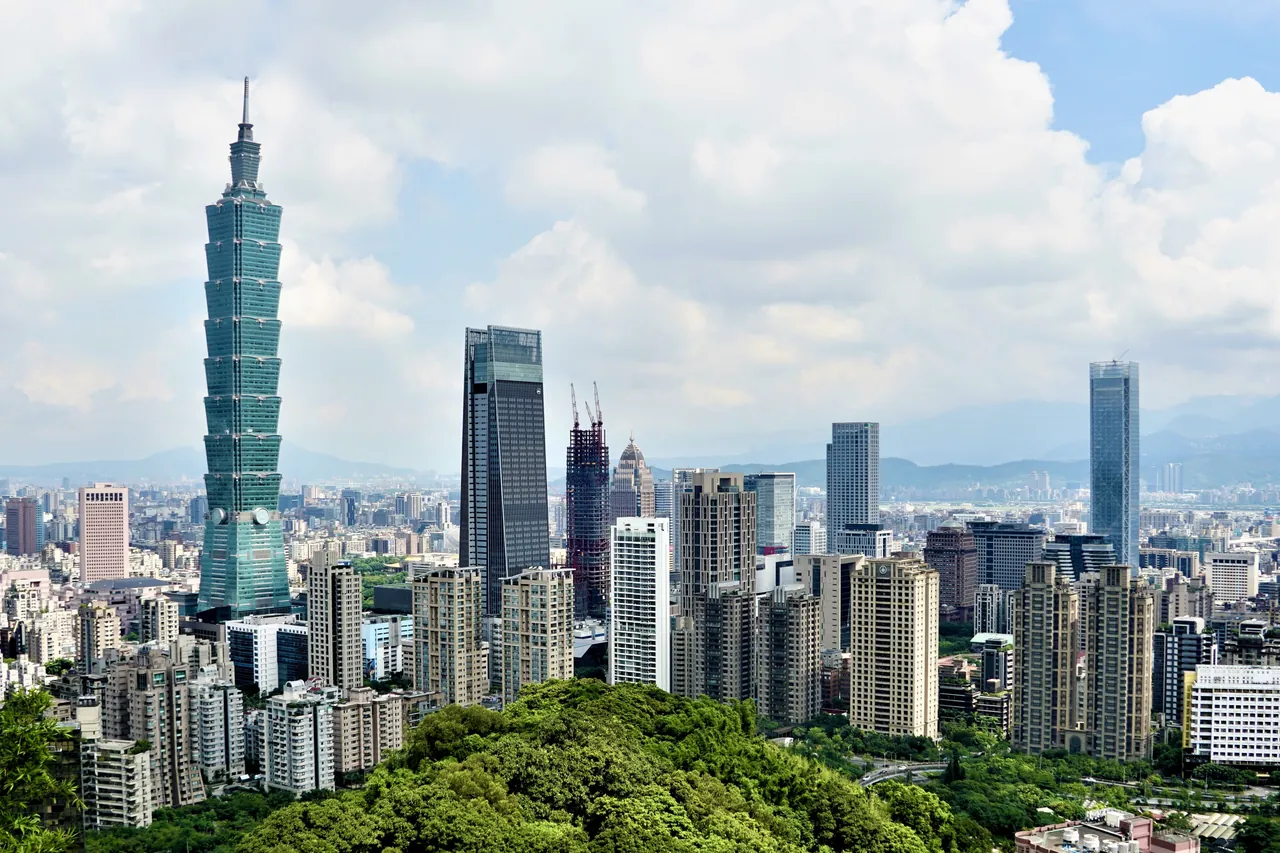
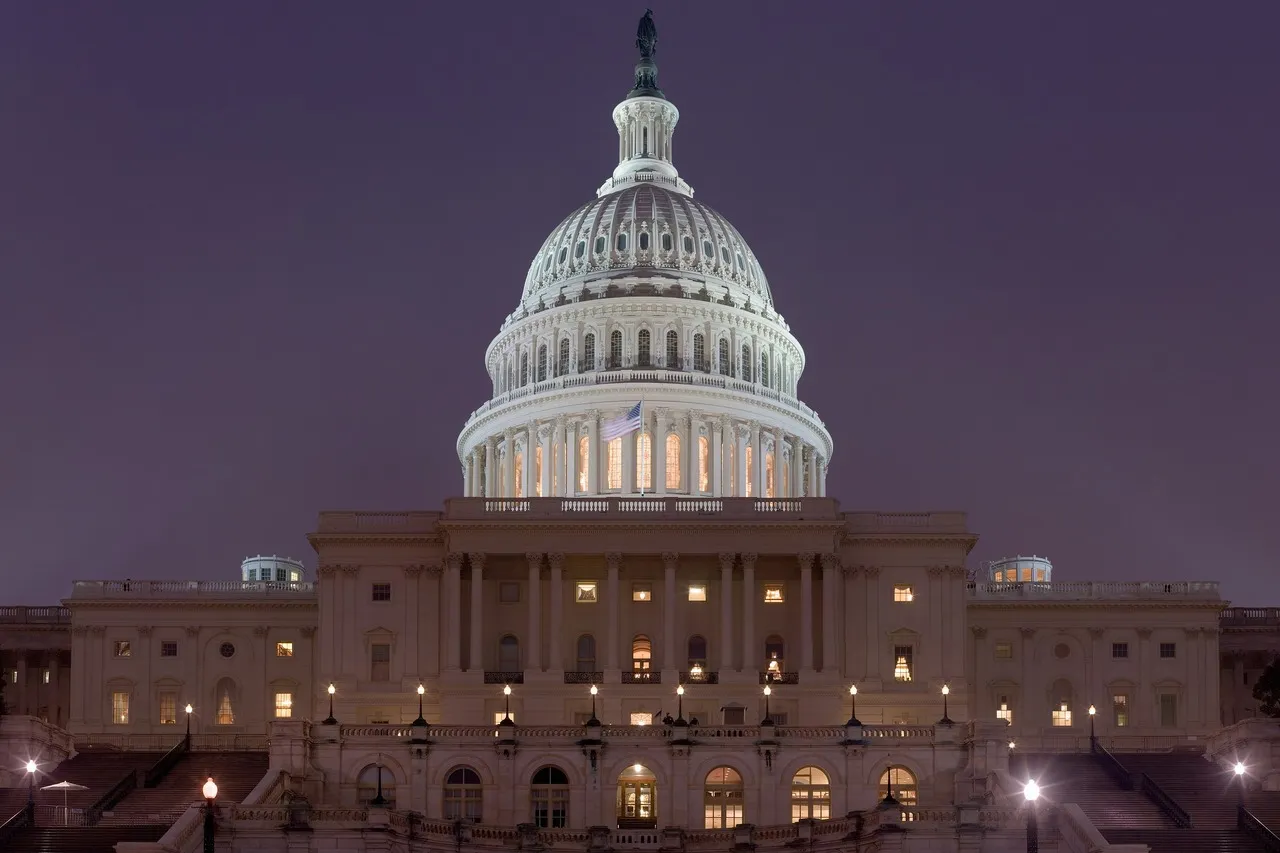
- No embassyAIT has done an embassy's work since 1979
- $151bnGoods traded in 2024
- 1979Taiwan Relations Act signed April 10
- $30.16bnUS arms ordered, not yet delivered (Oct 2026)
- 404,256Taiwan-born people living in the US (2024)
- $265bnTSMC's planned investment in Arizona
Where relations stand today
Checked November 18, 2026President Trump has held a $14 billion arms package for Taiwan since his May 2026 summit in Beijing, while other US arms deliveries continue. A trade agreement signed in February 2026 still awaits approval by Taiwan's legislature.
Recent milestones
- Taiwan received three more F-16V jets in early November, for five of the 66 ordered in 2019. Several congressional staffers said Congress could now push through the held $14 billion arms package, even over a possible veto by Trump, the Council on Foreign Relations reported.
- Taiwan opened its 14th US representative office, in Phoenix, on October 5. When the first new F-16V jets arrived, China's foreign ministry said it "remains firmly opposed to US arms sales to China's Taiwan region."
- A 10% Section 301 tariff on Taiwanese goods took effect on July 24, pending a second US investigation. TSMC announced another $100 billion of US investment on July 27, bringing its Arizona total to $265 billion.
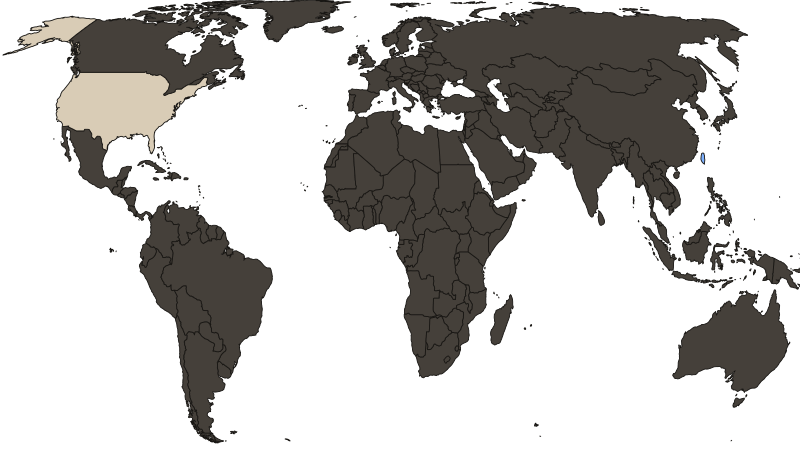 Taiwan
United States
Phoenix (TSMC)
Why are Taiwan and the US so close without official ties?
What ties them
- Arms and security. Taiwan had $30.16 billion of ordered US arms not yet delivered in October 2026. A retired US admiral told Congress in 2025 that about 500 US military personnel train Taiwan's forces.
- Trade and chips. Taiwan sold $112.6 billion of goods to the US in 2024, mostly computers, servers and microchips. TSMC, which earns about 70% of the world's contract chipmaking revenue, plans $265 billion of investment in Arizona.
- Shared democracy. Taiwan held its first direct presidential election in 1996. The 2025 US National Security Strategy called deterring a conflict over Taiwan a priority.
- People and money. About 404,000 people born in Taiwan lived in the US in 2024, and 23,263 students from Taiwan studied in the US in 2024/25. Taiwan held $298.4 billion of US Treasury debt in August 2026.
What divides them
- Arms held for bargaining. President Trump put a $14 billion arms package on hold after his May 2026 summit with Xi Jinping and called it "a very good negotiating chip." Taiwan's defense minister said he was "cautiously optimistic" and that Taiwan had not been notified of a formal pause.
- Tariffs on Taiwan. Trump said Taiwan "stole" the US chip industry. US tariffs on Taiwan went from 20% in August 2025 to 15% under a February 2026 deal and a combined 10% since July 24, 2026, with a second US investigation pending.
- Strategic ambiguity. The Taiwan Relations Act does not commit US forces, and in November 2025 Trump answered a question on defending Taiwan with "You'll find out if it happens." Biden said four times that US forces would defend Taiwan, and each time the White House said policy had not changed.
- Visits restricted. Lai Ching-te has not passed through the continental US as Taiwan's president. In July 2025 the Financial Times reported that the Trump administration had declined a New York stop for him.
How much do Taiwan and the United States trade?
Download CSV Taiwan sells to United States
$113bn
- Computers and servers23%
- Computer parts22%
- Microchips10%
- Cameras and transmitters6%
 United States sells to Taiwan
$38.3bn
- Crude oil19%
- Microchips12%
- Industrial machines9%
- Jet engine parts5%
Taiwan is the United States's #8 trading partner (3% of its goods trade). United States is Taiwan's #2 (16.1%). BACI's figures end in 2024; by the US Census count, US imports from Taiwan rose to $201 billion in 2025 and passed imports from China in January-September 2026. Source: CEPII BACI (version 202601), goods only.
Have Taiwan and the US ever fought a war?
They have never fought each other. The United States and the Republic of China were allies in World War II. The closest event was the 1867 Formosa Expedition. A US Navy landing force fought Paiwan villagers in southern Taiwan after a shipwreck, when Taiwan was under Qing rule. In the 1958 Taiwan Strait crisis, the US Navy escorted Taiwan's supply convoys to Kinmen, and US-supplied Sidewinder missiles scored their first combat kills over the strait.
A short history of Taiwan-US relations
WarTreaty or peaceCrisis
Early contacts · 1867-1945
- 1867Formosa ExpeditionAfter the US bark Rover was wrecked and its crew killed by Paiwan people, US sailors landed in southern Taiwan on June 13. An officer was mortally wounded and the force withdrew.
- 1943Cairo DeclarationRoosevelt, Churchill and Chiang Kai-shek said Taiwan and Penghu would be "restored to the Republic of China." Madame Chiang Kai-shek addressed the US Congress on February 18, the first Chinese national to do so.
Cold War alliance · 1949-1978
- 1950Seventh Fleet to the straitAfter the Korean War began, President Truman ordered the Seventh Fleet on June 27 "to prevent any attack on Formosa." The US embassy had followed the ROC government to Taipei in December 1949.
- 1954Mutual Defense TreatySecretary of State John Foster Dulles and ROC Foreign Minister George Yeh signed the treaty in Washington on December 2. It covered Taiwan and Penghu but not Kinmen or Matsu.
- 1958Second Strait crisisChina shelled Kinmen from August 23. The US Navy escorted ROC supply convoys to within three miles of Kinmen, and US-supplied Sidewinder missiles scored their first combat kills over the strait on September 24.
- 1960Eisenhower visits TaipeiDwight Eisenhower, the only sitting US president to visit Taiwan, arrived in Taipei on June 18 by helicopter from the USS St. Paul. China had fired more than 30,000 shells at Kinmen the day before.
- 1971UN voteOn October 25 the General Assembly voted 76-35 to give China's UN seat to the People's Republic, replacing the Republic of China. The US voted against the resolution.
- 1972Nixon in ChinaDuring President Richard Nixon's visit to China, the US and China issued the Shanghai Communiqué on February 27. The US acknowledged that Chinese on both sides of the Taiwan Strait maintain there is one China and said it did not challenge that position.
Recognition switch and the TRA · 1978-1982
- 1979US recognizes BeijingThe US recognized the People's Republic on January 1 and ended diplomatic ties with Taipei. Ambassador Leonard Unger had learned of the switch at a Christmas party in December 1978 and told President Chiang Ching-kuo shortly after 2 a.m.
- 1979Taiwan Relations ActPresident Carter signed the act on April 10 after it passed the House 339-50 and the Senate 85-4. It requires the US to make defensive arms available to Taiwan but does not commit US forces.
- 1982Six AssurancesAIT Director James Lilley read the Six Assurances to President Chiang Ching-kuo on July 14, on President Reagan's authority. They said the US would not set a date to end arms sales or pressure Taiwan to negotiate with Beijing.
Modern partnership · 1992-2026
- 1996Strait crisisAfter President Lee Teng-hui's June 1995 visit to Cornell, China held missile tests near Taiwan in 1995 and 1996. The US sent two aircraft carrier battle groups in March 1996, the month Lee won Taiwan's first direct presidential election.
- 2022Pelosi visits TaipeiHouse Speaker Nancy Pelosi visited Taipei on August 2-3, the highest-ranking US official in about 25 years. China fired missiles and drilled around Taiwan from August 4 to 7.
- 2023Tsai meets McCarthyTaiwan's President Tsai Ing-wen met House Speaker Kevin McCarthy at the Reagan Library in Simi Valley, California, on April 5. It was the first meeting of a Taiwan president and a House speaker on US soil.
- 2025Record arms packageOn December 17, the US notified Congress of $11.1 billion in arms sales to Taiwan, the largest single package in Taiwan's history. It included 82 HIMARS launchers and 420 ATACMS missiles.
- 2026Trade deal and arms holdTaiwan and the US signed a trade agreement on February 12. After his May summit in Beijing, Trump put a $14 billion arms package on hold.
Treaties between Taiwan and the US
- 1954Mutual Defense TreatyEach side would "act to meet the common danger in accordance with its constitutional processes" if the other's territory in the West Pacific was attacked. It covered Taiwan and Penghu but not Kinmen or Matsu. Either side could end it with one year's notice.Ended January 1, 1980
- 1979Taiwan Relations ActIt is a US law, not a treaty. It requires the US to make defensive arms available to Taiwan and to keep the capacity to resist force or coercion against Taiwan. China says US arms sales violate the three China-US joint communiqués, particularly the August 17, 1982 Communiqué.In force
- 1982Six AssurancesUS policy commitments delivered to Taiwan's president on July 14, 1982. The US would not set a date to end arms sales, consult Beijing on sales, mediate between the two sides, revise the Taiwan Relations Act, change its position on sovereignty over Taiwan, or pressure Taiwan to negotiate with the PRC.US policy since 1982
- 2026Agreement on Reciprocal TradeAIT and TECRO signed it on February 12, 2026. It capped the US tariff on Taiwan at 15% and commits Taiwan to cut 99% of its tariff barriers on US goods. Taiwanese chips get the most favorable treatment under any future US chip tariff. Taiwan's legislature has not approved it.Signed 2026; not yet in force
How well do you know Taiwan and the United States?
10 questions on their wars, treaties, trade and size. About three minutes, no signup.
Orbis teaches the history behind the news
Orbis teaches geopolitics, history, and power in bite-sized lessons, 800+ of them, with flashcards that make it stick.


Taiwan vs United States: how they compare
All rankings →Taiwan
vs
United States
- Population 23M347M The United States has 15 times as many people as Taiwan
- Economy $921bn$30.9tn The United States's economy is 34 times the size of Taiwan's
- GDP per person $39.5k$90.3k People in the United States are 2.3 times as rich on average
- Military spending $18.2bn$954bn The United States spends 52 times as much on its military
- Active troops 170,0001.32M The United States has 7.8 times as many soldiers
- Nuclear warheads None5,042 Taiwan has none
- Life expectancy 80.979.6 People in Taiwan live 1.3 years longer on average
- Area 36,197 km²9.8M km² The United States is 272 times the size of Taiwan
From the Orbis rankings: UN, IMF, SIPRI, Governments, Orbis, FAS. Each tile links to its ranking.
Taiwan
- President
- Lai Ching-te
- Population
- 23.1 million
- Economy
- $921bn, #22 in the world
- Region
- East Asia
United States
- President
- Donald Trump
- Population
- 347.3 million
- Economy
- $30.9tn, #1 in the world
- Region
- North America
Questions about Taiwan and the United States
Does the US have a treaty with Taiwan?
Not a defense treaty. The 1954 Mutual Defense Treaty ended on January 1, 1980, a year after the US recognized Beijing. Since 1979 the relationship rests on the Taiwan Relations Act, a US law that requires the US to make defensive arms available to Taiwan but does not commit American forces to fight. A trade agreement signed on February 12, 2026, between AIT and TECRO still awaits approval by Taiwan's legislature.
Is Taiwan a US ally?
Taiwan is a close US partner but not a treaty ally. The US has had no official diplomatic relations with Taiwan since January 1, 1979. It is Taiwan's main arms supplier, with $30.16 billion of ordered weapons not yet delivered in October 2026. A retired US admiral told Congress in 2025 that about 500 US military personnel train Taiwan's forces, but the US government has not confirmed the number.
What is strategic ambiguity toward Taiwan?
It is the US practice of not saying whether it would use military force to defend Taiwan. The Taiwan Relations Act calls any non-peaceful effort to decide Taiwan's future a matter of "grave concern" but does not commit US forces. Asked in November 2025 whether he would order US forces to defend Taiwan, President Trump said "You'll find out if it happens."
Does the US recognize Taiwan?
No. Since January 1, 1979, the US has recognized the People's Republic of China as "the sole legal Government of China." Under its one-China policy, the US acknowledges, but does not endorse, China's position that Taiwan is part of China. China's one-China principle holds that Taiwan is an inalienable part of China. Taiwan's government says the Republic of China and the People's Republic "are not subordinate to each other."
Would the US defend Taiwan if China attacked?
The US has not said. President Biden said four times that US forces would defend Taiwan; each time the White House said policy had not changed. President Trump said in May 2026 he was "not looking to have somebody go independent" and was not looking "to travel 9,500 miles to fight a war." In a July 2025 poll, 43% of Americans supported sending troops if China invaded.
How many Taiwanese people live in the United States?
The United Nations counted 404,256 people born in Taiwan living in the US in 2024. The Pew Research Center counts about 260,000 people in the US who identify as Taiwanese. About 10,000 to 11,000 US citizens live in Taiwan.
More relations
All relations →- China and TaiwanA civil war that never formally ended, deep trade ties and a sovereignty dispute.Hostile
- Singapore and the United StatesNo defense treaty, but US forces use Singapore's bases and they trade $78 billion a year.Friendly
- China and the United StatesThe Korean War, a dispute over Taiwan, $604 billion in trade and tariffs on both sides.Tense
- Iran and the United StatesAt war, no embassies, almost no trade and 70 years of grievances.At war
- North Korea and the United StatesOne war, no peace treaty, nuclear weapons and three Trump-Kim meetings without a deal.Hostile
- The United States and VenezuelaThe US captured Maduro in 2026, then signed oil and military deals with his successor.Hostile
- Cuba and the United StatesA US embargo since 1962, a fuel cutoff since 2026 and embassies open since 2015.Hostile
- Saudi Arabia and the United StatesPartners since 1945 over oil, arms and Iran, but with no defense treaty.Friendly
- Japan and the United StatesTreaty allies since 1952. One war, $225 billion in trade and 54,000 US troops.Allies
- Canada and the United StatesAllies with the world's longest border, in a trade war since 2025.Allies
- The United Kingdom and the United StatesTwo wars, a "special relationship" and $131 billion in goods trade.Allies
- Israel and the United StatesThe largest US aid relationship, joint wars with Iran and a debate over what comes next.Friendly
- India and the United StatesNo treaty, three defense agreements, $128 billion in trade and a long tariff fight.Friendly
- Mexico and the United StatesOne war, $728 billion in trade, and disputes over cartels, tariffs and migration.Mixed
- Russia and the United StatesNo wars, 80 years of rivalry, expired nuclear treaties and sanctions over Ukraine.Tense
- Panama and the United StatesOne invasion, the canal handover, the dollar and a fight over Hong Kong-run ports.Friendly


