Relations · Superpowers

China-United States relations

TenseSuperpower rivals with a trade truce to January 2027

China and the United States are rivals, not allies. Each treats the other as its main strategic competitor, and their main disputes are Taiwan, technology controls and tariffs. They traded $604 billion in goods in 2024, which makes China the third-largest US trading partner. Their soldiers fought each other in the Korean War from 1950 to 1953. A trade truce has suspended the highest tariffs since October 2025, and Presidents Donald Trump and Xi Jinping have met twice in 2026, with a third meeting set for November 19.
Updated November 19, 2026 · Trade data from CEPII BACI, votes from the UN

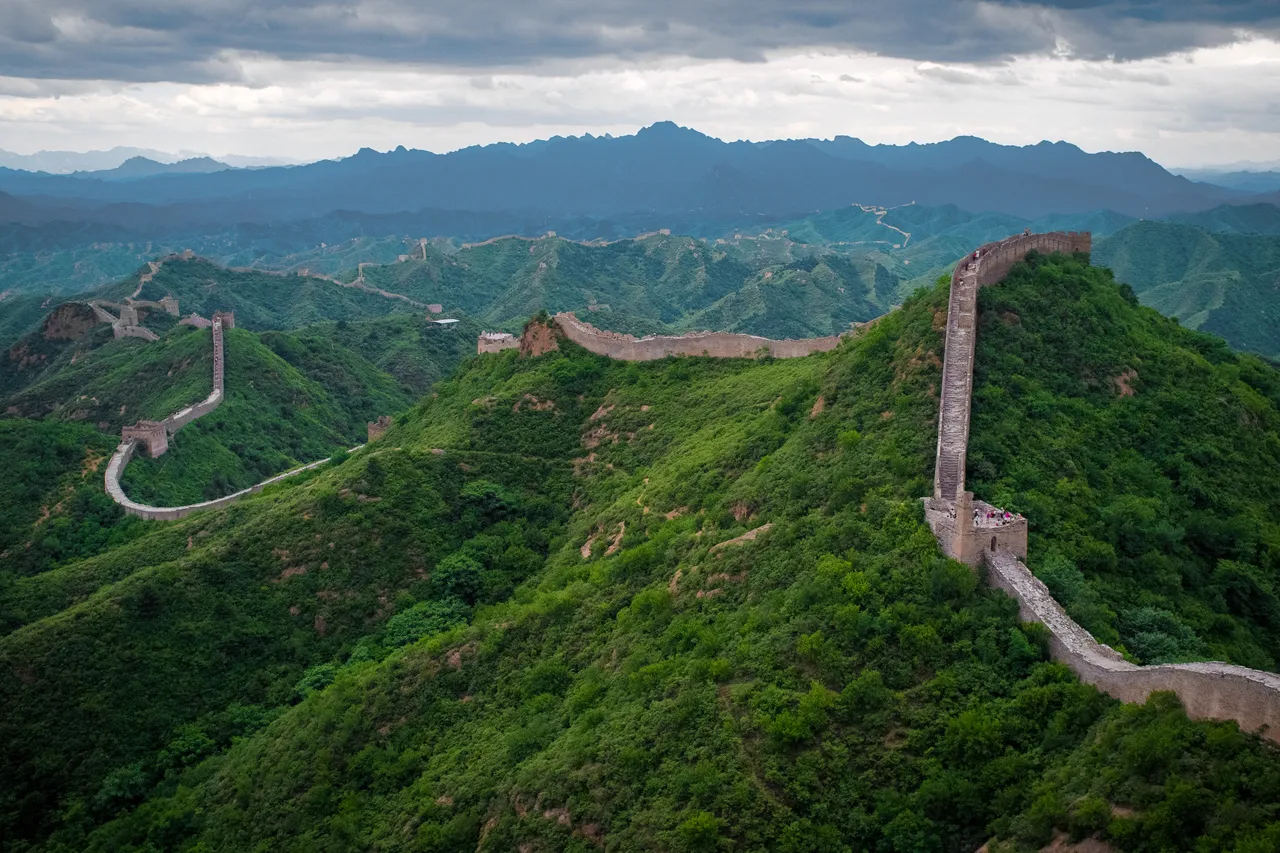
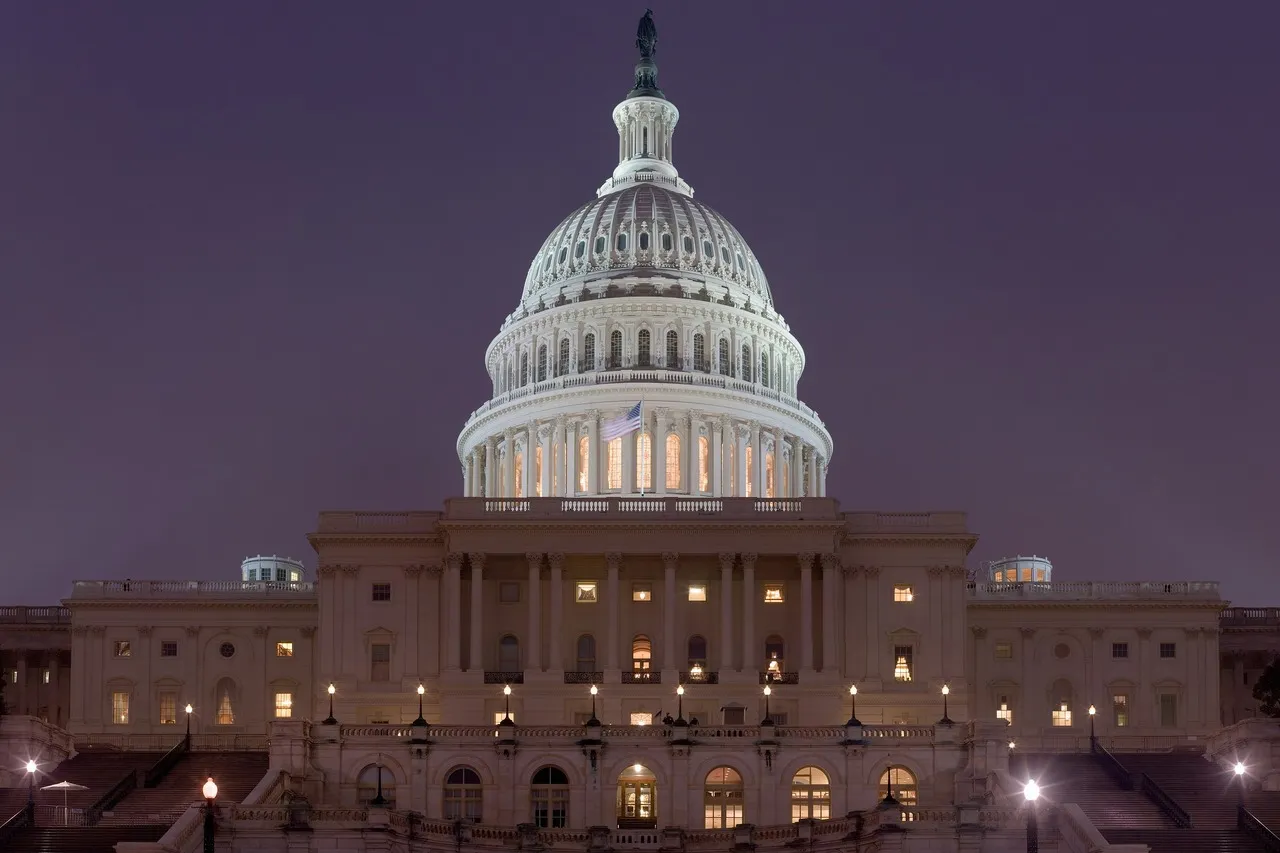
The Great Wall of China winding over green mountain ridges at Jinshanling The US Capitol in Washington, lit up at night
The Great Wall at Jinshanling. Photo: Severin Stalder, Wikimedia Commons, CC BY-SA 3.0 · The US Capitol, Washington. Photo: Diliff, Wikimedia Commons, public domain
  • 1979Diplomatic relations since January 1
  • $604bnGoods traded in 2024
  • 3 conflictsThe last was the Korean War, 1950-53
  • 10%Same UN votes in 2025
  • $563.9bnChinese-held US Treasury debt (Sep 2026)
  • 2,488,775China-born people living in the US (2024)

Where relations stand today

Checked November 18, 2026

President Donald Trump and President Xi Jinping are set to meet on November 19, 2026, at the APEC summit in Shenzhen. A trade truce, extended to January 10, 2027, keeps the highest tariffs suspended, but new US chip controls and China's rare-earth licensing keep the rivalry active.

Latest

  • The APEC summit opened in Shenzhen. Trump and Xi are to hold a bilateral meeting and a working lunch there on November 19, and Xi is to host Trump and Russia's President Vladimir Putin at the first meeting of the three leaders.
  • The US Commerce Department issued a rule requiring licenses to supply AI chips or servers to data centers anywhere in the world if they may provide computing power to companies in China. On November 17, China's foreign ministry called the rule economic coercion, and its commerce ministry threatened countermeasures.
  • China extended for two more months its suspension of the 24% additional tariff on US goods, its October 2025 rare-earth export controls and its measures on 27 US entities. On November 6, the US had extended 178 tariff exclusions and its pause on port fees to January 2027.
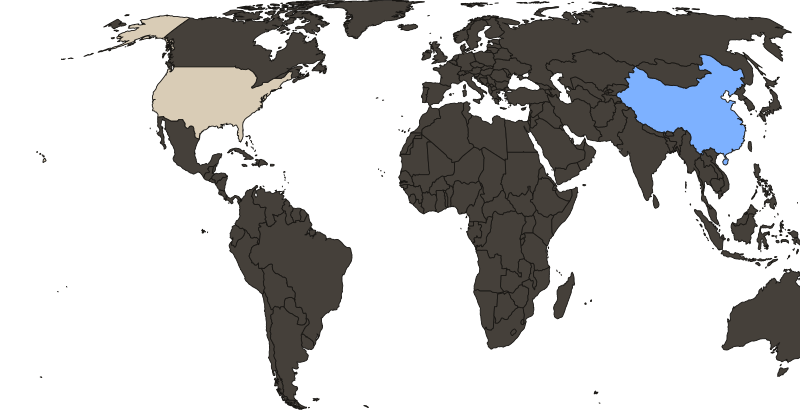
Map of the Northern Hemisphere showing the United States, China and Taiwan China United States Taiwan

Why are the US and China rivals?

What ties them

  • Trade. CEPII BACI counts $604 billion in goods traded in 2024, which makes China the third-largest US trading partner. China sells the US phones, computers and batteries, and the US sells China liquefied gas, soybeans and microchips.
  • Finance. China held $563.9 billion of US Treasury securities in September 2026, third behind Japan and the United Kingdom. Its holdings peaked at $1.3 trillion in November 2013.
  • People. About 2.49 million people born in China lived in the United States in mid-2024. Chinese students in the US numbered 265,919 in 2024/25, the second-largest group after India.
  • Summits. Trump and Xi met in Busan in October 2025, in Beijing in May 2026 and in Washington in September 2026. In Beijing, Xi called for "a constructive China-U.S. relationship of strategic stability."

What divides them

  • Taiwan. China says Taiwan is part of China and calls it "the most important issue in China-U.S. relations." The US says it follows a One China policy: it acknowledges China's position without endorsing it and sells Taiwan defensive arms under the Taiwan Relations Act.
  • Technology and chips. Since 2022 the US has restricted sales of advanced chips and chipmaking tools to China, citing national security. China calls the controls economic coercion, and it threatened countermeasures against a new US rule on AI chips in November 2026.
  • Tariffs. The US charges Section 301 tariffs of 7.5% to 100% on Chinese goods, plus a 12.5% forced-labor tariff since July 2026. China keeps a 10% additional tariff on all US goods, and a truce suspends further measures on both sides until January 10, 2027.
  • Rare earths. China has required licenses for exports of seven rare earths since April 2025 and says the controls protect its national security. A CSIS study found US imports of Chinese rare earths in the first 11 months of the Busan deal were still 75% below their level before the escalation.

How much do China and the United States trade?

Download CSV

China sells to United States

$449bn

  • Phones and radio equipment11%
  • Computers8%
  • Batteries4%
  • Computer parts3%

United States sells to China

$155bn

  • Liquefied gas9%
  • Soybeans8%
  • Microchips7%
  • Cars4%
Goods traded between China and the United States, 1995 to 2024US dollars, both directions, shares of 2024 sales

China is the United States's #3 trading partner (12% of its goods trade). United States is China's #1 (10.5%). BACI reconciles both countries' customs reports, so its figures differ from the US Census Bureau's, which counts $583.6 billion for 2024. Source: CEPII BACI (version 202601), goods only.

Have China and the United States fought a war?

1856

Battle of the Barrier Forts

Sides
US Navy ships against Qing Chinese forts near Canton
Result
The US destroyed the forts. No wider war followed.
Deaths
Seven Americans killed in action. The US Navy estimates 250 to 500 Chinese dead.

1900-1901

Boxer Rebellion

Sides
US troops as part of the Eight-Nation Alliance against Boxer and Qing forces
Result
The alliance relieved the besieged legations in Beijing. The Boxer Protocol set an indemnity of 450 million taels.
Fought over
The Boxer siege of foreign legations in Beijing
Encyclopedia entry →

1950-1953

Korean War

Sides
The Chinese People's Volunteers and North Korea against South Korea and the US-led United Nations Command
Result
The war ended in a stalemate near the 38th parallel. No peace treaty followed the armistice of July 27, 1953.
Deaths
The Pentagon counts 36,574 US deaths in the theater. China confirms 197,653 Chinese dead; outside estimates reach 400,000.
Take the quiz →

A short history of China-US relations

WarTreaty or peaceCrisis

First contacts · 1784-1908

  1. 1784Empress of China sailsThe Empress of China, the first US trading ship to China, left New York on February 22, George Washington's birthday, carrying ginseng for Canton. Its business agent, Samuel Shaw, later became the first US consul in China.
  2. 1844Treaty of WangxiaUS envoy Caleb Cushing signed the first US-China treaty on July 3. It opened five ports to American trade and gave Americans extraterritorial rights in China.
  3. 1882Chinese Exclusion ActPresident Chester Arthur signed a law that suspended Chinese labor immigration for 10 years. Congress kept exclusion in place until December 1943, when it repealed the laws to help China, a wartime ally.
  4. 1908Boxer indemnity scholarshipsCongress used surplus Boxer indemnity money to pay for Chinese students in the US, and the first 47 left in 1909. Tsinghua University grew from their preparatory school, founded in 1911.

Break and war · 1949-1958

  1. 1949The breakThe People's Republic was proclaimed on October 1. The US did not recognize the new government, and its embassy followed the Nationalist government to Taipei on December 19.
  2. 1950Korean WarChinese troops crossed the Yalu River in secret on October 19 and attacked US-led UN forces on October 25. The war lasted until the armistice of July 27, 1953, with no peace treaty.
  3. 1954-58Taiwan Strait crisesChina shelled the Taiwan-held island of Kinmen, also called Jinmen or Quemoy, in 1954 and again in 1958. The US signed a defense treaty with the Republic of China, and the Eisenhower administration considered using nuclear weapons.

Opening · 1971-2001

  1. 1971Ping-pong diplomacyAt the world championships in Nagoya, Chinese table tennis champion Zhuang Zedong gave American player Glenn Cowan a silk-screen picture, and the US team visited China in April. In July, Henry Kissinger flew secretly to Beijing from Pakistan, where his cover story was a stomach ache.
  2. 1972Nixon visits ChinaPresident Richard Nixon visited China from February 21 to 28 and met Mao Zedong. In the Shanghai Communiqué, the US acknowledged that Chinese on both sides of the Taiwan Strait maintain there is one China.
  3. 1979Full diplomatic relationsThe US recognized the People's Republic on January 1 and ended diplomatic ties with Taipei. On February 2, during his US visit, Deng Xiaoping put on a cowboy hat at a rodeo in Simonton, Texas.
  4. 1989Tiananmen sanctionsAfter the Tiananmen crackdown, President George H.W. Bush suspended arms sales and military exchanges on June 5. Congress wrote the sanctions into law in 1990.
  5. 1999Belgrade embassy bombingOn May 7, during NATO's air war against Yugoslavia, US bombs hit the Chinese embassy in Belgrade and killed three Chinese journalists. The US called it a mistake caused by outdated maps; Chinese state media called it a deliberate act.
  6. 2001China joins the WTOChina became the WTO's 143rd member on December 11, 2001. President Bill Clinton had signed permanent normal trade relations into law on October 10, 2000, ending the annual congressional review of China's trade status.

Rivalry · 2018-2026

  1. 2018Trade war beginsOn July 6, the US imposed 25% tariffs on $34 billion of Chinese goods, and China retaliated the same day. By April 2025, US tariffs on Chinese goods had peaked at 145% and China's at 125%.
  2. 2025Busan truceTrump and Xi met at an air base next to Busan airport on October 30 and agreed on a one-year trade truce. Trump said he would rate the meeting "a 12" on a scale of zero to 10.
  3. 2026Two state visitsTrump made a state visit to Beijing on May 14 and 15, the first visit to China by a US president since 2017. Xi made a state visit to Washington from September 23 to 25, and the truce was extended to January 10, 2027.

Treaties between the US and China

  • 1844Treaty of WangxiaThe first US-China treaty, signed by Caleb Cushing on July 3, 1844. It opened five ports, gave Americans extraterritorial rights and included a most-favored-nation clause.Superseded
  • 1972Shanghai CommuniquéIssued by Nixon and Premier Zhou Enlai on February 27, 1972. The US acknowledged that Chinese on both sides of the Taiwan Strait maintain there is one China, and it did not challenge that position.In force
  • 1979Joint Communiqué on Diplomatic RelationsReleased December 15, 1978, effective January 1, 1979. The US recognized the PRC as the sole legal government of China and acknowledged the Chinese position that Taiwan is part of China.In force
  • 1979Taiwan Relations Act (US law)Signed by President Jimmy Carter on April 10, 1979. It commits the US to provide Taiwan arms of a defensive character. It is a US law, not a treaty with China, and China says US arms sales under it violate the communiqués.In force
  • 1982August 17 CommuniquéThe US said it does not seek a long-term policy of arms sales to Taiwan and intends to reduce them gradually. China says continued US arms sales violate it. In the Six Assurances of July 1982, the US told Taiwan it would not set a date to end arms sales.In force
  • 2025Busan trade arrangementAgreed by Trump and Xi on October 30, 2025. The US cut its fentanyl tariff from 20% to 10%, China suspended its October 2025 rare-earth rules, and both sides paused port fees. The suspensions now run to January 10, 2027.Until January 10, 2027

Both are in

G20

Only China

BRICSSCORCEP

Only United States

NATOG7QuadAUKUSFive EyesOECD

How often do China and the United States vote the same way at the UN?

In 2025, China and the United States voted the same way on 10% of the recorded votes in the UN General Assembly. China and the United States voted the same way on 10% of recorded General Assembly votes in 2025, down from 31% in 2024. Compare their votes →

Abstaining while the other votes yes or no counts as half agreement. Data: UN Digital Library voting data, 1991 to 2025.

How well do you know China and the United States?

10 questions on their wars, treaties, trade and size. About three minutes, no signup.

China vs United States: how they compare

All rankings →

Questions about China and the United States

Are the US and China allies or enemies?

The United States and China are rivals, neither allies nor enemies. They have had full diplomatic relations since January 1, 1979, and their presidents met twice in 2026, with a third meeting set for November 19. Each side treats the other as its main strategic competitor, and they compete over Taiwan, technology and trade. A trade truce agreed in October 2025 suspends the highest tariffs until January 10, 2027.

Have the US and China ever been at war?

Yes. The Chinese People's Volunteers fought US-led UN forces in the Korean War from October 1950 to the armistice of July 27, 1953. The Pentagon counts 36,574 US deaths in the theater; China confirms 197,653 Chinese dead, and outside estimates reach 400,000. Earlier, US Navy ships destroyed Qing forts near Canton in 1856, and US troops fought in the Boxer Rebellion of 1900 to 1901.

How much do the US and China trade?

CEPII BACI counts $603.8 billion in goods traded in 2024: China sold the US $448.8 billion and the US sold China $155.1 billion. The US Census Bureau counts $583.6 billion for 2024 and $414.6 billion for 2025. By Census figures, China's share of US goods imports fell from 13.5% in 2024 to 9.0% in 2025.

Will the US defend Taiwan from China?

The US has not said. The Taiwan Relations Act of 1979 commits the US to provide Taiwan arms of a defensive character, not to fight for it. China says Taiwan is part of China and calls it the most important issue in the relationship. In May 2026, Trump put a roughly $14 billion Taiwan arms package on hold and called it "a very good negotiating chip"; it was still on hold in November.

What is the US-China trade truce?

Trump and Xi agreed on the truce in Busan, South Korea on October 30, 2025. It cut the US fentanyl tariff from 20% to 10%, paused China's October 2025 rare-earth export controls and suspended both sides' port fees. In February 2026 the US Supreme Court struck down the fentanyl tariff, and in September 2026 the truce was extended to January 10, 2027.

How much US debt does China own?

China held $563.9 billion of US Treasury securities in September 2026, making it the third-largest foreign holder behind Japan and the United Kingdom. Its holdings peaked at $1.3 trillion in November 2013. China held $699.7 billion a year earlier, in August 2025, so the trend is downward.

More relations

All relations →
7 days free cancel anytime
Get the app