Relations · Europe

Germany-Russia relations

TenseOnly embassies left after the consulate closures

Germany and Russia are not allies, and relations are tense. Germany's 2023 security strategy calls Russia the most significant threat to peace and security in the Euro-Atlantic area, and Germany is Ukraine's largest European donor. In September 2026 both countries closed each other's last consulates after Germany blamed Russia for an explosive drone at Leipzig/Halle Airport, which Russia denies. They fought each other in both world wars. Russia supplied 55% of Germany's gas imports in 2021, but no gas has come through Nord Stream since August 2022.

Updated November 18, 2026 · Trade data from CEPII BACI, votes from the UN

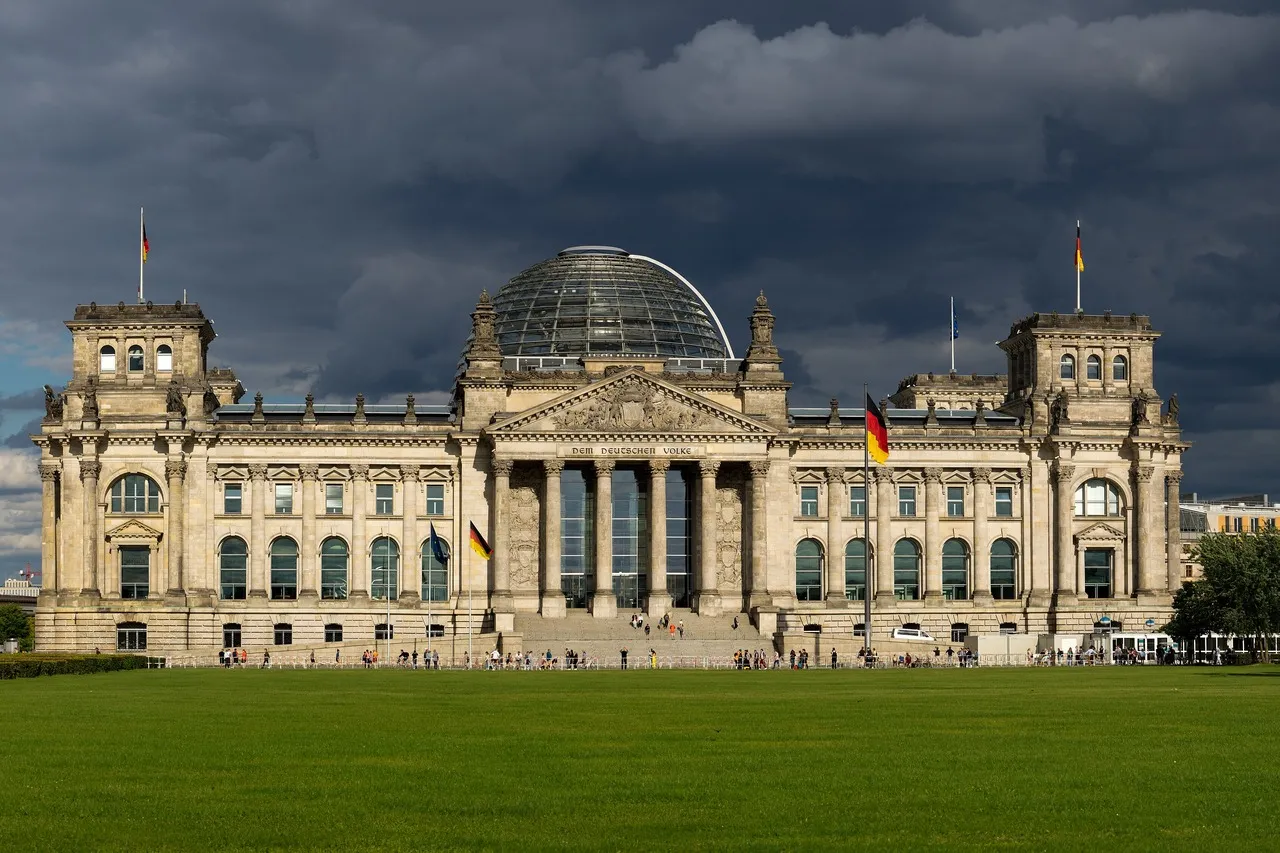
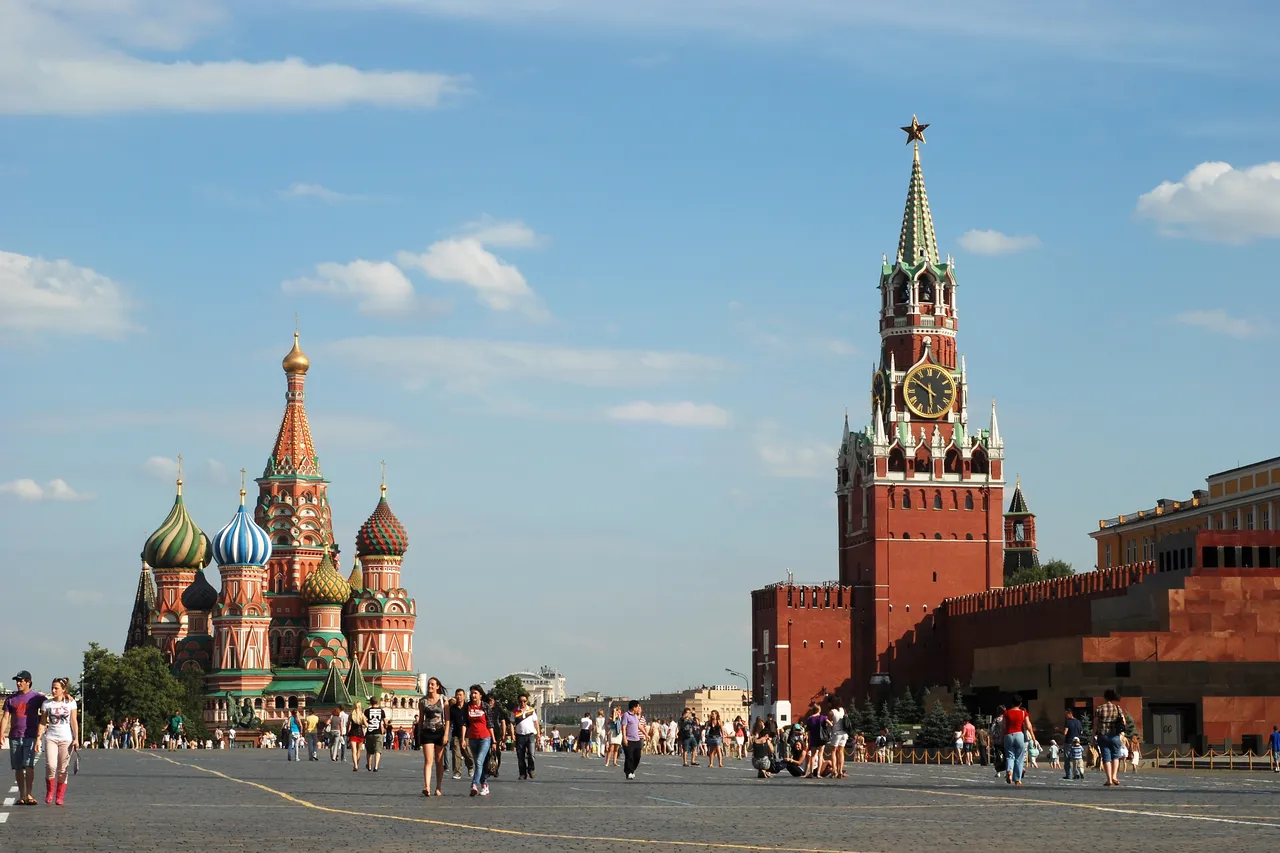
The Reichstag building in Berlin, seat of the Bundestag, under a dark sky Red Square in Moscow with St. Basil's Cathedral and the Kremlin's Spasskaya Tower
The Reichstag, Berlin. Photo: Jörg Braukmann, Wikimedia Commons, CC BY-SA 4.0 · Red Square, Moscow. Photo: Alvesgaspar, Wikimedia Commons, CC BY-SA 3.0
  • 1955Diplomatic relations since (West Germany)
  • $10.3bnGoods traded in 2024
  • 2 warsSince 1871: World War I and World War II
  • 73%Same UN votes in 2025
  • 1,137,448Born in Russia, living in Germany (UN, 2024)
  • 0 consulatesBoth sides closed their last in September 2026

Where relations stand today

Checked November 18, 2026

Diplomatic relations continue, but only the two embassies remain since both sides closed their last consulates in September 2026. Germany treats Russia as its main security threat and backs Ukraine, and Russia accuses Germany of wanting "war again."

Latest

  • On November 5, Russia's Foreign Ministry said Russia is ready to discuss resuming energy supplies to Germany. On November 16, Foreign Minister Johann Wadephul said Germany is not a neutral mediator in the war and firmly backs Ukraine.
  • A former Ukrainian officer, Serhii K., went on trial at the Hanseatic Higher Regional Court in Hamburg on October 14, charged with leading the 2022 Nord Stream sabotage. He denies the charges, and Russia says it expects a "just verdict" naming those who ordered the attack.
  • Germany blamed Russia for an explosive drone found at Leipzig/Halle Airport and closed Russia's last consulate, in Bonn. President Vladimir Putin called the evidence "planted," and Russia closed Germany's last consulate, in St. Petersburg, and all Goethe-Institut branches.
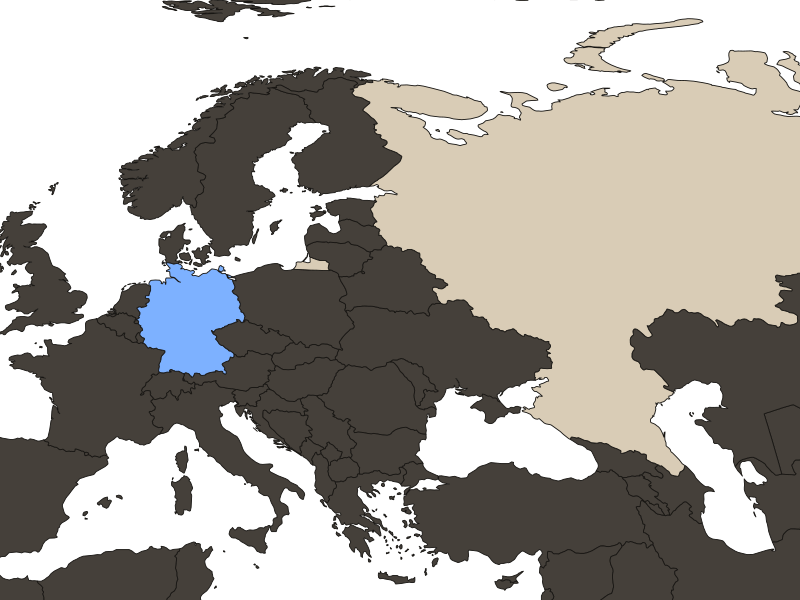
Map of Europe showing Germany and western Russia, with Leipzig/Halle Airport and the Nord Stream blast sites near Bornholm marked Germany Russia Leipzig/Halle Airport Nord Stream blasts

Why are Germany and Russia at odds?

What ties them

  • Trade. Germany and Russia traded $75.8 billion of goods in 2012 and $10.3 billion in 2024. Germany still sells medicines to Russia, and Russia still sells titanium, palladium and fish to Germany.
  • Energy history. Ruhrgas agreed to buy Soviet gas in a deal signed in Essen in 1970, and by 2021 Russia supplied 55% of Germany's gas imports. Russia's Foreign Ministry said in November 2026 that Russia is ready to discuss resuming supplies.
  • Russian Germans. About 2.5 million people of Russian-German origin, including family members, live in Germany. UN figures count 1,137,448 people born in Russia living in Germany in 2024, many of them ethnic German resettlers.

What divides them

  • The war in Ukraine. Germany calls it "Russia's war of aggression against Ukraine, contrary to international law" and gave Ukraine 9 billion euros of military aid in 2025, more than any other donor. Russia calls it a "special military operation," and Foreign Minister Sergei Lavrov has accused Germany of wanting "war again."
  • Hybrid attacks. Germany blames Russia for the Leipzig airport drone, a cyberattack on its air traffic control company and election disinformation. Russia denies every case, and President Vladimir Putin called the Leipzig evidence "planted."
  • Nord Stream sabotage. German prosecutors charge a former Ukrainian officer with leading the 2022 attack, and Ukraine denies any role. Russia rejects that account, has pointed to the United States and Britain, and calls the blasts "the largest terrorist attack of modern times."
  • Rearmament. Germany spent $113.6 billion on its military in 2025 and began stationing a permanent armored brigade in Lithuania, its first brigade based abroad. In April 2026 Russia's Defense Ministry listed three German drone makers that supply Ukraine as possible targets.

How much do Germany and Russia trade?

Download CSV

Germany sells to Russia

$8.1bn

  • Medicines21%
  • Blood products and vaccines8%
  • Medical instruments7%
  • Combine harvesters3%

Russia sells to Germany

$2.2bn

  • Titanium18%
  • Fish fillets10%
  • Palladium8%
  • Nickel7%
Goods traded between Germany and Russia, 1995 to 2024US dollars, both directions, shares of 2024 sales

Germany is Russia's #9 trading partner (1.8% of its goods trade). Russia is Germany's #41 (0.4%). In the first half of 2021 oil and gas made up 61.5% of Germany's imports from Russia (Destatis), but by 2024 German medicines and Russian metals led the trade. Source: CEPII BACI (version 202601), goods only.

Have Germany and Russia fought a war?

1914-1918

World War I (Eastern Front)

Sides
Germany and Austria-Hungary against the Russian Empire, which was allied with France and Britain
Result
Germany won at Tannenberg in 1914 and forced Soviet Russia out of the war in March 1918, but lost the war that November
Fought over
East Prussia, Poland, the Baltics and Ukraine
Take the quiz →

1941-1945

World War II (Eastern Front)

Sides
Germany with Romania, Hungary, Finland and others against the Soviet Union
Result
Soviet victory. The Red Army took Berlin, and Germany surrendered on May 8, 1945
Deaths
About 27 million Soviet citizens (Russia's official figure) and over 3.8 million German soldiers on the Eastern Front (German Historical Museum)
Take the quiz →

A short history of Germany-Russia relations

WarTreaty or peaceCrisis

Early encounters · 1242-1763

  1. 1242Battle on the IcePrince Alexander Nevsky's army from Novgorod defeated the Teutonic Knights on frozen Lake Peipus. Novgorod was a Russian city-state, and the knights were a German-led crusader order, not a German state.
  2. 1762Peter III saves PrussiaEmpress Elizabeth died in January 1762, and her heir Peter III, born in Kiel, admired Frederick the Great. He made peace with Prussia on May 5 and returned all the land Russia had occupied in the Seven Years' War.
  3. 1762A German princess takes Russia's throneSophie of Anhalt-Zerbst, born in Stettin, Prussia, overthrew her husband Peter III in 1762 and ruled as Catherine II. In 1763 she invited foreign settlers, and Germans founded colonies on the Volga.

Alliance and rivalry · 1812-1917

  1. 1813Russia and Prussia ally against NapoleonPrussian General Ludwig Yorck took his corps out of Napoleon's army at Tauroggen in December 1812, without his king's permission. Prussia and Russia became allies in February 1813 and helped beat Napoleon at Leipzig that October.
  2. 1887Bismarck's Reinsurance TreatyChancellor Otto von Bismarck's government signed a secret treaty with Russia: each country would usually stay neutral if the other fought a third great power. Germany let it lapse in 1890, and Russia turned to France.
  3. 1917Germany sends Lenin homeGermany let Vladimir Lenin travel by sealed train from Zurich across Germany, and he reached Petrograd's Finland Station on April 16, 1917. Seven months later his Bolsheviks seized power.

Cooperation, pact and war · 1922-1955

  1. 1922Treaty of RapalloForeign Minister Walther Rathenau and Soviet commissar Georgy Chicherin signed a treaty opening diplomatic relations. Secret military cooperation followed, with German schools for pilots at Lipetsk, tank crews near Kazan and chemical weapons at Volsk, despite the Versailles Treaty's ban.
  2. 1939Molotov-Ribbentrop PactNazi Germany and the Soviet Union signed a non-aggression pact on August 23, 1939. A secret protocol divided Eastern Europe between them.
  3. 1941Operation BarbarossaAbout three million German soldiers in about 150 divisions invaded the Soviet Union on June 22, 1941. Within six months they advanced over 1,200 km east, and forward units came within about 20 to 35 km of the Kremlin.
  4. 1955Adenauer in MoscowChancellor Konrad Adenauer visited Moscow in September 1955 and agreed to diplomatic relations. In return the Soviet Union released about 10,000 German prisoners of war still held ten years after the war ended.

Cold War to crisis · 1961-2026

  1. 1961The Berlin WallEast Germany built the Berlin Wall on August 13, 1961, with Soviet backing. It stood for 28 years.
  2. 1970Gas-for-pipes and the Moscow TreatyIn February 1970 Ruhrgas agreed to buy Soviet gas, and the Soviet Union ordered steel pipes from Mannesmann on credit from German banks. In August Chancellor Willy Brandt and Premier Alexei Kosygin signed the Moscow Treaty, which renounced force and recognized Europe's existing borders.
  3. 1990Reunification and the Two Plus FourIn July 1990 Helmut Kohl and Mikhail Gorbachev agreed that united Germany could stay in NATO. The Two Plus Four Treaty followed on September 12, and Germany reunified on October 3, 1990.
  4. 1994Last Russian troops leave GermanyAbout 340,000 soldiers and 210,000 civilian staff left Germany in the withdrawal, which ended on August 31, 1994. At the farewell in Berlin, Boris Yeltsin took the baton from the conductor of the Berlin police orchestra and conducted it himself.
  5. 2022ZeitenwendeGermany halted Nord Stream 2's certification on February 22, 2022, two days before Russia's full-scale invasion of Ukraine. Chancellor Olaf Scholz declared a Zeitenwende, a turning point, and announced a 100-billion-euro military fund.
  6. 2026Leipzig drone and consulate closuresIn August 2026 police found a drone carrying explosives next to a Ukrainian cargo plane at Leipzig/Halle Airport. Germany blamed Russia, Russia denied it, and by September 18 both countries had closed their last consulates in the other.

Treaties between Germany and Russia

  • 1887Reinsurance TreatyA secret treaty signed by Herbert von Bismarck, the chancellor's son, and Count Paul Shuvalov. Each country would usually stay neutral if the other fought a third great power. Germany let it lapse in June 1890.Lapsed 1890
  • 1918Treaty of Brest-LitovskSoviet Russia left World War I and gave up Poland, the Baltics, Ukraine and Finland. It was annulled after Germany's defeat in November 1918.Annulled 1918
  • 1922Treaty of RapalloGermany and Soviet Russia opened diplomatic relations and dropped mutual claims. Secret military cooperation followed, letting the German army train in Russia despite the Versailles ban.Ended
  • 1939Molotov-Ribbentrop PactA non-aggression pact with a secret protocol dividing Eastern Europe. Germany broke it by invading the Soviet Union on June 22, 1941.Broken 1941
  • 1970Moscow TreatySigned by Willy Brandt and Alexei Kosygin in the Kremlin's Catherine Hall on August 12, 1970. Both sides renounced force and recognized Europe's existing borders, including the Oder-Neisse line. It still applies between Germany and Russia.In force
  • 1990Two Plus Four TreatySigned in Moscow by the two German states and the four wartime Allies, including the Soviet Union. It ended Four-Power rights over Germany, capped its army at 370,000 and bars foreign troops and nuclear weapons from former East Germany.In force

Both are in

G20

Only Germany

NATOEUG7EurozoneSchengenOECD

Only Russia

BRICSSCOOPEC+CSTOCISEAEU

How often do Germany and Russia vote the same way at the UN?

In 2025, Germany and Russia voted the same way on 73% of the recorded votes in the UN General Assembly. Agreement in the UN General Assembly fell from 86% in 1995 to 48% in 2023, then rose to 73% in 2025. Compare their votes →

Abstaining while the other votes yes or no counts as half agreement. Data: UN Digital Library voting data, 1991 to 2025.

How well do you know Germany and Russia?

10 questions on their wars, treaties, trade and size. About three minutes, no signup.

Germany vs Russia: how they compare

All rankings →

Questions about Germany and Russia

Are Germany and Russia enemies?

They are not at war, but Germany treats Russia as its main security threat. Chancellor Friedrich Merz said in October 2026 that Russia is "on the way to destabilize the entire political order" of Europe. Russia's Foreign Minister Sergei Lavrov accused Germany of wanting "war again." Both ambassadors remain in post, but since September 2026 neither country has a consulate in the other.

Could Germany have beaten Russia in World War II?

Most historians say no. The Soviet Union had about 195 million people to Germany's 80 million and moved over 1,500 factories east of the Urals, out-producing Germany by late 1942. Only about 20% of the German army's transport was motorized. Many historians argue that even taking Moscow would not have ended the war.

How far did Germany get into Russia?

Within about six months of June 22, 1941, the German army advanced over 1,200 km east to the approaches of Moscow, according to the German Historical Museum. Forward units came within about 20 to 35 km of the Kremlin in early December 1941, before the Soviet counteroffensive began on December 5. In 1942 German forces pushed to Stalingrad on the Volga and toward the Caucasus oil fields.

How many German soldiers invaded Russia?

About three million German soldiers in about 150 divisions crossed the Soviet border on June 22, 1941. With Romanian, Finnish and other allied troops, the force was more than 3.5 million, according to the US Holocaust Memorial Museum. It was the largest invasion in history.

Why did Germany stop buying Russian gas?

Russia supplied 55% of Germany's gas imports in 2021. After Russia's 2022 invasion of Ukraine, Germany halted Nord Stream 2's certification, Gazprom cut Nord Stream 1 flows, and no gas has come through since August 31, 2022. Explosions destroyed three of the four Nord Stream lines on September 26, 2022. Norway supplied 44% of Germany's gas imports in 2025.

How many Russians live in Germany?

UN figures for 2024 count 1,137,448 people born in Russia living in Germany, and 60,040 people born in Germany living in Russia. Many in Germany are Russian Germans. About 2.5 million people of Russian-German origin, including family members, live in Germany. In 1941 the Soviet government deported at least 400,000 Volga Germans to Siberia and Kazakhstan.

More relations

All relations →
7 days free cancel anytime
Get the app