Alliance · Union
Arab League
League of Arab States
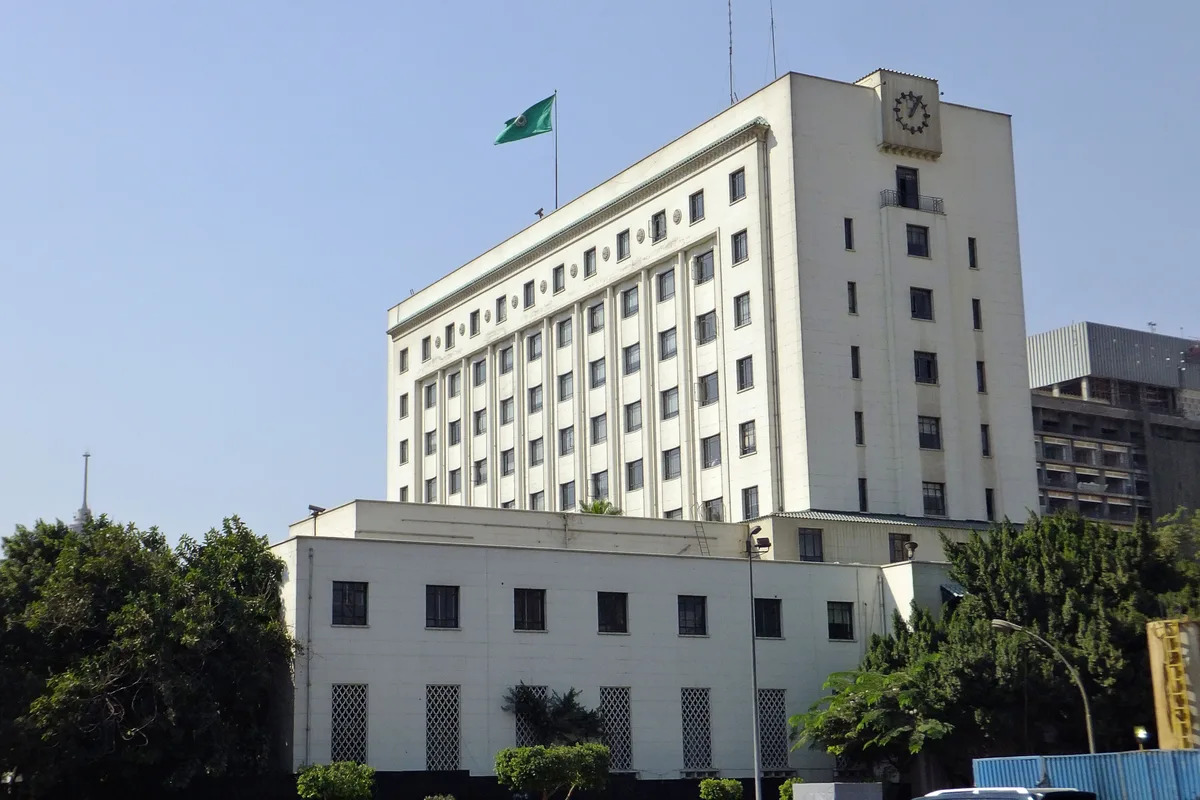
The League of Arab States has 22 members, from Morocco to the Gulf. Seven states founded it in Cairo in 1945. Six signed the pact on March 22, and Yemen signed on May 5. Palestine joined through the PLO in 1976. Comoros was the last to join, in 1993. No member has ever left. The League's charter says decisions taken by majority bind only the states that vote for them. Its headquarters are in Cairo, and Nabil Fahmy of Egypt has been secretary-general since July 2026.
- Members
- 22
- Comoros joined last, in 1993
- Founded
- 1945
- In Cairo, on March 22
- Headquarters
- Cairo
- In Tunis from 1979 to 1990
- Observers
- 7
- Eritrea, Brazil, Armenia, Chad, Venezuela, India, Greece
- Secretary-General
 Nabil Fahmy
- Since July 2026
Which countries are in the Arab League?
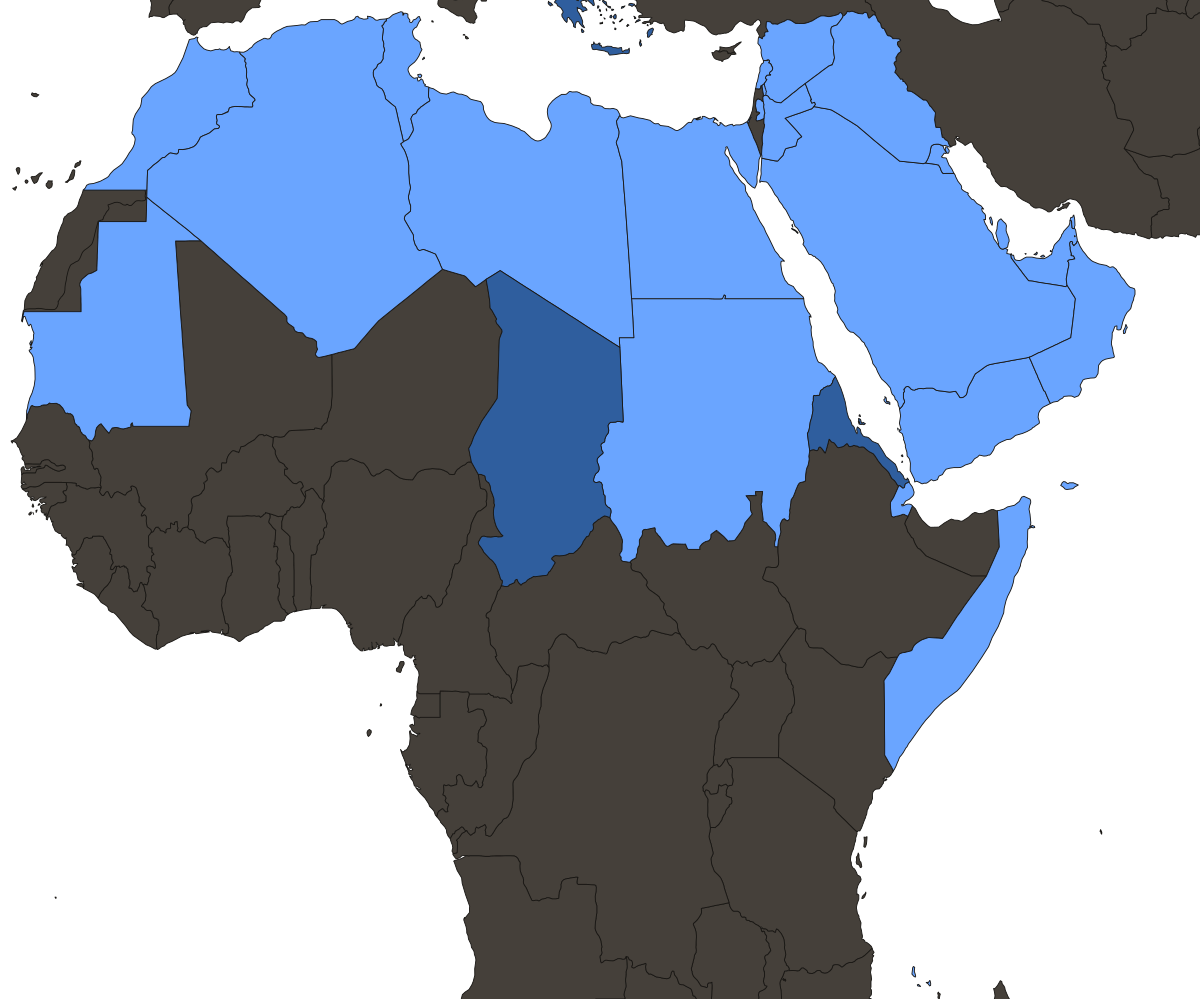
The Arab League has 22 members, all Arab states. Seven founded it in Cairo in 1945: Egypt, Iraq, Jordan (then Transjordan), Lebanon, Saudi Arabia, Syria and Yemen. Six signed the pact on March 22, 1945. Yemen signed on May 5. The League grew as countries gained independence. Libya joined in 1953, Sudan in 1956, Morocco and Tunisia in 1958, Kuwait in 1961 and Algeria in 1962. Bahrain, Qatar, Oman and the United Arab Emirates joined in 1971. Palestine was admitted through the PLO in 1976.
Comoros was the last to join, on November 20, 1993. No member has ever left. The charter allows a member to withdraw with one year's notice, but none has done so. Seven states hold observer status: Eritrea, Brazil, Armenia, Chad, Venezuela, India and Greece. Observers may speak and advise but cannot vote.
- Member
- Observer
- Not a member
How the Arab League grew
Countries that joined in each year, and the total after


 19457 founders
 19538
 19569

 195811
 196112
 196213


 197117
 197318
 197419
 197620
 197721
 199322
All 22 members and the year each joined
Who has been suspended from the Arab League?
Three members have been suspended. Egypt was suspended in March 1979 after signing a peace treaty with Israel. The headquarters moved from Cairo to Tunis. Egypt returned in May 1989 and the headquarters moved back to Cairo in September 1990. Libya was suspended in February 2011 during its civil war and restored in August 2011.
Syria was suspended on November 16, 2011. It was reinstated on May 7, 2023, and President Assad attended the Jeddah summit that month. After Assad's fall in December 2024, the League said its 2023 decision still applied. Syria's new authorities hold the seat without any new vote.
Suspensions
- 1979Egypt suspended after the peace treaty with Israel. Headquarters move to Tunis
- 1989Egypt readmitted. Headquarters return to Cairo in 1990
- 2011Libya suspended in February during the civil war, restored in August
- 2011Syria suspended on November 16
- 2013The Syrian opposition coalition given Syria's seat
- 2023Syria reinstated on May 7. Assad attends the Jeddah summit
- 2024Assad falls. The League says its 2023 decision still applies
What does the Arab League do?
The League is a forum where member states coordinate their policies. Under Article 7 of its charter, decisions taken by majority bind only the states that vote for them. Only unanimous decisions bind all members. The charter says every independent Arab state has the right to join. Members must respect each other's form of government.
The Joint Defence and Economic Co-operation Treaty, signed in 1950 and in force since August 1952, says an attack on one member is an attack on all. In March 2026 the League cited it when condemning Iran's missile and drone attacks on Gulf states, Jordan and Iraq. The Greater Arab Free Trade Area started in 1998 and had largely eliminated tariffs by 2005. It has 18 members.
Establish normal relations with Israel in the context of this comprehensive peace.
Adopted at the Cairo emergency summit on March 4, 2025. Presented as an alternative to President Trump's proposal. Phases of about $20 billion to 2027 and about $30 billion to 2030.
Held on May 17, 2025. Only about five heads of state attended. Iraq pledged $20 million each to rebuild Gaza and Lebanon.
Resolution 9241, adopted on March 8, 2026, condemned Iran's attacks on Qatar, Saudi Arabia, Oman, Kuwait, the UAE, Bahrain, Jordan and Iraq, and cited the 1950 treaty.
Who leads the Arab League?
Nabil Fahmy of Egypt became secretary-general on July 1, 2026, for a five-year term. He was nominated unanimously by foreign ministers in March 2026 and confirmed in Amman in June 2026. He served as Egypt's ambassador to the United States from 1999 to 2008 and was the founding dean of the American University in Cairo's School of Global Affairs and Public Policy. He holds a degree in physics and mathematics.
His father, Ismail Fahmy, was Egypt's foreign minister under Sadat and resigned in protest at Sadat's 1977 trip to Jerusalem. Every secretary-general has been Egyptian except Chedli Klibi of Tunisia, who served from 1979 to 1990, the years the headquarters were in Tunis.
-
Egypt2026-
Nabil Fahmy. Ambassador to the United States 1999 to 2008. Founding dean of the American University in Cairo's School of Global Affairs and Public Policy.
-
Egypt2016-2026
Ahmed Aboul Gheit. Served two terms. Did not seek a third.
-
Egypt2011-2016
Nabil Elaraby.
-
Egypt2001-2011
Amr Moussa.
-
Egypt1991-2001
Esmat Abdel-Meguid.
-
Tunisia1979-1990
Chedli Klibi of Tunisia. The only non-Egyptian to hold the post. Served while the headquarters were in Tunis.
-
Egypt1972-1979
Mahmoud Riad.
-
Egypt1952-1972
Abdul Khalek Hassouna.
-
Egypt1945-1952
Abdul Rahman Azzam. The first secretary-general.
Which countries are observers?
Seven states hold observer status. Eritrea was the first, in January 2003. Armenia joined in 2004, Chad in April 2005, India in April 2007 and Greece in 2021. Brazil and Venezuela attended as observers in 2003 and 2006. Chad applied for full membership on March 25, 2014. That application is still pending.
South Sudan applied for observer status in March 2018, with Sudan's support. South Sudan's government has said it does not meet the requirements for full membership. No decision has been announced.
-
 EritreaObserver since 2003
The first observer state. Arabic is one of Eritrea's working languages, alongside Tigrinya and English.
-
 ArmeniaObserver since 2004
Armenia has a historic diaspora across the Arab world, especially in Lebanon, Syria and Egypt.
-
 ChadObserver since 2005
Chad applied for full membership in March 2014. The application is still pending.
-
 IndiaObserver since 2007
India has millions of workers in Arab League member states, especially in the Gulf.
-
 GreeceObserver since 2021
Greece signed a memorandum with the League in Cairo in July 2021.
Is it in the Arab League?
Short answers for the countries people ask about most.

Is Iran in the Arab League?
NoIran is not an Arab state and has no status in the League. In 2026 the League condemned Iranian missile and drone attacks on member states.

Is Turkey in the Arab League?
NoTurkey has no observer status, despite some websites claiming otherwise.

Is Israel in the Arab League?
NoIsrael has never had any status. The League was founded in 1945, three years before Israel was established.
Is Somalia in the Arab League?
YesA member since February 14, 1974.
Is Djibouti in the Arab League?
YesA member since September 4, 1977.
Is Comoros in the Arab League?
YesA member since November 20, 1993. The most recent country to join.
Is Mauritania in the Arab League?
YesA member since November 26, 1973.
Is Eritrea in the Arab League?
ObserverAn observer since January 2003. Not a full member.
Is Chad in the Arab League?
ObserverAn observer since April 2005. Chad applied for full membership in March 2014. The application is still pending.

Is South Sudan in the Arab League?
NoSouth Sudan applied for observer status in March 2018. No decision has been announced.