
General Assembly vote · December 12, 2023
How countries voted on a Gaza ceasefire at the UN in December 2023
On December 12, 2023, the General Assembly demanded an immediate humanitarian ceasefire in Gaza and the immediate and unconditional release of all hostages, by 153 votes to 10 with 23 abstentions. The vote came four days after the United States vetoed a similar demand in the Security Council. Yes votes rose from 120 in October 2023, when the Assembly called for a "humanitarian truce."
- Yes
- 153
- No
- 10
- Abstained
- 23
- Didn't vote
- 7
Adopted: it needed two-thirds of the countries voting yes or no, and got 94%. Abstentions count for neither side.
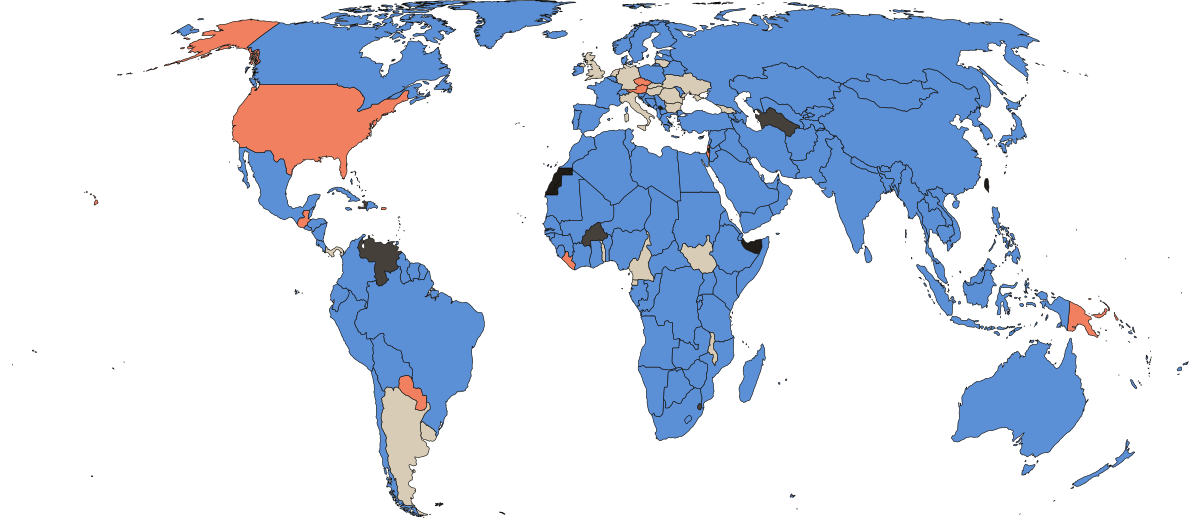
- Yes
- No
- Abstained
- Didn't vote
- Not a UN member
Which countries voted against?
The United States and Israel were joined by Austria, Czechia, Guatemala, Paraguay, Liberia and three Pacific island states. Czechia said the text failed to condemn Hamas. Austria said it failed to name the group holding the hostages.
 United States
 Austria
 Czechia
 Guatemala
 Israel
 Liberia
 Micronesia
 Nauru
Nauru Papua New Guinea
 Paraguay
How did the big powers vote?
What was happening when the Assembly voted?
About 1,200 people were killed in Israel in the Hamas-led attack of October 7, 2023, according to Israeli figures. More than 130 hostages were still held in Gaza, according to Israel. During a week-long truce that ended on December 1, more than 100 hostages were freed and 240 Palestinian prisoners were released, according to AFP tallies.
By December 12, more than 18,000 people had been killed in Gaza in Israel's military offensive, according to the Gaza Health Ministry. Nearly 1.9 million, over 85% of Gaza's population, had been displaced, according to UNRWA, the UN agency for Palestinian refugees.
On December 6, Secretary-General Antonio Guterres invoked Article 99 of the UN Charter for the first time in decades. Article 99 lets the Secretary-General formally warn the Security Council of a threat to peace. On December 8, the United States vetoed a Security Council ceasefire draft, with 13 members voting yes and the United Kingdom abstaining. At a campaign fundraiser hours before the Assembly vote, President Joe Biden said Israel had "most of the world supporting them" but "they're starting to lose that support by indiscriminate bombing that takes place."
- A humanitarian truceOct 2023 120 yes14 no45 abstained
- An immediate humanitarian ceasefire (this vote)Dec 2023 153 yes10 no23 abstained
- A permanent ceasefireDec 2024 158 yes9 no13 abstained
- A permanent ceasefire and an end to the blockadeJun 2025 149 yes12 no19 abstained
Why did most countries vote yes?
Palestine's ambassador Riyad Mansour called it "a historic day in terms of the powerful message that was sent." In the Assembly on December 15, he recalled the Al Jazeera journalist Wael Al-Dahdouh, who had said "It does not matter" after losing his family. Mansour answered: "It does matter... Enough is enough." He added: "The General Assembly spoke, the world spoke, 153 countries spoke. Shame on those who refuse to stand against atrocities."
Canada's ambassador Bob Rae said "The ongoing humanitarian crisis weighed heavily in Canada's decision." The prime ministers of Australia, Canada and New Zealand said "The price of defeating Hamas cannot be the continuous suffering of all Palestinian civilians" and that a "sustainable ceasefire" "cannot be one-sided." Canada and Australia switched from abstaining to yes. Japan and India also switched to yes. All four also voted for the two amendments that would have named Hamas, both of which failed.
Why did the United States and Israel vote no?
The United States ambassador Linda Thomas-Greenfield said the United States agreed with the text on the humanitarian situation, civilian protection and hostage releases. But she said the United States "cannot support a one-sided Security Council or General Assembly resolution that ignores so much of what we all stand for." She added: "So long as Hamas remains driven by its murderous ideology, any ceasefire right now would be temporary at best and dangerous at worst."
Israel's ambassador Gilad Erdan said the draft "does not even mention Hamas at all" and that "A ceasefire means one thing and one thing only: ensuring the survival of Hamas."
Austria's amendment would have said the hostages were "held by Hamas and other groups." It failed with 61 votes for, 89 against and 20 abstentions. The United States amendment would have added that the Assembly "unequivocally rejects and condemns the heinous terrorist attacks by Hamas that took place in Israel starting 7 October 2023 and the taking of hostages." It failed with 62 for, 84 against and 25 abstentions.
Why did the UK, Germany and Italy abstain?
Germany's ambassador Antje Leendertse said "we cannot endorse a text that does not condemn the heinous acts of terror." Italy's ambassador Maurizio Massari cited the missing "unequivocal condemnation" of Hamas's attacks. The United Kingdom gave no explanation of vote. Three days later, the United Kingdom's ambassador James Kariuki said the United Kingdom supported calls for a "sustainable ceasefire, whereby hostages are released, more aid can get in and Hamas stops firing rockets into Israel."
Argentina, which had voted yes in October under the previous government, abstained. Its ambassador said Argentina could not support a text without "an express repudiation" of Hamas's attacks.
What happened next?
On March 25, 2024, Security Council resolution 2728 became the Council's first ceasefire demand of this war. A ceasefire took effect in January 2025 but collapsed in March 2025. A ceasefire under US President Donald Trump's plan took effect on October 10, 2025. All living hostages were freed on October 13, 2025. The remains of the last hostage, Ran Gvili, were returned in January 2026.
The Gaza Health Ministry says at least 74,370 people have been killed since October 2023, including 1,481 since the ceasefire.
How did each region vote?
Asia voted yes almost as one, with 28 of 29 countries in favor, and so did the Middle East, with 13 of 14. Israel was the only no vote in either region. Europe and Oceania were the most divided: Europe had 34 yes, two no and 11 abstentions among 47 members, and Oceania had 7 yes, 3 no and 3 abstentions among 14.
- Europe47 countries 34 yes2 no11 abstained
- Americas35 countries 27 yes3 no3 abstained
- Asia29 countries 28 yes0 no0 abstained
- Oceania14 countries 7 yes3 no3 abstained
- Middle East14 countries 13 yes1 no0 abstained
- Africa54 countries 44 yes1 no6 abstained
What did the resolution say?
- The preamble noted the Secretary-General's letter of December 6 (under Article 99 of the UN Charter) and a letter from UNRWA chief Philippe Lazzarini, expressed "grave concern over the catastrophic humanitarian situation in the Gaza Strip," and said "Palestinian and Israeli civilian populations must be protected."
- It demanded an immediate humanitarian ceasefire.
- It repeated the demand that all parties comply with international law, "notably with regard to the protection of civilians."
- It demanded "the immediate and unconditional release of all hostages, as well as ensuring humanitarian access."
- The text had four numbered paragraphs, the last of them procedural. It named neither Hamas, nor October 7, nor Israel as a party to the fighting. "Israeli" appears only in the preamble's line on civilians. The October resolution "calls for" a truce, but this one "demands" a ceasefire. Like other General Assembly resolutions of this kind, it is not legally binding.
How did every country vote?
| Country | Region | Vote |
|---|---|---|
 Afghanistan Afghanistan | Asia | Yes |
 Albania Albania | Europe | Yes |
 Algeria Algeria | Africa | Yes |
 Andorra Andorra | Europe | Yes |
 Angola Angola | Africa | Yes |
 Antigua and Barbuda Antigua and Barbuda | Americas | Yes |
 Argentina Argentina | Americas | Abstained |
 Armenia Armenia | Europe | Yes |
 Australia Australia | Oceania | Yes |
| Austria | Europe | No |
 Azerbaijan Azerbaijan | Europe | Yes |
 Bahamas Bahamas | Americas | Yes |
 Bahrain Bahrain | Middle East | Yes |
 Bangladesh Bangladesh | Asia | Yes |
 Barbados Barbados | Americas | Yes |
 Belarus Belarus | Europe | Yes |
 Belgium Belgium | Europe | Yes |
 Belize Belize | Americas | Yes |
 Benin Benin | Africa | Yes |
 Bhutan Bhutan | Asia | Yes |
 Bolivia Bolivia | Americas | Yes |
 Bosnia and Herzegovina Bosnia and Herzegovina | Europe | Yes |
 Botswana Botswana | Africa | Yes |
 Brazil Brazil | Americas | Yes |
 Brunei Brunei | Asia | Yes |
 Bulgaria Bulgaria | Europe | Abstained |
 Burkina Faso Burkina Faso | Africa | Didn't vote |
 Burundi Burundi | Africa | Yes |
 Cambodia Cambodia | Asia | Yes |
 Cameroon Cameroon | Africa | Abstained |
 Canada Canada | Americas | Yes |
 Cape Verde Cape Verde | Africa | Abstained |
 Central African Republic Central African Republic | Africa | Yes |
 Chad Chad | Africa | Yes |
 Chile Chile | Americas | Yes |
 China China | Asia | Yes |
 Colombia Colombia | Americas | Yes |
 Comoros Comoros | Africa | Yes |
 Costa Rica Costa Rica | Americas | Yes |
 Côte d'Ivoire Côte d'Ivoire | Africa | Yes |
 Croatia Croatia | Europe | Yes |
 Cuba Cuba | Americas | Yes |
 Cyprus Cyprus | Europe | Yes |
| Czechia | Europe | No |
 Denmark Denmark | Europe | Yes |
 Djibouti Djibouti | Africa | Yes |
 Dominica Dominica | Americas | Yes |
 Dominican Republic Dominican Republic | Americas | Yes |
 DR Congo DR Congo | Africa | Yes |
 Ecuador Ecuador | Americas | Yes |
 Egypt Egypt | Africa | Yes |
 El Salvador El Salvador | Americas | Yes |
 Equatorial Guinea Equatorial Guinea | Africa | Abstained |
 Eritrea Eritrea | Africa | Yes |
 Estonia Estonia | Europe | Yes |
 Eswatini Eswatini | Africa | Didn't vote |
 Ethiopia Ethiopia | Africa | Yes |
 Fiji Fiji | Oceania | Yes |
 Finland Finland | Europe | Yes |
 France France | Europe | Yes |
 Gabon Gabon | Africa | Yes |
 Gambia Gambia | Africa | Yes |
 Georgia Georgia | Europe | Abstained |
 Germany Germany | Europe | Abstained |
 Ghana Ghana | Africa | Yes |
 Greece Greece | Europe | Yes |
 Grenada Grenada | Americas | Yes |
| Guatemala | Americas | No |
 Guinea Guinea | Africa | Yes |
 Guinea-Bissau Guinea-Bissau | Africa | Yes |
 Guyana Guyana | Americas | Yes |
 Haiti Haiti | Americas | Didn't vote |
 Honduras Honduras | Americas | Yes |
 Hungary Hungary | Europe | Abstained |
 Iceland Iceland | Europe | Yes |
 India India | Asia | Yes |
 Indonesia Indonesia | Asia | Yes |
 Iran Iran | Middle East | Yes |
 Iraq Iraq | Middle East | Yes |
 Ireland Ireland | Europe | Yes |
| Israel | Middle East | No |
 Italy Italy | Europe | Abstained |
 Jamaica Jamaica | Americas | Yes |
 Japan Japan | Asia | Yes |
 Jordan Jordan | Middle East | Yes |
 Kazakhstan Kazakhstan | Asia | Yes |
 Kenya Kenya | Africa | Yes |
 Kiribati Kiribati | Oceania | Didn't vote |
 Kuwait Kuwait | Middle East | Yes |
 Kyrgyzstan Kyrgyzstan | Asia | Yes |
 Laos Laos | Asia | Yes |
 Latvia Latvia | Europe | Yes |
 Lebanon Lebanon | Middle East | Yes |
 Lesotho Lesotho | Africa | Yes |
| Liberia | Africa | No |
 Libya Libya | Africa | Yes |
 Liechtenstein Liechtenstein | Europe | Yes |
 Lithuania Lithuania | Europe | Abstained |
 Luxembourg Luxembourg | Europe | Yes |
 Madagascar Madagascar | Africa | Yes |
 Malawi Malawi | Africa | Abstained |
 Malaysia Malaysia | Asia | Yes |
 Maldives Maldives | Asia | Yes |
 Mali Mali | Africa | Yes |
 Malta Malta | Europe | Yes |
 Marshall Islands Marshall Islands | Oceania | Abstained |
 Mauritania Mauritania | Africa | Yes |
 Mauritius Mauritius | Africa | Yes |
 Mexico Mexico | Americas | Yes |
| Micronesia | Oceania | No |
 Moldova Moldova | Europe | Yes |
 Monaco Monaco | Europe | Yes |
 Mongolia Mongolia | Asia | Yes |
 Montenegro Montenegro | Europe | Yes |
 Morocco Morocco | Africa | Yes |
 Mozambique Mozambique | Africa | Yes |
 Myanmar Myanmar | Asia | Yes |
 Namibia Namibia | Africa | Yes |
| Nauru | Oceania | No |
 Nepal Nepal | Asia | Yes |
 Netherlands Netherlands | Europe | Abstained |
 New Zealand New Zealand | Oceania | Yes |
 Nicaragua Nicaragua | Americas | Yes |
 Niger Niger | Africa | Yes |
 Nigeria Nigeria | Africa | Yes |
 North Korea North Korea | Asia | Yes |
 North Macedonia North Macedonia | Europe | Yes |
 Norway Norway | Europe | Yes |
 Oman Oman | Middle East | Yes |
 Pakistan Pakistan | Asia | Yes |
 Palau Palau | Oceania | Abstained |
 Panama Panama | Americas | Abstained |
| Papua New Guinea | Oceania | No |
| Paraguay | Americas | No |
 Peru Peru | Americas | Yes |
 Philippines Philippines | Asia | Yes |
 Poland Poland | Europe | Yes |
 Portugal Portugal | Europe | Yes |
 Qatar Qatar | Middle East | Yes |
 Republic of the Congo Republic of the Congo | Africa | Yes |
 Romania Romania | Europe | Abstained |
 Russia Russia | Europe | Yes |
 Rwanda Rwanda | Africa | Yes |
 Saint Kitts and Nevis Saint Kitts and Nevis | Americas | Yes |
 Saint Lucia Saint Lucia | Americas | Yes |
 Saint Vincent and the Grenadines Saint Vincent and the Grenadines | Americas | Yes |
 Samoa Samoa | Oceania | Yes |
 San Marino San Marino | Europe | Yes |
 São Tomé and Príncipe São Tomé and Príncipe | Africa | Didn't vote |
 Saudi Arabia Saudi Arabia | Middle East | Yes |
 Senegal Senegal | Africa | Yes |
 Serbia Serbia | Europe | Yes |
 Seychelles Seychelles | Africa | Yes |
 Sierra Leone Sierra Leone | Africa | Yes |
 Singapore Singapore | Asia | Yes |
 Slovakia Slovakia | Europe | Abstained |
 Slovenia Slovenia | Europe | Yes |
 Solomon Islands Solomon Islands | Oceania | Yes |
 Somalia Somalia | Africa | Yes |
 South Africa South Africa | Africa | Yes |
 South Korea South Korea | Asia | Yes |
 South Sudan South Sudan | Africa | Abstained |
 Spain Spain | Europe | Yes |
 Sri Lanka Sri Lanka | Asia | Yes |
 Sudan Sudan | Africa | Yes |
 Suriname Suriname | Americas | Yes |
 Sweden Sweden | Europe | Yes |
 Switzerland Switzerland | Europe | Yes |
 Syria Syria | Middle East | Yes |
 Tajikistan Tajikistan | Asia | Yes |
 Tanzania Tanzania | Africa | Yes |
 Thailand Thailand | Asia | Yes |
 Timor-Leste Timor-Leste | Asia | Yes |
 Togo Togo | Africa | Abstained |
 Tonga Tonga | Oceania | Abstained |
 Trinidad and Tobago Trinidad and Tobago | Americas | Yes |
 Tunisia Tunisia | Africa | Yes |
 Turkey Turkey | Middle East | Yes |
 Turkmenistan Turkmenistan | Asia | Didn't vote |
 Tuvalu Tuvalu | Oceania | Yes |
 Uganda Uganda | Africa | Yes |
 Ukraine Ukraine | Europe | Abstained |
 United Arab Emirates United Arab Emirates | Middle East | Yes |
 United Kingdom United Kingdom | Europe | Abstained |
| United States | Americas | No |
 Uruguay Uruguay | Americas | Abstained |
 Uzbekistan Uzbekistan | Asia | Yes |
 Vanuatu Vanuatu | Oceania | Yes |
 Venezuela Venezuela | Americas | Didn't vote |
 Vietnam Vietnam | Asia | Yes |
 Yemen Yemen | Middle East | Yes |
 Zambia Zambia | Africa | Yes |
 Zimbabwe Zimbabwe | Africa | Yes |