
General Assembly vote · December 1, 2025
How countries voted on the treaty banning nuclear weapons in 2025
The General Assembly votes each year on a resolution on the Treaty on the Prohibition of Nuclear Weapons. The most recent plenary vote took place on December 1, 2025. It passed 119 to 45, with 12 abstentions. All nine nuclear-armed states voted no. The 2026 text passed the First Committee on October 27, 2026, with the plenary vote due in December 2026. The treaty entered into force on January 22, 2021, and has 75 states parties as of November 2026. The resolution is non-binding.
- Yes
- 119
- No
- 45
- Abstained
- 12
- Didn't vote
- 17
Adopted: it needed more yes votes than no votes, and abstentions count for neither side.
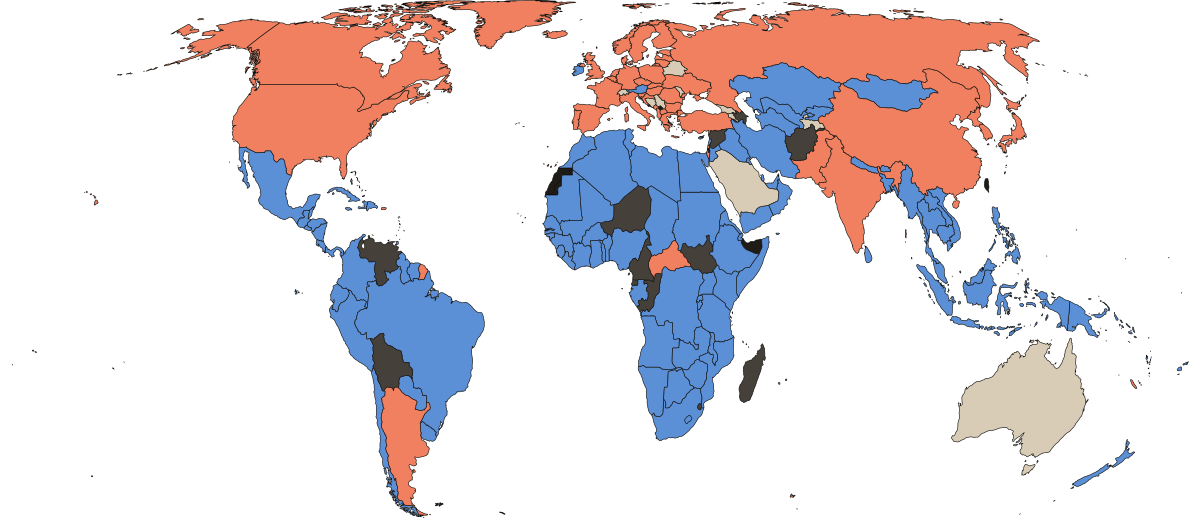
- Yes
- No
- Abstained
- Didn't vote
- Not a UN member
Which countries voted against?
The 45 countries that voted no included all nine nuclear-armed states: the United States, Russia, China, the United Kingdom, France, India, Pakistan, North Korea and Israel. All 32 NATO members also voted no, among them Germany, Canada and Turkey. Japan and South Korea, both US allies, voted no as well. NATO's North Atlantic Council said in December 2020 that "the NPT remains the only credible path to nuclear disarmament." France, the United Kingdom and the United States said in July 2017 that the treaty does not address "the security concerns that continue to make nuclear deterrence necessary."
 United States
 Albania
 Argentina
 Belgium
 Bulgaria
 Canada
 Central African Republic
 China
 Croatia
 Czechia
 Denmark
 Estonia
 Finland
 France
 Germany
 Greece
 Hungary
 Iceland
 India
 Israel
 Italy
 Japan
 Latvia
 Lithuania
 Luxembourg
 Micronesia
 Monaco
 Montenegro
 Netherlands
 North Korea
 North Macedonia
 Norway
 Pakistan
 Poland
 Portugal
 Romania
 Russia
 Slovakia
 Slovenia
 South Korea
 Spain
 Sweden
 Turkey
 Ukraine
 United Kingdom
How did the big powers vote?
How did the treaty banning nuclear weapons come about?
A series of conferences on the humanitarian consequences of nuclear weapons built support for a ban. Norway hosted the first in Oslo in March 2013. Mexico hosted the second in Nayarit in February 2014. Mexico's Deputy Foreign Minister Juan Manuel Gómez Robledo chaired it. His chair's summary said: "It is time to take action... Nayarit is a point of no return." About 158 states attended the third in Vienna in December 2014.
In December 2016 the General Assembly voted 113 to 35, with 13 abstentions, to convene a conference to negotiate a treaty. Austria had introduced the draft for Austria, Brazil, Ireland, Mexico, Nigeria and South Africa. A United States "non-paper" urged NATO allies to vote no and "not to merely abstain." Ambassador Elayne Whyte Gómez of Costa Rica presided over the 2017 conference in New York. On July 7, 2017, it adopted the treaty by 122 to 1, with 1 abstention. The Netherlands voted no. Singapore abstained.
The International Campaign to Abolish Nuclear Weapons (ICAN) won the 2017 Nobel Peace Prize. In the Nobel lecture on December 10, 2017, Hiroshima survivor Setsuko Thurlow said: "I was just 13 years old when the United States dropped the first atomic bomb, on my city Hiroshima... 'Don't give up! Keep pushing! See the light? Crawl towards it.'" Honduras deposited the 50th ratification on October 24, 2020. The treaty entered into force on January 22, 2021. The first annual resolution passed 126 to 41, with 16 abstentions, in December 2018. Support peaked at 130 votes in 2020. It was 119 in 2025.
- Yes
- No
- Abstained
- Didn't vote
Why do the nuclear powers and their allies vote no, and what do supporters say?
On July 7, 2017, France, the United Kingdom and the United States said in a joint statement: "We do not intend to sign, ratify or ever become party to it." They said accession "is incompatible with the policy of nuclear deterrence". On September 20, 2017, NATO's North Atlantic Council said a treaty "that will not engage any state actually possessing nuclear weapons will not be effective, will not reduce nuclear arsenals". On October 24, 2018, the five permanent Security Council members said: "We will not support, sign or ratify this Treaty." China told the First Committee in 2025 that "the nuclear disarmament process cannot be divorced from the realities of international security". Japan said in 2025 that "engagement with nuclear weapons states is necessary."
Austria, introducing the 2016 mandate, said "a legal instrument that prohibits nuclear weapons will be a solid foundation on which to build additional instruments." South Africa told the First Committee on October 28, 2026, that "the Treaty is fully complementary to the Treaty on the Non-Proliferation of Nuclear Weapons" and "advances implementation of Article VI of the NPT." South Africa added: "Deciding not to be party to an instrument should not provide entitlement to determine or admonish other States for exercising their rights in this regard." Cuba said in 2025: "Each new state that joins the TPNW contributes in a practical way to the de-legitimization of nuclear weapons".
In 2025, all nine nuclear-armed states and all 32 NATO members voted no.
Abstained→No5
Yes→Abstained4
 Marshall Islands
 Saudi Arabia
 Singapore
 Tajikistan
No→Yes1
 Andorra
Unchanged: 93 yes both times, 3 abstained both times, 31 no both times. Countries that didn't vote on one of the two, or weren't members yet, are left out.
Which countries have joined the treaty, and which ones observe its meetings?
As of November 12, 2026, the treaty has 96 signatories and 75 states parties. Recent ratifications include Indonesia, Sierra Leone and the Solomon Islands in September 2024, and Ghana in September 2025. Tonga acceded in July 2026. Gabon signed in September 2026. Brazil, one of the six states that introduced the 2016 mandate, signed in 2017 and had not ratified by November 2026. The Holy See was among the first three ratifiers on September 20, 2017, the day signature opened. Pope Francis said at the Hiroshima Peace Memorial on November 24, 2019: "The use of atomic energy for purposes of war is immoral, just as the possessing of nuclear weapons is immoral... We will be judged on this."
Some states outside the treaty have attended meetings of states parties as observers. Germany, Norway, the Netherlands, Belgium, Finland, Sweden, Australia and Switzerland observed the first meeting in Vienna in June 2022. Finland and Sweden had applied to join NATO the month before. At the third meeting in March 2025, Australia and Switzerland were the only ones of these 8 states to attend. No NATO member observed it. Germany said in 2022 that the treaty's prohibitions "create a conflict of interests between the TPNW and the responsibilities that the NATO allies have assumed." Australia, which observed all three meetings, moved from voting no to abstaining in 2022, after the Labor government took office. As of November 12, 2026, the first Review Conference is set for November 30 to December 4, 2026, in New York. Ambassador Xolisa Mabhongo of South Africa will preside.
How did each region vote?
In Europe, 32 of 47 members voted no and 7 voted yes. In Africa, 45 of 54 voted yes and 1 voted no. In the Americas, 26 of 35 voted yes and 3 voted no. In Asia, 20 of 29 voted yes and 6 voted no. In the Middle East, 10 of 14 voted yes and 2 voted no. In Oceania, 11 of 14 voted yes and 1 voted no.
- Europe47 countries 7 yes32 no7 abstained
- Americas35 countries 26 yes3 no0 abstained
- Asia29 countries 20 yes6 no2 abstained
- Oceania14 countries 11 yes1 no2 abstained
- Middle East14 countries 10 yes2 no1 abstained
- Africa54 countries 45 yes1 no0 abstained
What did the resolution say?
- The resolution "calls upon all States that have not yet done so to sign, ratify, accept, approve or accede to the Treaty at the earliest possible date" (operative paragraph 12).
- It welcomes that 95 states had signed and 74 had become parties as at October 10, 2025 (operative paragraph 4). By November 12, 2026, Tonga had also acceded and Gabon had signed.
- The treaty requires each state party "never under any circumstances to develop, test, produce, manufacture, otherwise acquire, possess or stockpile" nuclear weapons (Article 1(1)(a)).
- It prohibits any state party from allowing "any stationing, installation or deployment" of nuclear weapons on its territory (Article 1(1)(g)).
- The resolution "confirms that the first Review Conference... will be held at United Nations Headquarters in New York from 30 November to 4 December 2026" (operative paragraph 10).
- The treaty requires each state party to provide "age- and gender-sensitive assistance, without discrimination, including medical care, rehabilitation and psychological support" to people under its jurisdiction affected by nuclear use or testing (Article 6(1)).
How did every country vote?
| Country | Region | Vote |
|---|---|---|
 Afghanistan | Asia | Didn't vote |
| Albania | Europe | No |
 Algeria | Africa | Yes |
| Andorra | Europe | Yes |
 Angola | Africa | Yes |
 Antigua and Barbuda | Americas | Yes |
| Argentina | Americas | No |
 Armenia | Europe | Abstained |
 Australia | Oceania | Abstained |
 Austria | Europe | Yes |
 Azerbaijan | Europe | Didn't vote |
 Bahamas | Americas | Yes |
 Bahrain | Middle East | Yes |
 Bangladesh | Asia | Yes |
 Barbados | Americas | Didn't vote |
 Belarus | Europe | Abstained |
| Belgium | Europe | No |
 Belize | Americas | Yes |
 Benin | Africa | Yes |
 Bhutan | Asia | Yes |
 Bolivia | Americas | Didn't vote |
 Bosnia and Herzegovina | Europe | Abstained |
 Botswana | Africa | Yes |
 Brazil | Americas | Yes |
 Brunei | Asia | Yes |
| Bulgaria | Europe | No |
 Burkina Faso | Africa | Yes |
 Burundi | Africa | Yes |
 Cambodia | Asia | Yes |
 Cameroon | Africa | Didn't vote |
| Canada | Americas | No |
 Cape Verde | Africa | Yes |
| Central African Republic | Africa | No |
 Chad | Africa | Yes |
 Chile | Americas | Yes |
| China | Asia | No |
 Colombia | Americas | Yes |
 Comoros | Africa | Yes |
 Costa Rica | Americas | Yes |
 Côte d'Ivoire | Africa | Yes |
| Croatia | Europe | No |
 Cuba | Americas | Yes |
 Cyprus | Europe | Yes |
| Czechia | Europe | No |
| Denmark | Europe | No |
 Djibouti | Africa | Yes |
 Dominica | Americas | Didn't vote |
 Dominican Republic | Americas | Yes |
 DR Congo | Africa | Yes |
 Ecuador | Americas | Yes |
 Egypt | Africa | Yes |
 El Salvador | Americas | Yes |
 Equatorial Guinea | Africa | Didn't vote |
 Eritrea | Africa | Yes |
| Estonia | Europe | No |
 Eswatini | Africa | Didn't vote |
 Ethiopia | Africa | Yes |
 Fiji | Oceania | Yes |
| Finland | Europe | No |
| France | Europe | No |
 Gabon | Africa | Yes |
 Gambia | Africa | Yes |
 Georgia | Europe | Abstained |
| Germany | Europe | No |
 Ghana | Africa | Yes |
| Greece | Europe | No |
 Grenada | Americas | Didn't vote |
 Guatemala | Americas | Yes |
 Guinea | Africa | Yes |
 Guinea-Bissau | Africa | Yes |
 Guyana | Americas | Yes |
 Haiti | Americas | Yes |
 Honduras | Americas | Yes |
| Hungary | Europe | No |
| Iceland | Europe | No |
| India | Asia | No |
 Indonesia | Asia | Yes |
 Iran | Middle East | Yes |
 Iraq | Middle East | Yes |
 Ireland | Europe | Yes |
| Israel | Middle East | No |
| Italy | Europe | No |
 Jamaica | Americas | Yes |
| Japan | Asia | No |
 Jordan | Middle East | Yes |
 Kazakhstan | Asia | Yes |
 Kenya | Africa | Yes |
 Kiribati | Oceania | Yes |
 Kuwait | Middle East | Yes |
 Kyrgyzstan | Asia | Yes |
 Laos | Asia | Yes |
| Latvia | Europe | No |
 Lebanon | Middle East | Yes |
 Lesotho | Africa | Yes |
 Liberia | Africa | Yes |
 Libya | Africa | Yes |
 Liechtenstein | Europe | Yes |
| Lithuania | Europe | No |
| Luxembourg | Europe | No |
 Madagascar | Africa | Didn't vote |
 Malawi | Africa | Yes |
 Malaysia | Asia | Yes |
 Maldives | Asia | Yes |
 Mali | Africa | Yes |
 Malta | Europe | Yes |
| Marshall Islands | Oceania | Abstained |
 Mauritania | Africa | Yes |
 Mauritius | Africa | Yes |
 Mexico | Americas | Yes |
| Micronesia | Oceania | No |
 Moldova | Europe | Abstained |
| Monaco | Europe | No |
 Mongolia | Asia | Yes |
| Montenegro | Europe | No |
 Morocco | Africa | Yes |
 Mozambique | Africa | Yes |
 Myanmar | Asia | Yes |
 Namibia | Africa | Yes |
 Nauru | Oceania | Yes |
 Nepal | Asia | Yes |
| Netherlands | Europe | No |
 New Zealand | Oceania | Yes |
 Nicaragua | Americas | Yes |
 Niger | Africa | Didn't vote |
 Nigeria | Africa | Yes |
| North Korea | Asia | No |
| North Macedonia | Europe | No |
| Norway | Europe | No |
 Oman | Middle East | Yes |
| Pakistan | Asia | No |
 Palau | Oceania | Yes |
 Panama | Americas | Yes |
 Papua New Guinea | Oceania | Yes |
 Paraguay | Americas | Yes |
 Peru | Americas | Yes |
 Philippines | Asia | Yes |
| Poland | Europe | No |
| Portugal | Europe | No |
 Qatar | Middle East | Yes |
 Republic of the Congo | Africa | Didn't vote |
| Romania | Europe | No |
| Russia | Europe | No |
 Rwanda | Africa | Yes |
 Saint Kitts and Nevis | Americas | Yes |
 Saint Lucia | Americas | Yes |
 Saint Vincent and the Grenadines | Americas | Didn't vote |
 Samoa | Oceania | Yes |
 San Marino | Europe | Yes |
 São Tomé and Príncipe | Africa | Didn't vote |
| Saudi Arabia | Middle East | Abstained |
 Senegal | Africa | Yes |
 Serbia | Europe | Abstained |
 Seychelles | Africa | Yes |
 Sierra Leone | Africa | Yes |
| Singapore | Asia | Abstained |
| Slovakia | Europe | No |
| Slovenia | Europe | No |
 Solomon Islands | Oceania | Yes |
 Somalia | Africa | Yes |
 South Africa | Africa | Yes |
| South Korea | Asia | No |
 South Sudan | Africa | Didn't vote |
| Spain | Europe | No |
 Sri Lanka | Asia | Yes |
 Sudan | Africa | Yes |
 Suriname | Americas | Yes |
| Sweden | Europe | No |
 Switzerland | Europe | Abstained |
 Syria | Middle East | Didn't vote |
| Tajikistan | Asia | Abstained |
 Tanzania | Africa | Yes |
 Thailand | Asia | Yes |
 Timor-Leste | Asia | Yes |
 Togo | Africa | Yes |
 Tonga | Oceania | Yes |
 Trinidad and Tobago | Americas | Yes |
 Tunisia | Africa | Yes |
| Turkey | Middle East | No |
 Turkmenistan | Asia | Yes |
 Tuvalu | Oceania | Yes |
 Uganda | Africa | Yes |
| Ukraine | Europe | No |
 United Arab Emirates | Middle East | Yes |
| United Kingdom | Europe | No |
| United States | Americas | No |
 Uruguay | Americas | Yes |
 Uzbekistan | Asia | Yes |
 Vanuatu | Oceania | Yes |
 Venezuela | Americas | Didn't vote |
 Vietnam | Asia | Yes |
 Yemen | Middle East | Yes |
 Zambia | Africa | Yes |
 Zimbabwe | Africa | Yes |