
Ranking · People
Corruption by country
The Corruption Perceptions Index 2025 measures perceived public-sector corruption in 182 countries. Somalia and South Sudan score 9 each, the lowest, so they are perceived as the most corrupt. Venezuela scores 10. At the top, Denmark scores 89, Finland 88 and Singapore 84. The global average is 42, the lowest in more than a decade, and 122 of the 182 countries score below 50.
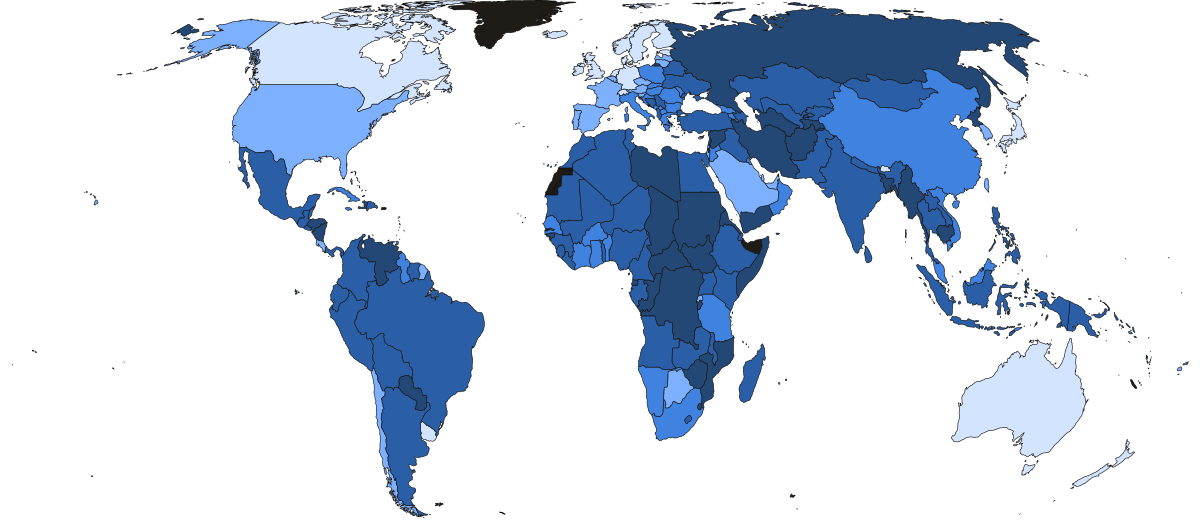
- Under 25
- 25–40
- 40–55
- 55–70
- Over 70
- Not in this ranking
- Under 25
- 25–40
- 40–55
- 55–70
- Over 70
- Not in this ranking
| # | Country | Score | 2015 score | Change since 2015 |
|---|---|---|---|---|
| 1 |  Denmark |
89 | 91 | −2 |
| 2 |  Finland |
88 | 90 | −2 |
| 3 |  Singapore |
84 | 85 | −1 |
| 4 |  New Zealand |
81 | 91 | −10 |
| 4 |  Norway |
81 | 88 | −7 |
| 6 |  Sweden |
80 | 89 | −9 |
| 6 |  Switzerland |
80 | 86 | −6 |
| 8 |  Luxembourg |
78 | 85 | −7 |
| 8 |  Netherlands |
78 | 84 | −6 |
| 10 |  Germany |
77 | 81 | −4 |
| 10 |  Iceland |
77 | 79 | −2 |
| 12 |  Australia |
76 | 79 | −3 |
| 12 |  Estonia |
76 | 70 | +6 |
| 12 |  Ireland |
76 | 75 | +1 |
| 16 |  Canada |
75 | 83 | −8 |
| 17 |  Uruguay |
73 | 74 | −1 |
| 18 |  Bhutan |
71 | 65 | +6 |
| 18 |  Japan |
71 | 75 | −4 |
| 20 |  United Kingdom |
70 | 81 | −11 |
| 21 |  Austria |
69 | 76 | −7 |
| 21 |  Belgium |
69 | 77 | −8 |
| 21 |  United Arab Emirates |
69 | 70 | −1 |
| 24 |  Barbados |
68 | · | |
| 24 |  Seychelles |
68 | 55 | +13 |
| 24 |  Taiwan |
68 | 62 | +6 |
| 27 |  France |
66 | 70 | −4 |
| 28 |  Lithuania |
65 | 59 | +6 |
| 29 |  Bahamas |
64 | · | |
| 29 |  United States |
64 | 76 | −12 |
| 31 |  Brunei |
63 | · | |
| 31 |  Chile |
63 | 70 | −7 |
| 31 |  Saint Vincent and the Grenadines |
63 | · | |
| 31 |  South Korea |
63 | 54 | +9 |
| 35 |  Cape Verde |
62 | 55 | +7 |
| 35 |  Israel |
62 | 61 | +1 |
| 37 |  Dominica |
60 | · | |
| 37 |  Latvia |
60 | 56 | +4 |
| 39 |  Czechia |
59 | 56 | +3 |
| 39 |  Saint Lucia |
59 | · | |
| 41 |  Botswana |
58 | 63 | −5 |
| 41 |  Qatar |
58 | 71 | −13 |
| 41 |  Rwanda |
58 | 54 | +4 |
| 41 |  Slovenia |
58 | 60 | −2 |
| 45 |  Saudi Arabia |
57 | 52 | +5 |
| 46 |  Costa Rica |
56 | 55 | +1 |
| 46 |  Grenada |
56 | · | |
| 46 |  Portugal |
56 | 64 | −8 |
| 49 |  Cyprus |
55 | 61 | −6 |
| 49 |  Fiji |
55 | · | |
| 49 |  Spain |
55 | 58 | −3 |
| 52 |  Italy |
53 | 44 | +9 |
| 52 |  Poland |
53 | 63 | −10 |
| 54 |  Malaysia |
52 | 50 | +2 |
| 54 |  Oman |
52 | 45 | +7 |
| 56 |  Bahrain |
50 | 51 | −1 |
| 56 |  Georgia |
50 | 52 | −2 |
| 56 |  Greece |
50 | 46 | +4 |
| 56 |  Jordan |
50 | 53 | −3 |
| 60 |  Malta |
49 | 60 | −11 |
| 61 |  Mauritius |
48 | 53 | −5 |
| 61 |  Slovakia |
48 | 51 | −3 |
| 63 |  Croatia |
47 | 51 | −4 |
| 63 |  Vanuatu |
47 | · | |
| 65 |  Armenia |
46 | 35 | +11 |
| 65 |  Kuwait |
46 | 49 | −3 |
| 65 |  Montenegro |
46 | 44 | +2 |
| 65 |  Namibia |
46 | 53 | −7 |
| 65 |  Senegal |
46 | 44 | +2 |
| 70 |  Benin |
45 | 37 | +8 |
| 70 |  Romania |
45 | 46 | −1 |
| 70 |  São Tomé and Príncipe |
45 | 42 | +3 |
| 73 |  Jamaica |
44 | 41 | +3 |
| 73 |  Solomon Islands |
44 | · | |
| 73 |  Timor-Leste |
44 | 28 | +16 |
| 76 |  China |
43 | 37 | +6 |
| 76 |  Côte d'Ivoire |
43 | 32 | +11 |
| 76 |  Ghana |
43 | 47 | −4 |
| 76 |  Kosovo |
43 | 33 | +10 |
| 80 |  Moldova |
42 | 33 | +9 |
| 81 |  South Africa |
41 | 44 | −3 |
| 81 |  Trinidad and Tobago |
41 | 39 | +2 |
| 81 |  Vietnam |
41 | 31 | +10 |
| 84 |  Bulgaria |
40 | 41 | −1 |
| 84 |  Burkina Faso |
40 | 38 | +2 |
| 84 |  Cuba |
40 | 47 | −7 |
| 84 |  Guyana |
40 | 29 | +11 |
| 84 |  Hungary |
40 | 51 | −11 |
| 84 |  North Macedonia |
40 | 42 | −2 |
| 84 |  Tanzania |
40 | 30 | +10 |
| 91 |  Albania |
39 | 36 | +3 |
| 91 |  India |
39 | 38 | +1 |
| 91 |  Maldives |
39 | · | |
| 91 |  Morocco |
39 | 36 | +3 |
| 91 |  Tunisia |
39 | 38 | +1 |
| 96 |  Ethiopia |
38 | 33 | +5 |
| 96 |  Kazakhstan |
38 | 28 | +10 |
| 96 |  Suriname |
38 | 36 | +2 |
| 99 |  Colombia |
37 | 37 | 0 |
| 99 |  Dominican Republic |
37 | 33 | +4 |
| 99 |  Gambia |
37 | 28 | +9 |
| 99 |  Lesotho |
37 | 44 | −7 |
| 99 |  Zambia |
37 | 38 | −1 |
| 104 |  Argentina |
36 | 32 | +4 |
| 104 |  Belize |
36 | · | |
| 104 |  Ukraine |
36 | 27 | +9 |
| 107 |  Brazil |
35 | 38 | −3 |
| 107 |  Sri Lanka |
35 | 37 | −2 |
| 109 |  Algeria |
34 | 36 | −2 |
| 109 |  Bosnia and Herzegovina |
34 | 38 | −4 |
| 109 |  Indonesia |
34 | 36 | −2 |
| 109 |  Laos |
34 | 25 | +9 |
| 109 |  Malawi |
34 | 31 | +3 |
| 109 |  Nepal |
34 | 27 | +7 |
| 109 |  Sierra Leone |
34 | 29 | +5 |
| 116 |  Ecuador |
33 | 32 | +1 |
| 116 |  Panama |
33 | 39 | −6 |
| 116 |  Serbia |
33 | 40 | −7 |
| 116 |  Thailand |
33 | 38 | −5 |
| 120 |  Angola |
32 | 15 | +17 |
| 120 |  El Salvador |
32 | 39 | −7 |
| 120 |  Philippines |
32 | 35 | −3 |
| 120 |  Togo |
32 | 32 | 0 |
| 124 |  Belarus |
31 | 32 | −1 |
| 124 |  Djibouti |
31 | 34 | −3 |
| 124 |  Mongolia |
31 | 39 | −8 |
| 124 |  Niger |
31 | 34 | −3 |
| 124 |  Turkey |
31 | 42 | −11 |
| 124 |  Uzbekistan |
31 | 19 | +12 |
| 130 |  Azerbaijan |
30 | 29 | +1 |
| 130 |  Egypt |
30 | 36 | −6 |
| 130 |  Kenya |
30 | 25 | +5 |
| 130 |  Mauritania |
30 | 31 | −1 |
| 130 |  Peru |
30 | 36 | −6 |
| 135 |  Gabon |
29 | 34 | −5 |
| 136 |  Bolivia |
28 | 34 | −6 |
| 136 |  Iraq |
28 | 16 | +12 |
| 136 |  Liberia |
28 | 37 | −9 |
| 136 |  Mali |
28 | 35 | −7 |
| 136 |  Pakistan |
28 | 30 | −2 |
| 141 |  Mexico |
27 | 31 | −4 |
| 142 |  Cameroon |
26 | 27 | −1 |
| 142 |  Guatemala |
26 | 28 | −2 |
| 142 |  Guinea |
26 | 25 | +1 |
| 142 |  Kyrgyzstan |
26 | 28 | −2 |
| 142 |  Nigeria |
26 | 26 | 0 |
| 142 |  Papua New Guinea |
26 | 25 | +1 |
| 148 |  Madagascar |
25 | 28 | −3 |
| 148 |  Uganda |
25 | 25 | 0 |
| 150 |  Bangladesh |
24 | 25 | −1 |
| 150 |  Central African Republic |
24 | 24 | 0 |
| 150 |  Paraguay |
24 | 27 | −3 |
| 153 |  Eswatini |
23 | · | |
| 153 |  Iran |
23 | 27 | −4 |
| 153 |  Lebanon |
23 | 28 | −5 |
| 153 |  Republic of the Congo |
23 | 23 | 0 |
| 157 |  Chad |
22 | 22 | 0 |
| 157 |  Honduras |
22 | 31 | −9 |
| 157 |  Russia |
22 | 29 | −7 |
| 157 |  Zimbabwe |
22 | 21 | +1 |
| 161 |  Guinea-Bissau |
21 | 17 | +4 |
| 161 |  Mozambique |
21 | 31 | −10 |
| 163 |  Cambodia |
20 | 21 | −1 |
| 163 |  Comoros |
20 | 26 | −6 |
| 163 |  DR Congo |
20 | 22 | −2 |
| 166 |  Tajikistan |
19 | 26 | −7 |
| 167 |  Burundi |
17 | 21 | −4 |
| 167 |  Turkmenistan |
17 | 18 | −1 |
| 169 |  Afghanistan |
16 | 11 | +5 |
| 169 |  Haiti |
16 | 17 | −1 |
| 169 |  Myanmar |
16 | 22 | −6 |
| 172 |  Equatorial Guinea |
15 | · | |
| 172 |  North Korea |
15 | 8 | +7 |
| 172 |  Syria |
15 | 18 | −3 |
| 175 |  Nicaragua |
14 | 27 | −13 |
| 175 |  Sudan |
14 | 12 | +2 |
| 177 |  Eritrea |
13 | 18 | −5 |
| 177 |  Libya |
13 | 16 | −3 |
| 177 |  Yemen |
13 | 18 | −5 |
| 180 |  Venezuela |
10 | 17 | −7 |
| 181 |  Somalia |
9 | 8 | +1 |
| 181 |  South Sudan |
9 | 15 | −6 |
| # | Country | 2015 score | Score | Change since 2015 |
|---|---|---|---|---|
| 1 | Denmark |
91 | 89 | −2 |
| 1 | New Zealand |
91 | 81 | −10 |
| 3 | Finland |
90 | 88 | −2 |
| 4 | Sweden |
89 | 80 | −9 |
| 5 | Norway |
88 | 81 | −7 |
| 6 | Switzerland |
86 | 80 | −6 |
| 7 | Singapore |
85 | 84 | −1 |
| 7 | Luxembourg |
85 | 78 | −7 |
| 9 | Netherlands |
84 | 78 | −6 |
| 10 | Canada |
83 | 75 | −8 |
| 11 | Germany |
81 | 77 | −4 |
| 11 | United Kingdom |
81 | 70 | −11 |
| 13 | Iceland |
79 | 77 | −2 |
| 13 | Australia |
79 | 76 | −3 |
| 15 | Belgium |
77 | 69 | −8 |
| 16 | Austria |
76 | 69 | −7 |
| 16 | United States |
76 | 64 | −12 |
| 18 | Ireland |
75 | 76 | +1 |
| 18 | Japan |
75 | 71 | −4 |
| 20 | Uruguay |
74 | 73 | −1 |
| 21 | Qatar |
71 | 58 | −13 |
| 22 | Estonia |
70 | 76 | +6 |
| 22 | United Arab Emirates |
70 | 69 | −1 |
| 22 | France |
70 | 66 | −4 |
| 22 | Chile |
70 | 63 | −7 |
| 26 | Bhutan |
65 | 71 | +6 |
| 27 | Portugal |
64 | 56 | −8 |
| 28 | Botswana |
63 | 58 | −5 |
| 28 | Poland |
63 | 53 | −10 |
| 30 | Taiwan |
62 | 68 | +6 |
| 31 | Israel |
61 | 62 | +1 |
| 31 | Cyprus |
61 | 55 | −6 |
| 33 | Slovenia |
60 | 58 | −2 |
| 33 | Malta |
60 | 49 | −11 |
| 35 | Lithuania |
59 | 65 | +6 |
| 36 | Spain |
58 | 55 | −3 |
| 37 | Latvia |
56 | 60 | +4 |
| 37 | Czechia |
56 | 59 | +3 |
| 39 | Seychelles |
55 | 68 | +13 |
| 39 | Cape Verde |
55 | 62 | +7 |
| 39 | Costa Rica |
55 | 56 | +1 |
| 42 | South Korea |
54 | 63 | +9 |
| 42 | Rwanda |
54 | 58 | +4 |
| 44 | Jordan |
53 | 50 | −3 |
| 44 | Mauritius |
53 | 48 | −5 |
| 44 | Namibia |
53 | 46 | −7 |
| 47 | Saudi Arabia |
52 | 57 | +5 |
| 47 | Georgia |
52 | 50 | −2 |
| 49 | Bahrain |
51 | 50 | −1 |
| 49 | Slovakia |
51 | 48 | −3 |
| 49 | Croatia |
51 | 47 | −4 |
| 49 | Hungary |
51 | 40 | −11 |
| 53 | Malaysia |
50 | 52 | +2 |
| 54 | Kuwait |
49 | 46 | −3 |
| 55 | Ghana |
47 | 43 | −4 |
| 55 | Cuba |
47 | 40 | −7 |
| 57 | Greece |
46 | 50 | +4 |
| 57 | Romania |
46 | 45 | −1 |
| 59 | Oman |
45 | 52 | +7 |
| 60 | Italy |
44 | 53 | +9 |
| 60 | Montenegro |
44 | 46 | +2 |
| 60 | Senegal |
44 | 46 | +2 |
| 60 | South Africa |
44 | 41 | −3 |
| 60 | Lesotho |
44 | 37 | −7 |
| 65 | São Tomé and Príncipe |
42 | 45 | +3 |
| 65 | North Macedonia |
42 | 40 | −2 |
| 65 | Turkey |
42 | 31 | −11 |
| 68 | Jamaica |
41 | 44 | +3 |
| 68 | Bulgaria |
41 | 40 | −1 |
| 70 | Serbia |
40 | 33 | −7 |
| 71 | Trinidad and Tobago |
39 | 41 | +2 |
| 71 | Panama |
39 | 33 | −6 |
| 71 | El Salvador |
39 | 32 | −7 |
| 71 | Mongolia |
39 | 31 | −8 |
| 75 | Burkina Faso |
38 | 40 | +2 |
| 75 | India |
38 | 39 | +1 |
| 75 | Tunisia |
38 | 39 | +1 |
| 75 | Zambia |
38 | 37 | −1 |
| 75 | Brazil |
38 | 35 | −3 |
| 75 | Bosnia and Herzegovina |
38 | 34 | −4 |
| 75 | Thailand |
38 | 33 | −5 |
| 82 | Benin |
37 | 45 | +8 |
| 82 | China |
37 | 43 | +6 |
| 82 | Colombia |
37 | 37 | 0 |
| 82 | Sri Lanka |
37 | 35 | −2 |
| 82 | Liberia |
37 | 28 | −9 |
| 87 | Albania |
36 | 39 | +3 |
| 87 | Morocco |
36 | 39 | +3 |
| 87 | Suriname |
36 | 38 | +2 |
| 87 | Algeria |
36 | 34 | −2 |
| 87 | Indonesia |
36 | 34 | −2 |
| 87 | Egypt |
36 | 30 | −6 |
| 87 | Peru |
36 | 30 | −6 |
| 94 | Armenia |
35 | 46 | +11 |
| 94 | Philippines |
35 | 32 | −3 |
| 94 | Mali |
35 | 28 | −7 |
| 97 | Djibouti |
34 | 31 | −3 |
| 97 | Niger |
34 | 31 | −3 |
| 97 | Gabon |
34 | 29 | −5 |
| 97 | Bolivia |
34 | 28 | −6 |
| 101 | Kosovo |
33 | 43 | +10 |
| 101 | Moldova |
33 | 42 | +9 |
| 101 | Ethiopia |
33 | 38 | +5 |
| 101 | Dominican Republic |
33 | 37 | +4 |
| 105 | Côte d'Ivoire |
32 | 43 | +11 |
| 105 | Argentina |
32 | 36 | +4 |
| 105 | Ecuador |
32 | 33 | +1 |
| 105 | Togo |
32 | 32 | 0 |
| 105 | Belarus |
32 | 31 | −1 |
| 110 | Vietnam |
31 | 41 | +10 |
| 110 | Malawi |
31 | 34 | +3 |
| 110 | Mauritania |
31 | 30 | −1 |
| 110 | Mexico |
31 | 27 | −4 |
| 110 | Honduras |
31 | 22 | −9 |
| 110 | Mozambique |
31 | 21 | −10 |
| 116 | Tanzania |
30 | 40 | +10 |
| 116 | Pakistan |
30 | 28 | −2 |
| 118 | Guyana |
29 | 40 | +11 |
| 118 | Sierra Leone |
29 | 34 | +5 |
| 118 | Azerbaijan |
29 | 30 | +1 |
| 118 | Russia |
29 | 22 | −7 |
| 122 | Timor-Leste |
28 | 44 | +16 |
| 122 | Kazakhstan |
28 | 38 | +10 |
| 122 | Gambia |
28 | 37 | +9 |
| 122 | Guatemala |
28 | 26 | −2 |
| 122 | Kyrgyzstan |
28 | 26 | −2 |
| 122 | Madagascar |
28 | 25 | −3 |
| 122 | Lebanon |
28 | 23 | −5 |
| 129 | Ukraine |
27 | 36 | +9 |
| 129 | Nepal |
27 | 34 | +7 |
| 129 | Cameroon |
27 | 26 | −1 |
| 129 | Paraguay |
27 | 24 | −3 |
| 129 | Iran |
27 | 23 | −4 |
| 129 | Nicaragua |
27 | 14 | −13 |
| 135 | Nigeria |
26 | 26 | 0 |
| 135 | Comoros |
26 | 20 | −6 |
| 135 | Tajikistan |
26 | 19 | −7 |
| 138 | Laos |
25 | 34 | +9 |
| 138 | Kenya |
25 | 30 | +5 |
| 138 | Guinea |
25 | 26 | +1 |
| 138 | Papua New Guinea |
25 | 26 | +1 |
| 138 | Uganda |
25 | 25 | 0 |
| 138 | Bangladesh |
25 | 24 | −1 |
| 144 | Central African Republic |
24 | 24 | 0 |
| 145 | Republic of the Congo |
23 | 23 | 0 |
| 146 | Chad |
22 | 22 | 0 |
| 146 | DR Congo |
22 | 20 | −2 |
| 146 | Myanmar |
22 | 16 | −6 |
| 149 | Zimbabwe |
21 | 22 | +1 |
| 149 | Cambodia |
21 | 20 | −1 |
| 149 | Burundi |
21 | 17 | −4 |
| 152 | Uzbekistan |
19 | 31 | +12 |
| 153 | Turkmenistan |
18 | 17 | −1 |
| 153 | Syria |
18 | 15 | −3 |
| 153 | Eritrea |
18 | 13 | −5 |
| 153 | Yemen |
18 | 13 | −5 |
| 157 | Guinea-Bissau |
17 | 21 | +4 |
| 157 | Haiti |
17 | 16 | −1 |
| 157 | Venezuela |
17 | 10 | −7 |
| 160 | Iraq |
16 | 28 | +12 |
| 160 | Libya |
16 | 13 | −3 |
| 162 | Angola |
15 | 32 | +17 |
| 162 | South Sudan |
15 | 9 | −6 |
| 164 | Sudan |
12 | 14 | +2 |
| 165 | Afghanistan |
11 | 16 | +5 |
| 166 | North Korea |
8 | 15 | +7 |
| 166 | Somalia |
8 | 9 | +1 |
Why they rank where they do
-
Denmark
Denmark scores 89 and has held the top spot for eight years in a row. It is down from 91 in 2015.
-
Finland
Finland scores 88 and ranks second. It fell 2 points from 90 in 2015.
-
Singapore
Singapore scores 84, the highest in Asia and the only Asian country in the top 10. Its Corrupt Practices Investigation Bureau received 177 reports in 2024, down from 215 in 2023. Transparency International notes that Singapore has faced scrutiny for facilitating the movement of dirty money, which the CPI does not measure.
-
New Zealand
New Zealand scores 81, down 10 points from 91 in 2015. It has fallen 2 points for four years in a row. Transparency International New Zealand cites bid-rigging prosecutions, driver-licensing frauds and a lack of lobbying and political-donation transparency.
-
United Kingdom
The United Kingdom scores 70, also its lowest ever, down from 81 in 2015. Transparency International links the decline to the awarding of favours and honours to political donors.
-
United States
The United States scores 64, its lowest ever, down 12 points from 76 in 2015. Transparency International points to the temporary freeze and weakening of Foreign Corrupt Practices Act enforcement and cuts to overseas aid for civil society.
-
Qatar
Qatar scores 58, down from 71 in 2015. Most of the fall came in 2016, when Transparency International named Qatar the biggest decliner, citing the FIFA scandals and reports of human rights abuses against migrant workers.
-
China
China scores 43, up from 37 in 2015. It ranks 76th of the 182 countries Transparency International scores.
-
Hungary
Hungary scores 40, tied with Bulgaria as the lowest in the EU. It has lost 15 points since 2012. Transparency International says the government used claims of promoting transparency to justify proposed powers to shut down critical organizations and media.
-
Ukraine
Ukraine scores 36, up from 27 in 2015. Transparency International credits sustained pressure from civil society and the work of the High Anti-Corruption Court and the National Anti-Corruption Bureau. It says further reforms are needed to protect defense and reconstruction funds from misuse.
-
Angola
Angola scores 32, up from 15 in 2015, the biggest rise of any country over the decade. Transparency International links the improvement to measures taken after President João Lourenço's election in 2017. The IMF said in May 2025 that the strong momentum observed through 2022 has slowed.
-
Russia
Russia scores 22, down from 29 in 2015. It ranks 157th, tied with Chad, Honduras and Zimbabwe.
-
Venezuela
Venezuela scores 10. Transparency International's Venezuela chapter has been forced into exile because of government repression. Former oil minister Tareck El Aissami was arrested in April 2024 over oil-sale revenue that was never recorded in state accounts.
-
Somalia
Somalia scores 9, tied last. In August 2026, Somalia's Auditor General said he could not verify $42.2 million of port revenue for 2025.
-
South Sudan
South Sudan scores 9, tied last. A UN report published in September 2025 found that about $2.2 billion of oil revenue was diverted through the "Oil for Roads" scheme between 2021 and 2024, to firms linked to Vice President Benjamin Bol Mel.
Which countries are the most corrupt?
Somalia and South Sudan share the lowest score, 9 out of 100. Venezuela scores 10, and Yemen, Libya and Eritrea each score 13. Transparency International says countries at the bottom overwhelmingly have severely repressed civil societies and high levels of instability.
Nicaragua scores 14, down from 27 in 2015. Human Rights Watch reports that the Nicaraguan government has shut down over 5,500 organizations and at least 58 media outlets since 2018. North Korea and Syria each score 15. Sudan scores 14.
- Somalia9
- South Sudan9
- Venezuela10
- Eritrea13
- Libya13
- Yemen13
- Nicaragua14
- Sudan14
- Equatorial Guinea15
- North Korea15
Which countries are the least corrupt?
Denmark leads with 89 points, followed by Finland at 88 and Singapore at 84. New Zealand and Norway tie at 81. These five are the only countries above 80, down from 12 a decade ago. Sweden and Switzerland follow at 80.
Transparency International credits long-term improvers with reforms, strengthened oversight institutions and broad political consensus. It also warns that several top scorers, including Singapore and Switzerland, enable corruption elsewhere by facilitating the movement of dirty money, something the CPI does not capture.
What does the CPI measure, and what are its limits?
The Corruption Perceptions Index scores how corrupt each country's public sector is perceived to be, according to experts and businesspeople. It draws on 13 external sources, including the World Bank and the World Economic Forum. A country needs at least three sources to be included. The general public is not surveyed.
The CPI does not measure citizens' direct experience of corruption, tax fraud, illicit financial flows, money laundering, private-sector corruption or the role of enablers such as lawyers and accountants. Critics such as Staffan Andersson and Paul Heywood argue the index can feed a "corruption trap" by tying aid to perception scores. Alex Cobham of the Center for Global Development has argued that the CPI reflects the opinions of an internationally focused elite.
Which countries have become more corrupt since 2015?
Nicaragua fell 13 points, from 27 to 14. Qatar fell 13 points, from 71 to 58. The United States and the United Kingdom each fell 12 points. New Zealand fell 10, from 91 to 81. Transparency International names Nicaragua, Hungary and Turkey as the biggest decliners since 2012, linking them to democratic backsliding, institutional fragility and entrenched patronage networks.
Mozambique fell 10 points, from 31 to 21. Sweden fell 9 points, from 89 to 80. Flora Cresswell, Transparency International's adviser for Europe, said Sweden and the Netherlands "just have not had strong standards" on lobbying and political finance transparency.
- Qatar−13
- Nicaragua−13
- United States−12
- United Kingdom−11
- Malta−11
- Hungary−11
- Turkey−11
- New Zealand−10
Change in CPI score, 2015 to 2025. Calculated by Orbis from Transparency International data.
Which countries improved the most since 2015?
Angola rose 17 points, from 15 to 32, the largest gain. Transparency International credits anti-corruption measures introduced after President João Lourenço took office in 2017, though the IMF says momentum has slowed since 2022.
Timor-Leste rose 16 points, from 28 to 44. Transparency International attributes its rise to structural reforms that strengthened oversight institutions. Seychelles rose 13 points, Uzbekistan 12 and Armenia 11. Iraq rose 12 points, with Transparency International citing its anti-corruption agency's commitment to reform. Ukraine rose 9 points, from 27 to 36, driven by civil society pressure and new anti-corruption bodies.
- Angola+17
- Timor-Leste+16
- Seychelles+13
- Uzbekistan+12
- Iraq+12
- Armenia+11
- Côte d'Ivoire+11
- Guyana+11
Change in CPI score, 2015 to 2025. Calculated by Orbis from Transparency International data.
Where does the United States rank, and why has it fallen?
The United States scores 64 and ranks 29th, its lowest score ever. In 2015 it scored 76. The 12-point fall over a decade leaves it below France (66) and Canada (75).
Transparency International says the United States "sustained its downward slide". It points to the temporary freeze and weakening of Foreign Corrupt Practices Act enforcement, which it says signals tolerance for corrupt business practices. It also cites cuts to overseas aid for civil society as weakening global anti-corruption efforts. Gary Kalman, Executive Director of Transparency International US, pointed to the use of enforcement discretion to politically determine winners and losers.


